
Sourcing wholesale insoles for your footwear line is one of those decisions that quietly shapes everything downstream — your unit costs, your production schedule, your product quality, and ultimately your margins. Whether you’re a footwear brand placing your first bulk order or an established buyer looking to renegotiate terms with a new supplier, understanding the real mechanics of MOQ, lead times, and pricing will save you from expensive surprises. This guide breaks down everything you need to know before you commit to a supplier, so you can negotiate smarter, plan better, and build a supply chain that actually holds up.
MOQ Explained: What to Expect
Minimum order quantities are often the first sticking point buyers encounter when sourcing wholesale insoles — and for good reason. MOQs vary widely depending on the supplier’s manufacturing setup, the complexity of the insole, and the materials involved. A factory running high-volume EVA compression molds will typically have higher MOQs (often 1,000–3,000 pairs per SKU) because the tooling economics demand it. Smaller specialty suppliers offering custom orthotics or performance foam constructions may accept lower quantities, but usually at a higher per-unit cost.
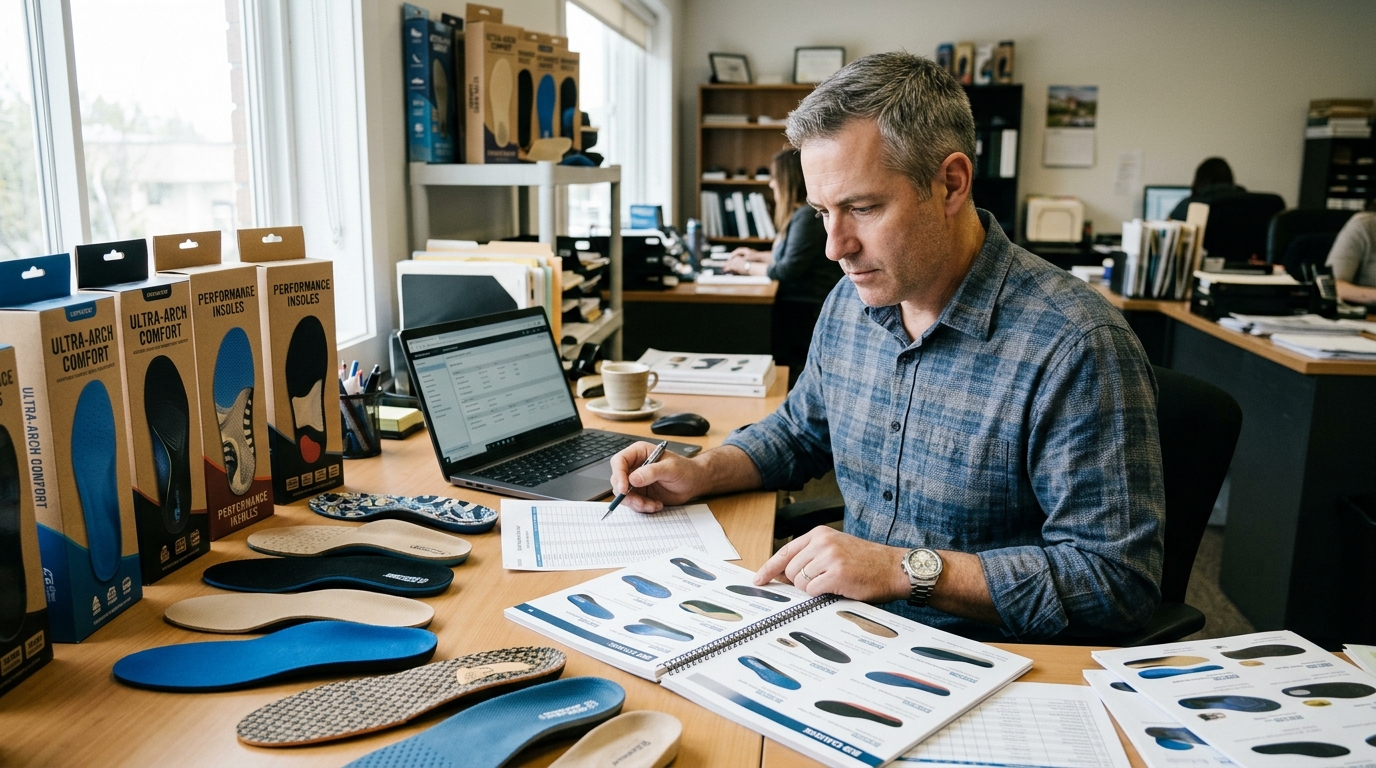
The key is to understand what’s driving the MOQ you’re being quoted. If it’s tooling cost, you may be able to negotiate a one-time mold fee in exchange for a lower minimum run. If it’s material procurement — say, a specific fabric top cloth or gel component — there may be flexibility if you’re willing to accept a standard material for smaller runs. Always ask your supplier to itemize what’s behind the MOQ number rather than accepting it as a fixed ceiling.
For new buyers, it’s worth noting that many B2B insole manufacturers offer sample orders or trial runs before committing to full production quantities. This is a reasonable expectation to set from the first conversation. If a supplier won’t provide samples at any stage, that’s a yellow flag worth noting before you scale up your order.
Lead Times: Planning Your Production Calendar
Lead times in wholesale insole manufacturing are rarely as simple as “8 weeks from order.” The actual timeline depends on several compounding variables: whether you’re ordering a stock construction or a custom design, whether tooling needs to be produced, how backed-up the factory is at the time of your order, and how quickly you can turn around approval on pre-production samples.
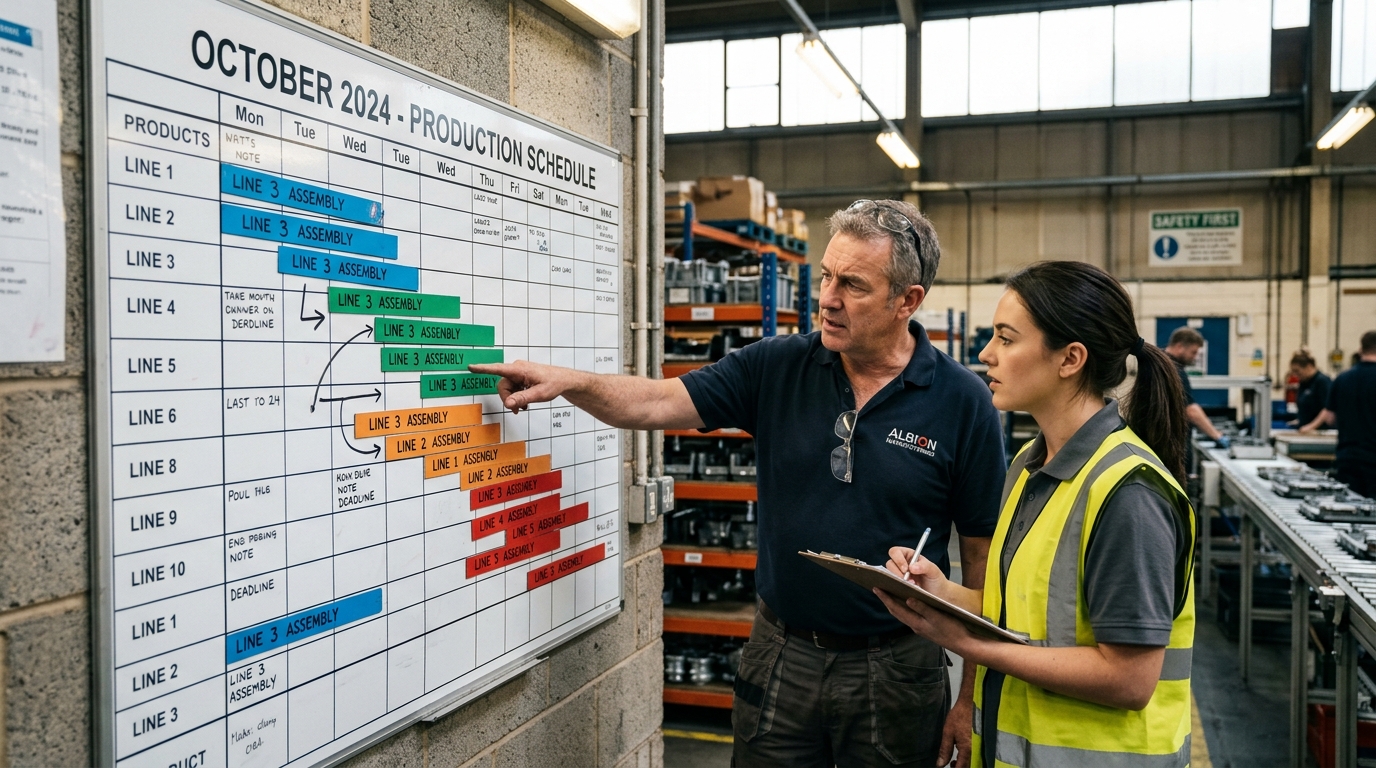
For standard stock insoles — those using existing molds and readily available materials — lead times typically run 15 to 30 days after deposit and material confirmation. Custom insoles, which require new tooling, top cloth sourcing, or unique cushioning configurations, commonly run 45 to 75 days. If your order includes a new mold build, add 10 to 20 days on top of that baseline. Factories that carry finished-goods inventory in common sizes can sometimes fulfill reorders in under two weeks, which is worth asking about for your core SKUs.
The single biggest lead time killer that buyers underestimate is the sample approval loop. Every round of revisions — a fit tweak, a color change, a density adjustment — adds a week or more. Front-loading your specification work before you place a production order isn’t just good practice; it’s the difference between hitting your launch date and missing it. Build at least two revision rounds into your calendar when planning for a new construction.
Wholesale Insole Pricing: Key Cost Drivers
Pricing for wholesale insoles is more variable than many buyers expect, and understanding the underlying cost drivers puts you in a much stronger negotiating position. The three biggest variables are material selection, construction complexity, and order volume. A basic flat EVA insole with a non-woven top cloth might run $0.80–$1.50 per pair at volume. A multi-layer cushioned insole with a memory foam top pad and a structured arch layer could run $3.00–$6.00 or more depending on material costs and the manufacturing steps involved.

Material choices have an outsized impact on price. Memory foam layers, PU gel pods, supercritical foams, and premium fabric top cloths all add cost in ways that compound quickly when you’re buying thousands of units. For brands exploring advanced cushioning technology, a supercritical CO2 foam insole adds performance credentials that justify a higher retail price point — but it’s worth mapping that cost all the way through to your final margin before committing.
Volume discounts are real and meaningful at scale, but the breakpoints vary significantly between manufacturers. Some factories tier pricing at 500, 2,000, and 5,000 pairs. Others don’t move meaningfully until you reach 10,000+ units per SKU. Ask for a tiered pricing sheet early in the conversation so you can model your landed cost at multiple volume levels rather than discovering the pricing cliff after you’ve already projected your margins.
Custom vs. Stock Insoles: Tradeoffs
One of the most consequential decisions in wholesale insole sourcing is whether to buy stock constructions or invest in a custom program. Stock insoles — those built on existing molds and standard material stacks — offer lower MOQs, faster lead times, and no tooling investment. For brands testing a new category or a new price point, stock constructions are a logical starting point. The tradeoff is differentiation: if your competitor can source the same insole from the same factory, your product story becomes harder to tell.
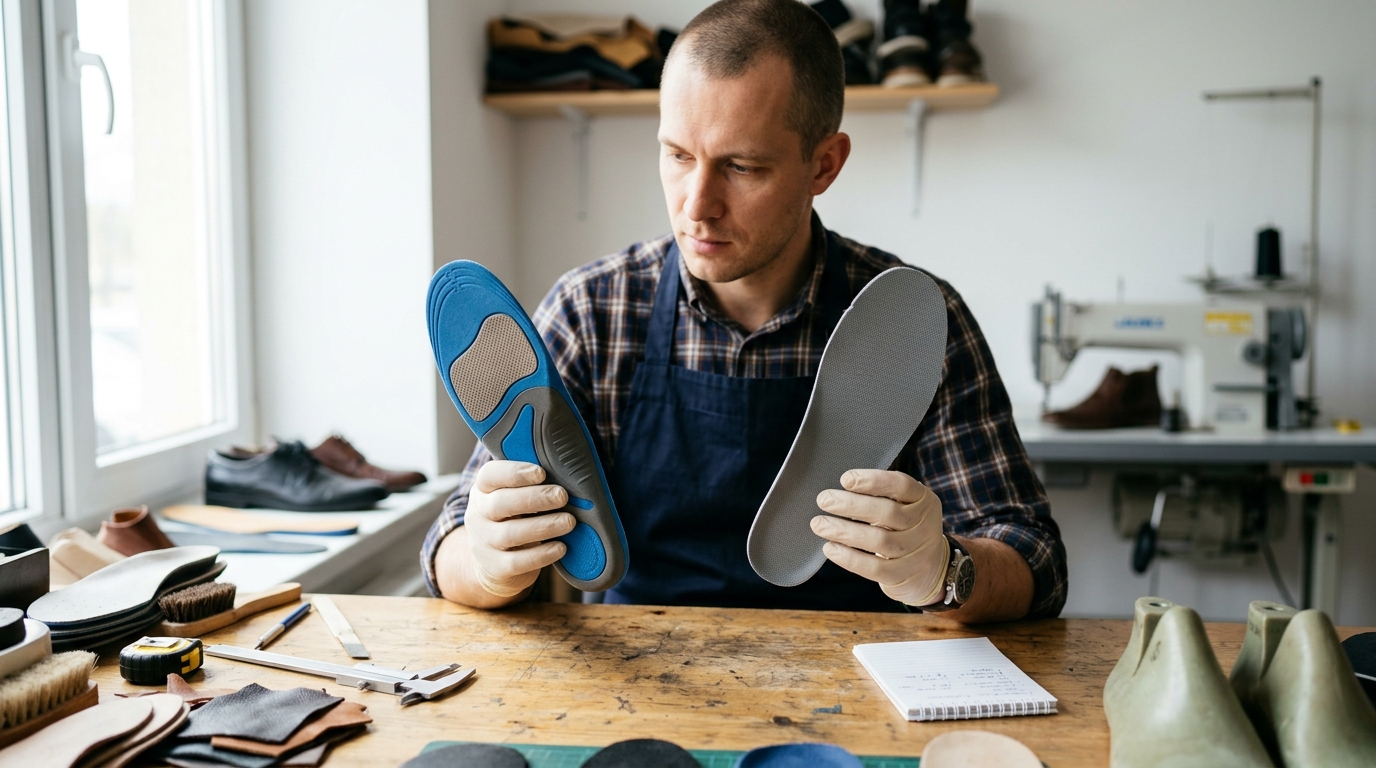
Custom insoles require more upfront investment — tooling fees typically range from $500 to $2,500 depending on complexity — but they give you control over density, arch geometry, top cloth branding, and the full cushioning profile. For brands where insole performance is a core marketing claim, that differentiation is worth the investment. If you’re in the process of evaluating suppliers for a custom program, reading up on how to evaluate an OEM insole manufacturer before your first factory conversation will help you ask sharper questions and avoid common pitfalls.
The middle path — semi-custom — is worth exploring with established manufacturers. This approach uses existing mold geometry but allows customization of materials, densities, and branding elements. It often hits a lead time and MOQ sweet spot that works well for mid-sized brands that want some product distinctiveness without bearing the full cost of a ground-up custom program.
Vetting Wholesale Insole Suppliers
Finding a supplier who can quote low prices is easy. Finding one who delivers consistent quality, hits lead times reliably, and communicates clearly when problems arise is the harder and more important task. The baseline credentials to ask for include ISO certification, export compliance documentation, and references from buyers in your target market. For the US market specifically, ask whether the supplier has experience with REACH compliance and standard chemical testing protocols for footwear components.
Factory audits — whether in-person or through a third-party inspection service — are worth the cost if you’re placing significant orders. But you can learn a great deal from a supplier’s responsiveness before an order is placed. How quickly do they respond to technical questions? Do they provide clear, itemized quotes? Are they proactive about flagging potential lead time issues? These behavioral signals at the quoting stage are often predictive of how they’ll behave when a production issue surfaces six weeks into your order.
Working with an established wholesale shoe insole manufacturer supplier like FX Footwear (Fuxiang Group) means you’re dealing with a factory that has both the production depth to handle volume orders and the product engineering capability to support custom development. When you’re evaluating your shortlist, look for suppliers who treat technical dialogue as part of their service rather than a burden — that mindset tends to produce better outcomes across the whole relationship. For buyers also evaluating cushioned insoles wholesale, it’s worth requesting both a spec sheet and a physical sample to properly assess the cushioning feel before committing to bulk production.
FAQ
FAQ: What is a typical MOQ for wholesale insoles?
Most wholesale insole manufacturers set MOQs somewhere between 500 and 3,000 pairs per SKU, though this varies by construction type and supplier. Standard stock insoles often have lower minimums because no new tooling is needed. Custom insoles with new mold builds typically carry higher minimums to amortize tooling costs. Some suppliers will negotiate reduced MOQs in exchange for a mold fee paid upfront. If you’re just entering a new category, ask specifically about stock options that allow lower entry quantities while you validate market demand.
FAQ: How long does insole production take?
Lead times for stock insoles typically run 15 to 30 days after order confirmation and material approval. Custom insoles with new tooling generally take 45 to 75 days. New mold development can add another 10 to 20 days on top of the production timeline. The sample approval process is often the biggest variable — plan for at least two revision rounds to avoid delays. If you have a hard launch date, communicate it to your supplier at the first conversation so they can flag any calendar conflicts before your order is placed.
FAQ: What drives the price of wholesale insoles?
The primary cost drivers are material selection, construction complexity, and order volume. Material choices — foam type, top cloth, gel components — have the single largest impact on unit cost. More complex constructions with multiple layers or molded arch geometry add both material and labor cost. Volume discounts are typically available at key breakpoints, so requesting a tiered pricing sheet from your supplier early lets you model your margins at different order sizes. Tooling is a one-time cost that can be amortized across multiple production runs once paid.
FAQ: Should I buy stock or custom insoles?
The right answer depends on your brand’s positioning and stage of growth. Stock insoles offer lower MOQs, faster lead times, and no tooling investment — a good fit for new categories or test runs. Custom insoles provide differentiation in density, arch geometry, top cloth, and branding, which is valuable when insole performance is central to your product story. Semi-custom options — using existing molds with custom materials or branding — offer a middle ground that many mid-sized brands find works well for balancing cost, lead time, and product distinctiveness.
FAQ: How do I evaluate an insole supplier’s reliability?
Start with baseline credentials: ISO certification, export documentation, and references from buyers in your market. Pay attention to how the supplier communicates during the quoting stage — response speed, clarity of quotes, and willingness to answer technical questions are good proxies for how they’ll behave during production. Third-party factory audits are worth considering for significant orders. Requesting physical samples before committing to production is non-negotiable — a spec sheet tells you what a product should be; a sample tells you what it actually is. Look for suppliers who treat technical dialogue as a standard part of their service.
If you’re ready to move from evaluation to action, FX Footwear (Fuxiang Group) is built for exactly this kind of B2B sourcing conversation. As a full-service shoe insole manufacturer with deep experience serving the US market, FX Footwear offers transparent MOQ structures, reliable lead times, and the engineering support to take a product from concept to production. Whether you’re sourcing a standard construction or building a custom insole program, reach out to the FX Footwear team to request a quote, a sample, or a factory consultation — and start your next insole program on solid ground.