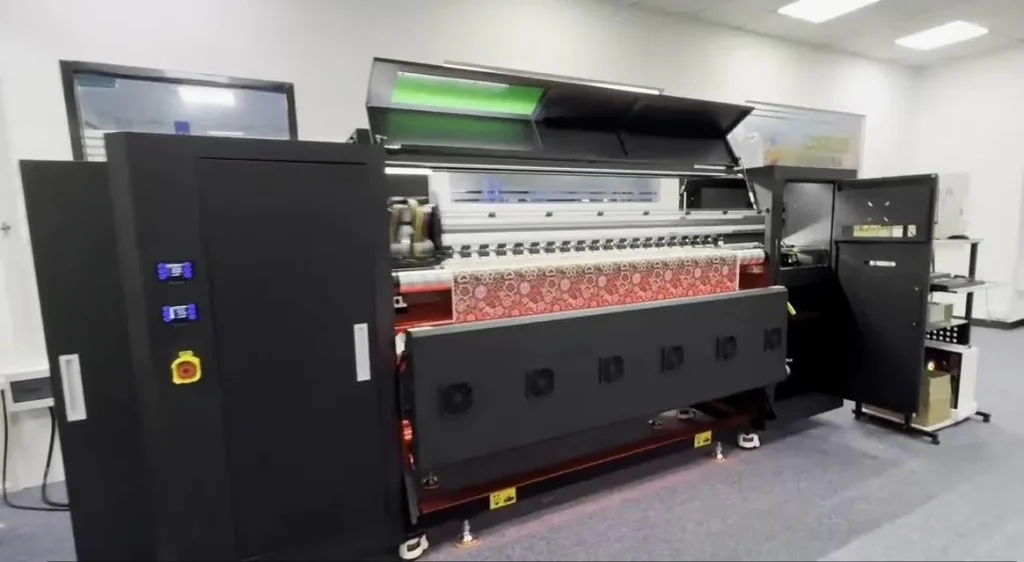
PT Fou Xiang Indonesia is Fuxiang Group’s integrated manufacturing base for foam materials and value-added converting. Its 2026 factory profile lists a 28,762 m² site, more than 380 employees, and production covering EVA and open-cell PU foaming, lamination, digital sublimation, screen printing, and high-frequency welding.
For a footwear buyer, that combination matters more than floor area alone. A foam material can move through lamination, printing, and forming processes within the same manufacturing network, creating a more direct route from material specification to production.
PT Fou Xiang Indonesia at a Glance
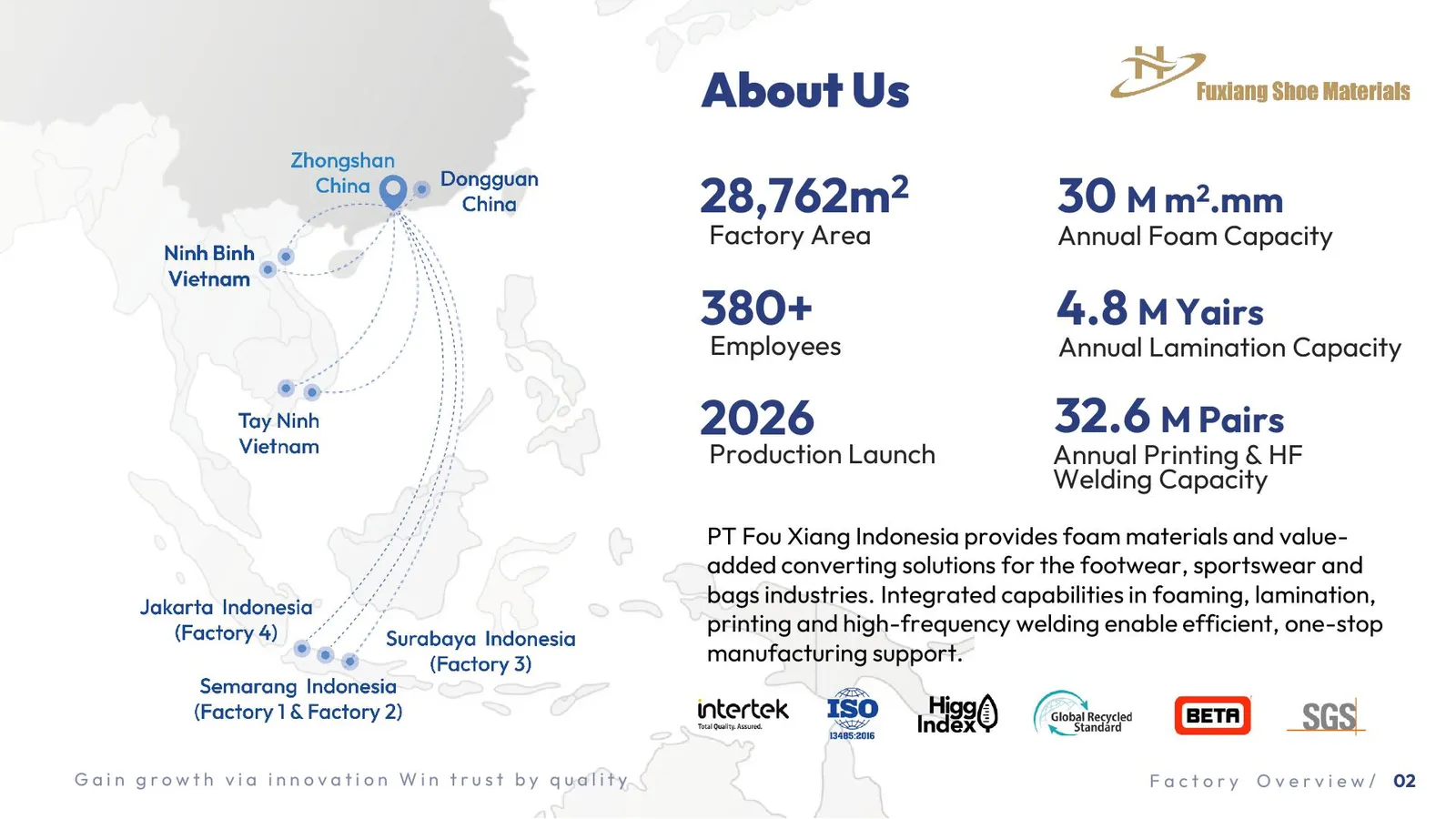
PT Fou Xiang Indonesia is a foam-and-converting factory for footwear, sportswear, and bag programs. The client-supplied 2026 factory profile lists 30 million m²·mm of annual foam capacity, measured by area × thickness, 4.8 million yards of lamination capacity, and 32.6 million pairs of combined capacity across digital sublimation, screen printing, and high-frequency welding.
| Factory detail | Listed capacity or scope |
|---|---|
| Factory area | 28,762 m² |
| Employees | 380+ |
| Production launch | 2026 |
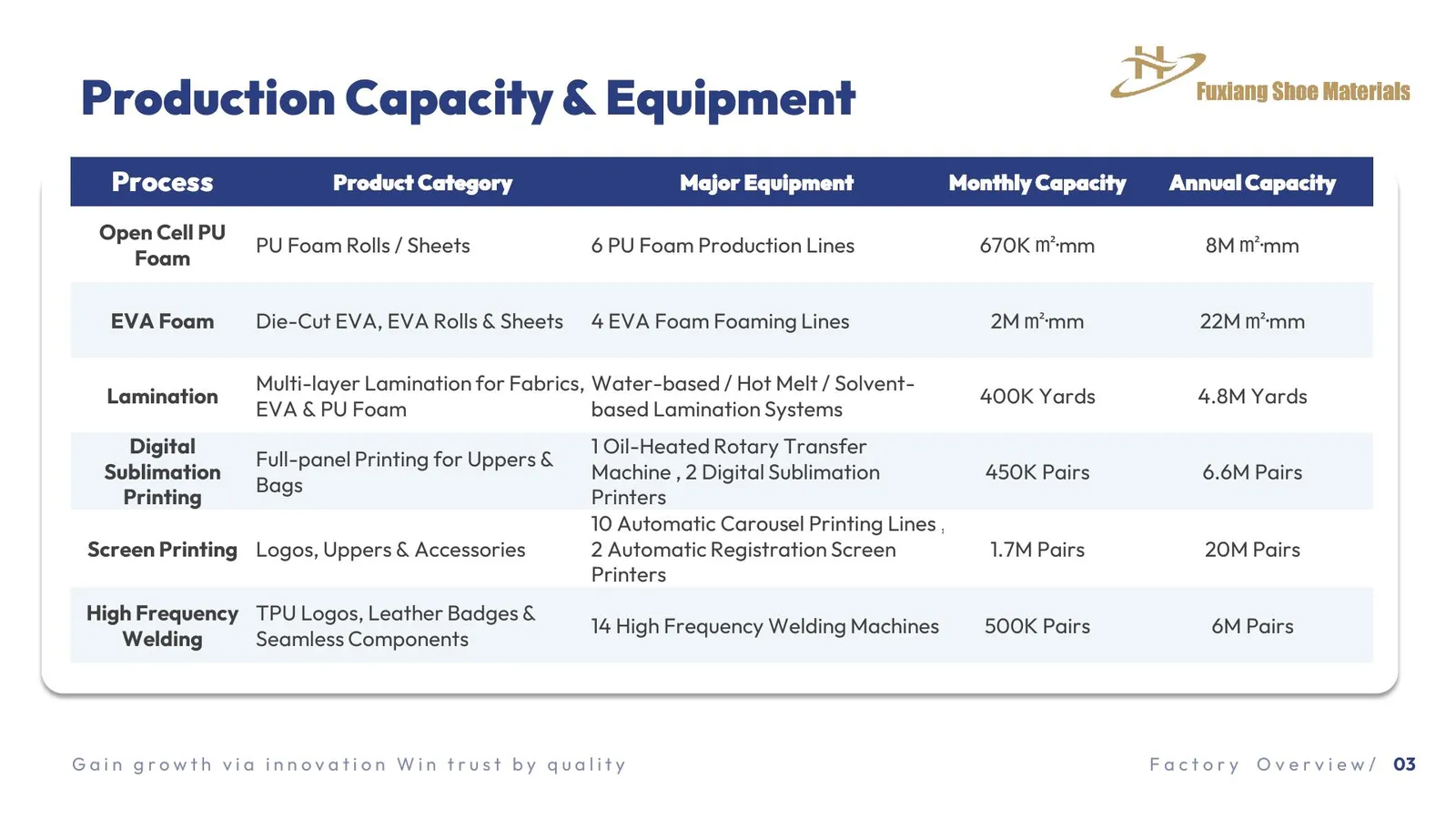
| Open-cell PU foam | 6 production lines; 8 million m²·mm per year |
| EVA foam | 4 foaming lines; 22 million m²·mm per year |
| Lamination | 4.8 million yards per year |
| Digital sublimation | 6.6 million pairs per year |
| Screen printing | 20 million pairs per year |
| High-frequency welding | 14 machines; 6 million pairs per year |
The foam figures use m²·mm, an area-by-thickness unit. This allows output to be compared across sheet and roll programs using different thicknesses.
Why the Integrated Factory Model Matters
Picture a footwear upper that needs perforated foam, mesh lamination, a full-panel color print, and a welded TPU badge. With a fragmented supply chain, four vendors may touch that component before it reaches the shoe assembly line. Each handoff adds another color standard, bonding variable, production queue, and freight leg.
PT Fou Xiang Indonesia keeps those linked processes inside one manufacturing system. Fuxiang’s material team can start with the foam specification, match the lamination method to the face material, then route the component to the appropriate print or welding process.
That doesn’t remove the need for approval samples. It makes the approval trail easier to control. Density, hardness, color, adhesive choice, artwork, and finishing method can be reviewed as one construction instead of disconnected purchase orders.
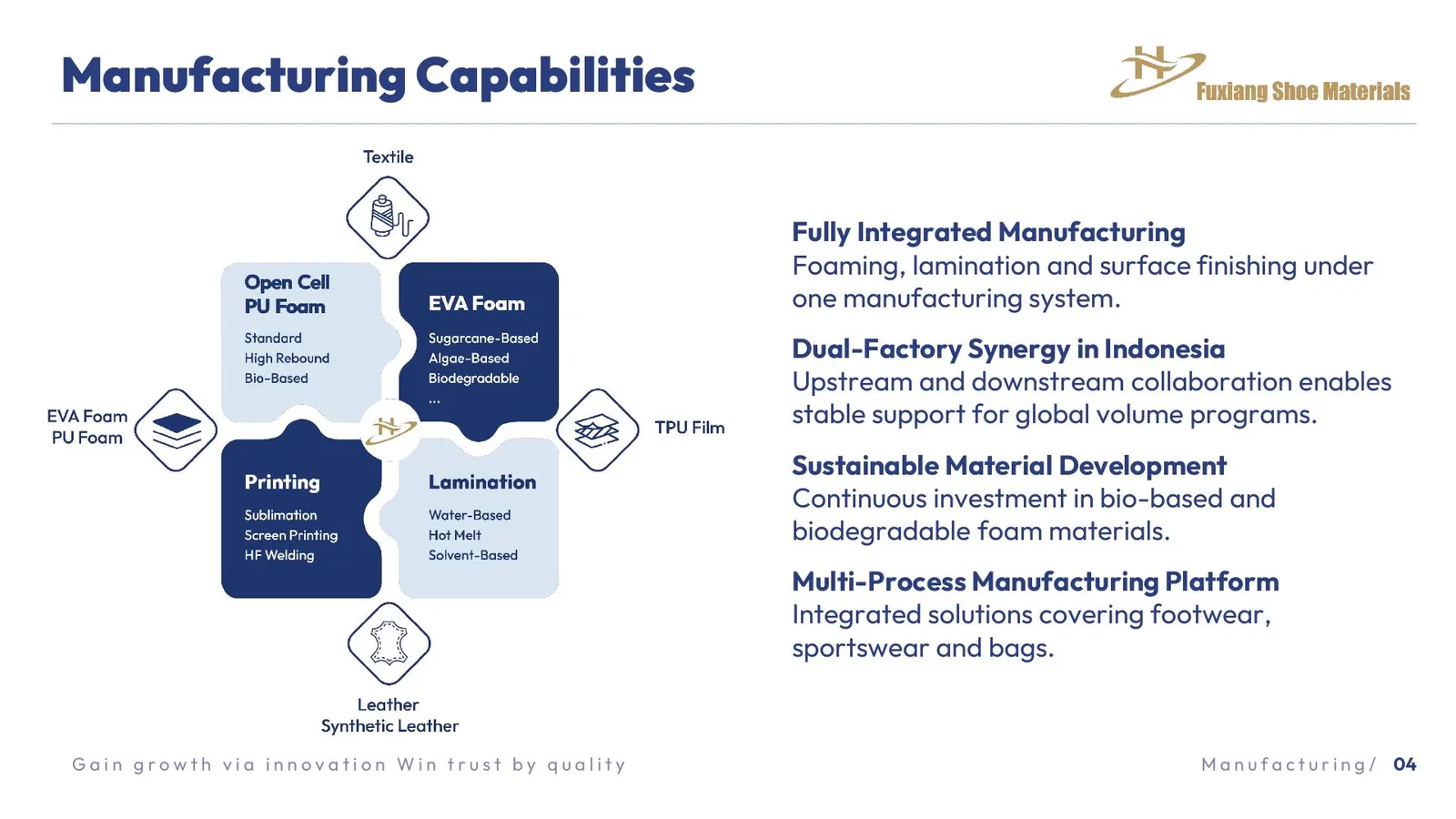
The factory also fits FX Footwear’s role as a component-focused footwear OEM supplier with production coverage across China, Vietnam, and Indonesia. Buyers planning multi-country programs can discuss material availability, tooling location, production timing, and the appropriate manufacturing base through a single group.
EVA and Open-Cell PU Foam
Foam sourcing gets difficult when the material name becomes the whole specification. “EVA” or “PU foam” doesn’t tell a developer enough. The useful questions concern density, hardness, thickness, recovery, water behavior, color, surface finish, and what happens to the material next.
PT Fou Xiang Indonesia’s open-cell PU range is listed at 90–160 kg/m³, and 15–35 Asker C. Width can reach 1.5 meters, and length can reach 2 meters, with thickness and color made to the project. The factory profile also lists standard, high-rebound, and bio-based series. Optional functions include anti-mold, antibacterial, anti-static, conductive, flame-retardant, and odor-control directions, subject to the final formulation and buyer test plan.
The EVA range covers 60–150 kg/m³ and 20–70 Asker C, with sheets and continuous-roll processing available. Listed material directions include high-resilience, high-tensile, rubber-blend, recycled, algae-based, coffee-ground-filled, and selected biodegradable formulations.
Those labels still need qualification. For recycled or bio-based programs, agree on the exact grade, content percentage, traceability route, test target, and approved marketing claim before sampling. GRS applicability depends on the recycled material, recycled-content threshold, certified supply-chain scope, and project documentation.
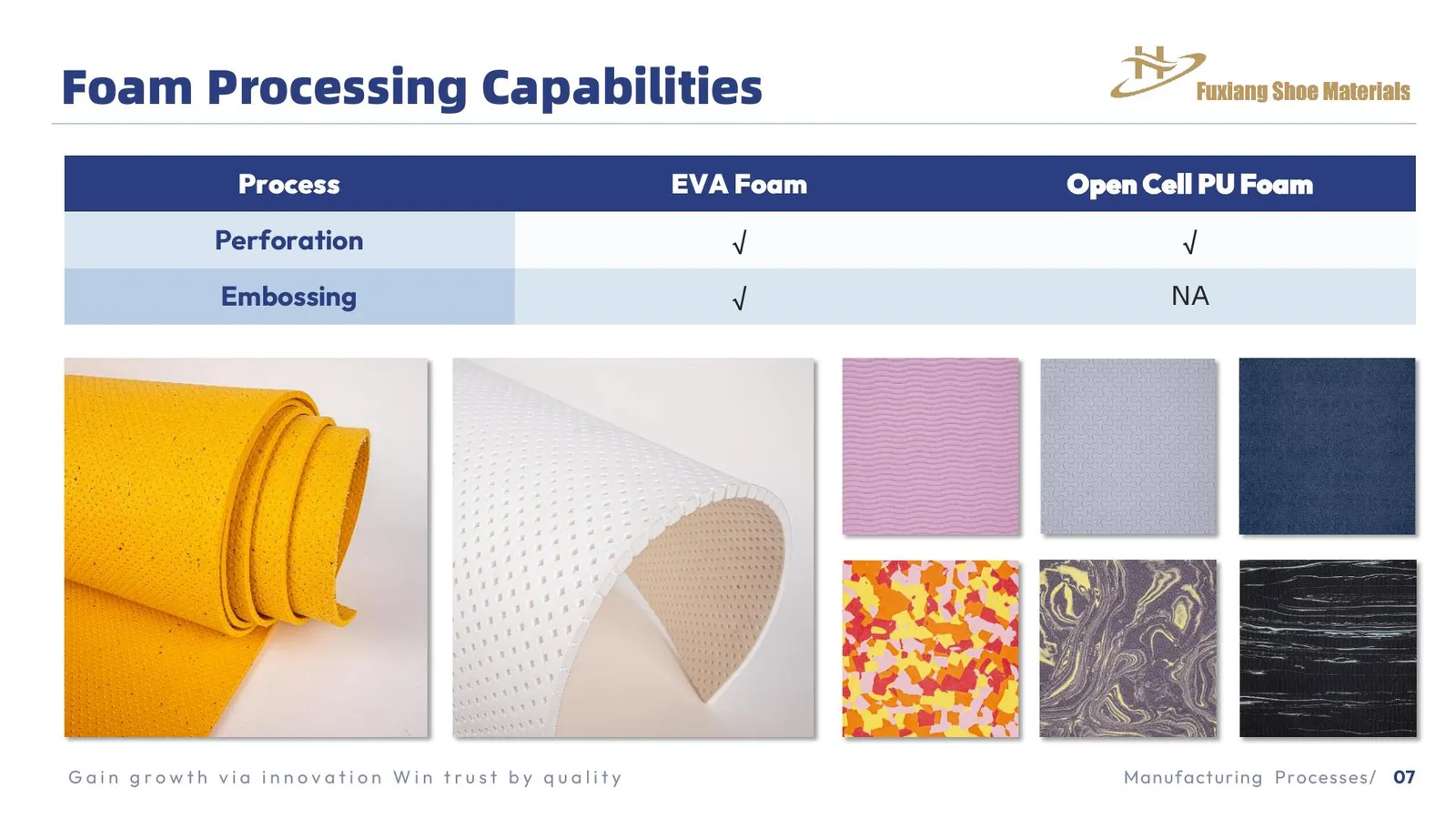
This material range supports insoles, midsoles, and cushioning components, upper padding, bag structures, and sportswear padding. Buyers who need finished insole development can also review FX Footwear’s custom insole services. Perforation is available for EVA and open-cell PU, while embossing is listed for EVA.
Lamination for Foam and Fabric
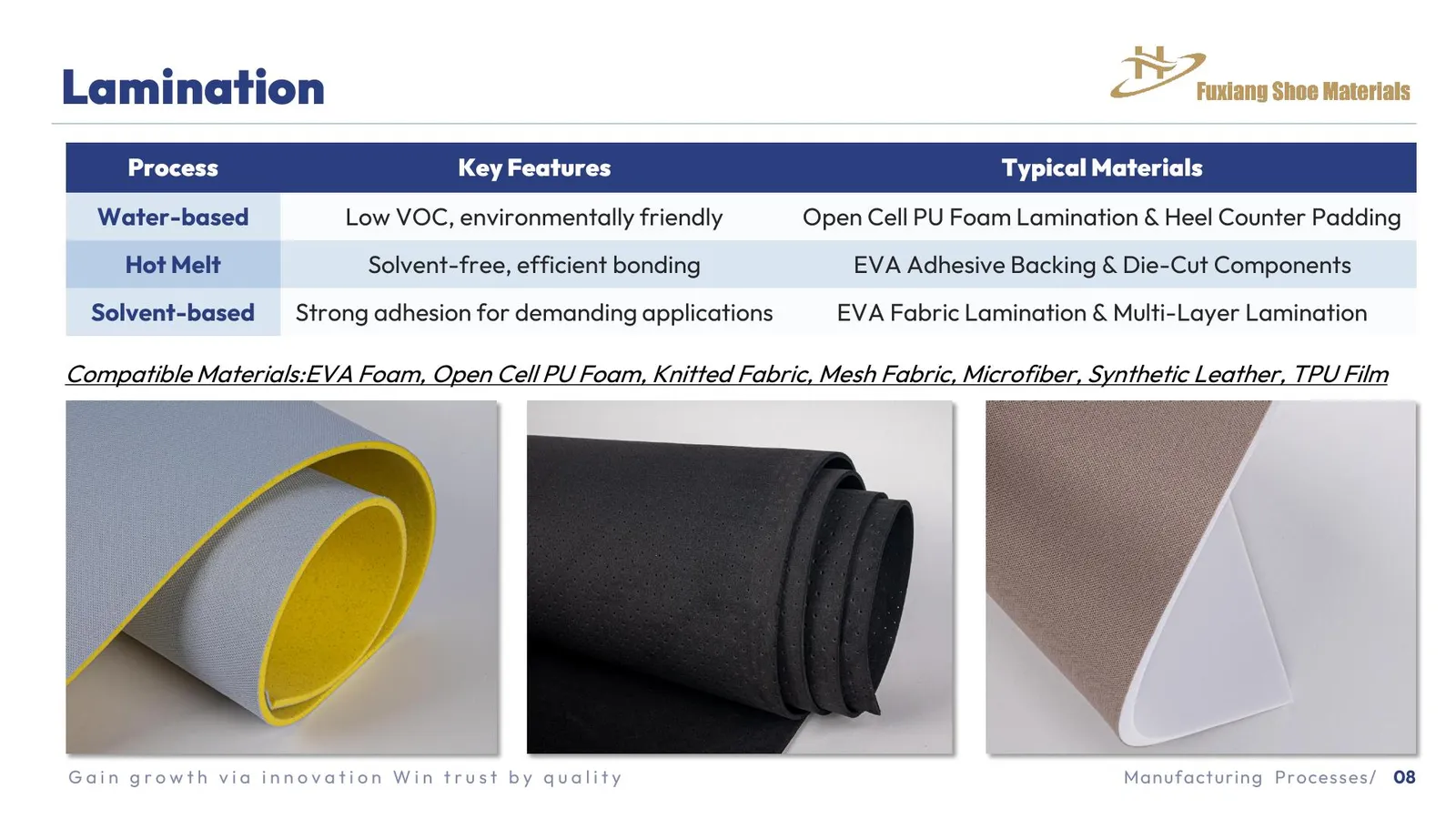
Lamination determines whether a multi-layer component stays clean through cutting, forming, repeated flexing, and wear. PT Fou Xiang Indonesia supports three bonding routes:
- Water-based lamination for lower-VOC constructions such as open-cell PU composites and heel padding.
- Hot-melt lamination for solvent-free bonding, adhesive-backed EVA, and die-cut parts.
- Solvent-based lamination when a demanding construction requires stronger adhesion.
Compatible materials include EVA foam, open-cell PU foam, knitted fabric, mesh, microfiber, synthetic leather, and TPU film. The right route depends on the substrate, hand feel, peel-strength target, heat exposure, and destination-market requirements.
A soft collar package and a structured bag panel may use similar materials, but they shouldn’t automatically use the same adhesive system. Send the full layer stack, not just the foam name.
Printing and High-Frequency Welding
With printing experience dating back to 2016, Fuxiang has developed established capabilities in digital sublimation transfer, screen printing, and high-frequency forming. These processes support footwear, sportswear, bags, and other applications requiring customized graphics, branding, and surface effects.
The factory operates dedicated equipment for each process, including digital sublimation systems, automatic carousel screen-printing lines, automatic registration printers, and high-frequency welding machines. The current production configuration is designed to support both development needs and larger-volume programs.
Digital Sublimation Transfer
Digital sublimation transfer is suited to detailed, full-panel artwork, photo-realistic graphics, gradients, and watercolor-style patterns. The color penetrates a suitable substrate rather than forming a heavy surface layer, helping maintain a lightweight hand feel while allowing fabric pores to remain open.
The process is used for polyester knits, engineered mesh, polyester-laminated foam, polyester-coated PU/EVA, and recycled polyester fabrics, with applications including full-print footwear uppers, bag panels, performance apparel, and polyester insole linings. Color fastness and artwork alignment are evaluated on the approved material construction.
Screen Printing
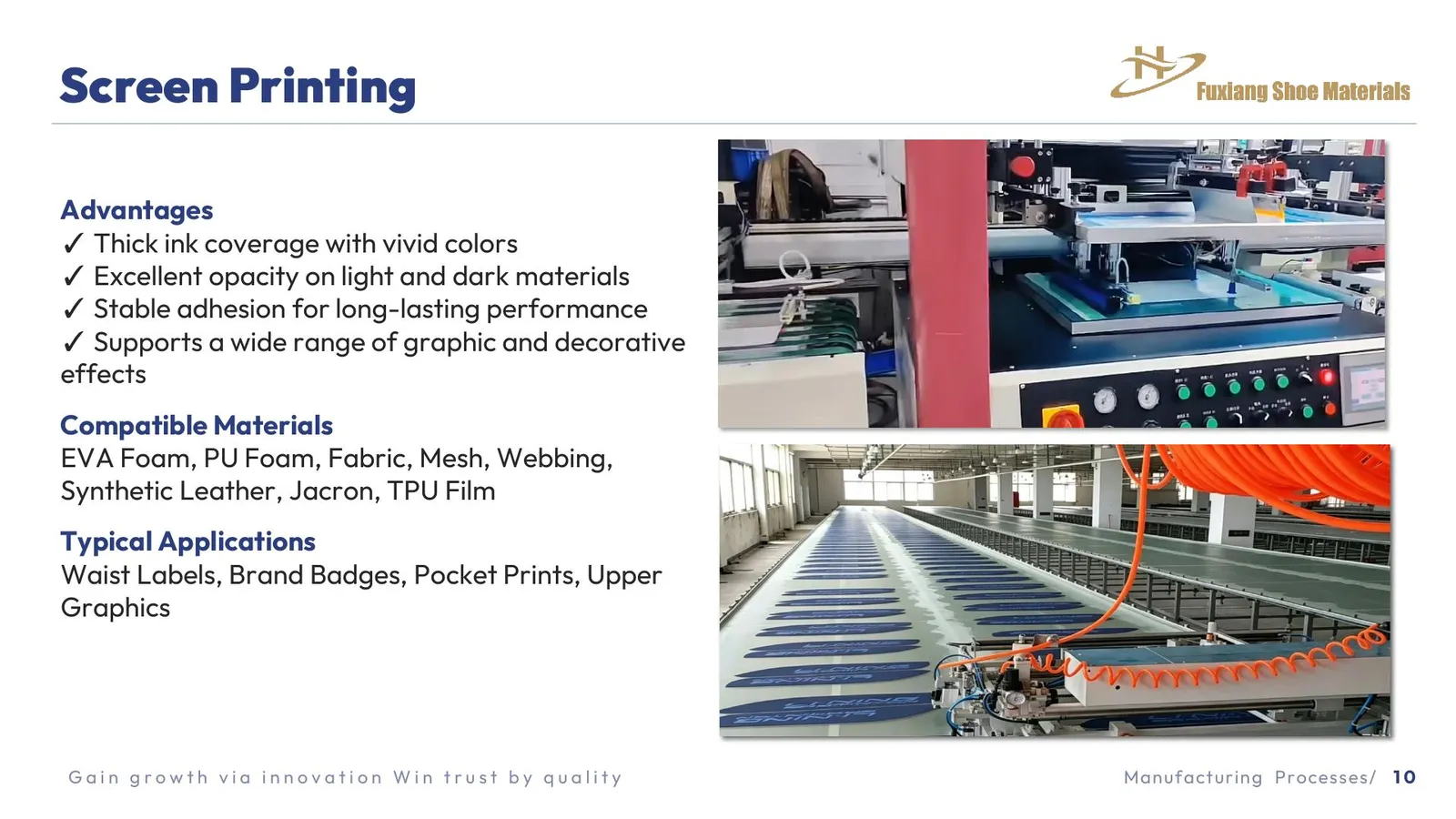
Screen printing provides strong ink coverage, vivid colors, and controlled spot-color application for graphic and branding requirements. With 10 automatic carousel printing lines and 2 automatic registration screen printers, the factory supports both production scale and consistent print positioning.
Available effects include high-density, puff, silicone, reflective, foil, pearlescent, glow-in-the-dark, halftone, crackle, chameleon, and other specialty finishes. These capabilities can be used for logos, badges, upper graphics, labels, and decorative details where controlled color coverage and distinctive surface effects are required.
High-Frequency Welding
High-frequency Welding enables 3D embossing, raised branding, and seamless component forming on compatible heat-weldable materials. Applications include 3D logo badges, sports badges, embossed nameplates, decorative overlays, and other formed components.
Compatible materials include TPU film, EVA foam, fabric, synthetic leather, microfiber, Jacron, and other heat-weldable materials, depending on the material construction. High-frequency forming can also be combined with printing processes to create layered graphic and dimensional effects.
Programs and Technical Review
PT Fou Xiang Indonesia is best suited to programs that combine foam production with one or more downstream processes. Typical constructions include:
- A printed footwear upper with laminated foam backing and a welded TPU detail.
- EVA or PU padding requiring perforation, lamination, and screen-printed branding.
- Sportswear panels combining sublimation, foam padding, and high-frequency badges.
- Bag shoulder straps or back panels using foam, fabric, print, and formed decoration.
A finished insole, footbed, heel counter, or another molded component may be assigned to a different FX Footwear production base. Regional manufacturing is planned around the construction, equipment, material source, tooling location, and schedule; individual factories don’t carry identical process capability.
For a technical review, prepare:
- Product type, end use, annual volume, destination market, and target launch date.
- Material stack, density, hardness, thickness, color, and required functions.
- Drawings, dimensions, artwork, test requirements, and any approved physical sample.
- Required converting processes plus any tooling or packaging constraints.
When you contact PT Fou Xiang Indonesia, this information helps the engineering team identify the production route, tooling needs, sampling checks, and appropriate factory. Initial quotations for standard constructions using existing materials and tooling are generally available within 48 hours; detailed costing follows technical evaluation.
Plan a Two-Factory Visit in Indonesia
PT Xiang Yun Indonesia (Factory 1) and PT Fou Xiang Indonesia (Factory 2) are close to each other, so buyers can include both facilities in the same Indonesia trip. Review the capabilities of PT Xiang Yun Indonesia (Factory 1), then email [wenjun@fuxshoes.com](mailto:wenjun@fuxshoes.com) or [MKT@fuxshoes.com](mailto:MKT@fuxshoes.com). The FX Footwear team will arrange the visit schedule and coordinate with the appropriate factory contacts.
FAQ
What does PT Fou Xiang Indonesia produce?
PT Fou Xiang Indonesia produces EVA and open-cell PU foam and provides lamination, digital sublimation, screen printing, perforation, embossing, and high-frequency welding for footwear, sportswear, and bag components.
Is PT Fou Xiang Indonesia a footwear component manufacturer?
Yes. PT Fou Xiang Indonesia is a B2B manufacturing operation providing EVA and open-cell PU foam, lamination, printing, and high-frequency welding for footwear, sportswear, and bag components.
How do Factory 1 and 2 differ?
PT Xiang Yun Indonesia, Factory 1, focuses on insoles, footbeds, heel counters, and selected molded components. PT Fou Xiang Indonesia, Factory 2, focuses on EVA and open-cell PU foam production plus converting processes.
Can buyers visit both factories?
Yes. The two factories are close to each other, and customers can arrange visits to both during the same Indonesia trip. FX Footwear coordinates the timing and appropriate factory contacts.