
Every year, thousands of workers file injury claims related to foot fatigue, plantar pain, and lower-limb stress — many of which trace back to inadequate insole support inside their work boots. For footwear brands serving construction crews, warehouse teams, and industrial professionals, the insole isn’t an afterthought; it’s a differentiator. Specifying the right custom insoles for work boots can mean the difference between a product that gets reordered and one that collects complaints. Whether you’re a brand manager drafting an OEM brief or a product developer evaluating material options, understanding the five non-negotiable features below will help you build insoles that keep workers comfortable, safe, and loyal to your brand.
Durability Under Extreme Conditions
Work boots face punishment that casual footwear never will. Concrete floors, steel grating, heavy loads, and 10-plus-hour shifts create a compressive environment that can flatten a poorly specified insole within weeks. When brands source custom insoles for work boots, durability should top the brief — because premature insole breakdown leads to warranty claims and lost accounts.
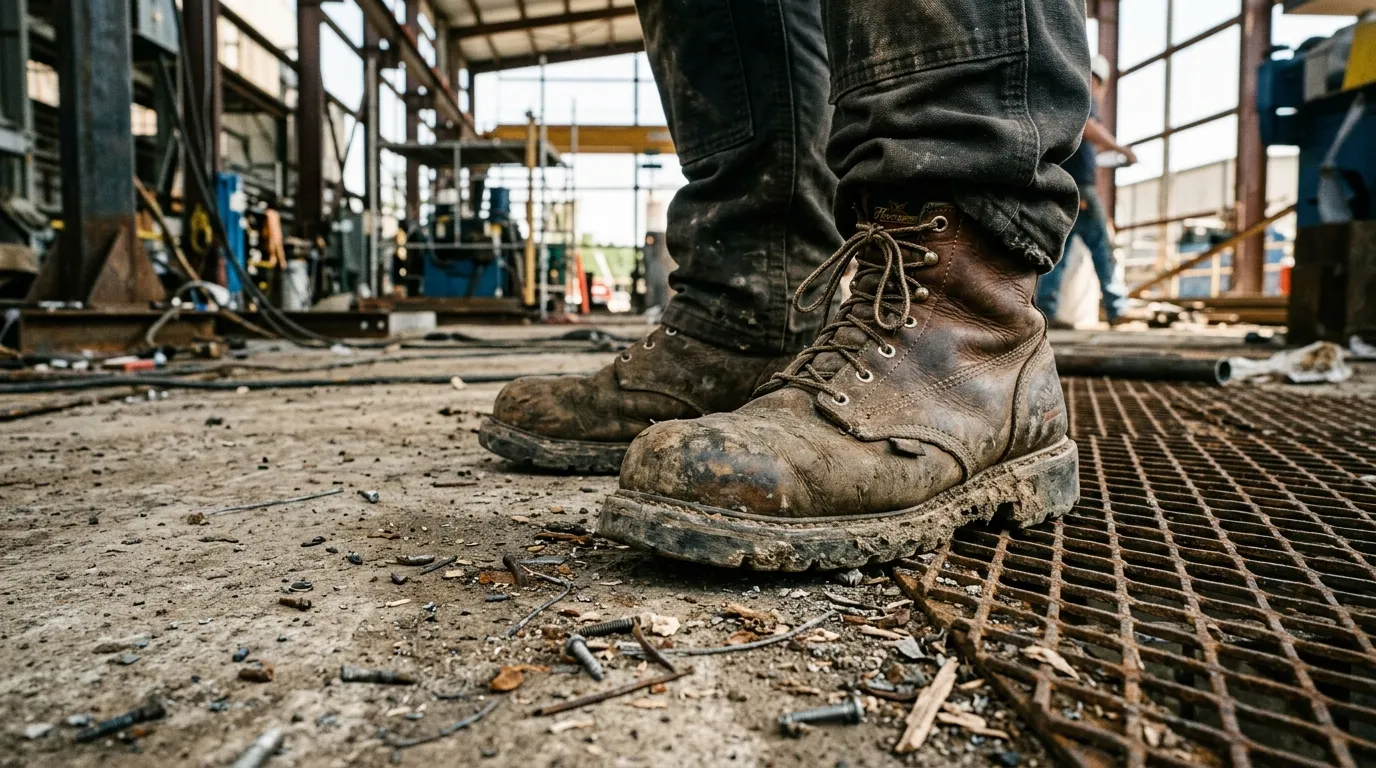
Material selection is the first lever. Closed-cell foams like high-density EVA and polyurethane retain their structure far longer than open-cell alternatives under repetitive loading. Some manufacturers now offer dual-density constructions that pair a resilient base layer with a softer comfort top, extending the functional life of the insole without sacrificing cushioning. If your product line targets heavy-industry end users, specify minimum compression-set values and ask suppliers for accelerated-aging test data so you can validate performance before committing to production runs.
Reinforcement elements also matter. A nylon or TPU stabilizer plate embedded in the midfoot can prevent the insole from deforming under lateral stress, which is common on uneven terrain. Brands that overlook structural reinforcement often find that their insoles “bottom out” long before the boot upper shows wear — an imbalance that frustrates the end user and undermines perceived quality. Work with a custom shoe insole manufacturer that can engineer layered constructions tailored to your target work environment.
Shock Absorption & Energy Return
Standing on hard surfaces generates ground-reaction forces that travel through the heel and forefoot with every step. Over a full shift, the cumulative impact can contribute to joint pain, heel spurs, and plantar fasciitis. Effective shock absorption is therefore a baseline requirement in any custom work-boot insole brief.
The key metric here is energy attenuation — how much impact energy the insole absorbs before it reaches the foot. Traditional EVA provides decent absorption but tends to lose its rebound over time. Newer material technologies have changed the game. For instance, supercritical foam insole technology uses supercritical CO₂ to expand foam cells uniformly, creating a lightweight structure that delivers superior energy return while resisting compression set. This translates to a bouncier, more supportive feel that lasts months longer than conventional foam.
When specifying shock-absorption requirements, consider zoning. A heel strike pad made from a high-rebound material, combined with a slightly firmer arch zone, distributes forces more effectively than a uniform-density insole. Some brands also request metatarsal cushioning zones for workers who spend long periods on ladders or scaffolding, where forefoot pressure spikes. The right material stack, paired with anatomical zoning, transforms a generic insole into one that genuinely reduces fatigue-related injuries on the job.
Anti-Fatigue Technology Explained
Anti-fatigue isn’t just a marketing label — it describes a measurable reduction in the muscular energy workers expend to maintain balance and posture while standing. According to the Occupational Safety and Health Administration (OSHA), prolonged standing contributes to musculoskeletal disorders that cost employers billions annually. For brands, integrating genuine anti-fatigue technology into custom insoles for work boots creates a compelling selling point backed by real biomechanical benefits.
True anti-fatigue insoles work on two fronts: contoured arch support and strategically variable densities. A supportive arch cradle reduces the demand on the plantar fascia and intrinsic foot muscles, while softer zones under the heel and ball of the foot encourage subtle micro-movements that improve blood circulation. This combination fights the “dead legs” sensation that workers describe after hours on concrete.
Many brand teams confuse pure cushioning with anti-fatigue performance. A thick, soft insole might feel plush out of the box, but if it lacks structural support, the foot sinks into it — actually increasing muscular effort. The goal is controlled support: enough give to absorb shock, enough firmness to stabilize the midfoot. Brands targeting premium work-boot segments should request fatigue-index testing during the development phase and compare results across material candidates. This approach is similar to what athletic brands consider when evaluating custom running insoles — the biomechanical principles overlap, even though the use cases differ.
Moisture Management & Odor Control
Work boots are sealed environments. Between thick socks, insulated linings, and safety-toe boxes, airflow is limited — and the foot produces roughly half a pint of sweat daily. Without effective moisture management, that sweat soaks the insole, creating a breeding ground for bacteria and fungi. The result is odor, degradation, and hygiene complaints that reflect poorly on the brand.
Moisture management begins with the insole’s top cover. Breathable textile covers with hydrophobic treatments wick sweat away from the skin surface, allowing it to evaporate rather than pool. Some suppliers offer antimicrobial treatments — silver-ion or activated-carbon infusions — that inhibit bacterial growth and extend the freshness window between washes. For brands selling into the safety segment, it’s worth noting that certain antimicrobial agents must comply with EPA regulations, so verify your supplier’s certifications before specifying a treatment.
The foam substrate also plays a role. Open-cell foams breathe better but sacrifice durability; closed-cell foams trap heat. A smart middle ground is perforated closed-cell foam, which creates airflow channels without compromising structural integrity. Partnering with an EVA insole manufacturer experienced in perforation patterns and cover lamination ensures you get moisture control without sacrificing the durability and support features discussed above. It’s a balancing act, and the material spec sheet needs to address all three layers — base foam, comfort foam, and top cover — as an integrated system.
Safety Compliance & Certifications
Work boots operate in regulated territory. Depending on the market and application, insoles may need to meet standards for puncture resistance, electrical hazard protection, static dissipation, or slip resistance. Brands that fail to specify compliance requirements upfront risk costly redesigns — or worse, liability exposure in the field.
In the United States, the primary standard is ASTM F2413, which covers performance requirements for protective footwear, including impact resistance, compression resistance, and optional ratings for electrical hazard (EH), static dissipative (SD), and puncture resistance (PR). While the standard applies to the complete boot assembly, the insole directly affects several test outcomes. For example, an insole that compresses excessively under load can alter the toe-box clearance, potentially causing a boot to fail impact testing. Similarly, insoles used in EH-rated boots must not introduce conductive pathways.
Brands exporting to the EU should also be aware of EN ISO 20345, which has its own insole-related requirements around energy absorption in the heel region and water penetration resistance. The takeaway for product teams: include target safety certifications in your insole brief from day one, not as an afterthought after tooling is finalized. A qualified OEM insole manufacturer will have in-house or third-party testing capabilities to validate compliance at the prototype stage, saving you time and money in the long run.
Beyond hard certifications, consider soft compliance factors like chemical safety. REACH restrictions in Europe and California’s Proposition 65 apply to adhesives, dyes, and foam-blowing agents used in insole production. Make sure your supplier provides full material-disclosure documentation and can demonstrate compliance with the chemical standards relevant to your distribution markets.
Specifying Your Insole Brief
Knowing the five features is one thing; translating them into a supplier brief that yields the right product is another. A well-structured insole specification should include target user profile (weight range, shift duration, work surface type), required safety certifications, material preferences and exclusions, durability benchmarks (cycles-to-failure or compression-set limits), and desired comfort features such as arch-support height and cushioning zones.
Don’t underestimate the value of prototyping. Requesting two or three material variations at the sample stage allows you to field-test options with real workers before committing to mass production. Wear-trial feedback on comfort, moisture, and perceived fatigue reduction provides data that lab testing alone cannot replicate. Brands that invest in this step consistently launch stronger products and avoid post-launch corrections.
Communication cadence matters as well. Establish clear milestone check-ins with your insole supplier — from initial concept review through first-article approval — so that the durability, shock absorption, anti-fatigue, moisture management, and safety compliance specs you defined in the brief are verified at every stage. The more specific and measurable your requirements, the closer the final product will match your intent.
FAQ
How long do custom work-boot insoles last?
With proper material specification, high-quality custom insoles for work boots typically last 6 to 12 months of daily use before requiring replacement, depending on user weight and work surface hardness.
What foam is best for work-boot insoles?
Dual-density constructions combining high-density EVA or PU bases with softer comfort layers offer the best balance of durability, shock absorption, and cushioning for demanding work environments.
Do insoles affect safety-boot certifications?
Yes — insoles can influence ASTM F2413 test outcomes related to impact clearance, electrical hazard ratings, and energy absorption, so compliance must be factored into the insole design from the start.
Can insoles reduce workplace fatigue claims?
Properly engineered anti-fatigue insoles with contoured arch support and zoned cushioning have been shown to reduce lower-limb muscular effort, which can help decrease fatigue-related discomfort and associated claims.
What should brands include in an insole brief?
A complete brief should cover target user profile, safety certifications, material preferences, durability benchmarks, moisture-management requirements, and comfort-zone specifications including arch height and cushioning density.
Ready to develop custom insoles for work boots that meet every performance and safety benchmark your brand demands? FX Footwear (Fuxiang Group) partners with footwear brands worldwide to engineer, prototype, and manufacture insoles built for the toughest work environments. From material selection and anti-fatigue zoning to full safety-compliance testing, our team supports you at every stage. Reach out today to start your next insole project with a manufacturer that understands what it takes to keep workers on their feet — comfortably and safely.