
If you spend eight or more hours a day on your feet, finding the best boot insoles for work isn’t a luxury — it’s a practical necessity. The right insole can mean the difference between walking off a shift feeling functional and limping to your car in genuine pain. This guide breaks down exactly what to look for, which insole types perform best under real working conditions, and how to match your choice to your job demands. Whether you’re sourcing for yourself or evaluating options as a footwear buyer, this buying guide covers everything you need to make a confident decision.
Why Work Boot Insoles Matter
Most work boots ship with stock footbeds that are little more than thin foam layers — functional enough for light use but inadequate for sustained physical labor. Over a full shift, your feet absorb enormous cumulative impact. Construction workers, warehouse staff, and industrial laborers are particularly at risk for plantar fasciitis, arch strain, and general foot fatigue when that support is missing.
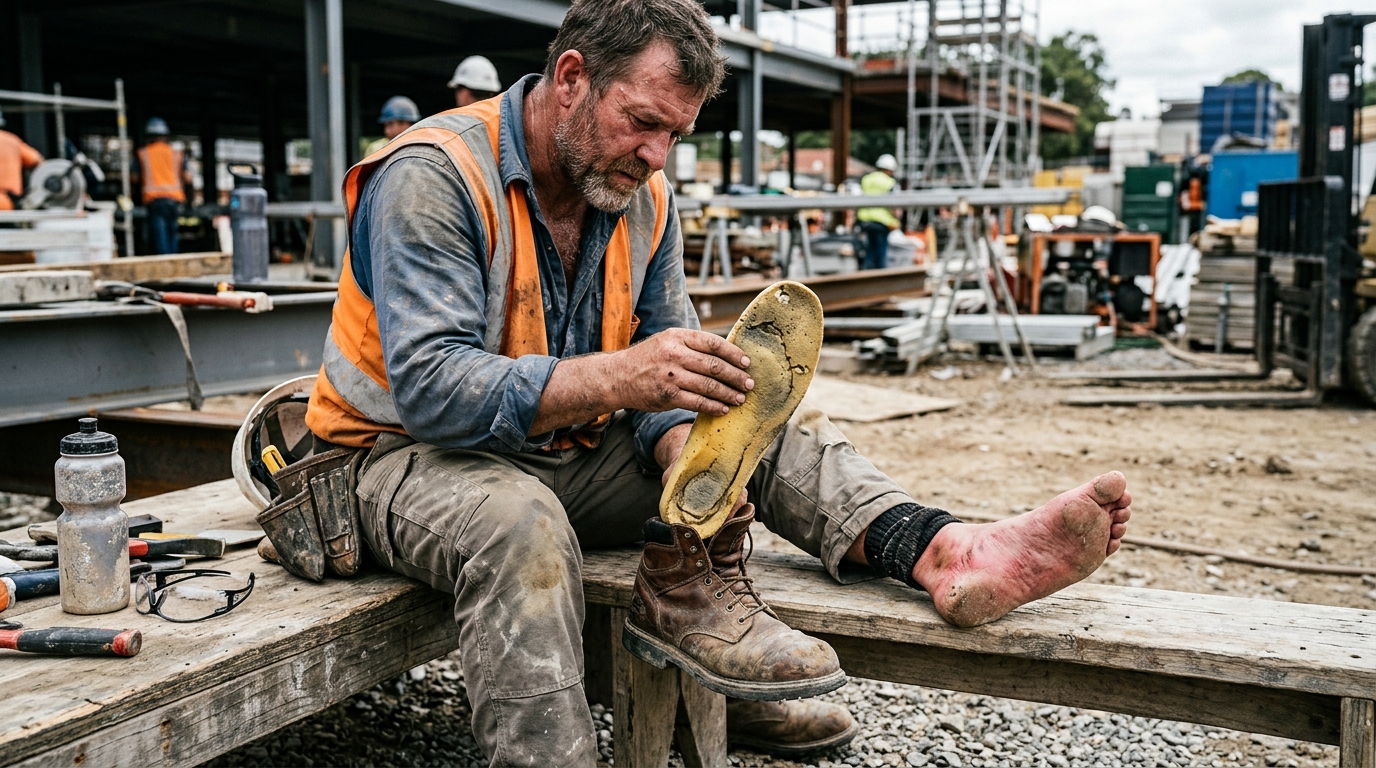
Upgrading to a purpose-built insole addresses multiple problems simultaneously. A well-designed insole redistributes pressure across the entire foot, reduces direct impact on the heel and metatarsal bones, and keeps the foot positioned correctly inside the boot — which in turn reduces knee, hip, and lower back strain. These aren’t minor perks; over a working career, proper foot support has measurable effects on musculoskeletal health.
It’s worth noting that not all aftermarket insoles are created equal. Some are marketed broadly without being engineered for the specific demands of work environments — heavy loads, uneven terrain, temperature extremes, and prolonged standing. The sections below focus only on insoles that hold up under those real conditions, not just lab benchmarks.
Key Features to Prioritize
Before comparing specific insole types, it helps to understand the features that actually matter in a work context. Cushioning material is the most obvious variable, but it’s far from the only one. Arch support geometry, heel cup depth, top cover durability, and moisture management all play significant roles in long-term comfort and performance.
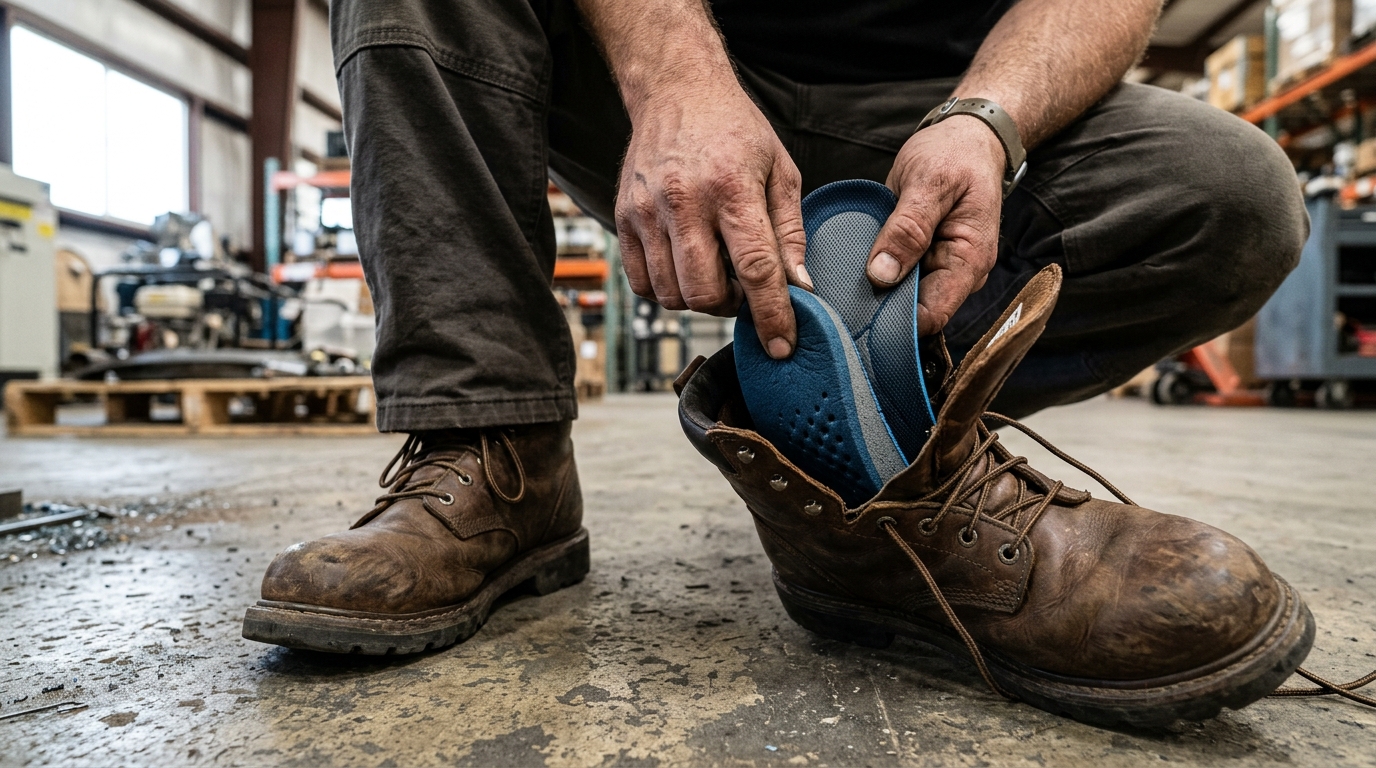
Cushioning material is where you’ll see the biggest performance differences. Polyurethane (PU) offers durability and firm support, making it popular in heavy-duty industrial insoles. EVA foam is lighter and absorbs shock well but compresses over time. Gel inserts provide localized cushioning — particularly useful under the heel or metatarsal area — but add weight. Newer materials like supercritical CO₂ foam offer an impressive balance of rebound, weight savings, and durability, and they’re increasingly appearing in premium work-focused insoles.
Arch support profile should match your foot type. Flat arches need more aggressive medial support, while high arches require cushioned, flexible structures that don’t create pressure points. Most work insoles fall into low, medium, or high arch profiles — and choosing the wrong one will create new problems rather than solving existing ones. If you’re still working out what features suit you best, reviewing a comprehensive insole buying guide is a smart first step before committing to a product.
Top Work Boot Insole Types
With the core features established, it’s practical to look at the main insole categories that consistently perform well in demanding work environments. Each category suits a different combination of job type, foot shape, and comfort priority.
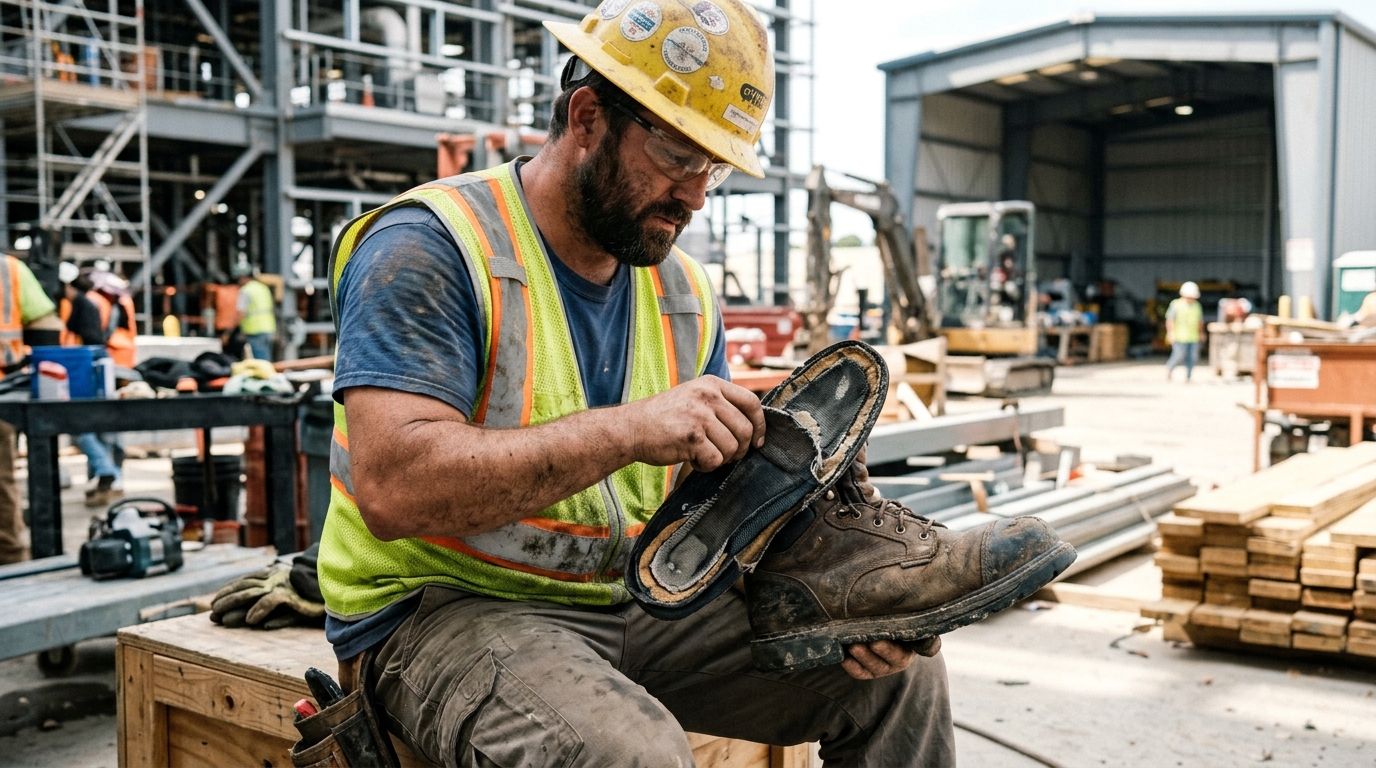
Full-length cushioned insoles are the most versatile option and the best starting point for most workers. They replace the stock footbed entirely, covering the full foot from heel to toe. Look for a dual-density construction — a firmer base layer for support and a softer top layer for comfort — along with a deep heel cup that stabilizes the foot during movement. These insoles work well in most standard work boot designs.
Orthotic-style insoles are the right choice for workers who are on their feet continuously, particularly those with known foot conditions like plantar fasciitis or flat feet. These feature semi-rigid or rigid arch supports and are often designed with biomechanical precision. For roles involving safety footwear — steel toe, composite toe, or metatarsal guard boots — it’s important to check that any insole fits correctly without compromising the protective features of the boot. Purpose-built insoles for safety shoes are engineered specifically to work within these constraints.
Anti-fatigue insoles target workers who stand on hard surfaces — concrete floors, warehouse slabs, factory environments — for extended periods. They prioritize energy return over raw cushioning, using materials designed to provide higher resilience and energy return, helping reduce perceived fatigue during prolonged standing. This active rebound effect reduces the muscular effort required to stay stable, which translates to noticeably less leg fatigue by end of shift.
Insole Materials Compared
Material choice has a direct impact on insole performance, lifespan, and cost. Understanding the trade-offs helps you make a smarter purchase — especially when buying at scale for a workforce.
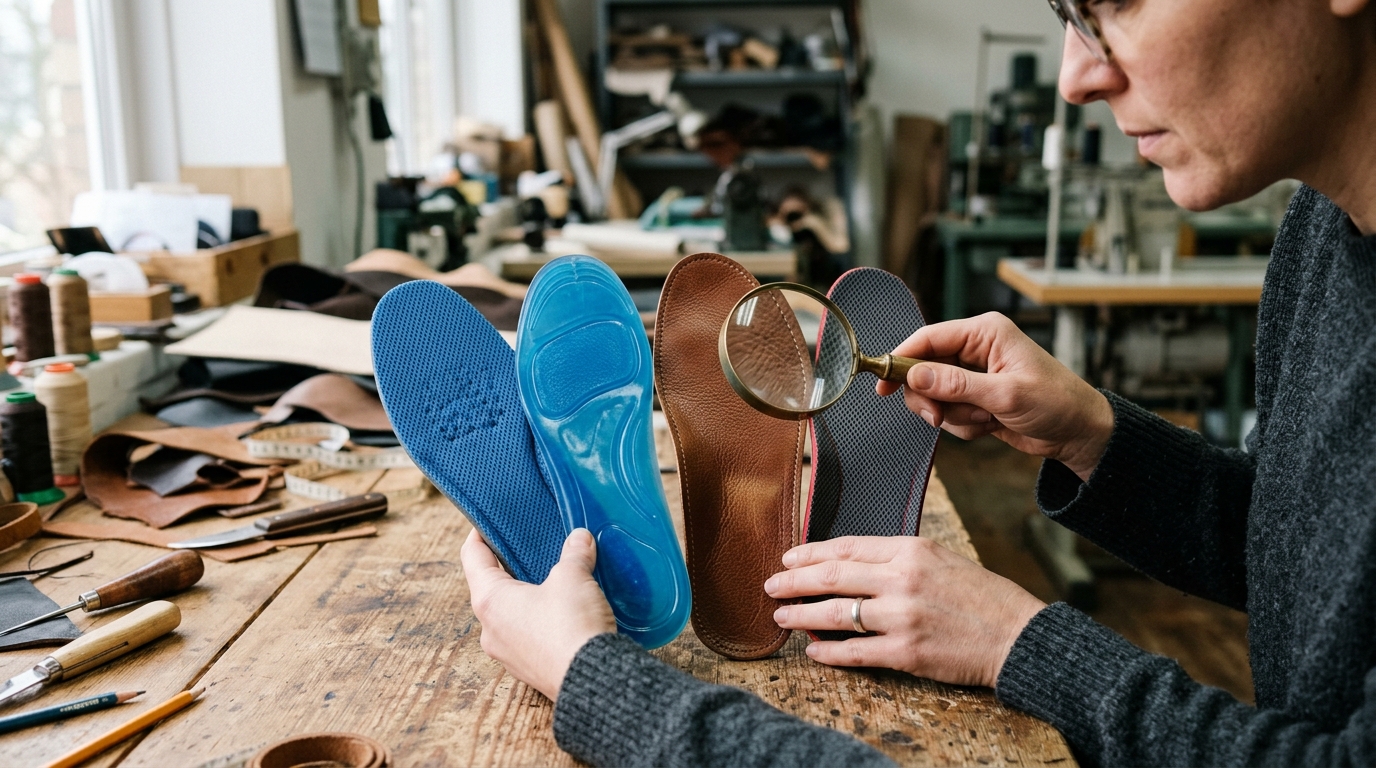
EVA (ethylene-vinyl acetate) remains the most widely used foam in budget to mid-range insoles. It’s lightweight, easy to produce in various densities, and absorbs shock reasonably well. The downside is compression fatigue: EVA loses its cushioning properties faster than other materials, particularly in high-wear zones like the heel. Depending on usage intensity, EVA insoles may require replacement within several months in high-wear environments. Working with a reliable EVA insole manufacturer ensures consistent foam density and durability across production runs — something that matters significantly when sourcing for large teams.
Polyurethane (PU) is denser and more durable than EVA, making it a strong choice for heavy-duty applications. PU insoles maintain their shape and support characteristics longer, which makes the higher upfront cost more justifiable over time. They’re also naturally more resistant to moisture absorption — a practical advantage in sweaty work environments.
Gel inserts and hybrid constructions combine materials to target specific pain points. A gel heel pad paired with an EVA or PU base is common in anti-fatigue designs. These work well but tend to add weight and can shift over time if the adhesive or pocket design isn’t well-executed.
Supercritical CO₂ foam represents the current premium tier. This manufacturing process creates an exceptionally uniform, lightweight foam cell structure with outstanding energy return. It outperforms standard EVA in both cushioning longevity and responsiveness — and is increasingly available from specialized insole suppliers as the technology scales, though availability and cost still vary depending on supplier capability and scale. When evaluating the best boot insoles for work at a sourcing level, this material tier is worth serious consideration for high-demand roles.
Fitting & Replacing Work Insoles
Even the best insole performs poorly if it’s not fitted correctly or replaced on schedule. Getting the fit right takes only a few minutes but makes a significant difference in both comfort and the insole’s effective lifespan.
Trimming to fit is standard for most aftermarket insoles. Most brands include size lines on the insole for trimming with scissors. The key is to fit the insole to the boot, not to your foot size — trim conservatively, test-fit inside the boot, and trim further as needed. The insole should lie flat with no bunching at the toe and should not shift when you walk. In steel-toe boots, pay particular attention to the toe box; some insoles are too thick to sit properly once the protective cap is in place.
Replacement frequency depends heavily on usage intensity and material quality. As a general guideline, workers on hard surfaces should plan to replace insoles every three to six months. Signs that replacement is overdue include visible compression in the heel, loss of arch firmness, or odor that doesn’t respond to airing out. Some workers find it helpful to rotate between two pairs, which extends the life of both.
Sizing and layering deserve attention when transitioning from stock footbeds. Stacking a thick aftermarket insole on top of the original factory insert creates a fit that’s too tight — always remove the stock insole before installing a replacement. If the boot still feels loose, a volume-adjusting insole (thicker construction) may be the right solution rather than layering.
For footwear brands and manufacturers building insole specifications into product lines, sourcing from an experienced shoe insole manufacturer ensures that fit tolerances, material specifications, and durability standards are engineered into the product from the start — rather than left to the aftermarket.
FAQ
FAQ: How often to replace work insoles?
For workers on hard surfaces or in high-activity roles, every three to six months is a practical replacement schedule. Light-duty use may extend that to nine or twelve months. The most reliable indicator isn’t time but wear: if you can see compression grooves under the heel or feel the arch support has softened noticeably, it’s time to replace. Don’t wait for pain to signal the need — by that point, the insole has already been underperforming for weeks.
FAQ: Can insoles work in different boots?
Yes, as long as the insoles are trimmed correctly to fit each boot’s interior dimensions. Keep in mind that boot volumes differ — a narrow logger boot and a wide-toe safety boot may need different fits even in the same shoe size. If you rotate between two pairs of boots, consider purchasing dedicated insoles for each pair rather than transferring the same insoles back and forth, which accelerates wear and compromises hygiene.
FAQ: Are thick insoles better for heavy-duty work?
Not necessarily. Thickness contributes to cushioning but can reduce stability if it raises the foot too high in the boot, creating ankle instability on uneven terrain. For heavy-duty applications, a medium-thickness insole with a firm, supportive base layer often outperforms a maximally cushioned option. Construction and material quality matter more than raw thickness. Look for deep heel cups, a defined arch profile, and durable top covers over sheer volume of foam.
FAQ: Do insoles help with back pain?
They can, yes — particularly when the pain originates from poor foot mechanics. Flat feet or collapsed arches that go unsupported cause a chain reaction of misalignment up through the knees, hips, and lumbar spine. A properly fitted orthotic or semi-rigid arch support insole can correct that alignment and meaningfully reduce lower back discomfort. That said, if back pain is significant or persistent, a podiatrist or physiotherapist assessment is advisable to rule out structural causes that insoles alone can’t address.
FAQ: What’s the difference between insoles and orthotics?
The terms are often used interchangeably but they’re not identical. “Insoles” is a broad category covering everything from basic cushioning footbeds to advanced biomechanical supports. “Orthotics” technically refers to devices designed to correct or accommodate specific foot mechanics — either custom-fabricated by a clinician or over-the-counter products with orthotic-style features (arch support, heel cups, metatarsal pads). For most work environments, a quality over-the-counter orthotic-style insole provides sufficient support. Custom orthotics are typically reserved for workers with diagnosed conditions or complex foot anatomy.
Finding the best boot insoles for work is ultimately about matching the right engineering to your specific job demands — and that starts with understanding materials, fit, and how insoles integrate with the footwear itself. FX Footwear (Fuxiang Group) works with footwear brands and sourcing teams to develop high-performance insole solutions built for real working conditions, from EVA and PU constructions to advanced foam technologies. If you’re evaluating insole options at a product or supply chain level, our team is equipped to help you find the right specification for your application. Explore our full range of work-optimized solutions at FX Footwear.