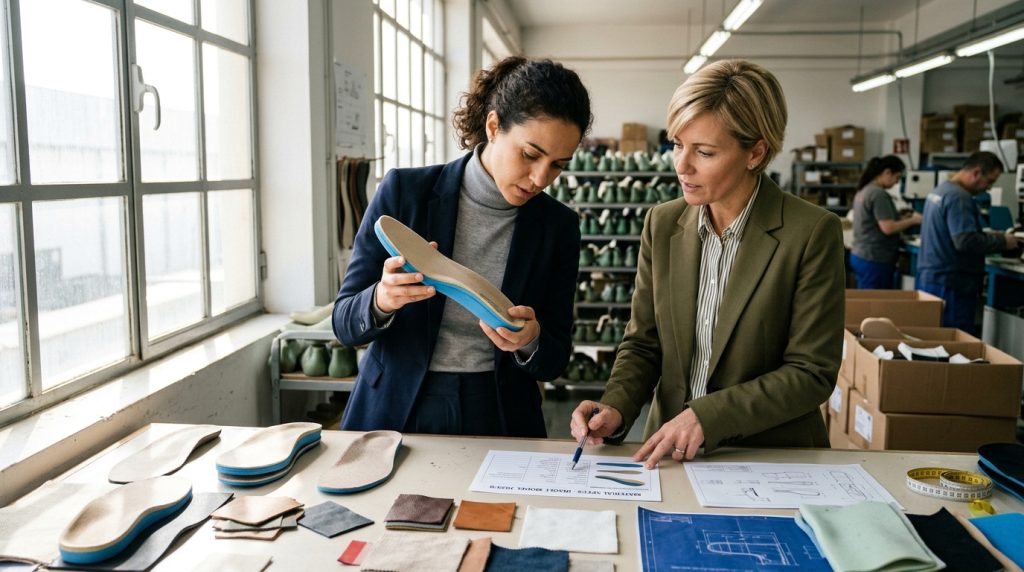
Finding the right OEM insole manufacturer can make or break your footwear line. Whether you’re launching a new athletic brand, scaling a private-label collection, or sourcing components for an established shoe range, the supplier you choose directly affects product quality, lead times, and your bottom line. With global supply chains still evolving and buyer expectations rising, the 2026 landscape demands a smarter, more systematic approach to vendor selection. This guide walks you through every critical factor—from evaluating manufacturing capabilities to negotiating MOQs—so you can partner with confidence and bring better products to market faster.
OEM vs. ODM: Key Differences
Before you start requesting quotes, it’s worth clarifying what you’re actually buying. OEM (Original Equipment Manufacturer) means the factory produces insoles to your specifications—your materials, your design, your branding. ODM (Original Design Manufacturer) means you’re licensing or adapting a design the factory already owns. For brands that want full control over cushioning profiles, arch geometry, and material layering, OEM is the right model.
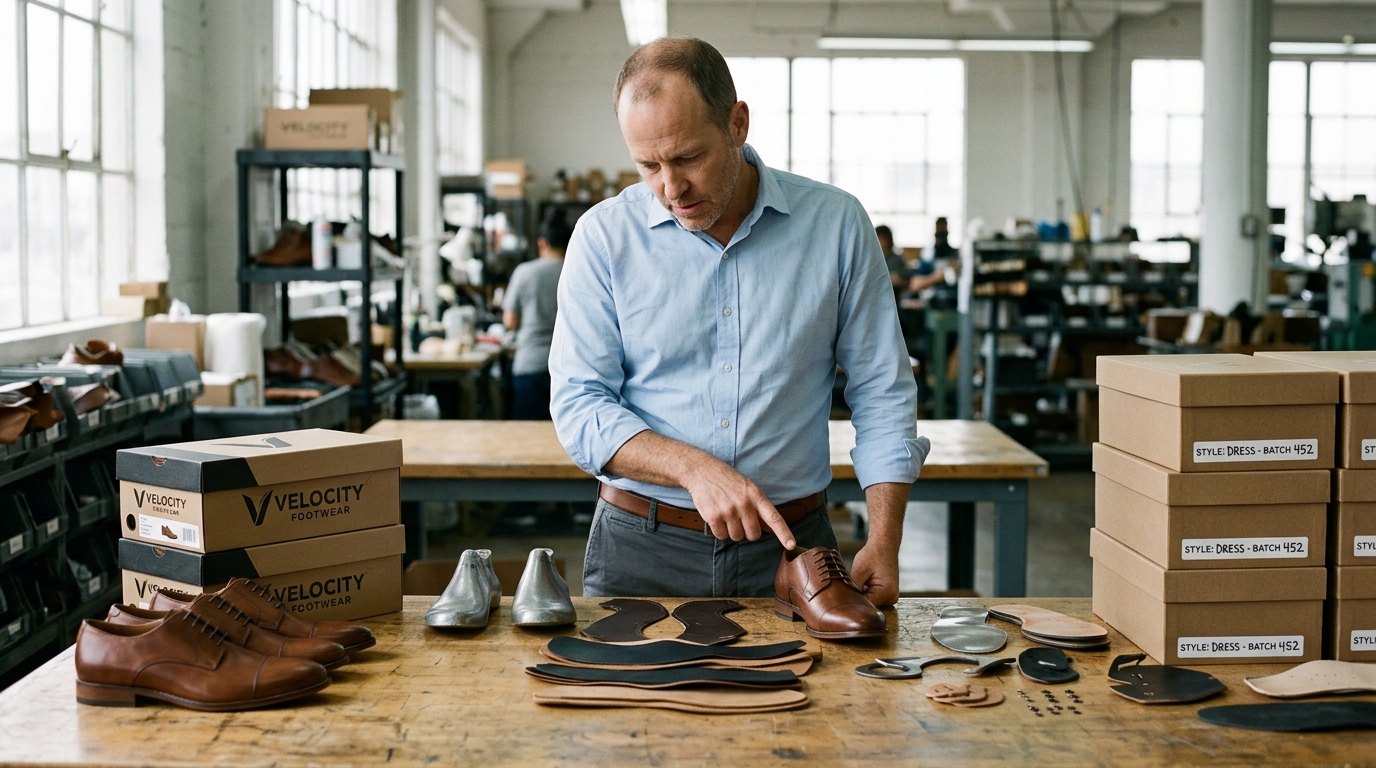
The distinction matters because it shapes every conversation you’ll have with a supplier. An OEM relationship requires the manufacturer to have robust engineering support, tooling capabilities, and a willingness to iterate on prototypes. Not every factory that calls itself an OEM partner actually has the in-house capacity to deliver that level of collaboration. Ask upfront whether the factory owns its molds, operates its own foam-cutting lines, and employs dedicated product development staff.
Understanding this difference also protects your IP. In a true OEM arrangement, your formulations, tooling, and branding assets should remain your property. Confirm this in writing before sharing any technical drawings. A supplier that resists clear IP clauses is a red flag—regardless of how competitive their pricing looks on paper.
Manufacturing Capabilities to Evaluate
Not all insole factories are built the same. A credible OEM insole manufacturer should be able to demonstrate mastery across multiple production technologies: die-cut EVA, injection-molded TPU, heat-molded memory foam, and increasingly, advanced foam processes like supercritical CO₂ expansion. Each technology has different tooling requirements, cycle times, and performance outcomes, so the broader a factory’s capability set, the more flexibility you have as your product line evolves.
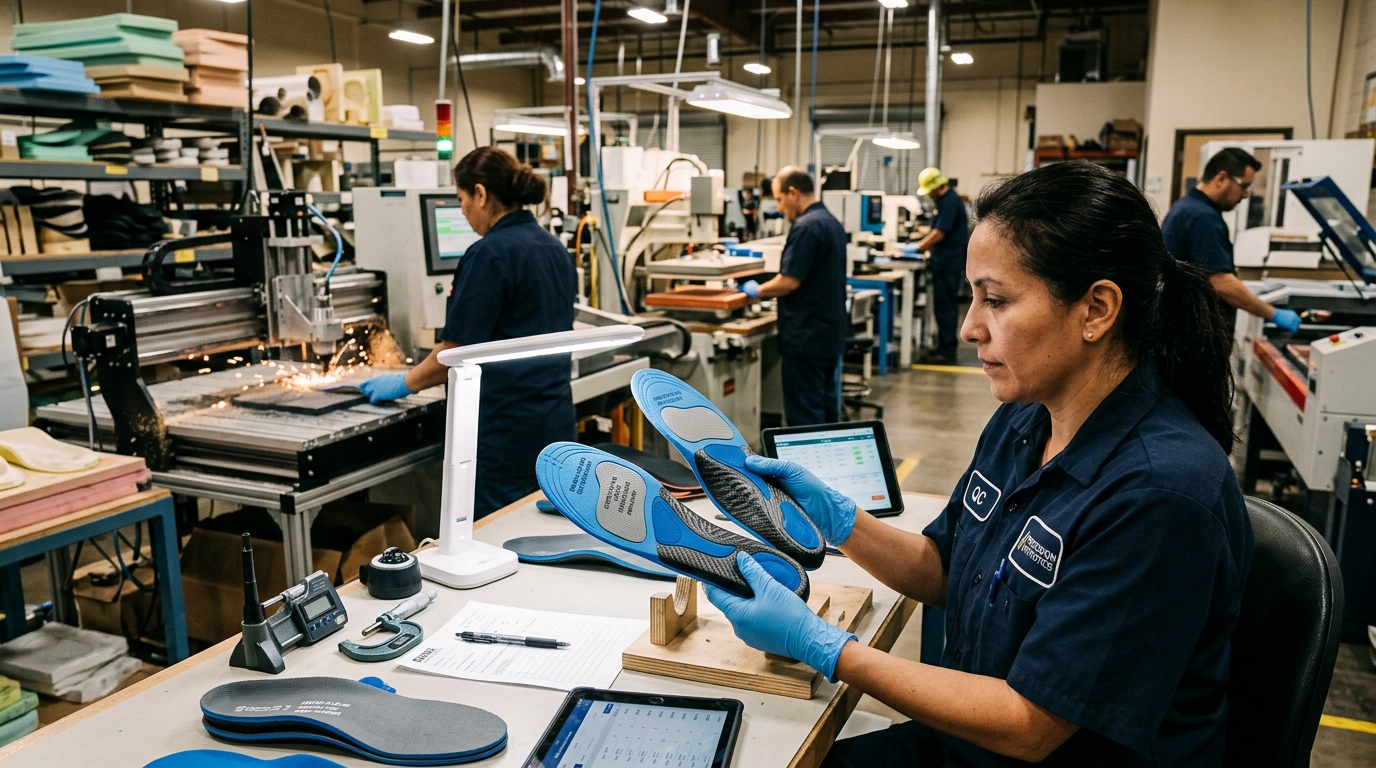
Ask for a factory tour—virtual or in person—and pay close attention to quality control stations on the production floor. Are there durometer testers for measuring foam hardness? Compression fatigue testing rigs? Moisture-wicking and abrasion-resistance test equipment? Factories that invest in in-house QC infrastructure are far more likely to catch defects before they ship, saving you costly returns and brand damage downstream. Look for clear evidence of structured quality control processes, and ask whether the factory can provide material compliance documentation or support third-party testing (such as REACH) based on your project requirements.
Capacity planning is equally important. A factory that can produce 50,000 pairs per month may not be the right fit if your initial order is 5,000—and vice versa. Get a clear picture of current utilization rates and lead times at your expected volume. A manufacturer running at 95% capacity has little buffer for rush orders or design revisions, which can stall your launch timeline at the worst possible moment.
Materials, Customization & Innovation
The insole market in 2026 is far more material-diverse than it was five years ago. Beyond standard EVA and polyurethane foam, what matters most is whether your OEM partner has the capability to work across different material systems and adapt to evolving product requirements. This includes sourcing suitable materials, adjusting performance characteristics such as density and resilience, and collaborating with upstream suppliers when needed. A capable manufacturer should not be limited to a fixed material offering, but able to support product development as design and performance expectations evolve.
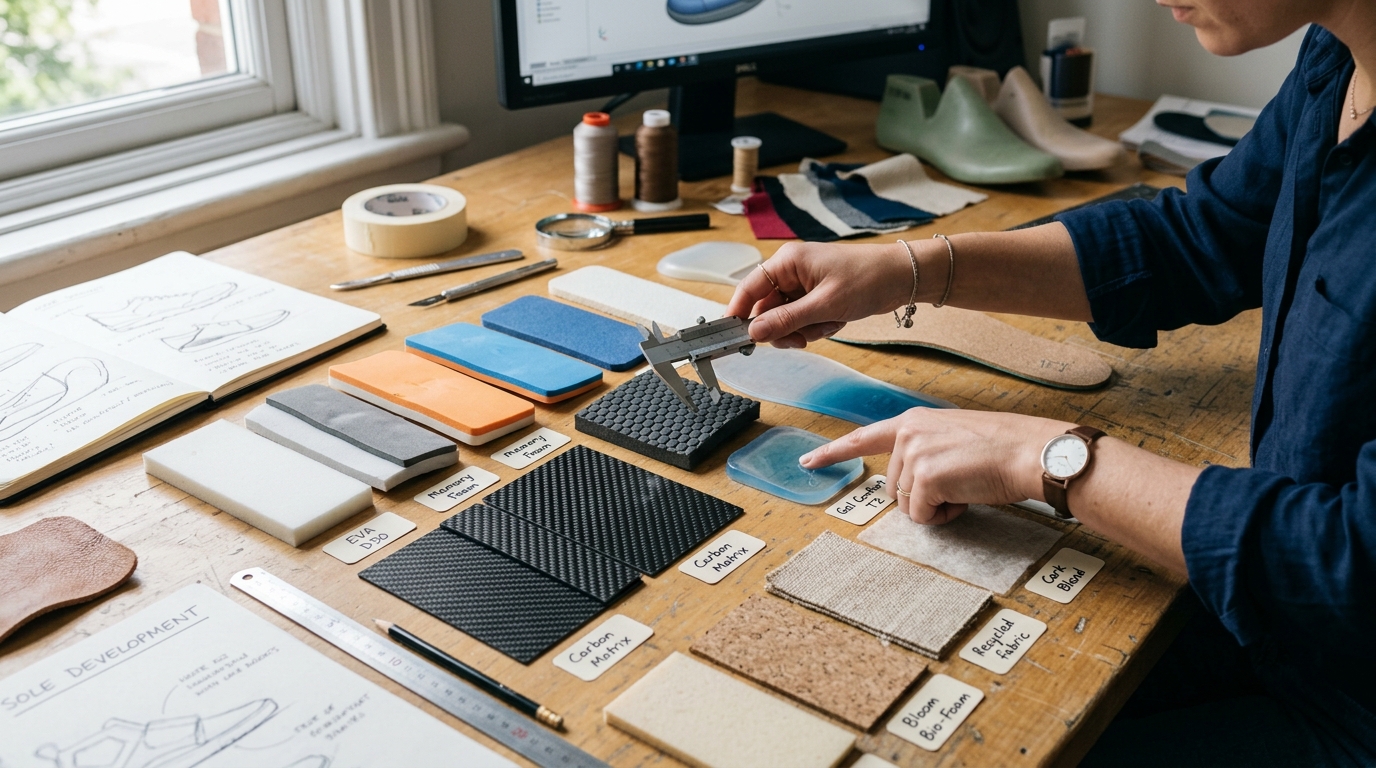
Customization depth is a key differentiator. Can the factory tune density zones across the heel, arch, and forefoot independently? Can they co-mold different materials in a single pressing cycle? For brands targeting performance athletics, a manufacturer offering advanced options—such as a supercritical CO2 foam insole process—delivers a meaningful product advantage that generic foam simply can’t match. Lightweight, resilient, and energy-returning, these next-generation foams are increasingly what performance-focused retail buyers are looking for.
Branding and finishing options also play an important role in perceived product value. Common approaches include heat-transfer or screen-printed top cloth graphics, debossed or embossed logos on structural components, and customized bottom sheets with color matching. For certain materials such as TPU or rubber, more advanced detailing—such as laser-etched logos—may also be applied.
Additional options like custom packaging, labeling, and retail presentation elements can further enhance brand differentiation. As with most customization features, feasibility and cost efficiency will depend on order volume and production setup.
Vetting Quality, Certifications & Ethics
Quality assurance in insole manufacturing involves more than passing a visual inspection. A reliable OEM partner will maintain documented testing protocols aligned with recognized footwear standards such as SATRA, ASTM, or EN ISO 20347. Request recent third-party test reports—ideally within the last 12 months—for products similar to your target design, and verify that testing is conducted by accredited laboratories.
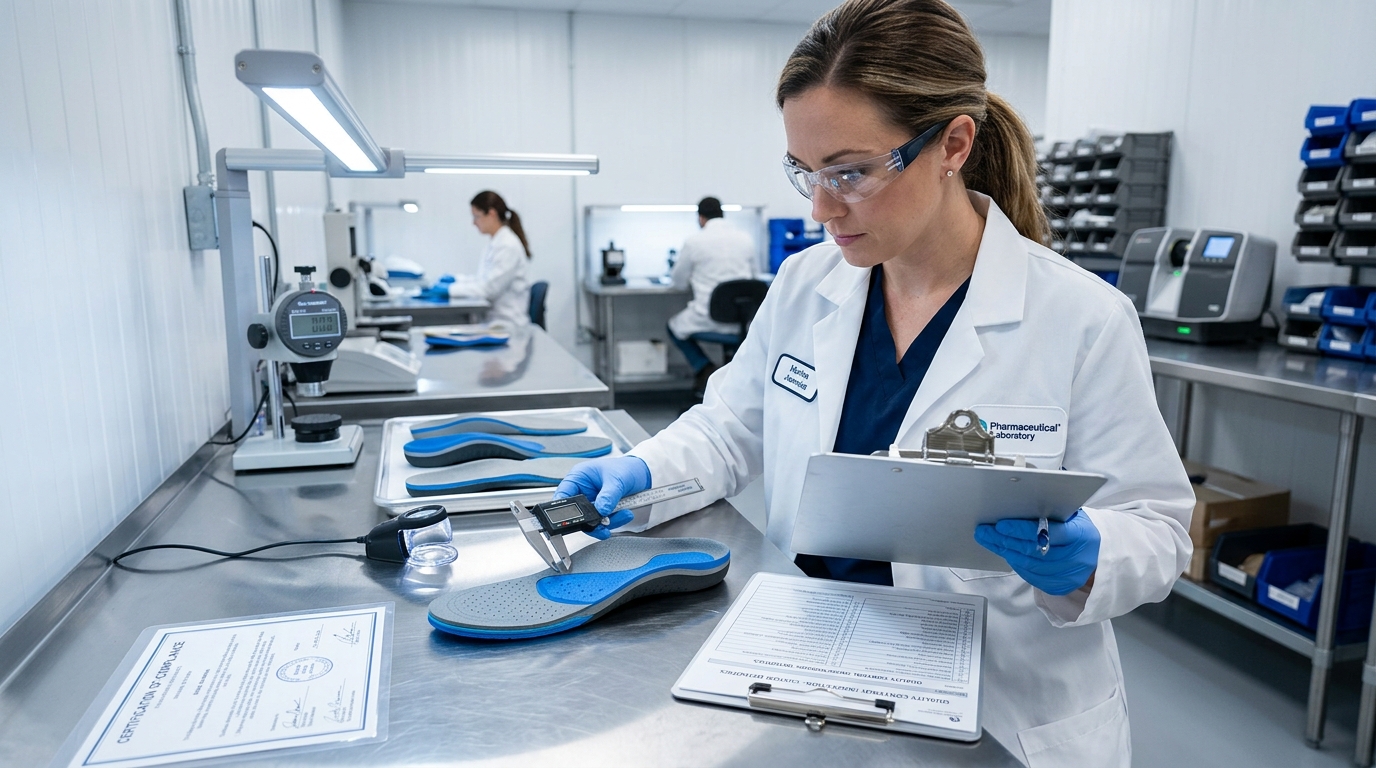
Certifications can indicate structured processes, but they are not the only measure of a reliable supplier. When evaluating a shoe insole manufacturer, focus on whether the factory maintains consistent quality control systems, documented testing procedures, and the ability to support compliance requirements across different markets.
For brands selling internationally, this may include meeting region-specific regulations such as CPSC or California Proposition 65 in the US, supported by third-party lab testing where required. The best shoe insole manufacturer partners proactively share testing data and compliance documentation, reflecting a transparent and responsible approach to quality management.
Social compliance is increasingly important for global buyers, especially in retail channels. Many manufacturers maintain audits such as BSCI or equivalent, which are often required before supplier onboarding. A transparent factory that can share audit results and demonstrate continuous improvement is typically a more reliable long-term partner.
Pricing, MOQs & Partnership Terms
Price is important, but cost-per-unit is only one part of the total cost of ownership. When comparing OEM insole manufacturers, factor in tooling fees, sample charges, shipping costs (EXW vs. FOB vs. DDP), payment terms, and the cost of potential delays. A quote that looks 15% cheaper than the competition can easily swing the other way once air freight, tooling amortization, and a two-week delay penalty are included.
MOQs (minimum order quantities) vary widely—anywhere from 500 pairs per SKU to 50,000+. Early-stage brands often need lower MOQs to test colorways and fits before committing to full production runs. Ask whether the factory offers a tiered pricing structure that rewards volume without locking you into quantities you can’t move. Some manufacturers, including established players in the custom insole space, offer development programs specifically for growing brands that need flexibility in their first few seasons.
Partnership terms deserve as much attention as the price sheet. How are change orders handled? What’s the process if a production run fails QC? Who owns tooling, and can you transfer it to another factory if the relationship sours? For a deeper look at how a well-structured OEM insole program handles these questions, the OEM insole manufacturer overview at FX Footwear outlines the key commercial frameworks worth benchmarking against. Nail these terms in writing before the first purchase order leaves your desk, and you’ll avoid the disputes that derail so many sourcing relationships.
FAQ
FAQ: What is the typical MOQ for an OEM insole manufacturer?
MOQs vary significantly depending on the factory’s scale, the complexity of the insole design, and the materials involved. For standard die-cut EVA styles, many manufacturers set MOQs between 500 and 2,000 pairs per SKU. More technical products—such as injection-molded TPU shells or multi-density co-molded constructions—often require higher minimums, typically 3,000 to 10,000 pairs, to justify tooling and setup costs. If you’re a smaller brand, look for manufacturers who offer tiered programs or development partnerships that let you start at lower volumes and scale up as demand grows. Always negotiate MOQs as part of your initial RFQ, not after you’ve already seen the price sheet.
FAQ: How long does OEM insole development take?
The development timeline for a custom OEM insole depends on design complexity, tooling requirements, and the factory’s current capacity. A straightforward EVA die-cut insole with custom top cloth and branding can move from concept to approved sample in four to six weeks. More complex constructions—multi-layer builds, injection-molded components, or proprietary foam formulations—typically require eight to fourteen weeks for tooling, initial samples, and fit/performance iterations. Building in buffer time for courier delays, revision rounds, and internal sign-off processes is wise. Most experienced buyers plan for a minimum of three months from brief to bulk production approval.
FAQ: What certifications should an OEM insole supplier have?
Rather than focusing on a fixed list of certifications, it’s more important to evaluate whether the supplier has structured quality control processes and can provide reliable testing and compliance support. In practice, many manufacturers work with third-party labs to meet requirements such as REACH or other market-specific regulations on a project basis.
For example, products entering the US market may need to comply with regulations such as CPSC requirements or California Proposition 65, while performance validation is often supported by test reports from recognized organizations such as SATRA or equivalent. For global retail supply, social compliance audits such as BSCI or similar are commonly expected by major buyers.
FAQ: Can an OEM manufacturer handle private-label branding?
Yes—private-label branding is a core part of most OEM insole programs. Typical branding options include custom top-cloth prints (sublimation or screen printing), laser-etched or debossed logos on the heel cup, branded bottom sheets, and custom retail packaging. Some factories also offer branded hang tags and point-of-sale inserts. The key variable is volume: certain decorative processes only become cost-effective above specific minimums, so confirm branding capabilities and associated MOQs early in the conversation. IP ownership of your artwork and branding elements should always be documented in your supplier agreement before production begins.
FAQ: How do I evaluate an OEM insole factory remotely?
Start by requesting a detailed factory profile: production area (square meters), annual output capacity, number of production lines, QC team size, and current certifications. Ask for video walkthroughs of key production and testing areas—any reputable factory will accommodate this. Review third-party audit reports, test certificates, and client references. Place a small development order before committing to bulk production; how a factory handles your sample request—responsiveness, accuracy, packaging, and communication quality—is highly predictive of how they’ll perform at scale. Tools like Alibaba Verified Supplier badges, SGS factory audits, and independent sourcing agents can provide additional assurance when you can’t visit in person.
Choosing the right OEM insole manufacturer is one of the highest-leverage decisions you’ll make as a footwear buyer or brand owner. Getting it right means reliable quality, competitive costs, and a partner that grows with you. FX Footwear (Fuxiang Group) brings decades of manufacturing experience, a full-spectrum material capability set, and a dedicated product development team to every client relationship. From high-performance athletic constructions to everyday comfort builds, explore the complete range at fxfootwear.com/insoles/ and connect with the team to discuss your 2026 sourcing roadmap today.