
When it comes to optimizing athletic footwear, most engineers and brand developers focus on outsole grip, midsole cushioning, or upper breathability — but insole weight often gets overlooked. That’s a mistake. Performance insoles play a direct role in energy efficiency, foot fatigue, and overall athletic output — and their mass is a critical variable in that equation. Whether you’re developing running shoes, court trainers, or cross-training footwear, understanding how performance insoles interact with biomechanics through weight is essential for building a better product. This technical deep-dive breaks down the physics, materials science, and real-world performance implications so you can make smarter decisions at the design and sourcing stage.
Why Insole Mass Matters Biomechanically
Every gram added to a shoe’s interior affects the metabolic cost of movement. Research in exercise science consistently shows that weight added at the foot — particularly at the distal end of the limb — demands more oxygen consumption and muscular effort than equivalent weight added at the torso. This is because the foot travels through a wide arc with each stride, requiring greater rotational force to accelerate and decelerate.
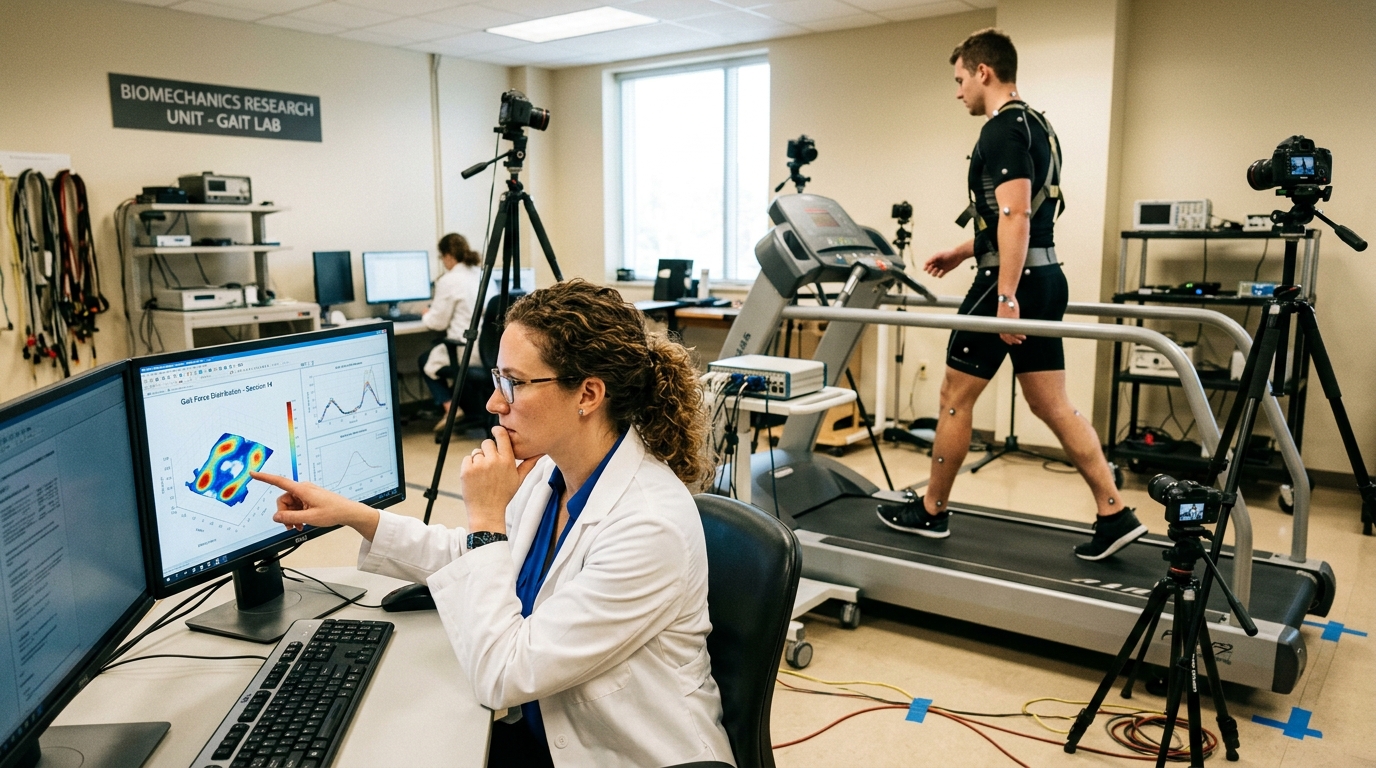
For athletic applications, even a difference of 10–15 grams per insole can influence a runner’s perceived exertion over a long training session. The effect compounds across thousands of footstrikes. A 10K run involves roughly 8,000–10,000 steps; small inefficiencies per step accumulate into meaningful fatigue.
This is why footwear engineers who understand the functional role of insoles in the shoe system tend to treat insole weight as a first-order design variable — not an afterthought. Reducing insole mass without sacrificing cushioning or support is one of the central engineering challenges in high-performance shoe development.
Weight vs. Cushioning: Core Trade-Offs
The fundamental tension in insole engineering is between mass reduction and functional performance. Cushioning materials that provide excellent energy return and pressure distribution — like dense polyurethane (PU) foams — tend to be heavier than alternatives. Lightweight materials such as open-cell EVA or supercritical foams offer reduced mass but may compromise durability or cushioning depth if not formulated carefully.
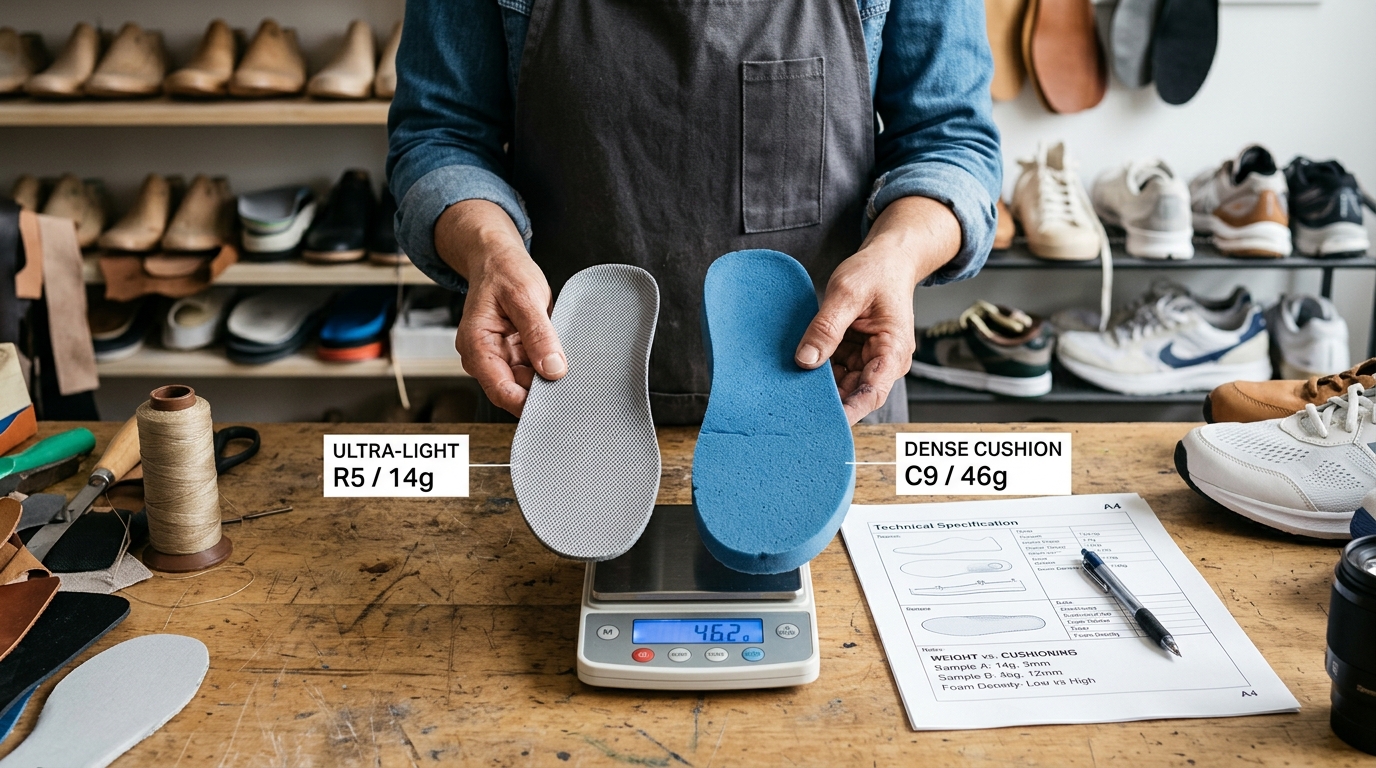
This trade-off is not binary. Modern foam chemistry has made significant advances. Supercritical CO₂ foaming processes, for example, create microcellular foam structures with exceptional cushioning-to-weight ratios. These processes inject CO₂ into polymer melts under pressure, producing a foam with millions of tiny, uniform cells that are both lightweight and highly resilient. The result is an insole that absorbs impact effectively without carrying unnecessary mass.
The practical implication for product developers: material selection is the primary lever for managing the weight-cushioning balance. Specifying a foam density that is even 5–10% lower while maintaining Shore hardness within target range can meaningfully reduce insole weight across a production run. Understanding the full material matrix — density, rebound, compression set, and durometer — is essential before locking in a specification.
Lightweight Materials in Performance Insoles
The materials landscape for performance insoles has evolved considerably over the past decade. Traditional PU foam, long the industry standard for durability and moldability, is gradually being supplemented or replaced by next-generation alternatives in performance-focused applications.
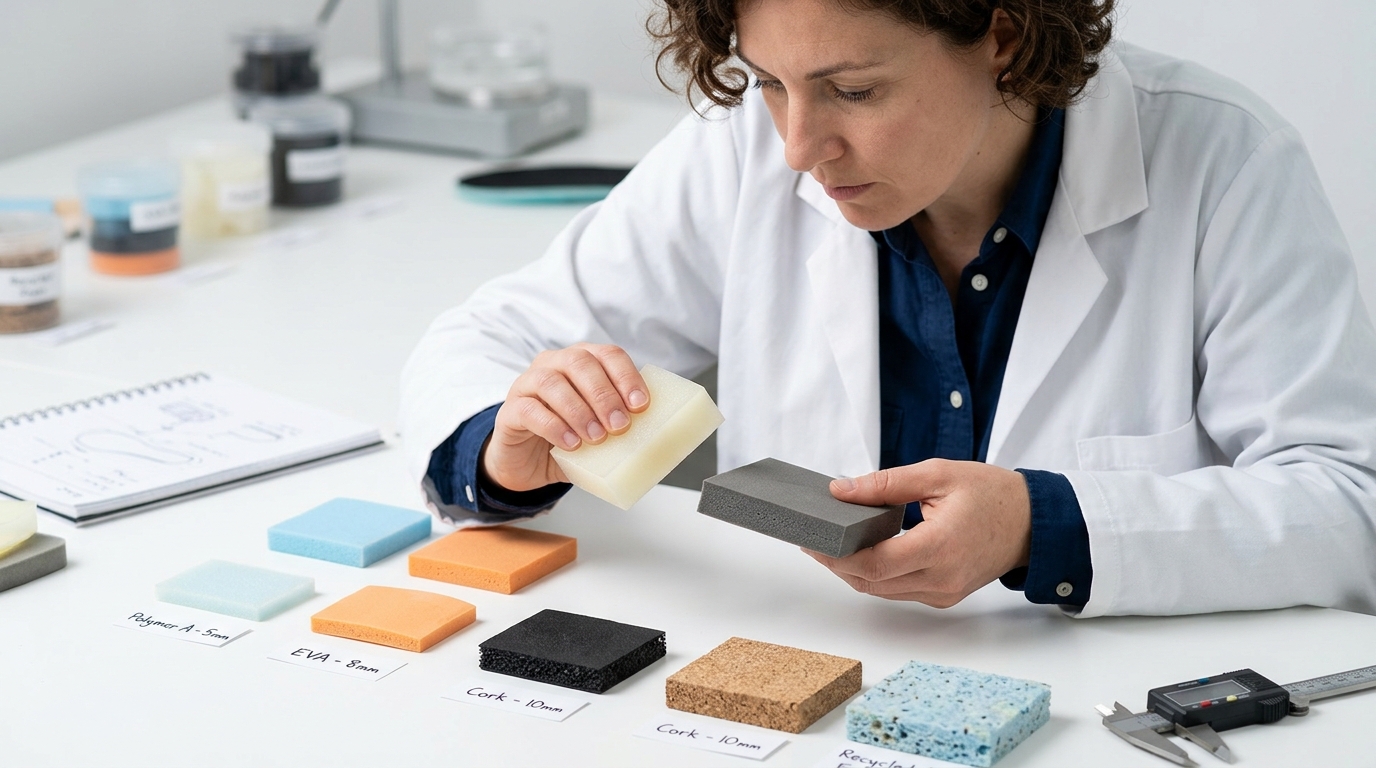
EVA (Ethylene-Vinyl Acetate): Still widely used, EVA is valued for its low density and versatile processing characteristics. Closed-cell EVA foams can be tuned across a broad hardness range and are significantly lighter than PU at comparable thicknesses. However, EVA is more prone to compression set over time, meaning it loses cushioning performance after repeated loading cycles — a relevant consideration for athletic insoles with high-frequency use.
Supercritical and Expanded Foams: Materials like expanded TPU (eTPU) and supercritical EVA represent the current frontier of lightweight cushioning. These materials achieve densities 20–40% lower than conventional foams while maintaining or improving energy return metrics. They are increasingly specified in elite running and training footwear precisely because they reduce mass without compromising the cushioning performance that athletic use demands.
Carbon Fiber & Composite Plates: Some high-performance insole architectures incorporate thin rigid plates for propulsion enhancement. Carbon fiber is the preferred material because of its extreme stiffness-to-weight ratio, adding structural function with minimal mass penalty. These hybrid insole constructions represent the cutting edge of performance insoles engineering.
How Weight Affects Specific Athletic Disciplines
The performance implications of insole weight are not uniform across sports — they vary significantly depending on movement patterns, load duration, and the specific biomechanical demands of each discipline.

Running: Distance runners are most sensitive to cumulative weight effects. Every gram saved translates to less metabolic work over thousands of strides. For marathon or ultramarathon applications, even modest weight reductions in insoles contribute meaningfully to finish times and fatigue profiles. Sprint applications, by contrast, prioritize energy return and ground contact mechanics over absolute mass savings.
Court Sports (Basketball, Tennis): Lateral movement, rapid direction changes, and jump-landing cycles characterize court sports. Here, insole weight interacts with stability and cushioning requirements. Heavier, more structured insoles may provide better medial support for lateral cuts, but excess mass slows the foot’s response time in rapid multi-directional movement. Balancing these demands typically requires a mid-density foam with strategic zoning rather than a simple lightweight approach.
Training & Cross-Fit: High-intensity interval training involves mixed modalities — jumping, lifting, sprinting — within a single session. Insoles for these applications need to perform across multiple biomechanical contexts. Lightweight construction helps with dynamic movements, but adequate heel cushioning remains critical during loaded exercises like squats and deadlifts where vertical force is high and repetitive.
Testing & Measuring Insole Weight Impact
Quantifying the performance impact of insole weight requires a combination of laboratory measurement and field validation. On the materials side, standard density testing (ASTM D792 or ISO 845) provides baseline mass data per unit volume, allowing engineers to compare materials consistently across suppliers and formulations.
Beyond simple density, dynamic mechanical analysis (DMA) captures how a foam behaves under cyclic loading — relevant because insoles experience thousands of compression cycles during athletic use. Energy return percentage, measured by ball rebound or compression resilience tests, is a proxy for how efficiently the insole returns stored energy to the athlete. Higher energy return at lower density is the performance insoles target specification.
At the product level, wear testing with instrumented insoles can capture pressure distribution, impact force, and step symmetry across fatigue cycles. Comparing a lightweight insole formulation against a heavier baseline in controlled treadmill trials provides evidence-based data to support sourcing and specification decisions. For brands working with a dedicated shoe insole manufacturer partner, requesting standardized test data across formulations — rather than relying solely on shore hardness specifications — leads to more informed material choices and better end-product performance.
When evaluating suppliers, look for transparency in test methodology. Density figures quoted without specifying foam state (pre-compression vs. as-molded), or energy return values without indicating test temperature, are insufficient for rigorous comparison. Insist on complete datasheets and, where possible, independent third-party validation for performance claims.
FAQ
FAQ: How much do insole types differ in weight?
The weight difference between a standard PU insole and a premium lightweight performance insole of the same size can range from 8 to 25 grams per unit, depending on the materials and construction. For a US Men’s size 10 insole, a conventional PU foam insole might weigh 35–45 grams, while a supercritical EVA or eTPU construction can come in at 18–28 grams. At scale — across a full production run — these differences are significant. For athletes, the combined bilateral difference (both shoes) of 16–50 grams at foot level has a measurable metabolic effect during prolonged activity. For brands, lighter insoles can also contribute to total shoe weight claims that influence consumer purchasing decisions in performance categories.
FAQ: Does a lighter insole mean less cushioning?
Not necessarily — and this is one of the most important distinctions in modern insole engineering. Advances in foam chemistry, particularly supercritical foaming processes and expanded bead technologies, have decoupled weight from cushioning performance to a significant degree. A well-engineered lightweight performance insole using expanded TPU or supercritical EVA can deliver equal or superior energy return and impact attenuation compared to a heavier conventional PU insole. The key variables are foam cell structure, density distribution, and material formulation — not mass alone. That said, ultra-low-density foams that haven’t been properly engineered can underperform on cushioning durability, so material specification and supplier expertise both matter.
FAQ: How does insole weight affect shoe longevity?
Insole weight and insole durability are related but distinct concerns. Lightweight foams — particularly open-cell EVA — can be more susceptible to compression set, meaning they flatten and lose cushioning performance faster under repeated loading. This reduces effective product lifespan in high-use athletic applications. Denser, heavier foams typically resist compression set better because they have more material mass to absorb and distribute force over time. The engineering solution is to select lightweight materials that have been specifically formulated for durability — such as high-rebound eTPU — rather than simply choosing the lowest-density option available. Durability testing (compression set per ASTM D395) should be part of any lightweight insole specification process.
FAQ: Can insole weight drop without redesigning shoes?
Yes, in most cases. Because insoles are modular components, they can be reformulated or replaced without requiring changes to the upper, midsole, or outsole construction. This makes insole weight reduction one of the most accessible performance upgrades available during a product refresh or mid-cycle update. The primary constraints are dimensional — the replacement insole must match the original’s volume profile and thickness to maintain last fit and heel cup geometry. Beyond dimensional compatibility, the Shore hardness and energy return profile should be maintained within tolerance to preserve the shoe’s cushioning feel. Working with an experienced insole manufacturer during this process ensures that weight reduction goals don’t inadvertently compromise fit or performance specifications.
FAQ: What insole weight suits running shoes?
Industry benchmarks for performance running shoe insoles typically target a finished weight of 20–30 grams for a US Men’s size 9–10, depending on construction complexity. Minimalist running insoles can come in below 15 grams, while motion control or structured insoles with added reinforcement may reach 35–40 grams. For mainstream performance running, the 22–28 gram range represents a practical sweet spot that balances lightweight construction with adequate cushioning depth, durability, and cost. Brands developing elite racing footwear often push below 20 grams using premium expanded materials, accepting higher material costs in exchange for marginal performance gains. The right target depends on your shoe’s intended use, price tier, and athlete performance profile.
Getting insole weight right is one of the most technically nuanced — and most impactful — decisions in athletic footwear development. From material selection and foam chemistry to discipline-specific biomechanical requirements and durability validation, every choice compounds across the full product lifecycle and athlete experience. If you’re developing or refining athletic footwear and want insole components built to precise weight and performance specifications, FX Footwear (Fuxiang Group) brings deep manufacturing expertise and materials engineering capability to every project. Explore the lightweight insole manufacturer offering to see how advanced foam technologies can help you hit your performance and weight targets — or reach out directly to discuss a custom specification for your next development cycle.