MATERIAL DEVELOPMENT
PU Foam for Footwear Components
Develop PU components around cushioning feel, recovery behavior and the space available inside the shoe.
Polyurethane foam systems vary in cell structure and recovery response. Match the selected formulation, geometry and other component layers before sample evaluation.
Specify Structure and Process Separately
Cell structure and production route describe different aspects of PU. Define both for the selected grade and finished component.
Foam Structure
Confirm the documented cell structure and intended underfoot feel.
Recovery Behavior
Agree the response and residual-deformation checks to compare.
Component Route
Review sheet converting or PU pouring for the specified formulation.
Build Around the Complete Construction
A PU component may include a textile cover, localized cushioning or another material. Confirm the foam body, interfaces and geometry as one sample specification.
Select the grade, thickness and forming or converting route.
Define gel, support or cover elements only where the build uses them.
Evaluate dimensions, feel, bonding and agreed physical properties.
Two Documented PU Constructions
Compare a PU-and-gel insole with a PU footbed. Their material arrangements and component requirements are different.
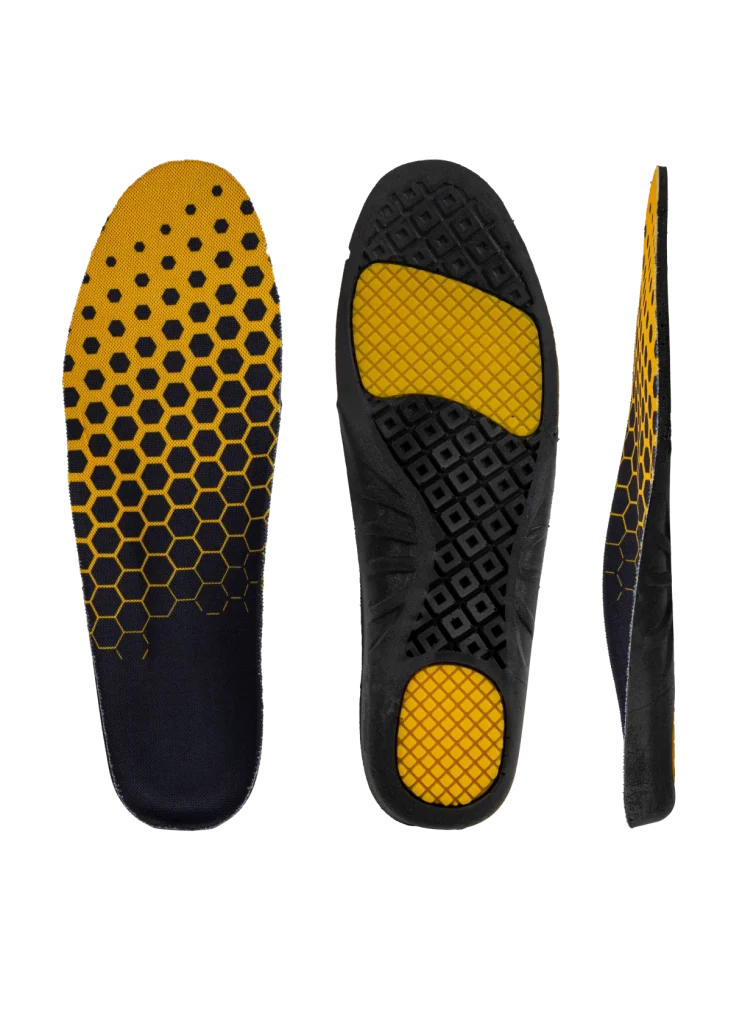
PU FOAM + GEL
PU Gel Comfort Insole
A PU foam body works with localized gel cushioning zones and a mesh textile cover. Final geometry and material placement follow the footwear brief.
Explore the PU Gel Insole ↗
PU FOOTBED
PowerFrame Rebound PU Footbed
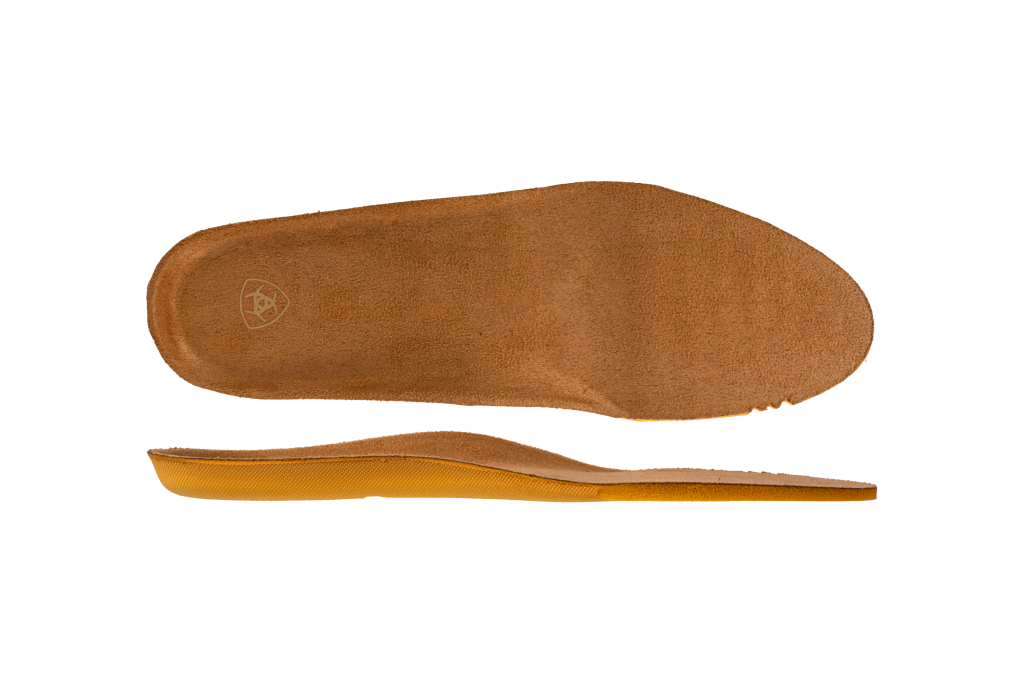
A PU footbed reference for reviewing underfoot shape, surface finish and material feel. Confirm the grade and forming route for the project.
Explore the PU Footbed ↗ARIAT OUTPACE SHIFT
Open-Cell PU in a Work-Shoe Insole
This removable insole uses open-cell PU. The component work focuses on matching the required feel, fit, cushioning and compression recovery to the approved sample.
View the Component Case ↗Define the PU Specification
Softness, resilience and compression set need separate review under agreed conditions. Use Asker C for applicable foam-hardness measurements.
- Material
- Grade, cell structure and route.
- Geometry
- Thickness, contour and shoe-volume allowance.
- Response
- Hardness, resilience and compression set.
- Interfaces
- Cover, gel and material interfaces.
- Approval
- Sample, methods and acceptance criteria.
Start with the Required Feel and Fit
Share the component drawing, application, target underfoot feel, cover requirements and testing needs. Select the PU grade and finished construction against the same brief.
PU Foam FAQs
Is every PU foam open-cell?
No. Confirm the cell structure for the selected grade rather than applying one description to the whole PU family.
Does soft feel mean slow recovery?
Softness and recovery response describe different behaviors. Evaluate both under the conditions agreed for the material and component.
Can PU be combined with gel or a textile cover?
The PU Gel Comfort Insole documents a PU foam body, localized gel zones and a mesh cover. Other combinations require their own construction and sample review.
How should PU and EVA be compared?
Compare specific grades and constructions against the same footwear brief. Consider weight, feel, recovery, compression set, processing and cost instead of ranking the material names alone.
Which material checks can be requested?
The plan may include dimensions, hardness, density, resilience, compression set and interface quality. Methods and acceptance requirements are agreed for the specific construction.