Cushioning Feel
How the insole compresses beneath the foot. A softer construction may compress further; that alone does not establish better impact protection.

APPLICATION / COMPETITION USE
Custom Insoles for Competition Footwear.
A close-fitting shoe, a weight target and a responsive underfoot feel place different demands on an insole. FX Footwear helps brands develop the foam core, thickness and top cover as one component, matched to the intended competition shoe.
Discuss Your Competition Insole01 / THIN & LOW-PROFILE INSOLES
A thin insole does not have to mean the same thickness from heel to toe. Start with the original sockliner and identify where the new construction uses too much shoe space.
Extra thickness under the heel lifts the foot inside the upper. Check heel hold and collar position before adding cushioning here.
Reduce forefoot thickness only where more room is needed. Recheck cushioning feel and shoe flex after the change.
An oversized outline can curl or bunch at the edges. Adjust the cut shape separately from the thickness.
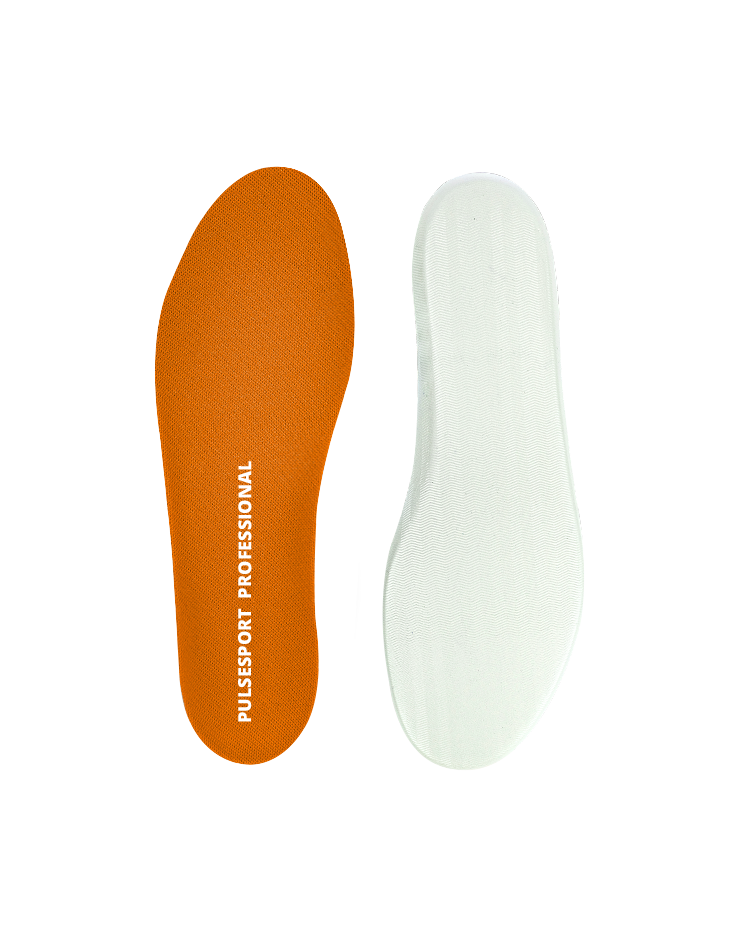
02 / LIGHTWEIGHT INSOLES
A lower-density foam can reduce core weight at the same volume. A thinner shape reduces volume. These are different changes: either can also change the way the insole feels.
Record grams per insole or grams per pair, the shoe size and whether the cover is included. Without those details, two weight figures may describe different builds.
Explore PulseSport Professional Foam Grades ↗03 / CUSHIONING & ENERGY RETURN
A soft first impression, a springy response and lasting thickness describe different properties. Choose the one your current competition-shoe sample needs to change.
How the insole compresses beneath the foot. A softer construction may compress further; that alone does not establish better impact protection.
How the material recovers, and how much input energy is returned under a specified method. A rebound result is not automatically an energy-return percentage.
Residual deformation after the specified compression and recovery period. This is a different check from the loss of cushioning feel after repeated loading.
For a sample that feels too firm, compare a different foam grade before adding thickness to a tight shoe. For a sample that feels too soft, check compression under load rather than selecting solely by a high rebound figure. No single material result establishes an athlete’s competition performance.
Read the Rebound & Hand-Feel Guide ↗04 / TOP-COVER OPTIONS
Choosing a non-slip insole surface involves sock grip; choosing a breathable insole involves air and moisture through the construction. Neither can be judged from appearance alone.
Textile texture and finish can change how the sock moves over the top cover. Compare dry and damp contact; more grip is not automatically more comfortable.
Mesh appearance alone does not establish breathability. The foam core and bonding layer also affect the air and moisture path.
FX top-cover options include textiles, mesh, microfiber and project-specified functional fabrics. Compare the complete laminated insole, rather than choosing only by the fabric name.
TURN THE DESIGN CHOICE INTO SAMPLES
Use your existing competition-shoe sockliner as the reference. A focused sample comparison helps identify which change solves the problem.
Send the target size, outline or drawing, heel and forefoot thickness, and the issue you want to solve. FX supports component-level material and physical-property checks; the brand or Tier 1 assembler handles finished-shoe wear testing.
BUYER QUESTIONS
Where the shoe is designed for a removable sockliner, use that space as the starting point; stacking another insole on top reduces internal room and changes foot position. Bonded sockliners need a different construction review.
No. A foam insole and a plate-containing construction address different structural choices. A plate can change bending stiffness; a high-rebound foam does not make the same construction or establish the same performance claim.
Yes. The intended shoe and available insole space determine the outline, heel and forefoot thickness, cushioning feel and top-cover choices.
Heat-transfer printing, screen printing, embossing and debossing can be reviewed for the chosen material. Share the artwork and placement so the marking can be checked on the actual cover.