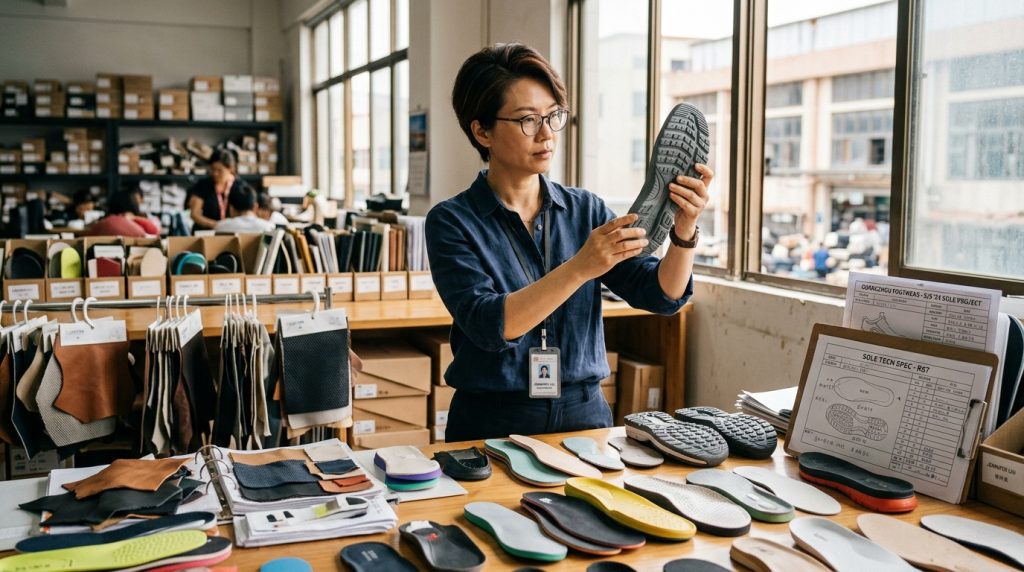
Footwear brands spend more time on design and marketing than on component sourcing — and then wonder why their supply chain underperforms. The reality is that OEM footwear components are where product quality, cost structure, and delivery reliability are determined. Get the components right, and everything downstream — assembly, QC, retail sell-through — gets easier. Get them wrong, and no amount of creative marketing fixes a shoe that falls apart or a launch delayed by a failed sampling round.
This guide covers everything you need to know about sourcing OEM footwear components: what they are, how to evaluate your manufacturing options, which materials matter, what certifications to look for, and how to structure a sourcing relationship that performs under real-world conditions.
What Are OEM Footwear Components?
OEM (Original Equipment Manufacturer) footwear components are the individual structural and cushioning parts produced to a brand’s specifications. Unlike ODM (Original Design Manufacturer) components — where you adapt an existing factory design — OEM means the factory builds to your technical brief: your materials, your geometry, your performance targets, your branding.
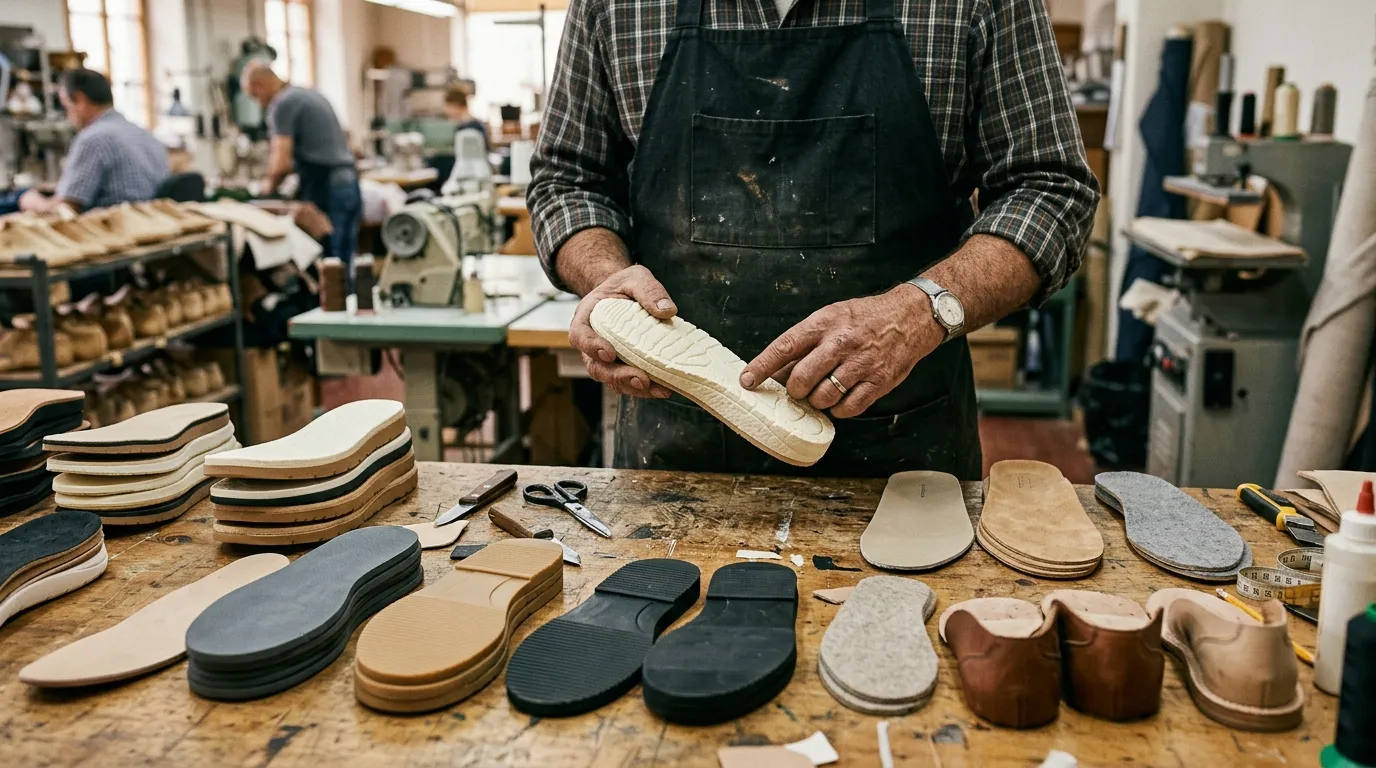
The major categories of OEM footwear components include:
- Insoles — the removable or bonded layer inside the shoe that contacts the foot directly; primary functions are cushioning, moisture management, and arch support
- Midsoles — the structural foam layer between the outsole and insole; determines energy return, stability, and stack height
- Upper components — structural parts of the shoe upper: heel counters (for rear-foot stability), molded collars (for ankle cushioning), tongues, and eyelet systems
- Outsole components — rubber or TPU-based bottom units; typically sourced separately from cushioning specialists
A supplier capable of producing across multiple component categories — rather than only insoles or only midsoles — gives sourcing teams the option to consolidate vendors, standardize quality review processes, and reduce inter-component fitment issues that arise when parts come from different factories.
Key Component Types: Materials and Performance Profiles
Insoles
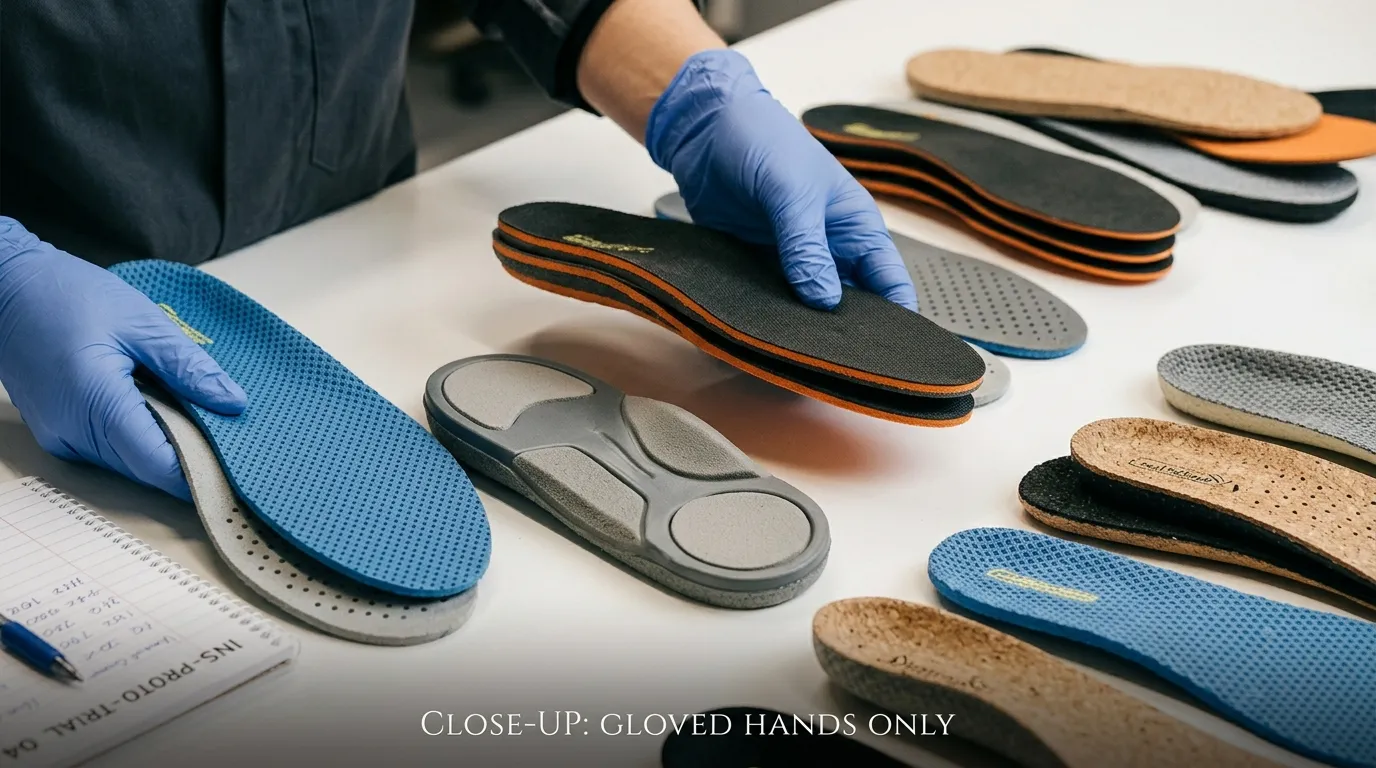
The insole market encompasses several distinct material technologies, each with different performance trade-offs:
EVA (Ethylene-Vinyl Acetate): The most common insole material. Available in die-cut, injection-molded, and compression-molded formats. EVA is versatile across athletic, casual, and workwear applications; single-layer and multi-density constructions are both standard. Hardness is measured in Asker C (the correct unit for flexible foam — not Shore C), with typical ranges of 20–45 Asker C depending on application. EVA offers good cushioning and cost-efficiency, but compresses over time faster than PU or supercritical foam under sustained load.
PU (Polyurethane) foam: PU’s primary advantages are compression resistance, long-term shape retention, and a soft, comfortable feel. Open-cell PU constructions offer better breathability. PU is well-suited for comfort-focused and everyday wear applications where durability over long use cycles matters more than peak energy return.
Supercritical CO₂ foam: A next-generation material produced by infusing CO₂ into foam under supercritical conditions — without traditional chemical blowing agents. The result is a microcellular structure with predominantly closed cells that delivers consistent energy return and impact absorption. Energy return performance ranks: supercritical foam > EVA > PU. Supercritical foam is the premium option for performance athletic footwear where weight, resilience, and energy return are primary requirements.
Midsoles
Midsoles use similar material families to insoles but at different geometries, densities, and structural roles. Stack height, dual-density zoning, and plate integration (TPU or carbon fiber) are advanced midsole design parameters that affect running mechanics and shoe classification for performance categories.
Upper Components
Structural upper components are often overlooked in sourcing discussions but are critical for shoe fit, durability, and performance. Heel counters — the stiffened rear element that wraps the Achilles area — determine how well the shoe holds the foot in place during lateral movement. Molded heel counters using 3D integrated construction reduce part count and improve fitment consistency versus traditional thermoplastic inserts.
Sustainable Material Options
Sustainable material options are increasingly demanded by US and European retail buyers. The following eco-material types are commercially available for OEM insole and midsole production:

- Sugarcane-based EVA — bio-based carbon content; drop-in replacement for petroleum EVA in most constructions
- Algae-based EVA — reduces reliance on petroleum-based materials; GRS-traceable supply chains available
- Recycled EVA compounds — post-industrial recycled content; GRS-compliant documentation available
- Bio-based PU (Susterra®-based formulations) — DuPont-licensed bio-derived polyol content for PU foams
Note: bio-based TPU shells and phase-change material (PCM) linings are at early-stage commercial development — not mass-production-ready options for standard product lines.
> Need eco-certified insole materials for your next line? Contact our team → to discuss GRS-compliant options and available traceability documentation.
Manufacturing Capabilities to Evaluate
When assessing an OEM footwear components manufacturer, the core capabilities to evaluate include:
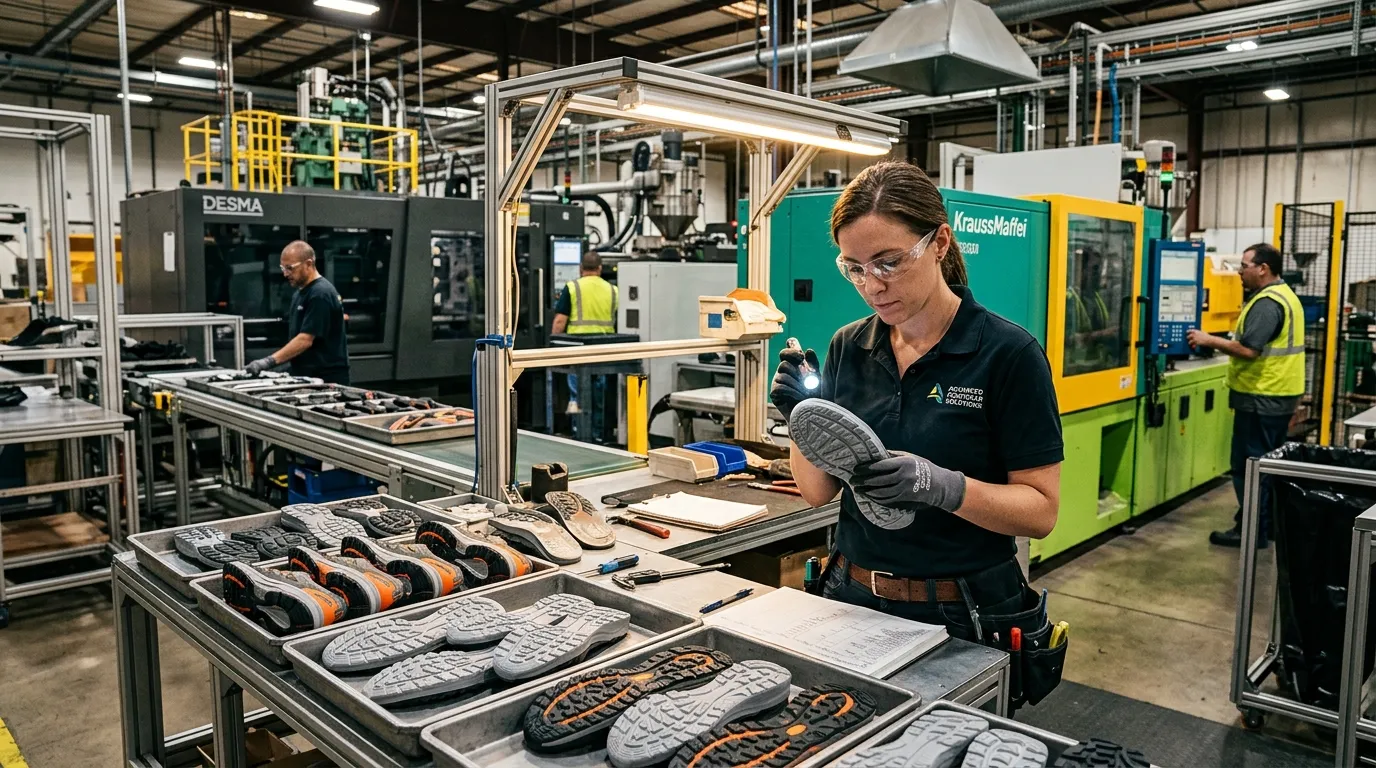
Production technology range. Can the factory produce across die-cut EVA, injection-molded TPU, and advanced foam processes? A broader capability set gives you more design flexibility as your product line evolves.
Multi-density and co-molding capability. For performance footwear, the ability to tune density zones across heel, arch, and forefoot independently — or co-mold different materials in a single pressing cycle — is a meaningful differentiator. Not all factories can do this consistently.
In-house tooling. Factories that own their molds can iterate faster and protect your tooling IP more cleanly than those relying on external toolmakers. Confirm tooling ownership in your supplier agreement.
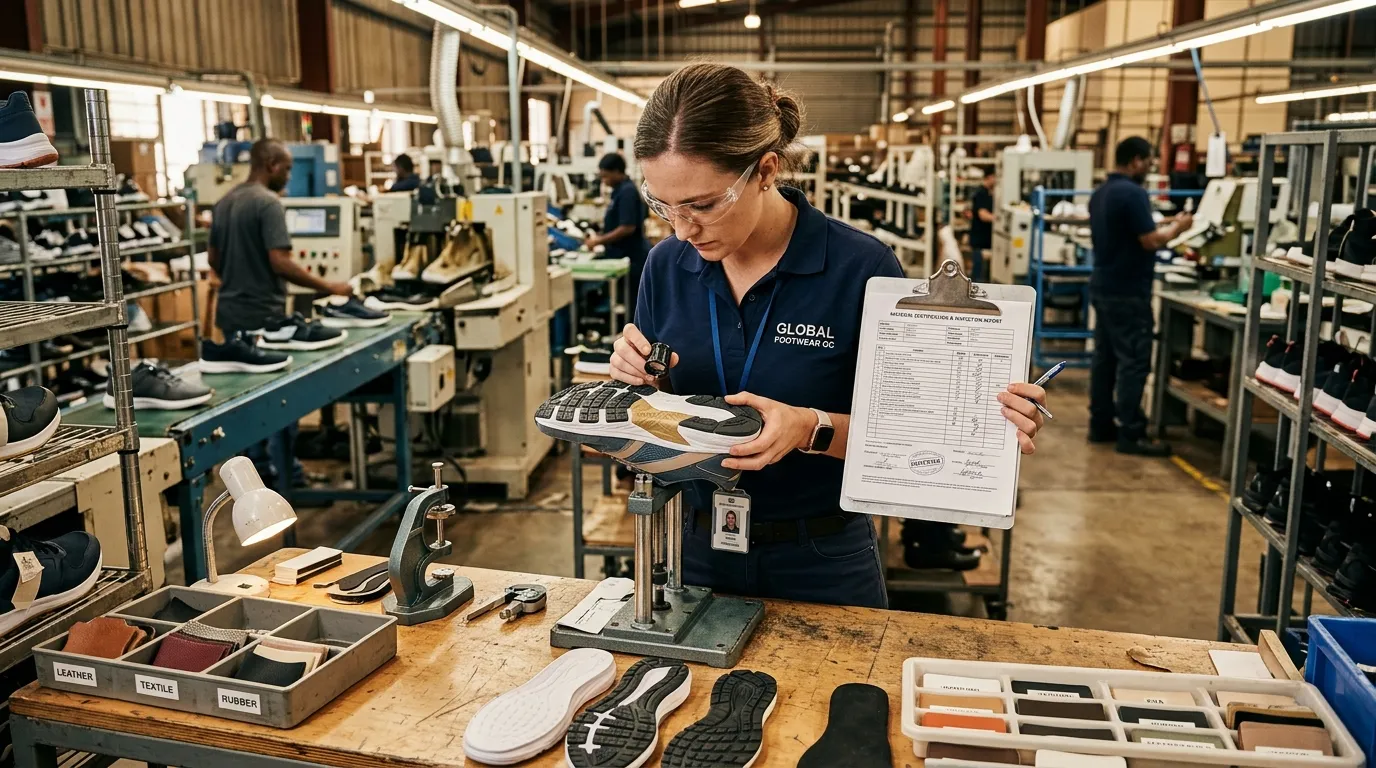
In-house lab. Factories with their own testing lab can validate hardness (Asker C), compression fatigue, abrasion resistance, and material consistency without depending on external lab scheduling. This matters most during development iterations when rapid feedback reduces sampling cycles.
Geographic footprint. Manufacturing in proximity to your assembly factories reduces cross-border logistics complexity and duty exposure. Facilities in China, Northern Vietnam, Southern Vietnam, and Indonesia position a manufacturer alongside the major Tier 1 footwear assembly hubs.
Certifications and Compliance
Certification requirements depend on your product category and target market. For OEM footwear components, the relevant certifications include:
GRS (Global Recycled Standard): Required if your brand makes recycled content claims on insoles or midsoles. GRS-certified supply chains include material traceability documentation from recycled feedstock through finished component.
ISO 13485:2016: Required for therapeutic or medical-device-adjacent footwear such as orthotic insoles and footbeds. This is a medical-device quality management standard — distinct from general manufacturing quality management.
Higg Index: Supply chain sustainability measurement increasingly required by large US and European retail buyers during vendor onboarding.
US market compliance: CPSC (Consumer Product Safety Commission) and California Proposition 65 chemical content restrictions are non-negotiable for US retail distribution. Confirm your manufacturer’s familiarity with both before bulk production.
EU market compliance: REACH is an EU chemical regulation that requires compliance testing and documentation — not a factory-level certification, but one your supplier needs to be able to support for EU-destined shipments.
Social compliance: BSCI, SMETA, or equivalent social audit documentation is increasingly required by major US retail buyers as a condition of vendor onboarding. Ask for current audit status and remediation history.
Sourcing Timelines
Realistic timeline planning prevents the single most common sourcing failure: underestimating development time and then compressing sampling iterations to meet a launch deadline.

| Stage | Timeline |
|---|---|
| Die-cut / knife-cut samples (no new tooling) | ~3 days |
| New mold / tooling required | ~10 business days |
| Custom insoles — sampling phase | 7–14 days |
| Bulk production after sample approval | ~30–40 days |
| Total custom order (spec to goods ready) | 45–70 days |
| Ocean freight to US ports | 18–30 days |
| Air freight door-to-door | 5–10 days |
| Total first-time custom cycle | ~65–100 days |
Build these timelines into your product development calendar. A sampling round that requires two revision iterations adds 14–20 days to your critical path — that buffer needs to exist in your plan, not be borrowed from freight time.
Payment Terms and Quoting
Standard payment terms for new customer relationships in the OEM footwear components space are 30% deposit upfront, 70% before shipment. Sampling costs are typically paid upfront. Terms can be renegotiated as order volumes and the business relationship grow.

Initial quotations for standard constructions with existing tooling are typically available within 48 hours. Detailed cost breakdowns for custom specifications require technical evaluation before pricing can be finalized.
How to Start Your OEM Footwear Component Sourcing
The most effective way to initiate an OEM component relationship is with a clear technical brief: material type, target hardness and density, component geometry (last-based or standard sizing), required certifications, target quantities, and delivery timeline. The more specific your brief, the faster and more accurate the initial quotation.

> Ready to source OEM footwear components? Submit your specifications and get a detailed quote within 48 hours.
>
> Start your sourcing inquiry →
FX Footwear’s product development team can assist in translating a functional performance brief into specific material and construction recommendations — particularly for brands new to specifying foam properties or structural component geometry.
FAQ
What is the difference between OEM and ODM footwear components?
OEM (Original Equipment Manufacturer) means the factory produces components to your specifications — your materials, design, and branding. ODM (Original Design Manufacturer) means you license or adapt a design the factory already owns. OEM is appropriate when you need full control over cushioning profiles, arch geometry, material layering, and IP protection.
What is the typical MOQ for OEM footwear components?
MOQ varies by material type and construction complexity. Standard die-cut EVA insoles typically have MOQs starting at 500–2,000 pairs per SKU. More complex constructions — injection-molded components, supercritical foam, multi-density co-molded builds — typically require higher minimums to justify tooling and setup costs. Contact your supplier with specific requirements for applicable MOQ ranges.
What certifications should an OEM footwear component supplier have?
For brands with sustainability commitments or recycled-material claims: GRS. For therapeutic or medical-grade orthotic applications: ISO 13485. For US distribution: CPSC and California Prop 65. For EU distribution: REACH compliance documentation support. For major US retail: BSCI or SMETA social audit. Ask for current documentation across all applicable categories before committing to production.
How do I evaluate a footwear component manufacturer remotely?
Request a factory profile (production capacity, facility size, QC team structure, certifications), video walkthroughs of production and testing areas, third-party audit reports, and recent test certificates. Place a development order before committing to bulk — how a factory handles your sample request (speed, accuracy, communication) is strongly predictive of bulk performance.
Can one supplier produce insoles, midsoles, and upper components?
Yes — some manufacturers operate as one-stop footwear component suppliers across multiple categories. This consolidation reduces coordination overhead, improves cross-component fitment consistency, and simplifies your vendor management. Not all factories offer this range; confirm multi-category capability before treating it as a given in your sourcing plan.