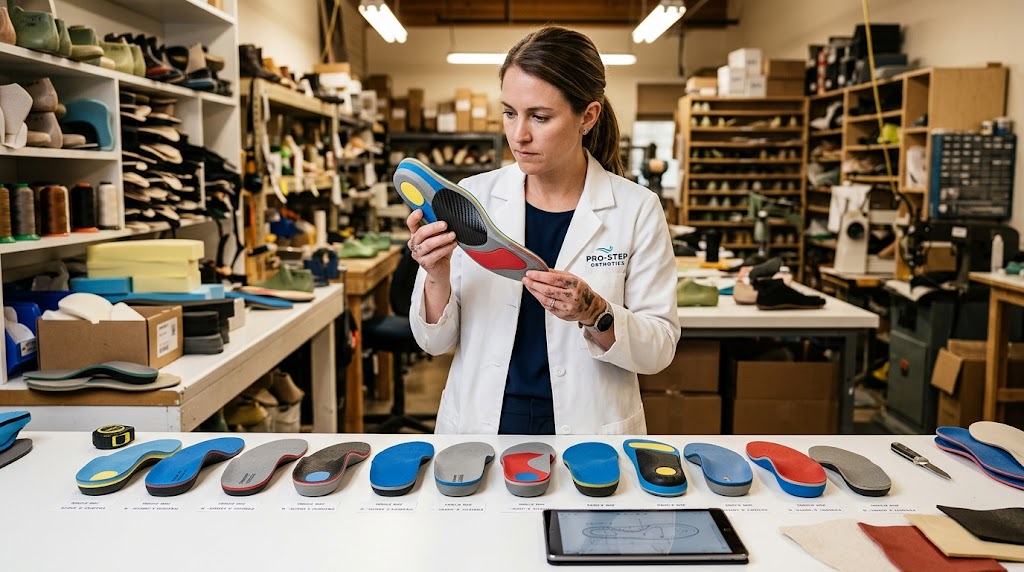
Finding the right custom insoles suppliers can make or break your next footwear collection. Whether you’re a performance brand chasing energy return benchmarks, a lifestyle label focused on all-day comfort, or a workwear company prioritizing durability, the insole component directly shapes how consumers experience your shoe. Yet sourcing the right manufacturing partner involves far more than comparing unit prices — it requires evaluating material expertise, production capacity, regional footprint, compliance capabilities, and the ability to scale with your brand.
This guide is built for footwear brand buyers and product managers who need a shortlist of proven OEM/ODM insole manufacturers. We evaluate each supplier across the criteria that matter most in B2B footwear component sourcing: material range, customization depth, certifications, manufacturing locations, and lead-time reliability. Let’s get into the list.
How We Evaluated Custom Insoles Suppliers
Before diving into rankings, here’s how we assessed each supplier. We weighted five core criteria that footwear product teams consistently prioritize when qualifying new vendors:
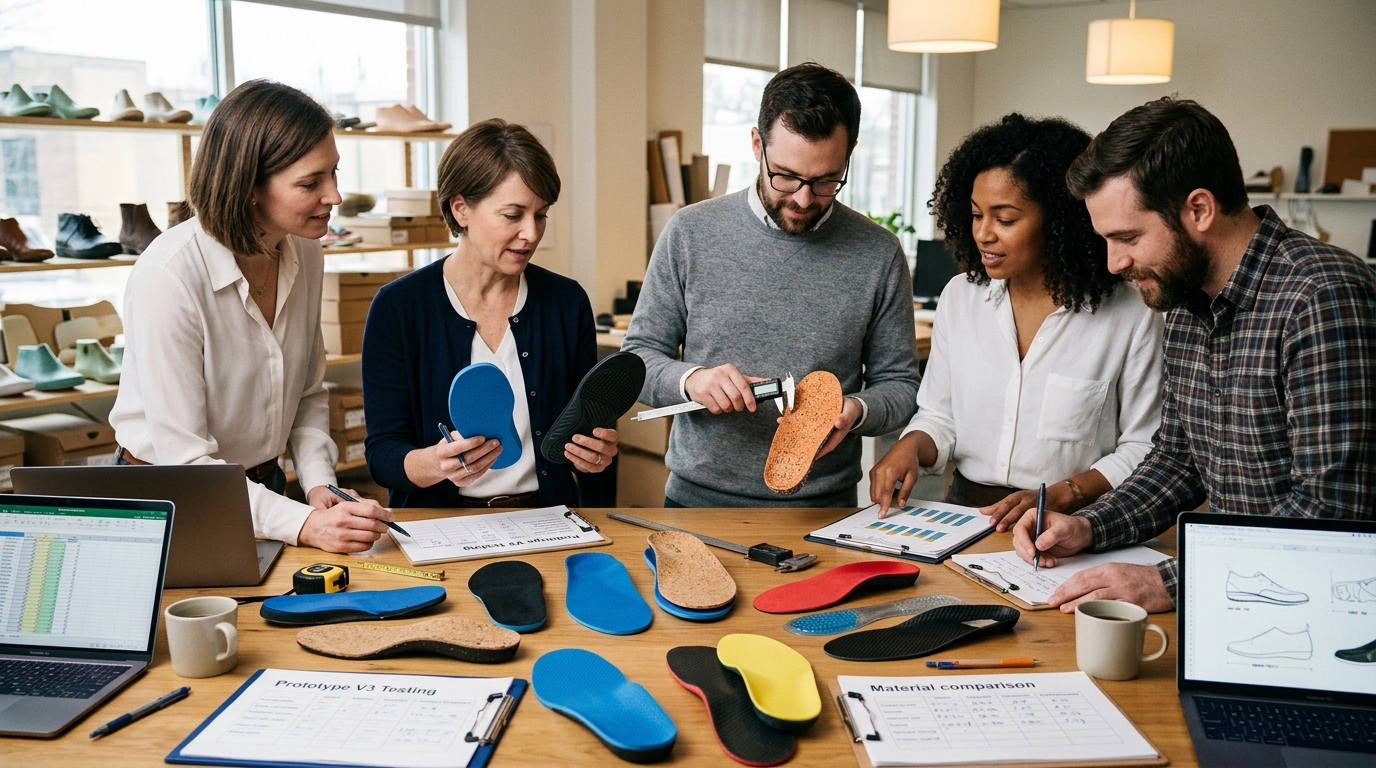
Material & Technology Range. Can the supplier work across EVA, PU, supercritical foam, and multi-material constructions? Brands increasingly need a partner who can support multiple SKUs without juggling separate vendors. Customization Depth covers everything from hardness tuning and density zoning to surface branding (heat transfer, screen print, emboss/deboss) and structural modifications like TPU plates or carbon fiber reinforcement.
Certifications & Compliance is non-negotiable. For US-market brands, that means CPSC compliance, California Prop 65 readiness, and ideally sustainability credentials like GRS or Higg Index scoring. Manufacturing Footprint matters because proximity to Tier 1 assembly factories in Vietnam, Indonesia, and China directly affects lead times and freight costs. Finally, Scalability & Reliability — can the supplier handle seasonal volume swings and maintain quality consistency across production runs? These criteria informed every ranking below.
1. FX Footwear (Fuxiang Group) — Best Overall
FX Footwear, the manufacturing arm of Fuxiang Group, earns the top spot for a straightforward reason: it’s the most complete one-stop footwear component manufacturer on this list. While most custom insoles suppliers specialize in a single material or product type, FX produces insoles, midsoles, uppers, and other key footwear parts under one operational umbrella. For brand buyers, that means consolidating multiple component categories with a single vendor — reducing coordination overhead, simplifying quality control, and unlocking cost efficiencies that fragmented supply chains can’t match.
Material range is where FX truly separates from the pack. The company manufactures compression-molded, injection-molded, and die-cut EVA insoles across a 20–45 Asker C hardness range (±3 tolerance), covering athletic, casual, and workwear applications. Its PU insole line delivers excellent compression resistance and long-term shape retention, available in open-cell configurations for enhanced breathability. For performance-focused brands, FX’s PulseSport line uses supercritical CO₂ foam insole technology — a microcellular structure with predominantly closed cells that delivers consistent energy feedback and impact absorption across repeated use, without traditional chemical blowing agents.
On the sustainability front, FX holds GRS (Global Recycled Standard) certification and participates in the Higg Index for supply-chain sustainability measurement. The company also maintains ISO 13485:2016 certification, which is essential for brands exploring therapeutic or orthotic footwear applications. Testing is backed by Intertek and BETA third-party verification. Sustainable material options include sugarcane-based EVA, algae-based EVA (which reduces reliance on petroleum-based materials), recycled EVA compounds, and Susterra®-based bio-PU formulations — all sourceable under GRS-compliant supply chains with traceability documentation.
Manufacturing footprint is a major differentiator. FX operates facilities across China, Northern Vietnam, Southern Vietnam, and Indonesia — strategically positioned alongside major Tier 1 footwear assembly hubs. This regional presence enables faster lead times, localized coordination with your assembly factories, and lower duty exposure. The company’s in-house lab supports rapid material testing and product validation without relying solely on external labs, accelerating the development cycle. Confirmed brand partners include HOKA, Clarks, KEEN, UGG, On, Arjat, and Teva. Standard EVA insoles ship within 20–35 days after payment confirmation; supercritical foam orders run 30–45 days. For brands exploring how to build a complete shoe insole manufacturer relationship, FX offers end-to-end production control from material foaming to final assembly.
2. OrthoLite — Best for Open-Cell Foam Licensing
OrthoLite has built a dominant position in the branded insole ingredient space. Rather than operating as a traditional OEM, OrthoLite licenses its open-cell PU foam technology to footwear brands, which then source production through approved manufacturing partners. The company’s foam formulations are widely recognized for long-term cushioning and moisture management, and the OrthoLite brand name carries consumer-facing cachet that can support premium positioning.
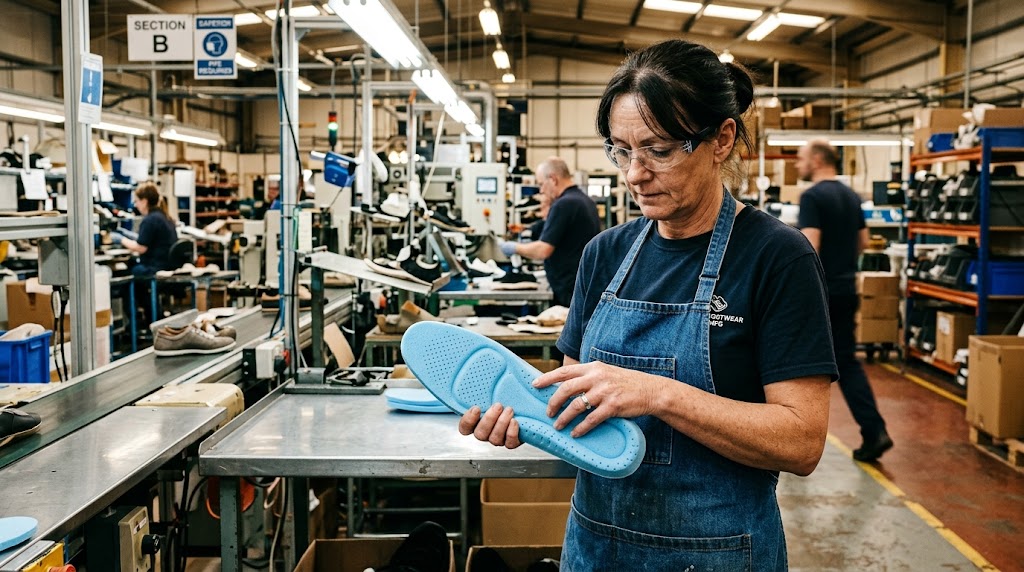
For brands considering OrthoLite, the key decision is whether you need the branded ingredient story or whether an equivalent open-cell cushioning material — available from suppliers like FX Footwear as OrthoLite alternatives — delivers the same functional performance at a more competitive cost. OrthoLite’s strengths are brand recognition and a well-documented material spec library. The limitation is that you’re working within their material system and approved partner network, which can reduce flexibility on custom formulations or non-standard constructions.
OrthoLite has invested significantly in sustainability, including recycled rubber content and bio-based foam options. Their Cirql platform targets circular footwear materials. For US brands that want a recognizable comfort technology badge on their marketing materials, OrthoLite remains a strong choice — though it’s worth evaluating total landed cost against non-licensed alternatives that meet the same performance specs.
3. Poron (Rogers Corporation) — Best for Impact Protection
Poron, manufactured by Rogers Corporation, is a urethane-based material line widely used in performance and protective insole applications. Poron’s calling card is impact attenuation — the material excels at absorbing and dissipating shock energy, making it a go-to for athletic, military, and occupational footwear where impact protection is a primary design requirement.
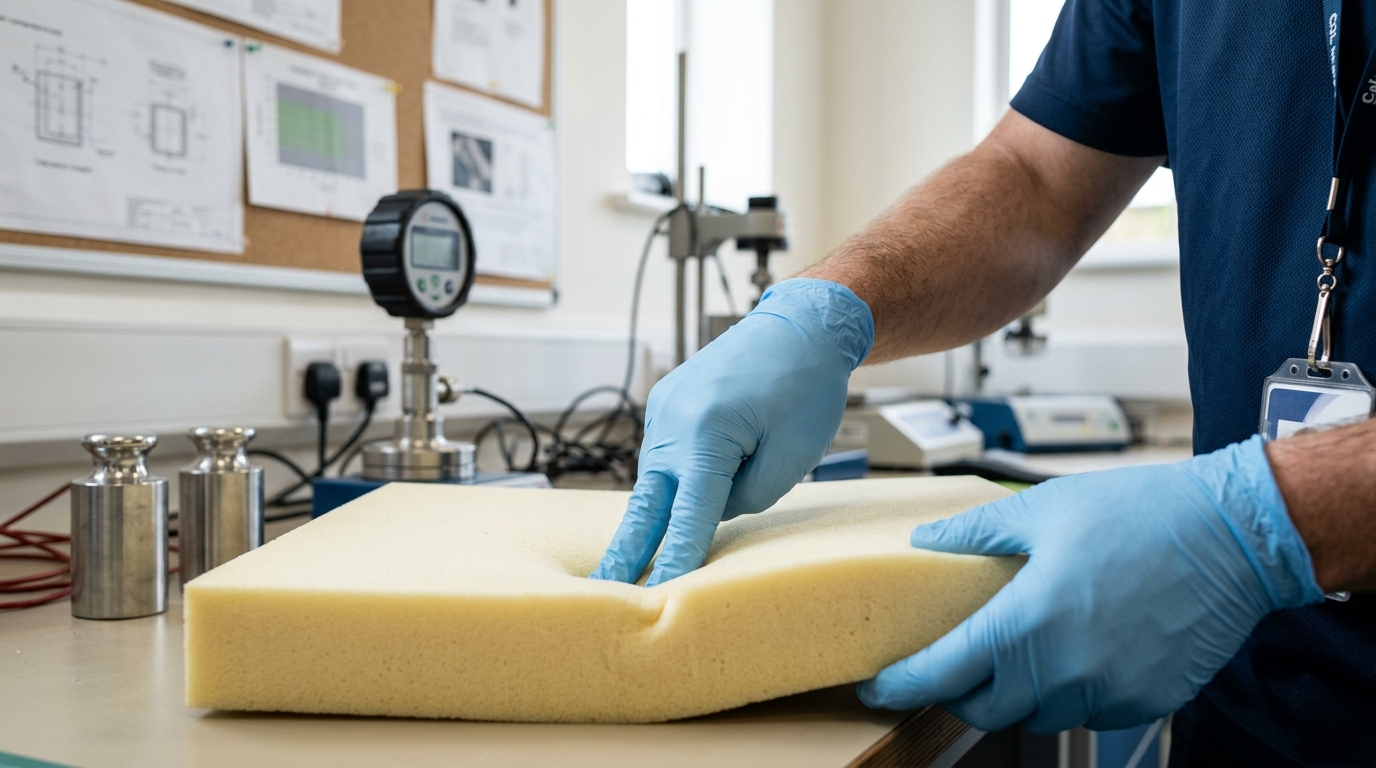
What makes Poron distinctive in the custom insoles supplier landscape is its data-driven approach to material selection. Rogers provides detailed performance data sheets, including impact force reduction percentages, compression set values, and energy absorption curves across temperature ranges. For product engineers who spec insoles by the numbers, this transparency is valuable. Poron materials are often used as heel or forefoot zones within multi-material insole constructions, rather than as full-length insole solutions.
The trade-off is cost. Poron is a premium-priced material, and Rogers operates more as a material supplier than a full-service insole OEM. Brands typically need a separate manufacturing partner to convert Poron sheets into finished insoles, which adds a coordination layer. If your application demands documented impact protection performance — particularly for workwear or tactical footwear meeting ASTM standards — Poron is hard to beat on the material science side.
4. Amfit — Best for 3D-Printed Custom Orthotics
Amfit occupies a specialized niche: digitally manufactured custom orthotics and insoles using 3D scanning and CNC/additive manufacturing technology. The company provides both the scanning hardware and the manufacturing platform, enabling footwear brands and retailers to offer truly individualized insole products based on each wearer’s foot geometry.
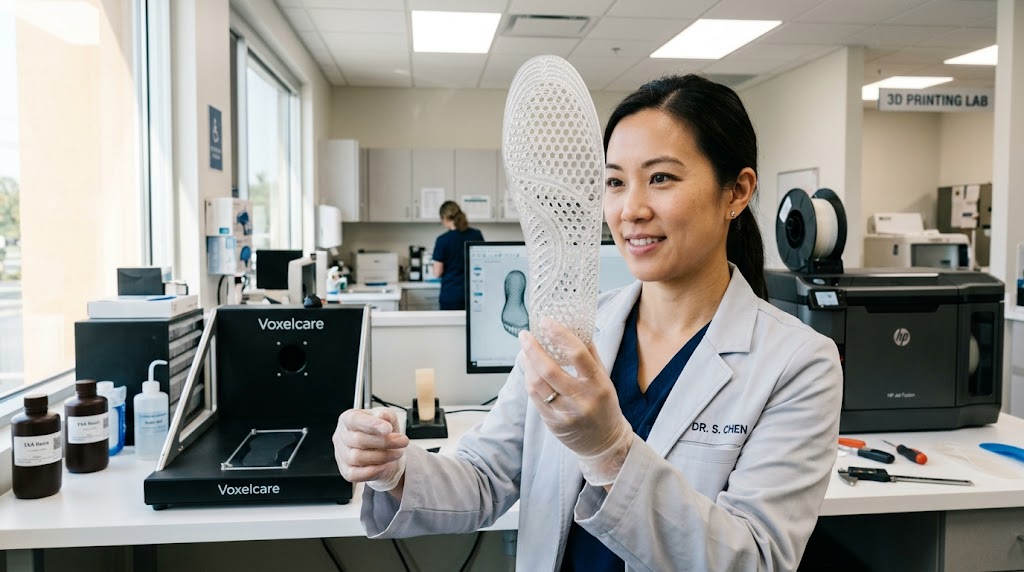
For brands exploring mass customization or direct-to-consumer orthotic programs, Amfit’s digital workflow is compelling. Their system captures foot shape data, generates a custom insole design, and manufactures the product — all within a streamlined digital pipeline. This is particularly relevant for therapeutic footwear brands operating under ISO 13485 quality systems, where patient-specific devices require documented manufacturing traceability.
The limitation is scalability for high-volume athletic or casual footwear. Amfit’s per-unit economics work best for premium-priced custom products, not commodity insoles at scale. If your brand needs tens of thousands of standardized insoles per season, a traditional OEM manufacturer will deliver better cost efficiency. But for premium orthotic programs, medical footwear lines, or retail customization experiences, Amfit’s technology platform is among the most advanced available.
5. Superfeet — Best for Structured Support Insoles
Superfeet has built a strong retail and brand-partnership presence around structured, shape-based insole design. Their insoles typically feature a deep heel cup and defined arch profile, targeting consumers who need biomechanical support rather than pure cushioning. Superfeet operates both as a consumer brand and as a B2B partner for footwear companies that want to incorporate structured insole technology into their products.
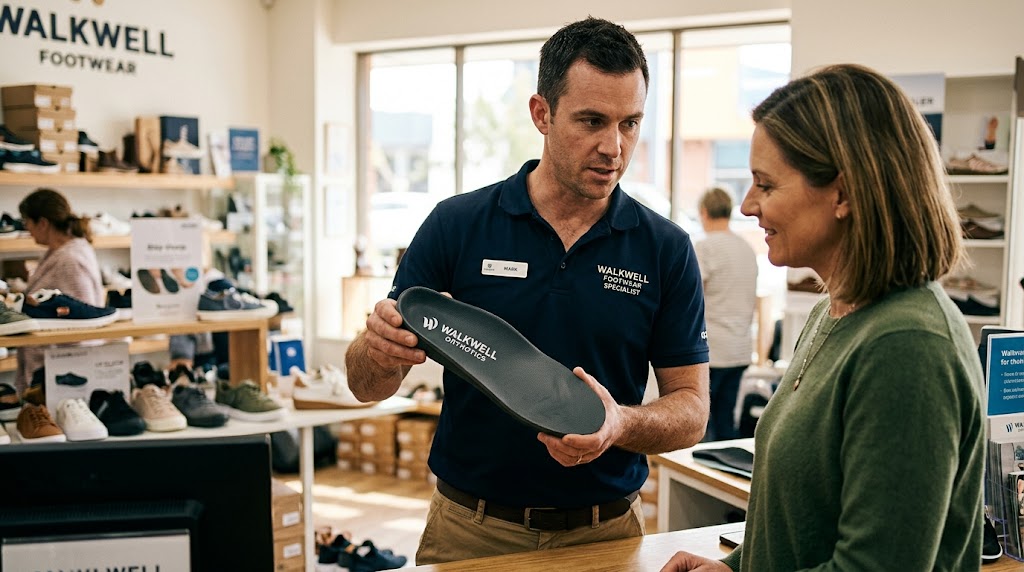
From a sourcing perspective, Superfeet’s value proposition centers on its proprietary shape and support philosophy. The company has invested heavily in fit research and maintains a well-organized product architecture that makes it relatively easy for brand partners to select appropriate insole profiles for different shoe categories. Their sustainability efforts include plant-based foam materials and recycled content options.
For brand buyers evaluating Superfeet as a supplier, the consideration is similar to OrthoLite: you’re buying into a branded system with established specs and pricing structures. If your design team wants full control over insole geometry, material hardness, and density zoning — the kind of ground-up customization that if you’ve explored custom insoles for athletes you’ll understand requires close OEM collaboration — a dedicated manufacturing partner may offer more flexibility than Superfeet’s structured product range.
6. Spenco — Best for Medical & Comfort Insoles
Spenco Medical Corporation has decades of history in medical and comfort insole products. Originally founded to address foot health in clinical settings, Spenco now serves both consumer retail and B2B channels. Their insole lines emphasize cushioning, anti-microbial treatment, and podiatric support — making them a natural fit for brands in the comfort, wellness, and medical footwear segments.
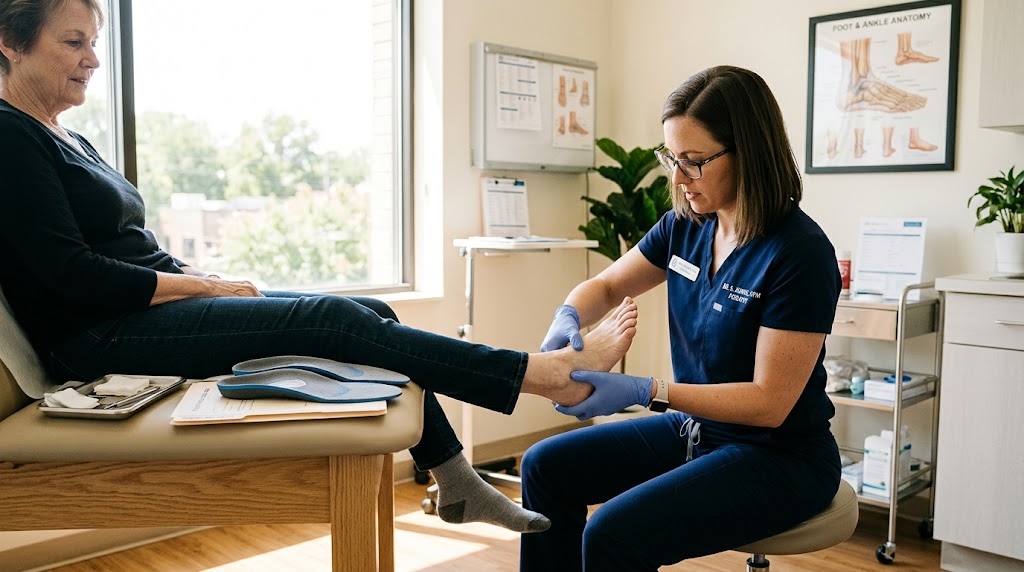
Spenco’s B2B offering includes co-branded insole programs and white-label manufacturing for brands that want clinically positioned insole products without developing the expertise in-house. Their Total Support line and Polysorb products are well-documented and have strong recognition among podiatrists and sports medicine professionals, which can be valuable for brands that market through healthcare channels.
The trade-off is that Spenco’s manufacturing is primarily US-based, which affects unit economics compared to Asia-based suppliers. For brands with US-market distribution that prioritize domestic sourcing or “Made in USA” positioning, this is an advantage. For brands optimizing landed cost across global supply chains, the pricing differential can be significant — particularly at higher volumes where Asian manufacturers with regional footprints offer substantially better cost efficiency at scale.
7. Dr. Scholl’s (Bayer/Reckitt) — Best Brand Recognition
Dr. Scholl’s is the most widely recognized insole brand in the consumer market, which creates interesting B2B opportunities for footwear brands that want to leverage that name recognition. Through licensing and partnership programs, brands can incorporate Dr. Scholl’s insole technology and branding into their footwear products, instantly communicating comfort credentials to end consumers.
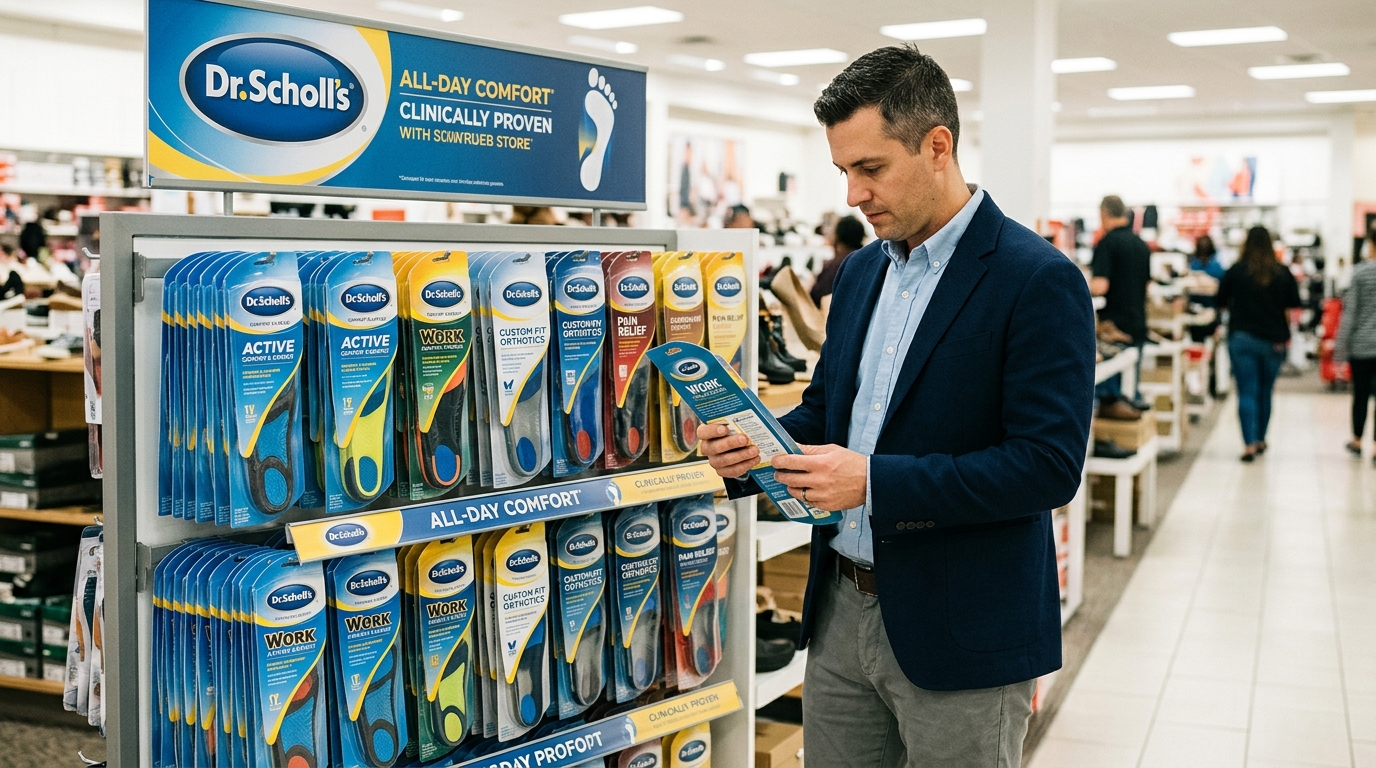
The Dr. Scholl’s portfolio spans gel insoles, foam cushioning, and orthotic support products, covering a broad range of comfort and therapeutic applications. The brand’s consumer research and marketing investment means that “Dr. Scholl’s inside” carries immediate trust value — particularly in the US market, where consumer awareness is highest.
However, for custom insoles suppliers evaluation, Dr. Scholl’s operates very differently from a dedicated OEM partner. The licensing model means you’re working within pre-defined product specifications and branding guidelines. Customization options are more limited than what a full-service OEM can offer, and per-unit licensing costs add to the BOM. For brands that need deep technical customization — specific Asker C hardness ranges, multi-density constructions, or structural elements like TPU plates — a manufacturing-first partner will provide more design freedom.
8. Healix (Texon) — Best for Fiber-Based Insole Boards
Healix, part of the Texon group, specializes in fiber-based insole boards and structural insole components. While many suppliers on this list focus on foam cushioning, Healix occupies the structural foundation layer — the insole board that sits between the midsole and the comfort insole, providing rigidity, shape retention, and lasting structure to the shoe.
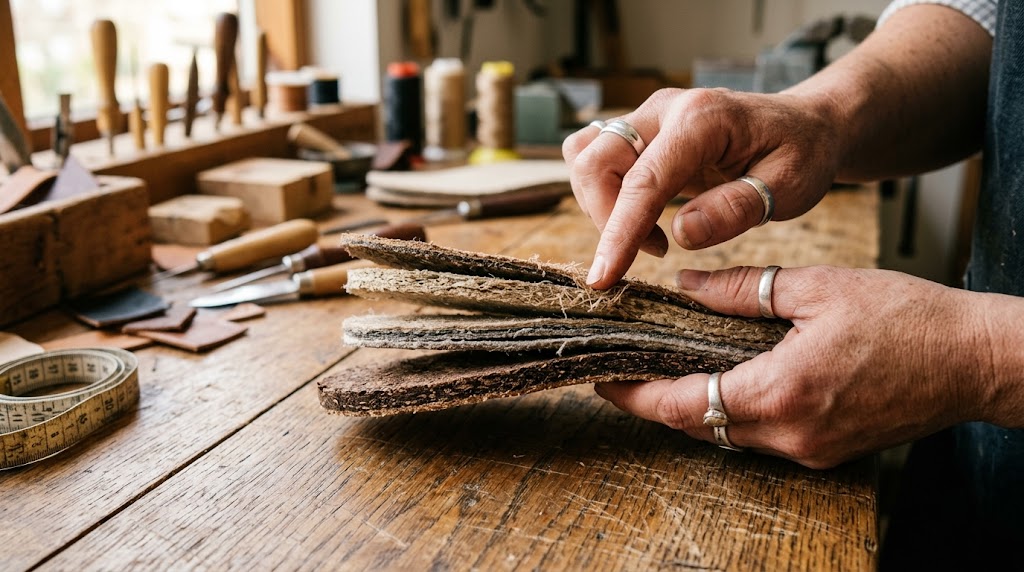
For brands designing cemented-construction footwear, the insole board is a critical but often overlooked component. Healix offers cellulose-based, synthetic, and blended insole board materials with varying stiffness, moisture resistance, and weight characteristics. Their product range addresses everything from lightweight athletic boards to rigid dress shoe foundations.
Texon’s global manufacturing network spans multiple continents, which supports supply-chain resilience. The company also offers sustainable insole board options using recycled fiber content. For footwear product managers, Healix is typically part of a multi-supplier BOM rather than a sole-source partner — you’ll still need a separate cushioning insole supplier. But for the structural component, Healix’s specialization and material science depth make them a strong choice.
9. Nikitas (Greece) — Best for European Sourcing
Nikitas is a European insole manufacturer based in Greece, offering EVA, PU, and multi-material insole production for brands that prioritize EU-based manufacturing. For European footwear brands — particularly those in the Mediterranean footwear cluster spanning Italy, Spain, Portugal, and Greece — Nikitas offers geographic proximity, shorter lead times, and simplified logistics compared to Asian suppliers.
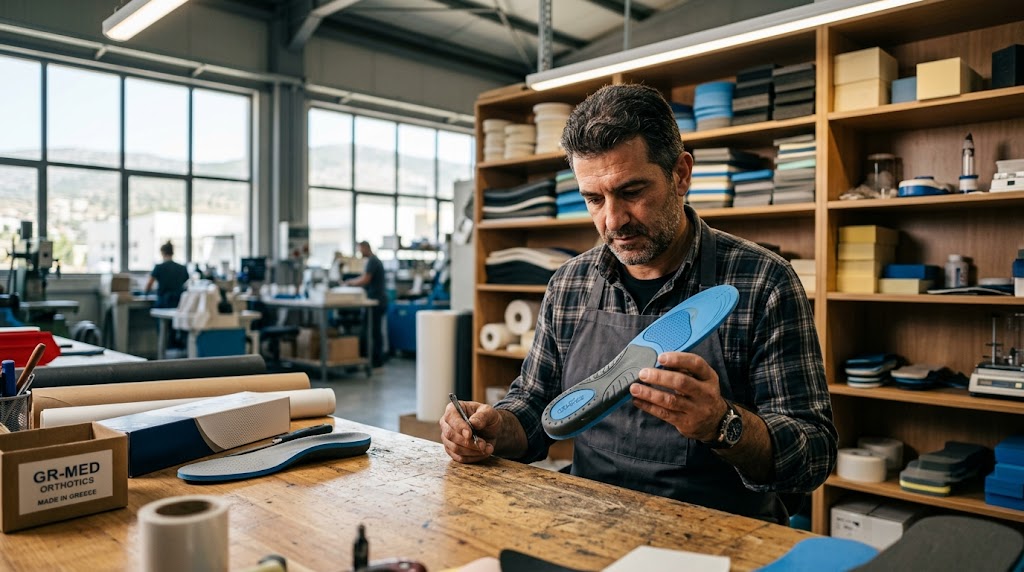
The company provides compression-molded and injection-molded insoles with standard customization options including density selection, surface finishing, and branding. Nikitas has invested in sustainability initiatives aligned with EU regulatory frameworks, and their European location simplifies REACH compliance for brands selling primarily within the EU market.
For US-market brands, Nikitas is generally less cost-competitive than Asian manufacturers due to higher labor and material costs in Europe. However, for brands with significant European distribution or those seeking a dual-sourcing strategy with one Asian and one European supplier for supply-chain resilience, Nikitas provides a credible EU manufacturing option. The company is best suited for mid-volume European programs rather than high-volume global production runs.
10. Zhejiang Kailong — Best Budget EVA Supplier
Zhejiang Kailong represents the high-volume, cost-optimized end of the custom insoles supplier spectrum. Based in China’s Zhejiang province, the company specializes in EVA insole production at scale, targeting brands and private-label programs where unit cost is the primary decision driver.
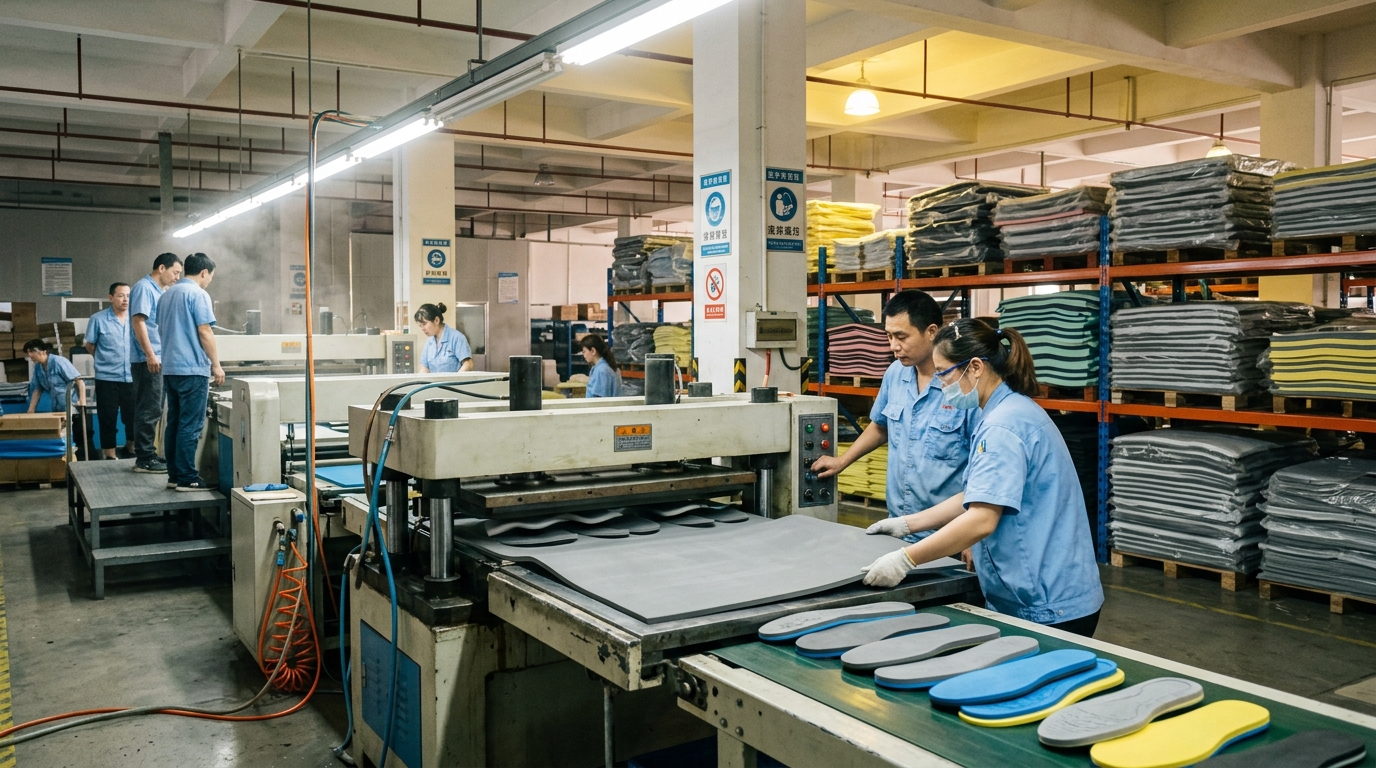
Kailong’s strength is straightforward: competitive pricing on standard EVA insole constructions with basic customization options. For brands launching value-tier product lines, promotional footwear, or high-volume programs where the insole is a basic comfort layer rather than a performance feature, Kailong can deliver acceptable quality at aggressive price points. Their die-cut EVA capabilities support fast turnaround on standard shapes and sizes.
The trade-off is evident in customization depth and technical support. Brands requiring precise hardness specification, multi-density construction, advanced materials like supercritical foam, or comprehensive compliance documentation (Prop 65 testing, GRS traceability, third-party verification) will find Kailong’s capabilities more limited than full-service OEM partners. For basic EVA insoles at maximum volume efficiency, they’re competitive. For anything requiring technical sophistication or sustainability credentials, look higher on this list.
Custom Insoles Supplier Selection: Key Criteria
Choosing among these custom insoles suppliers requires mapping your specific needs against each vendor’s strengths. Here’s a framework for making that decision:

Start with your material requirements. If your line spans EVA, PU, and supercritical foam across different SKUs, a one-stop manufacturer eliminates the complexity of managing multiple insole vendors. If you only need one material type at massive volume, a specialist may work. Consider whether you need sustainable material options — sugarcane-based EVA, algae-based EVA, recycled compounds, or bio-based PU — and whether the supplier can provide GRS-certified traceability documentation for those materials.
Map the manufacturing footprint against your assembly factories. If your Tier 1 assembly is in Vietnam, sourcing insoles from a supplier with Vietnam-based facilities dramatically reduces logistics complexity and transit time. This is where regional manufacturers with multi-country operations provide a genuine strategic advantage over single-location suppliers. Consider duty implications as well — manufacturing location affects tariff exposure under current US trade policy.
Evaluate compliance capabilities against your market requirements. For US-destined products, ensure your supplier can support CPSC compliance, California Prop 65 testing, and relevant ASTM test reports. For brands also selling into the EU, confirm whether the supplier can coordinate REACH compliance on a project basis. Social audit readiness (BSCI/SMETA) is increasingly important for brands with ESG commitments. An OEM insole manufacturer that proactively maintains these credentials reduces your compliance workload significantly.
Insole Sourcing Timeline & Process Overview
Understanding the typical sourcing timeline helps set realistic expectations with your internal team. For a first-time custom order with a new supplier, the total cycle from initial specification to goods ready for shipment typically runs 45–70 days, depending on complexity. Add 18–30 days for ocean freight to US ports (or 5–10 days for air freight), and you’re looking at approximately 65–100 days from spec finalization to delivery.

The process generally follows this sequence: initial inquiry and quotation (expect responses within 48 hours for standard constructions), technical evaluation and material selection, sampling (die-cut samples in roughly 3 days; new-mold samples in approximately 10 business days), sample approval, bulk production (20–35 days for standard EVA, 30–45 days for supercritical foam), quality inspection, and shipment. Standard payment terms for new customers are typically 30% deposit upfront with 70% before shipment, though terms can become more flexible as the relationship and order volumes grow.
For brands running seasonal calendars, this means insole sourcing decisions for a fall collection need to be initiated no later than early spring — and ideally earlier if you’re developing new constructions or testing new materials. Building supplier relationships during off-peak periods gives you better access to sampling resources and development attention.
FAQ
What defines a good custom insoles supplier?
A strong supplier offers diverse material capabilities (EVA, PU, supercritical foam), relevant certifications for your target market (GRS, Higg Index, CPSC/Prop 65 compliance), and manufacturing locations near your Tier 1 assembly factories. Consistent quality across production batches and transparent communication are equally critical.
How long does custom insole sampling take?
Die-cut or knife-cut samples with no new tooling typically take about 3 days, while samples requiring new mold or tooling run approximately 10 business days. These timelines begin after confirmed specifications and material approval are received.
What certifications matter for US-market insoles?
For US-market footwear, prioritize CPSC compliance, California Prop 65 testing, and relevant ASTM/SATRA/SGS test reports. On the sustainability side, GRS certification and Higg Index participation are increasingly expected by major retailers and brand partners.
What’s the cost difference between EVA and supercritical foam?
Supercritical CO₂ foam insoles carry a higher unit cost than standard EVA due to specialized equipment and processing requirements, but they deliver superior energy return and consistent performance over time. The premium is typically justified for performance and athletic footwear categories.
Can one supplier handle insoles plus other components?
Yes — one-stop component manufacturers like FX Footwear produce insoles, midsoles, uppers, and other footwear parts, allowing brands to consolidate suppliers and reduce coordination complexity across multiple component categories.
Ready to start your next insole development project? FX Footwear (Fuxiang Group) offers one-stop footwear component manufacturing across China, Vietnam, and Indonesia — with the material range, certifications, and production scale to support brands from sampling through high-volume delivery. Reach out to the FX team to get an initial quotation within 48 hours and discover why leading global footwear brands trust Fuxiang Group as their insole manufacturing partner.
Browse more articles in Sourcing & OEM Solutions.