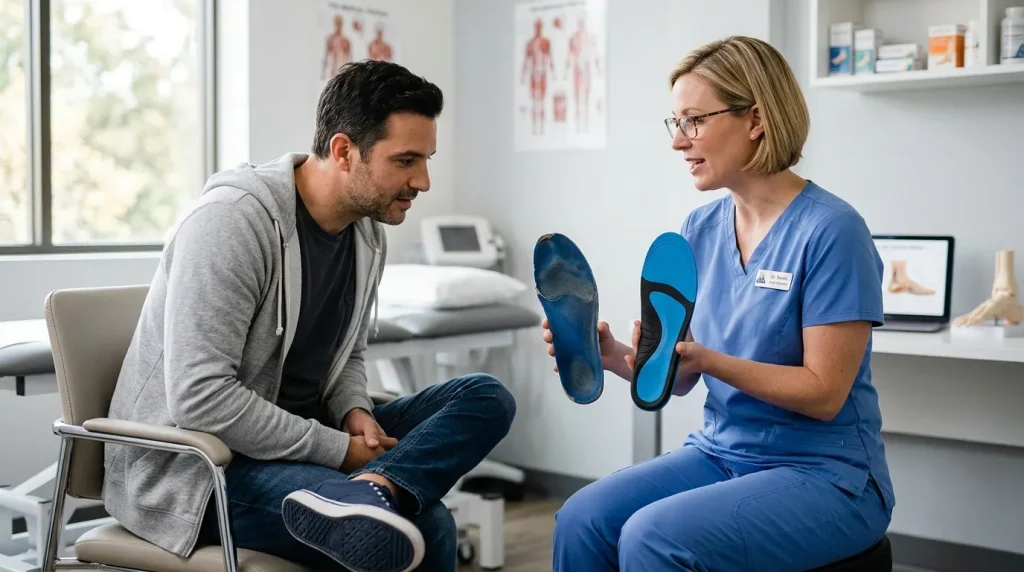
Your insoles are probably worn out right now. Most people don’t notice until their knees ache, their feet burn at the end of the day, or they realize the “new shoe smell” disappeared three years ago. Replacement insoles aren’t a luxury purchase — they’re the cheapest fix for shoes that have lost their cushioning but still have months of life in the upper and outsole.
Here’s the thing most people miss: the insole is the first component to fail in any shoe. The midsole compresses over time, sure. But the insole — the part directly under your foot — takes every gram of your body weight, absorbs sweat, and gets ground down by the repetitive micro-movements of walking. If you’re wearing the same pair of work boots or running shoes five days a week, you’re standing on a flat, dead slab of foam long before the treads wear smooth.
This guide covers the actual signs of insole failure, how long different materials last (with real numbers, not marketing fluff), and what to look for when you upgrade. Whether you’re a brand sourcing from a custom shoe insole manufacturer or a consumer wondering why your feet hurt, the material science is the same.
Five Signs Your Insoles Failed
A worn insole doesn’t announce itself. It degrades slowly, and your body compensates — until it can’t.
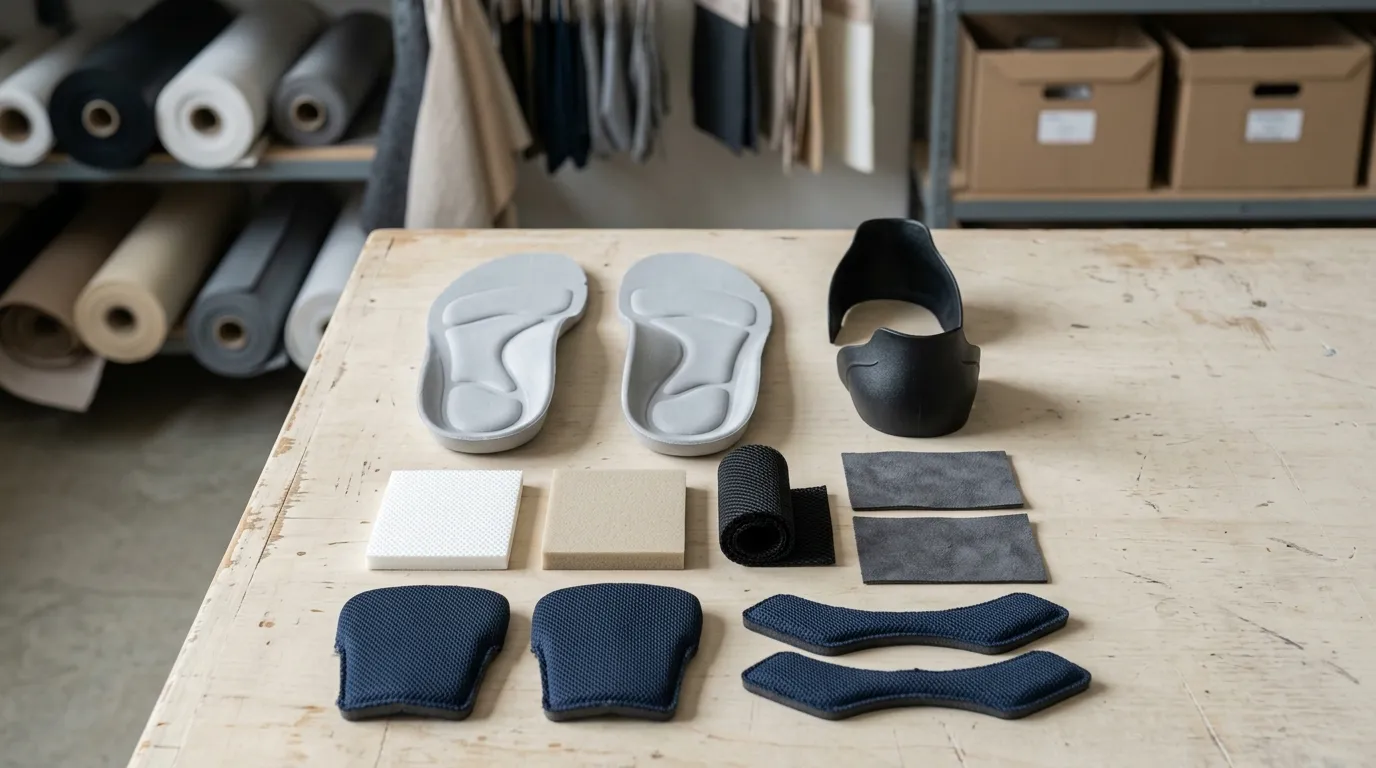
1. Visible compression marks. Pull your insole out. If you can see a permanent imprint of your heel and ball-of-foot that doesn’t spring back after 24 hours, the foam cells have collapsed. This is especially common in stock EVA insoles after 4–6 months of daily wear.
2. Uneven thickness. Run your thumb along the heel zone versus the arch. If the heel feels noticeably thinner (even 1–2mm difference), your foot is sitting lower than the shoe’s design intended. That changes your gait mechanics.
3. Odor that won’t wash out. Bacteria embed in open-cell foam over time. If a thorough wash and dry cycle doesn’t fix the smell, the foam’s cell structure has broken down enough to trap organic material permanently. This is a hygiene issue, not just an aesthetic one.
4. New foot pain with old shoes. Your plantar fascia, Achilles tendon, and metatarsal heads all respond to changes in cushioning underfoot. A 2019 study published in the Journal of Foot and Ankle Research found that insole material degradation correlated with increased plantar pressure in the forefoot — the kind of pressure that leads to metatarsalgia. If your shoes felt fine six months ago and don’t now, check the insoles before blaming the shoes.
5. The fold test. Fold your insole in half lengthwise. A new EVA insole resists and springs open. A dead one folds like a taco and stays there. PU insoles are harder to fold-test (they’re denser), but if they’ve lost their surface tension and feel “mushy” under thumb pressure, same verdict.
One sign that does not mean your insole is dead: surface wear on the top cloth. Fabric pilling or minor abrasion is cosmetic. The foam underneath is what matters.
Material Lifespan: EVA vs. PU vs. SCF
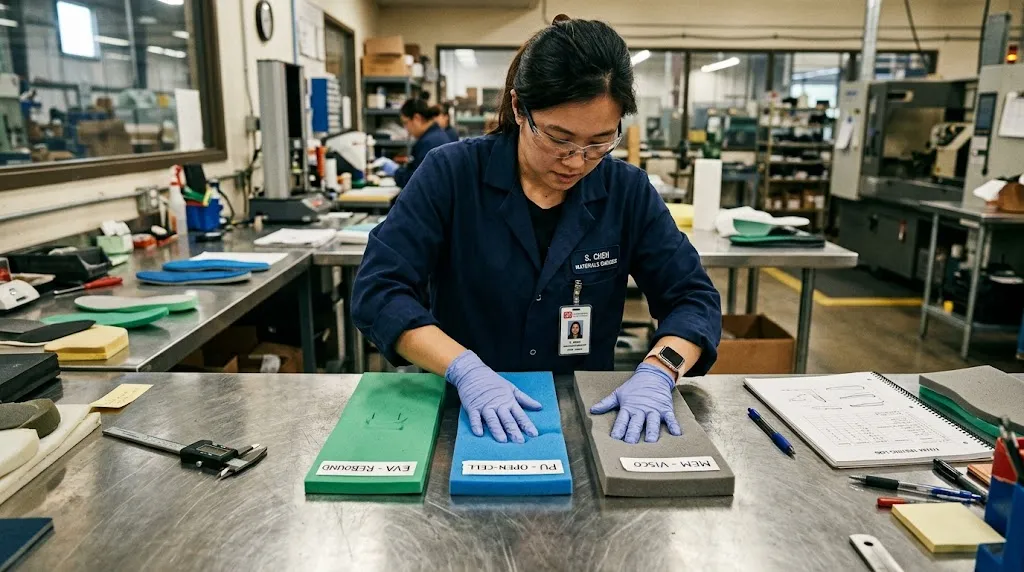
Replacement insole lifespan depends almost entirely on the foam type. Here’s what we see across production and field testing — not the idealized numbers from a spec sheet.
| Material | Typical Lifespan (Daily Wear) | Why It Fails | Best Use Case |
|---|---|---|---|
| EVA (compression-molded) | 4–8 months | Cell collapse under repeated compression; loses 40%+ of original cushion by month 6 | Athletic, casual, workwear — good value at scale |
| PU (open-cell polyurethane) | 8–14 months | Slower compression set; retains shape longer but eventually loses surface softness | Dress shoes, comfort footwear, applications where long-term shape retention matters |
| Supercritical CO₂ foam | 12–18+ months | Microcellular structure with predominantly closed cells resists compression set far longer than conventional EVA | Performance athletic, running, high-mileage applications |
EVA is the workhorse of the insole world. Hardness typically ranges from 20–45 Asker C (with ±3 tolerance), and softer formulations feel great on day one but compress faster. A 25 Asker C EVA insole in a running shoe worn 30+ miles per week? You’re looking at replacement around the 300-mile mark — roughly 3–4 months for a regular runner.
PU’s advantage isn’t energy return (that belongs to supercritical foam). PU excels at compression resistance and long-term shape retention. Open-cell PU also breathes better than closed-cell EVA, which matters for all-day wear in warm climates. The tradeoff: PU insoles are heavier. If you’re sourcing cushioned shoe insoles for a comfort-first brand, PU makes the case on durability alone.
Supercritical CO₂ foam — what we call our PulseSport line — changes the math. Because the foaming process uses CO₂ or N₂ as the blowing agent (without traditional chemical blowing agents), the resulting microcellular structure holds up under repeated impact cycles that would flatten conventional EVA. Energy return stays consistent across the insole’s life, not just for the first few weeks. For brands building performance insoles, this consistency is the selling point — not just peak performance, but sustained performance over 12+ months.
Upgrading Beyond Stock Insoles
Stock insoles (the ones that come in your shoes out of the box) are almost always the cheapest component in the build. Brands allocate their material budget to the midsole, outsole, and upper — the parts consumers see and feel in-store. The insole? Thin die-cut EVA, maybe with a printed top cloth. It’s there to cover the strobel board, not to perform.
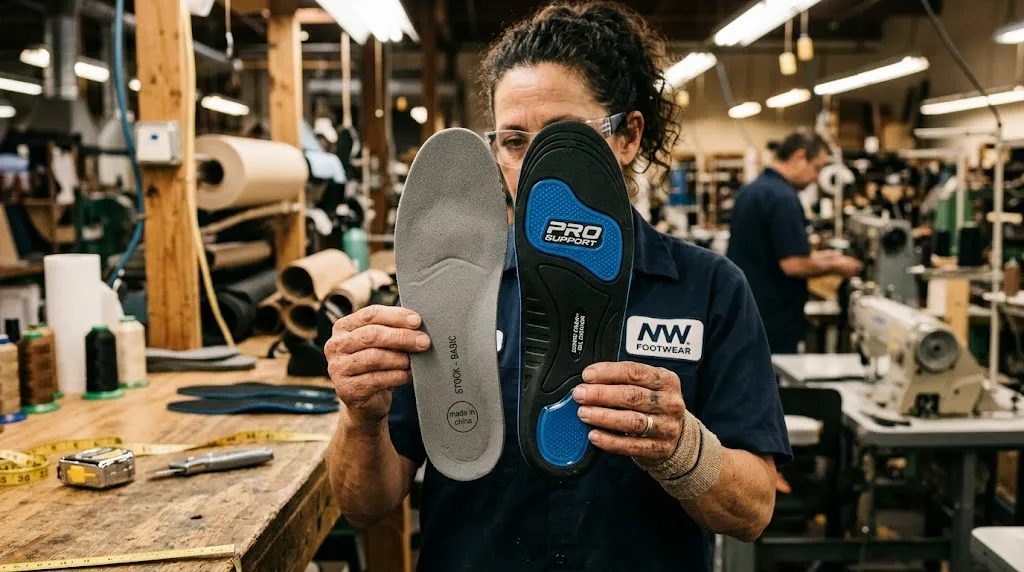
Upgrading means choosing a replacement insole that’s actually engineered for your use case. Here’s where it gets specific.
For high-impact sports: Look for multi-density construction. A firmer base layer (35–40 Asker C EVA or a TPU plate) paired with a softer top layer absorbs impact without bottoming out. This is the same principle behind basketball shoe insoles — lateral stability from the structure, cushioning from the foam.
For all-day standing (retail, hospitality, warehouse work): PU wins here. Your feet don’t need energy return when you’re standing on concrete for 10 hours — they need consistent cushioning that doesn’t flatten by hour six. Open-cell PU’s breathability is a real benefit when socks are soaked by lunchtime.
For running: Supercritical foam if you can get it. The rebound consistency over high mileage is measurably better than EVA. If budget matters (and it always does), a compression-molded EVA insole in the 25–30 Asker C range replaced every 300–400 miles is the pragmatic choice.
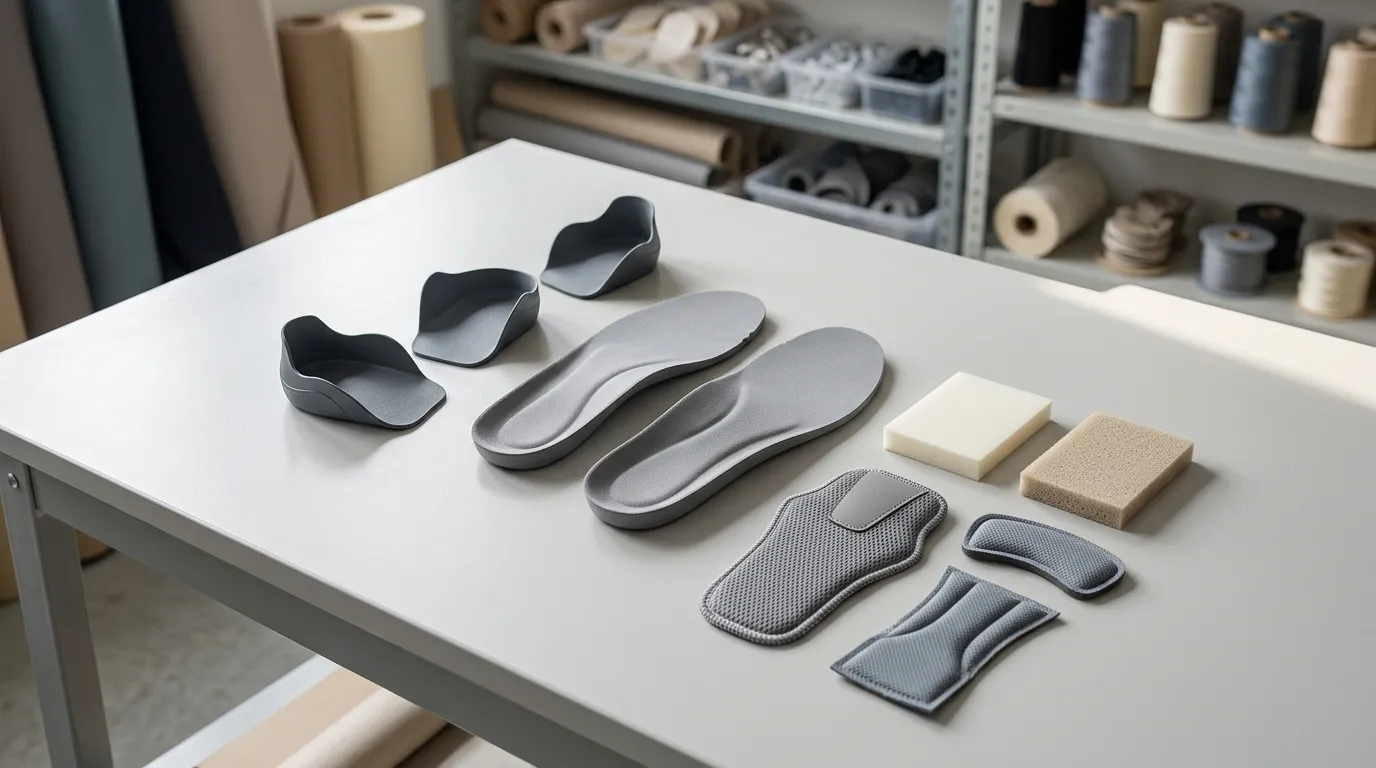
For anyone with foot conditions: This is where orthotic insoles for running or structured insoles with arch support, heel cups, and metatarsal pads come in. FX Footwear holds ISO 13485:2016 certification — that’s a medical-device quality management standard — which matters if you’re sourcing insoles for therapeutic or orthotic applications.
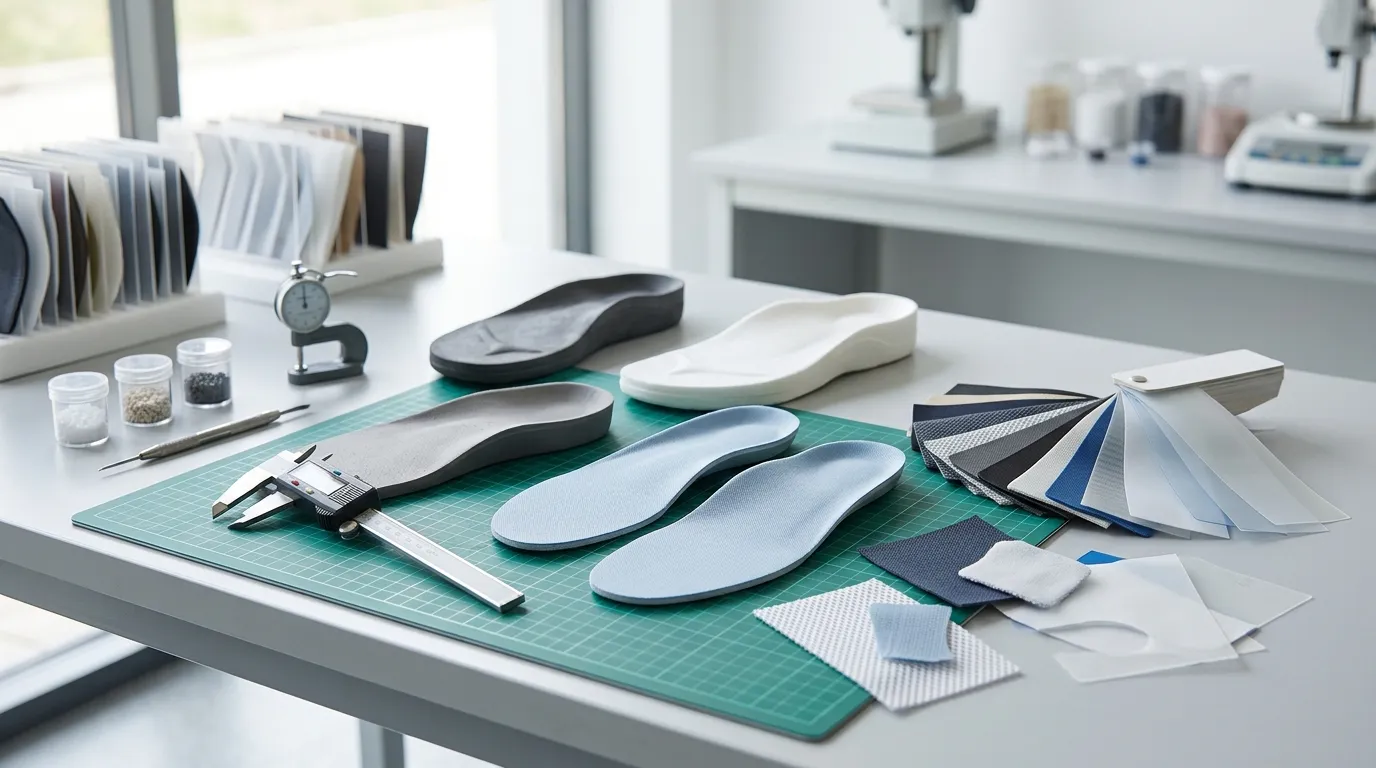
One upgrade most people overlook: the top cloth. Antimicrobial treatments, moisture-wicking fabrics, and high-friction surfaces (to prevent sock slippage inside the shoe) all live on the insole surface. When we produce insoles at FX, branding goes on via heat transfer print or screen print on the top cloth, with emboss or deboss reserved for structural components like heel cups.
Cost of Replacing vs. Cost of Not
A pair of quality replacement insoles costs $8–$30 at retail. A new pair of shoes costs $80–$200+.
That’s the basic math, but there’s a less obvious cost. The American Podiatric Medical Association (APMA) estimates that 77% of Americans experience foot pain, yet only a third of those seek treatment. Much of that pain is biomechanical — caused or worsened by inadequate support underfoot. A $15 replacement insole doesn’t cure plantar fasciitis, but it can reduce the daily stress that aggravates it.
For B2B buyers — brands and retailers reading this — the economics shift further. Offering a branded replacement insole as an accessory or aftermarket product extends customer lifetime value. Your customer bought the shoe once. They’ll buy replacement insoles two or three times during the shoe’s life. If those insoles carry your branding (heat transfer, screen print, your colorway), you’ve turned a consumable into a brand touchpoint.
We see this pattern with partners like HOKA and Clarks. The shoe gets the marketing spotlight. The insole gets the repeat purchase.
From a sourcing perspective, replacement insoles are also simpler to produce than full-shoe insoles that need to match a specific last and midsole geometry. Die-cut EVA insoles with no new tooling required ship as samples in about 3 days. Custom molds take roughly 10 business days. Bulk production for standard EVA insoles runs 20–35 days after payment confirmation — fast enough to respond to seasonal demand without sitting on inventory.
When Replacement Isn’t Enough
Sometimes the insole isn’t the problem.
If your shoe’s midsole has compressed visibly (check for creasing on the sidewall, especially under the heel), a new insole will feel better but won’t fix the structural issue. You’re putting a fresh mattress topper on a broken bed frame. Midsole compression is why running shoe brands recommend retirement at 300–500 miles — the EVA midsole, not just the insole, loses its cushioning.
Similarly, if the shoe’s heel counter has collapsed or the upper has stretched to the point where your foot slides laterally, no insole upgrade compensates for the loss of fit. Insoles manage the vertical forces (impact, cushion, rebound). Fit and stability come from the shoe’s structure.
The honest answer: replace your insoles every 4–8 months for EVA, 8–14 months for PU, or 12–18 months for supercritical foam. Replace the whole shoe when the midsole and upper give out. And if you’re a brand designing shoes, spec a durable insole that outlasts the stock option — your customers will notice, even if they can’t articulate exactly why the shoe “still feels good” at month ten.
FAQ
How often should you replace insoles?
Every 4–8 months for EVA insoles with daily wear, 8–14 months for PU, and 12–18 months for supercritical CO₂ foam. High-mileage runners should replace EVA insoles every 300–400 miles regardless of calendar time.
Can replacement insoles fix foot pain?
Replacement insoles can reduce pain from plantar fasciitis, metatarsalgia, and general fatigue by restoring lost cushioning and support. They’re not a medical treatment — persistent pain warrants a visit to a podiatrist.
Are aftermarket insoles better than stock?
Almost always yes. Stock insoles are typically thin die-cut EVA chosen for cost, not performance. Aftermarket options use denser foams, multi-layer construction, and better top cloths.
Do replacement insoles fit any shoe?
Most replacement insoles come in standard sizes and can be trimmed along printed guidelines. Insoles designed for specific shoe types (dress shoes vs. athletic) vary in thickness and profile, so match the insole to your shoe category.
What’s the best insole material for standing all day?
Open-cell PU insoles offer the best combination of long-term compression resistance and breathability for extended standing on hard surfaces. Supercritical foam is an alternative if you also need energy return for walking between stations.
FX Footwear (Fuxiang Group) manufactures EVA, PU, and supercritical CO₂ foam insoles — plus midsoles, uppers, and other footwear components — across facilities in China, Vietnam, and Indonesia. If you’re a brand looking to source replacement insoles at scale, request a quote at fxfootwear.com. Initial quotations come back within 48 hours for standard constructions. We handle everything from material foaming to finished product, so you’re working with one supplier instead of four.