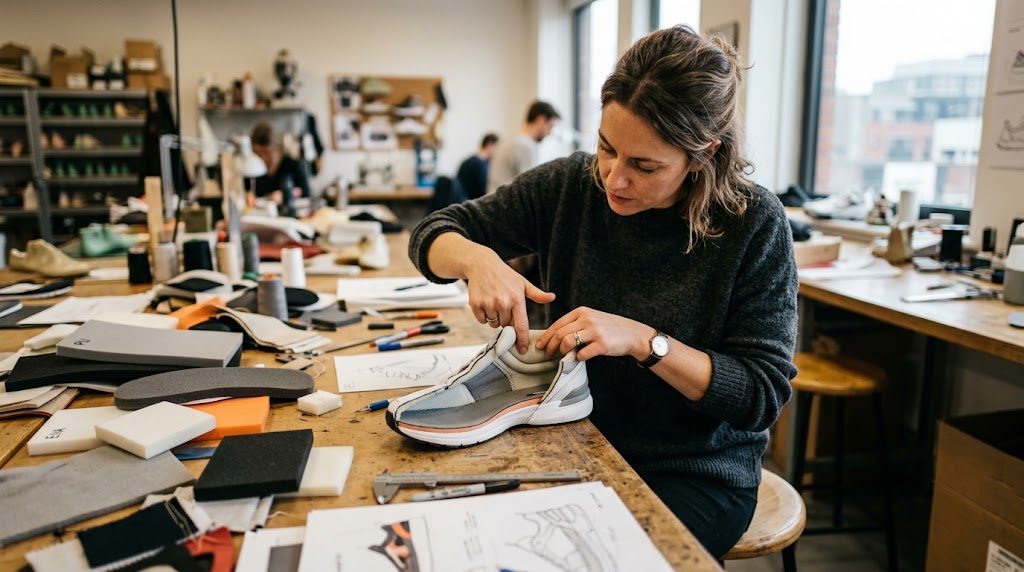
The collar — that ring of material hugging your ankle at the shoe’s topline — determines whether a shoe feels like it belongs on your foot or fights it with every step. 3D padded shoe collars use shaped foam inserts and engineered construction to create ankle zones that conform to anatomy rather than just wrapping flat material around an opening. If you’re developing footwear and the collar is an afterthought, this is where fit complaints start.
This article breaks down the foam types, molding approaches, performance tradeoffs, and real application decisions behind 3D collar padding — the kind of detail that matters when you’re speccing uppers for production.
What Makes a Collar “3D”?
A 3D padded shoe collar is a collar section constructed with pre-shaped or molded foam that follows the contours of the ankle and Achilles tendon area, rather than relying on flat-cut foam sandwiched between textile layers.
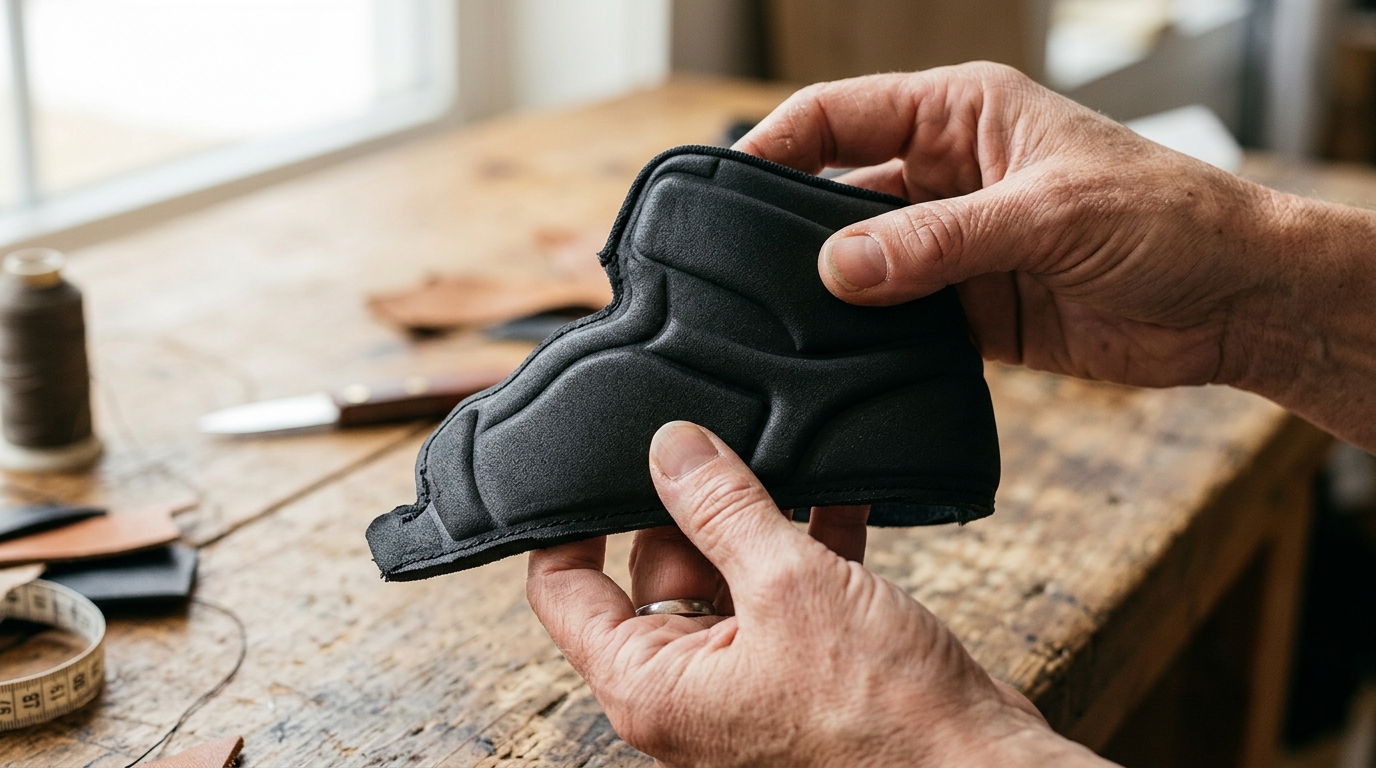
Traditional collars use die-cut foam sheets — typically 3–5 mm thick — layered between an outer shell and a lining. They’re uniform in thickness. The problem? Your ankle isn’t uniform. The medial malleolus (inner ankle bone) sits lower than the lateral one. The Achilles tendon creates a pronounced ridge at the back. A flat foam collar ignores all of this.
3D collars address the geometry directly. The foam is either thermoformed into a specific shape before assembly, injection-molded as a discrete component, or constructed with variable-thickness zones sewn or bonded into the collar pattern. Some designs integrate a sculpted heel notch (sometimes called an Achilles notch or heel dip) that relieves pressure on the tendon — you’ll see this on nearly every modern running shoe from HOKA, On, and KEEN.
The “3D” label also applies to collars using heat-activated foam that shapes during the lasting process. The foam starts flat but molds to the last’s collar profile when exposed to the oven temperatures in production (typically 80–120°C depending on the foam chemistry). Once cooled, it holds that shape permanently.
Why does this matter for your product? Because collar fit is one of the top three sources of consumer comfort complaints — alongside arch support and toe box width. A poorly designed collar creates heel slip, Achilles irritation, or that annoying bite point where stiff material digs into the ankle during dorsiflexion. 3D shaping addresses all three.
Foam Types for Collar Padding
Not all foams behave the same way when you compress them against an ankle bone 10,000+ times per day. Here’s what actually gets used in production — and where each one makes sense.
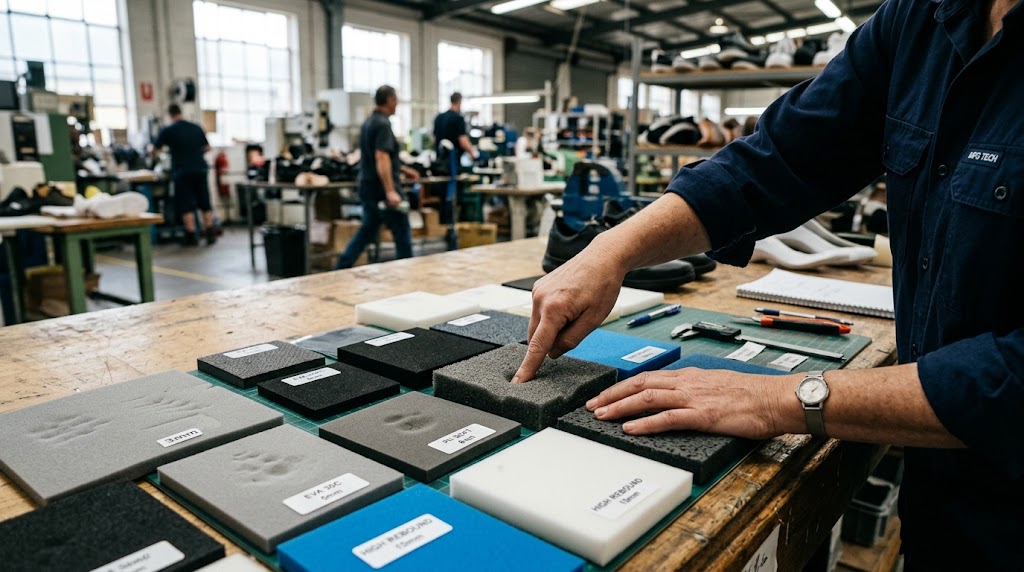
Open-cell PU foam remains the workhorse for collar padding in casual and comfort footwear. Its open-cell structure lets it breathe (important in a zone that traps heat between sock and shoe), and PU’s compression resistance means the collar won’t flatten out after 6 months of daily wear. Density typically runs 180–250 kg/m³ for collar applications. Clarks uses PU collar padding extensively in their comfort lines for exactly this reason — long-term shape retention without going rock-hard.
EVA foam, usually in the 25–35 Asker C range, shows up in athletic and lifestyle shoes where light weight matters more than longevity. It’s cheaper than PU, easier to thermoform, and can be produced in multi-density configurations (firmer behind the Achilles, softer over the ankle bones). The tradeoff: EVA compresses permanently faster than PU under sustained load. For a running shoe with an 18-month expected lifespan, that’s fine. For a work boot meant to last 3 years, it’s not.
Memory foam (viscoelastic PU) is popular in the “premium comfort” segment. It molds to the wearer’s specific ankle shape under body heat, which sounds great in marketing copy. In practice, memory foam’s temperature sensitivity means collar feel changes noticeably between a cold January morning and a warm August afternoon. It also bottoms out faster than standard PU under high loads.
Molded TPU foam appears in performance and outdoor footwear where collar structure needs to double as lateral support. TPU foam is denser and more resilient than EVA, holding shape under repeated flex cycles. KEEN integrates TPU-based collar structures in several hiking models where ankle stabilization matters.
| Foam Type | Density Range | Best For | Lifespan Concern |
|---|---|---|---|
| Open-cell PU | 180–250 kg/m³ | Comfort, casual, work | Excellent retention |
| EVA (25–35 Asker C) | 80–150 kg/m³ | Athletic, lifestyle | Compresses over 12–18 months |
| Memory foam (viscoelastic PU) | 60–120 kg/m³ | Premium casual | Temperature-sensitive, bottoms out |
| Molded TPU foam | 200–350 kg/m³ | Hiking, outdoor, performance | Very durable but heavier |
One thing to note: foam selection for the collar should be coordinated with the lining material supplier choice. A breathable collar foam paired with an impermeable lining defeats the purpose. The system needs to work together.
Molding Methods Compared
How you shape the collar foam dictates your tooling cost, production speed, and design freedom. Three methods dominate.
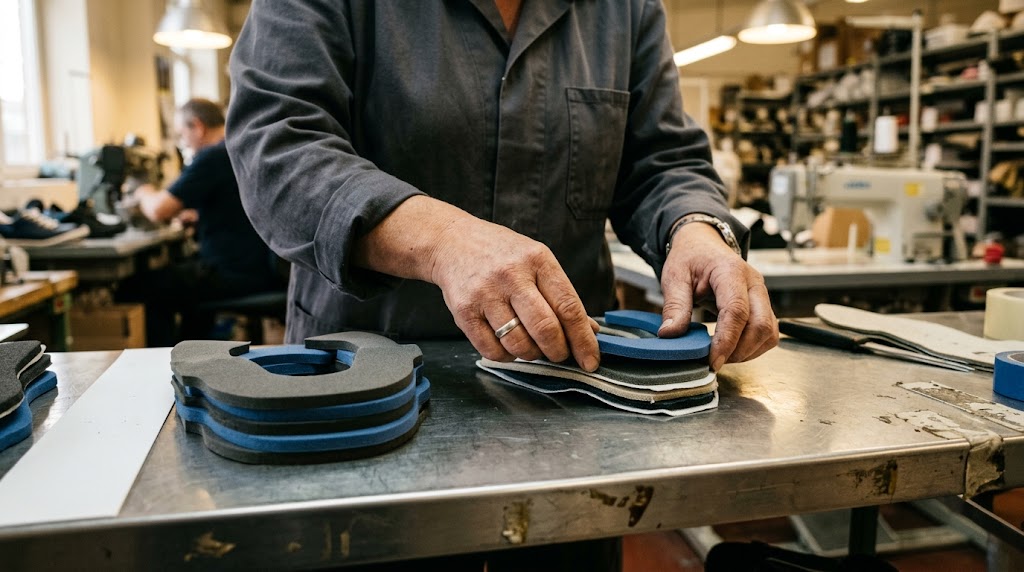
Die-cut and stacked construction is the simplest and cheapest. Foam sheets are die-cut into pattern pieces and layered — sometimes with varying thicknesses in different zones — then sewn or laminated between outer and lining fabrics. It’s not truly “3D” in the shaped sense, but strategic layering can approximate contoured padding. Die-cut collars work for entry-level products where tooling investment isn’t justified. Turnaround is fast because no molds are needed.
Thermoforming takes flat foam blanks and presses them over a heated mold to create the final 3D shape. The foam is heated until pliable (EVA typically at 90–110°C, PU at slightly higher temperatures depending on formulation), pressed into the mold cavity, then cooled under pressure. Thermoformed collars hold complex contours — Achilles notches, medial/lateral asymmetry, integrated tongue gussets — that flat construction can’t achieve. Tooling cost for thermoformed collar molds typically runs $2,000–$5,000 per size set, depending on complexity. This is the same thermoforming principle used in heel counters, and the processes share equipment; if you’re already investing in molded vs thermoformed heel counters, adding collar molds to the same production line is a logical step.
Injection molding produces the most precise collar components but requires the highest tooling investment ($8,000–$15,000+ per mold set). Liquid foam is injected directly into a closed mold and expands to fill it, creating exact geometries with consistent density throughout. Injection-molded collar inserts appear in premium athletic and orthopedic shoes where dimensional tolerance matters — think ±0.5 mm accuracy versus ±1.5 mm for thermoforming. The downside beyond cost: longer mold lead times (typically 4–6 weeks for new tooling) and less flexibility for mid-production design changes.
A hybrid approach is gaining traction: thermoformed foam bonded to an injection-molded structural frame. This lets you get the soft, contoured feel of thermoformed foam with the structural precision of an injection-molded skeleton. We’re seeing more requests for this configuration in performance hiking and trail running categories.
Ankle Support vs. Comfort Tradeoff
Here’s where collar design gets genuinely difficult. Support and comfort aren’t always aligned — and pretending otherwise leads to bad products.
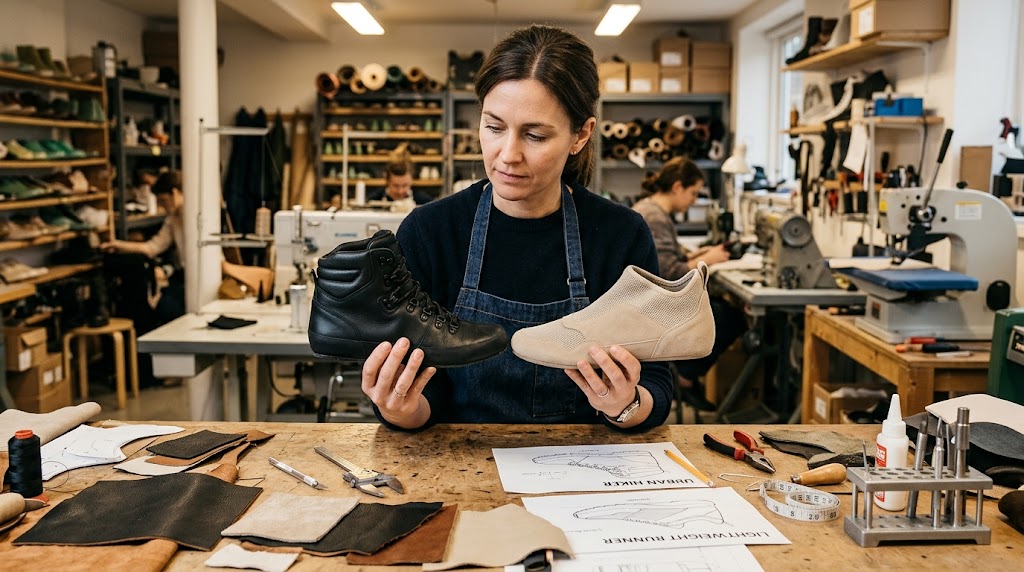
A thicker, firmer collar with higher ankle coverage provides more lateral stabilization. That’s physics: more material resisting ankle inversion/eversion = more support. Trail runners like the Salomon Speedcross build substantial collar padding precisely because uneven terrain demands it. But that same thick collar restricts ankle mobility during the gait cycle and creates pressure points if the padding doesn’t match the wearer’s anatomy. Runners who overpronate report medial collar irritation because the foam compresses asymmetrically with each stride.
Conversely, a thin, soft collar with a low-cut profile maximizes freedom of movement and minimizes weight. Road racing flats barely have collars at all. But that minimalism means zero support for the ankle joint, and any mismatch between foot shape and collar pattern shows up immediately as heel slip.
The answer isn’t “find the middle ground.” The answer is: match collar design to the use case.
- Road running / racing: Low-profile collar, 3–5 mm EVA, sculpted Achilles notch, minimal lateral structure
- Trail running / hiking: Medium-height collar, 6–10 mm PU or TPU foam, asymmetric padding (thicker laterally), integrated with the heel counter
- Work boots / safety footwear: High collar, 8–12 mm dual-density PU, firm lateral and rear zones, softer medial zone to accommodate flexion
- Casual / lifestyle: Medium collar, 5–8 mm memory foam or open-cell PU, uniform thickness, prioritizing out-of-box comfort over long-term support
What you can’t do is spec a plush 10 mm memory foam collar on a performance trail shoe and expect it to provide lateral stability. Memory foam deforms under load. That’s literally its selling point — and its structural weakness.
One design trick worth mentioning: graduated density within a single collar. The rear (Achilles zone) uses firmer foam to anchor the heel and prevent slip, while the sides use softer foam for ankle bone comfort. This requires either a multi-piece foam construction or a dual-density injection process, both of which add cost. But for mid-tier to premium products, the comfort improvement justifies it. Several HOKA models use this approach in their road and lifestyle shoes.
Applications Across Categories
3D padded collars aren’t limited to running shoes. The technology scales across almost every footwear category, though the execution varies significantly.
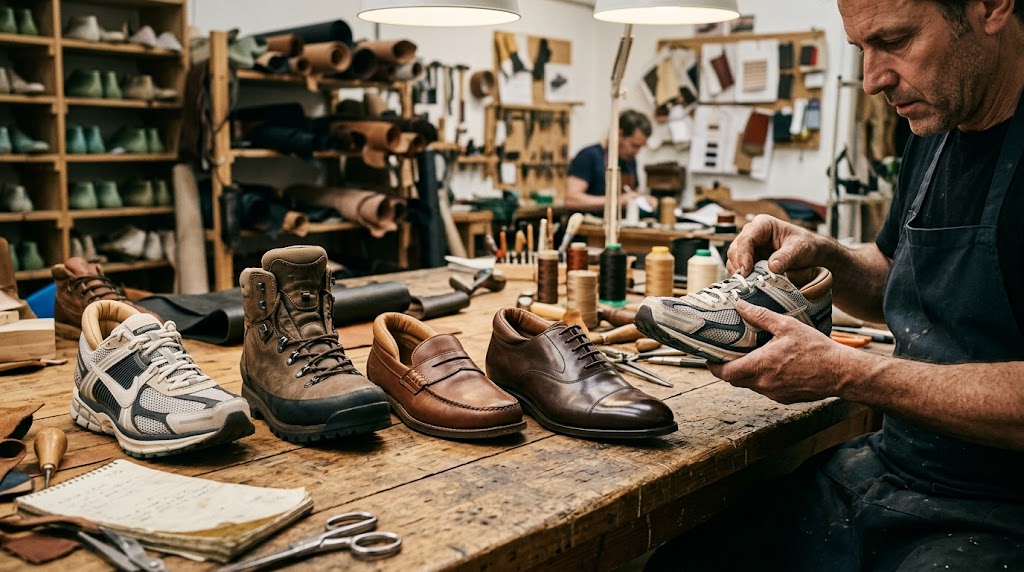
Athletic performance drives the most design innovation. Racing flats push toward ultra-thin engineered knit collars with minimal foam — sometimes just 2 mm of bonded EVA — while stability shoes and motion control models use structured multi-density collars integrated with the heel counter and midfoot cage.
Outdoor and hiking demands durability above all. Collar foam in a hiking boot faces water exposure, temperature swings from -10°C to 40°C, and compression forces from heavy loads (backpack weight transfers through the ankle). Closed-cell or semi-closed-cell foams dominate here because open-cell PU absorbs water and loses its cushioning properties when saturated.
Work and safety footwear has the strictest fit requirements because a poorly fitting collar in a steel-toe boot means an 8–12 hour shift of ankle pain. This is where PU collar padding truly outperforms EVA — the compression resistance keeps the collar functional through months of daily use on concrete. We’ve worked with brands on collar specs where the foam retention rate after 500,000 compression cycles was the primary selection criterion, not softness or weight.
Medical and therapeutic footwear — including diabetic shoes and post-surgical walking boots — requires collars that minimize pressure on sensitive ankle tissue. Under ISO 13485:2016 quality management standards (which FX holds), therapeutic collar components need documented material traceability and consistent mechanical properties batch to batch. Variable collar padding in this category isn’t just a comfort feature; it’s a medical device consideration.
Casual and lifestyle tends to be the most straightforward. Comfort at first try-on is the priority, because consumers make purchase decisions in-store within 30 seconds of putting the shoe on. Memory foam collars win in this category not because they’re technically superior, but because the immediate “wow” factor sells shoes.
Specifying Collar Padding for Production
When you’re briefing a manufacturer on collar padding, include these details to avoid sampling delays:
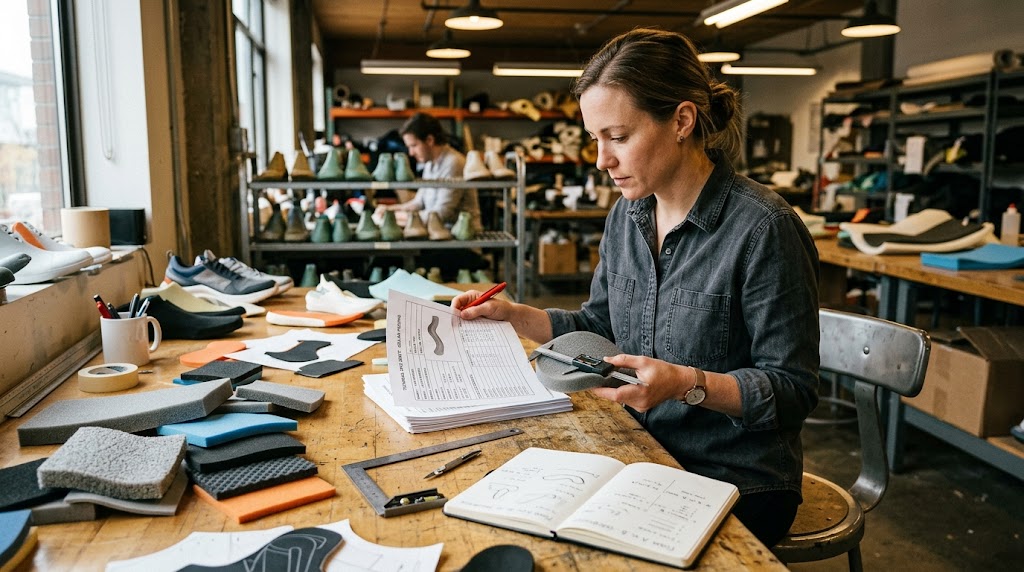
1. Foam material and target hardness (e.g., “EVA, 30 Asker C” or “open-cell PU, 200 kg/m³”)
2. Thickness map — specify thickness at the Achilles zone, medial, lateral, and tongue junction separately
3. Molding method preference (die-cut, thermoformed, injection-molded)
4. Whether the collar foam bonds to the lining, the outer material, or floats between layers
5. Achilles notch depth and profile — provide a cross-section drawing if possible
Skip any of these and you’ll get a sample that “looks right” but doesn’t fit correctly. The collar is forgiving visually — it’s hard to see a 2 mm thickness discrepancy — but the wearer feels it instantly.
At FX Footwear, our approach to collar components follows the same end-to-end production control we apply to insoles and midsoles: material selection, foam processing, and shaping happen under one roof, which means the collar foam spec you approve in sampling is the same foam that shows up in bulk. That consistency matters most for brands running multiple colorways of the same model, where collar feel should be identical across every SKU.
FAQ
What foam is best for shoe collar padding?
Open-cell PU foam offers the best balance of comfort, breathability, and long-term shape retention for most footwear categories. EVA works well for lightweight athletic shoes with shorter expected lifespans.
How thick should collar padding be?
Typical range is 3–12 mm depending on the application. Road running shoes use 3–5 mm, hiking boots use 8–12 mm, and casual footwear falls between 5–8 mm.
Do 3D padded collars prevent heel slip?
Yes, when properly shaped to the last profile. A contoured collar with firmer foam at the Achilles zone and a sculpted heel notch significantly reduces heel lift during the gait cycle.
What’s the cost difference between thermoformed and injection-molded collars?
Thermoformed collar tooling typically costs $2,000–$5,000 per size set, while injection molds run $8,000–$15,000+. Per-unit cost difference narrows at higher volumes.
Can collar padding be made from recycled materials?
Yes. Recycled EVA compounds and GRS-certified recycled PU foams are available for collar padding. FX sources these materials under GRS-compliant supply chains with traceability documentation.
Whether you’re developing a trail runner that needs structured ankle support or a lifestyle shoe where first-try comfort drives sell-through, collar padding deserves the same engineering attention as your midsole or insole spec. FX Footwear manufactures collar foam components alongside our full range of upper components, insoles, and midsoles — all from integrated facilities in China, Vietnam, and Indonesia. Reach out to our team to start speccing your next collar design with material samples and a detailed quote within 48 hours for standard constructions.