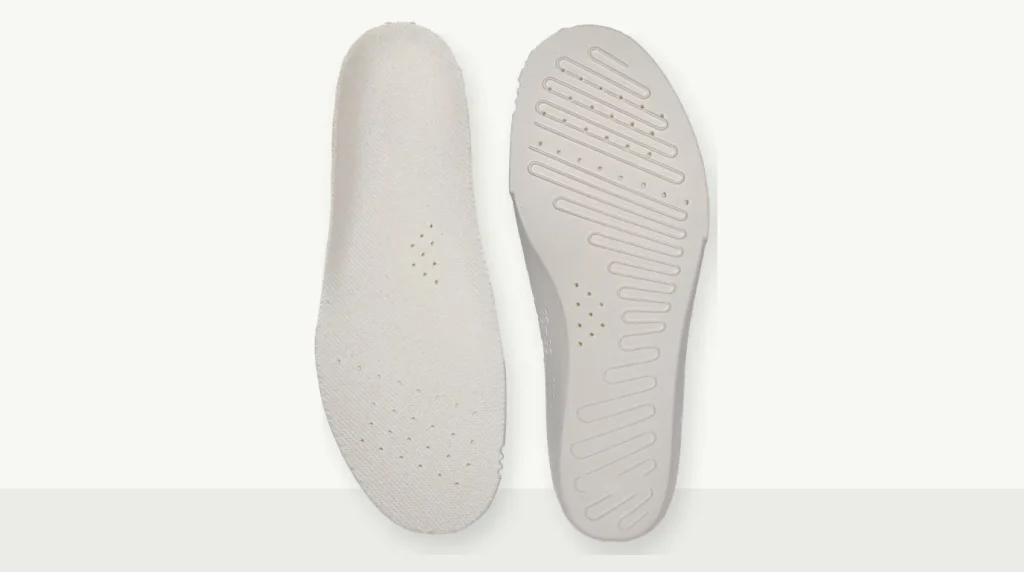
FX Footwear supplies custom high-rebound insoles for running shoes through PulseSport, our supercritical foam platform for performance footwear. For a running-shoe program, the sourcing question is not simply “Which foam has the highest rebound?” It is: which material can keep rebound, weight, shape, and price stable when the program moves from sample room to bulk production?
High Rebound Custom Insole Supplier
FX Footwear can support high-rebound custom running insoles with supercritical fluid foaming (SCF), in-house material validation, and component production across China, Vietnam, and Indonesia. SCF is the right discussion when rebound and low density matter, but the best answer for a volume order is usually a cost-performance grade, not the most expensive resin in the category.
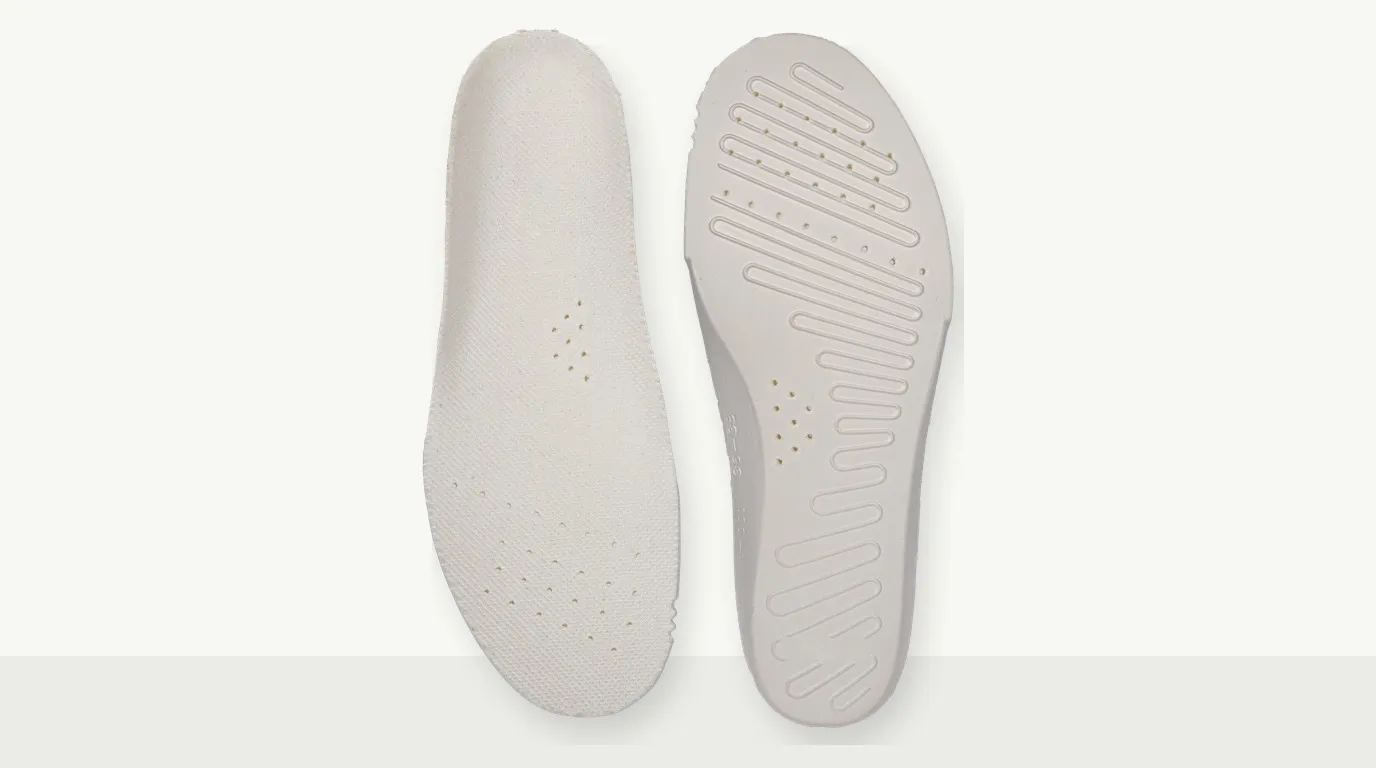
A running insole has a harder job than a casual insert. It sits under heel strike, midfoot loading, forefoot flex, sweat, heat, adhesive stress, and top-cover abrasion. A sample can feel lively on day one and dull after 50 miles. That failure is usually a materials-and-construction problem, not a logo problem.
This is where FX Footwear fits. We manufacture insoles, midsoles, uppers, heel counters, eyelets, molded parts, and adjacent foam components, so an R&D team can align the insole with the midsole and upper package instead of treating it as a late-stage insert.
For this running-insole brief, keep the process discussion on the routes FX uses for this kind of insert: compression molding, cold or hot pressing, die cutting, lamination, and assembly. One-piece clog-style EVA products belong to a different product/process discussion.
| Running program | Better insole direction | Watch-out |
|---|---|---|
| Daily trainer | SCF EVA or PulseSport Shield E60 | Price, compression set, top-cover wear |
| Tempo trainer | Modified TPU SCF or PulseSport Shield B65 | Rebound-to-weight balance |
| Premium trainer | Pure TPU SCF or TPEE SCF | Cost, validation time, density target |
| Elite racing concept | PEBA or PEBA-blend SCF | Highest price, MOQ, narrow use case |
| Recovery or comfort shoe | PU or soft EVA comfort build | Lower rebound than SCF |
SCF Foam For Running Insoles
Supercritical fluid foaming (SCF) is a physical foaming process that uses nitrogen, CO2, or a combined N2/CO2 process as the blowing agent. It creates a microcellular structure with predominantly closed cells, without traditional chemical blowing agents. In running footwear, that structure can deliver high rebound at low density.
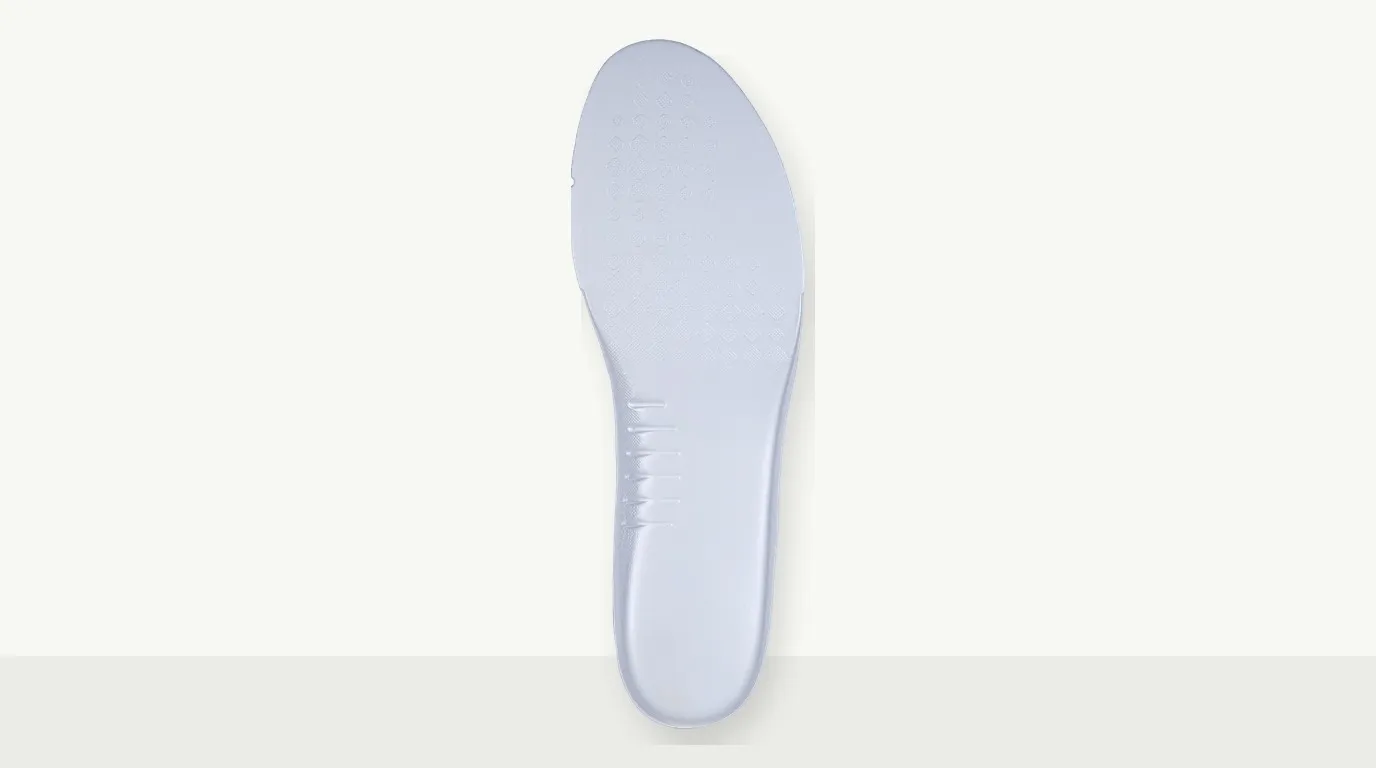
The visual standard matters. SCF foam for running shoes should not be shown like a large-pore open-cell PU foam. Open-cell PU is useful when the buyer wants breathability, moisture movement, and a soft comfort feel. Its pores are larger and more open by design. SCF running foam is different: the cell structure is fine and dense enough that a normal product photo will often look smooth rather than porous.
Color is another practical issue. Many supercritical running-foam samples are white or near-white because heavy pigment can affect cell formation, and bulk color matching is harder when the foam structure is sensitive. Bright colors can be made for some briefs, but they should not be the default visual for a mass-production SCF running insole article.
When a program fits our PulseSport platform, FX’s public product page describes the supercritical CO2 foam insole family. In engineering discussion, we use broader SCF wording because production may use N2, CO2, or N2/CO2 depending on the resin, density target, rebound target, and process stability.
Volume-Ready PulseSport Materials
PEBA gets attention because it sits at the top end of the rebound story. That does not make it the first recommendation for every running-insole RFQ. Over the last few years, footwear brands and raw-material suppliers have been looking harder at modified TPU, TPEE, and SCF EVA options that can keep the physical properties acceptable while bringing the price closer to a volume-production target.
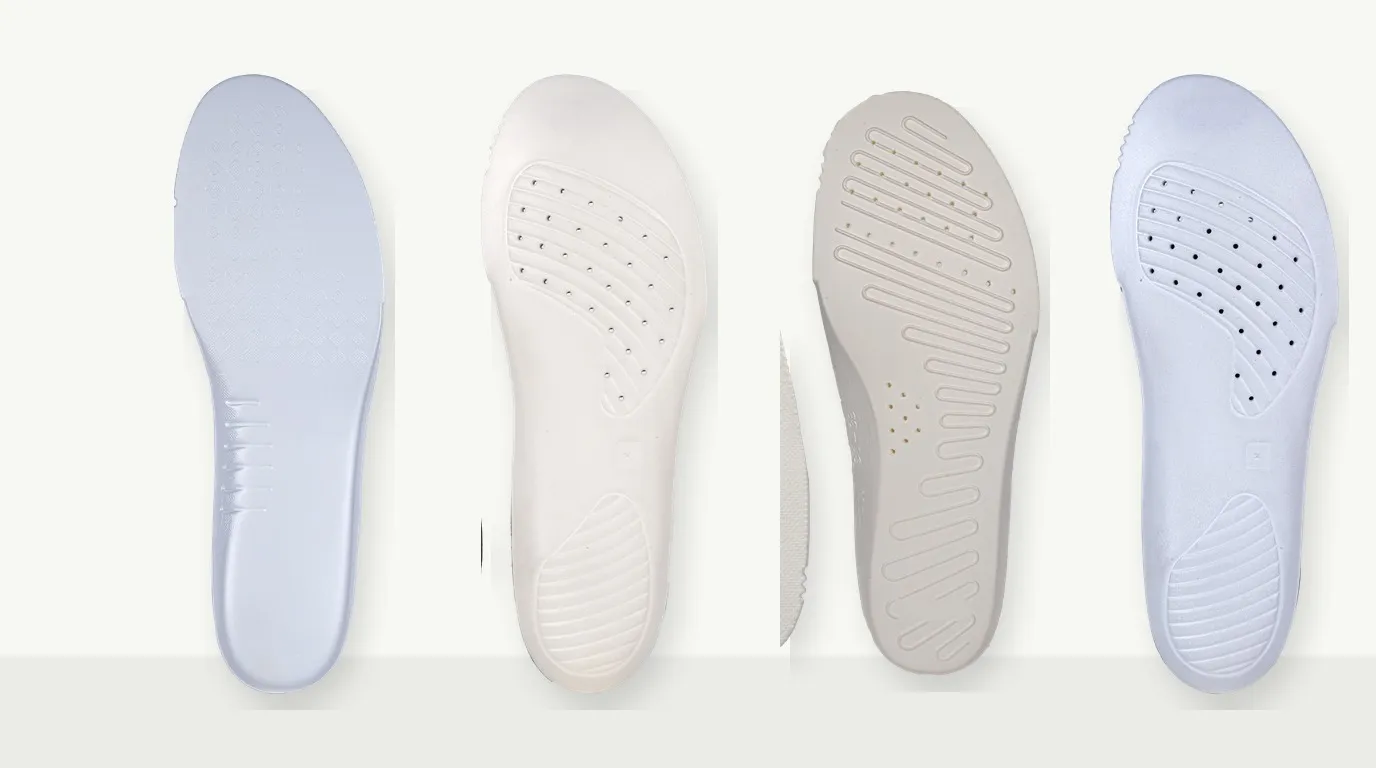
For most running-shoe brands, the practical shortlist should start here:
| PulseSport option | Material direction | Why it belongs in the quote |
|---|---|---|
| PulseSport Shield E60 | SCF EVA | Price-friendly upgrade from chemically foamed EVA, with better rebound and compression behavior than standard EVA |
| PulseSport Shield B65 | Modified TPU SCF | Strong cost-performance choice when the buyer wants higher rebound without jumping straight to PEBA pricing |
| PulseSport Pro SC70 / SC75 | Supercritical TPU | Higher response and cushioning for premium trainers where performance claims matter |
| PulseSport Pro PE70 | TPEE / M-TPEE SCF | Good rebound and compression resistance for performance programs that need better durability under stress |
| PulseSport Lite AU75 | A-TPU SCF | Ultralight direction for briefs where weight reduction is a top priority |
PEBA and PEBA-blend SCF still have a place. Use them for elite racing, special benchmark projects, or a brand story where the buyer accepts the higher resin cost, MOQ, and validation path. For broader production, modified TPU, TPEE, and SCF EVA often make the sourcing conversation easier because procurement and R&D can both live with the tradeoff.
Running Insole Specification Targets
Start with the ride target, then pick the construction. Too many RFQs start with a material name and a thickness number. That can work for a reorder. It does not work well for a new running-shoe platform.
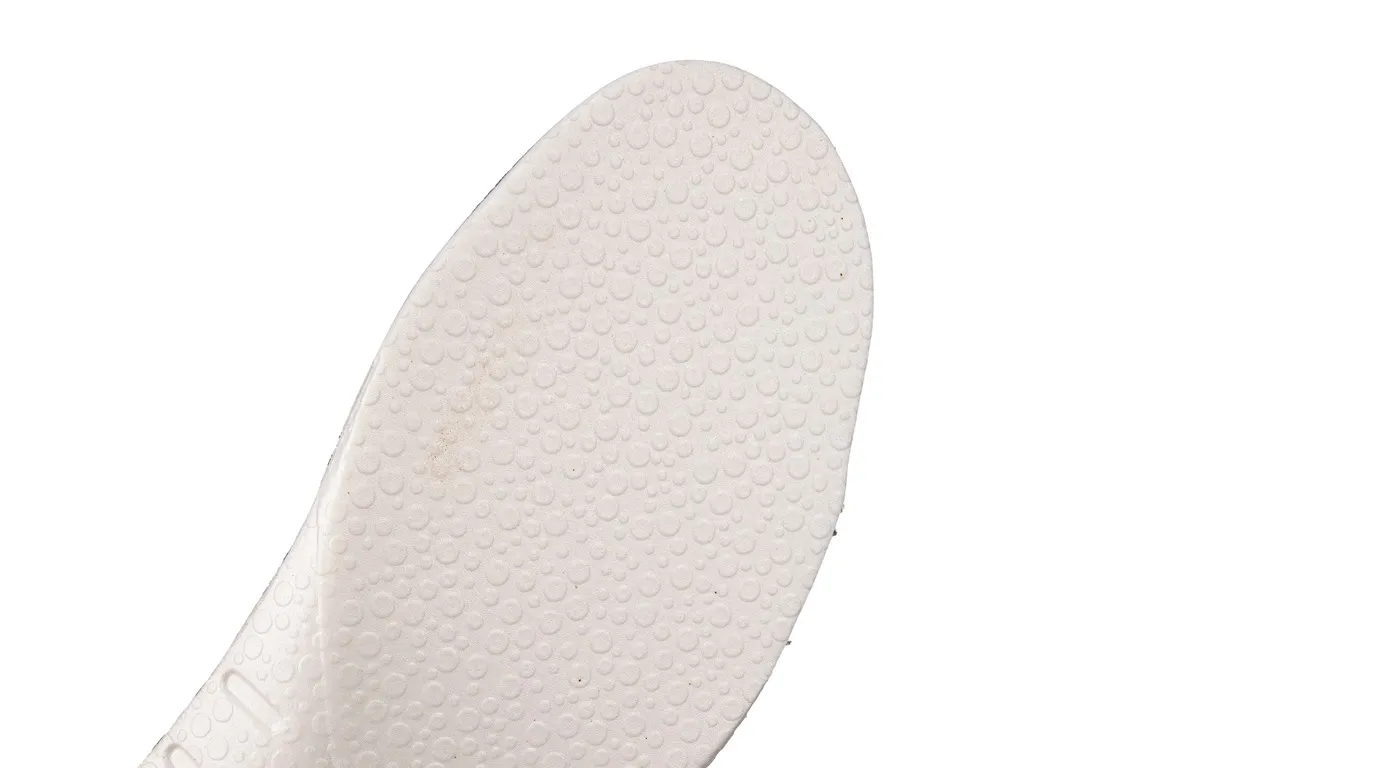
For EVA and SCF running insoles, FX’s practical conversion routes include compression molding, cold or hot pressing, die cutting, lamination, and assembly. For SCF insoles, density and rebound targets need to be tied to the named grade instead of copied from a generic sample sheet. FX’s current PulseSport examples include low-density grades such as 0.05D to 0.12D, with resilience targets commonly sitting in the 55% to 75% range depending on the material family and grade.
Numbers matter. So does the stack.
A lively foam under a dead top cover still feels flat. A high-rebound insert with poor arch geometry can slide inside the shoe. A forefoot that rebounds well in a lab slab may feel harsh if the insole edge digs into the strobel board. Small misses show up quickly in running.
| Spec area | Typical running decision | Why it matters |
|---|---|---|
| Foam platform | SCF EVA, modified TPU SCF, TPEE SCF, PU, or EVA | Sets rebound, price, density, and compression behavior |
| Hardness | Usually medium-soft to medium | Controls step-in feel and stability |
| Density | Lower for weight, higher for support | Affects fatigue feel and durability |
| Top cover | Mesh, tricot, Lycra, terry, recycled mesh | Drives friction, moisture, heat, and wear |
| Support parts | TPU arch, nylon shank, gel pad, PORON, carbon shank | Tunes stability and impact zones |
| Conversion | Molded, die-cut, laminated, dual-density, assembled | Controls fit, repeatability, and cost |
If the shoe has a plated midsole or aggressive rocker, the insole should not fight it. We may keep the insole thinner through the forefoot, use zoned cushioning under the heel, or add a support part only where the last and upper can accept it. Running comfort comes from the system, not a single foam number.
OEM Validation And Compliance
A good high rebound custom insole supplier should talk about testing before price. If a quote arrives before the supplier asks about target hardness, density, compression set, top cover, outsole or midsole pairing, and expected test reports, you are probably comparing a stock insert with a custom label.
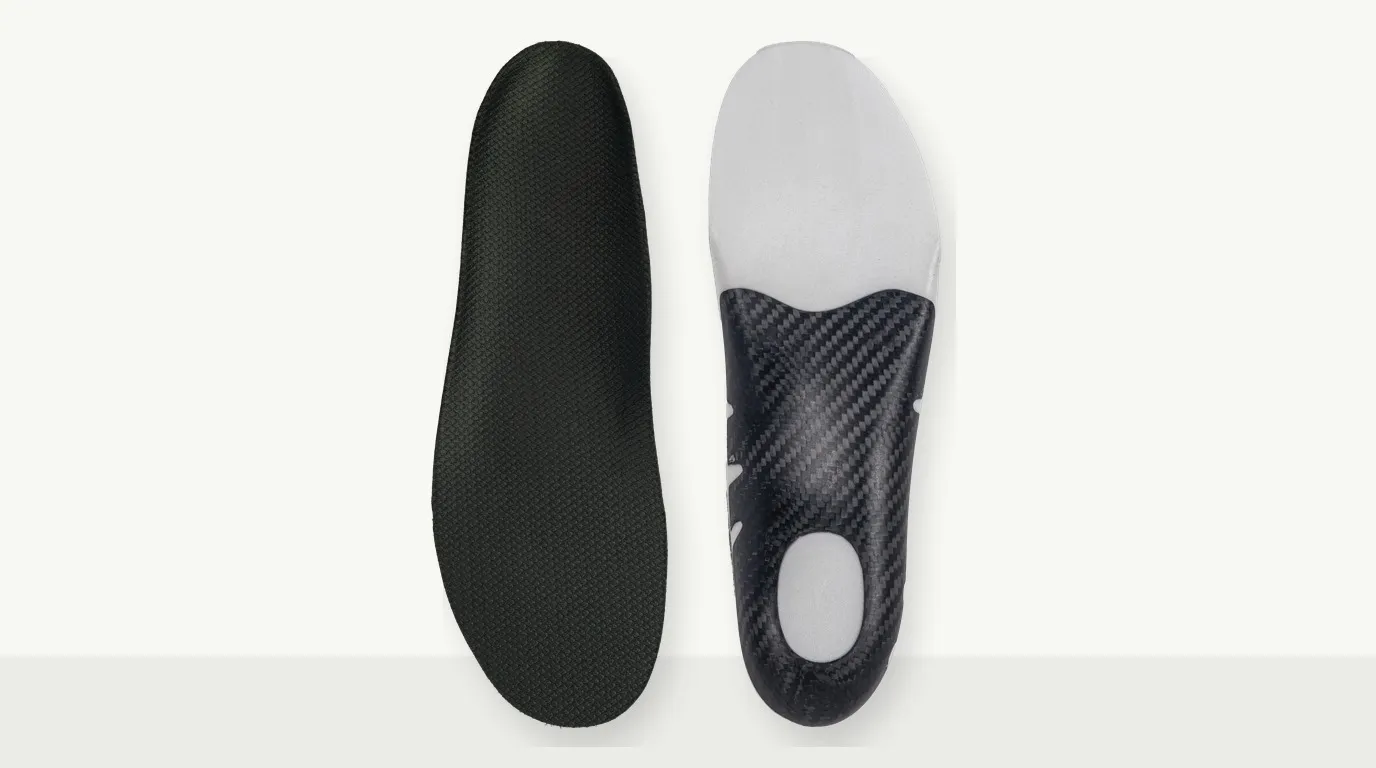
FX supports rapid internal validation through in-house lab resources, then can coordinate third-party testing when the program needs SATRA, SGS, ASTM, Intertek, or BETA reports. FX’s confirmed systems include GRS for recycled-material supply chains, ISO 13485:2016 for therapeutic and orthotic-footwear applications, Higg Index participation, and third-party verification/testing through Intertek and BETA.
For US retail programs, build the compliance file around consumer-product and chemical-exposure requirements first. The U.S. Consumer Product Safety Commission publishes business guidance for regulated consumer products at CPSC Business & Manufacturing, while California chemical-warning requirements should be checked against OEHHA Proposition 65.
REACH comes up when the product is headed to the EU. It is a regulation, not a certification or test standard. FX can source materials to meet REACH requirements based on the customer’s specification and coordinate the compliance process on a project basis.
| Sourcing step | Realistic timing |
|---|---|
| Initial quote for standard construction | Within 48 hours |
| Die-cut sample, no new tooling | About 3 days |
| Custom sampling phase | 7-14 days |
| New mold or tooling | About 10 business days |
| SCF insole bulk production | 30-45 days |
| Custom order, spec to goods ready | 45-70 days |
| Ocean freight to US ports | 18-30 days |
| Air freight door-to-door | About 5-10 days |
For new customers, standard payment terms are 30% deposit upfront and 70% before shipment. Sampling costs are paid upfront. Flexible terms can be discussed as the relationship and order volume grow.
Regional Component Manufacturing
Supply risk is part of the product. If your running-shoe launch depends on a single material shop and a separate insole converter, small delays stack up quickly.
FX Footwear’s manufacturing footprint spans China, Northern Vietnam, Southern Vietnam, and Indonesia. That regional setup sits close to major footwear assembly hubs and gives brands more options for duty exposure, lead time, and local coordination. For teams that need more than an insert, FX can connect the insole with midsoles, uppers, heel counters, molded tongues, collars, eyelet systems, and foam components under one supplier discussion.
This is where FX differs from an insole-only vendor. A running-shoe brand may start with a PulseSport insole, then ask whether the midsole should use SCF EVA, SCF TPU, PU, or an EVA dual-density construction. FX can support those adjacent parts through the same component-manufacturing base, and the broader shoe insole manufacturer program gives procurement a cleaner path when the project expands.
End-to-end production control also helps with batch consistency. FX’s capabilities cover EVA and PU foaming, PU pouring, supercritical physical foaming, compression molding, hot and cold pressing, lamination, and assembly. The point is repeatability. A running shoe does not forgive a foam batch that lands too hard in the heel and too soft in the forefoot.
RFQ Checklist For Buyers
Send a better RFQ and you will get a better answer. “High rebound insole, 5 mm, black mesh, best price” is enough for a rough quote. It is not enough for a running-shoe component that has to pass wear testing and match the ride of the shoe.
Use this instead:
- Running-shoe type: daily trainer, tempo, race, trail, recovery, or work-athletic.
- Target foam platform: SCF EVA, modified TPU SCF, TPEE SCF, PU, EVA, or open to recommendation.
- Rebound target: percentage if you have one, or benchmark shoe feel.
- Price target: target FOB range or retail-positioning tier.
- Hardness target: Asker C range, with tolerance.
- Thickness map: heel, midfoot, forefoot, and edge taper.
- Top cover: mesh, tricot, Lycra, terry, recycled mesh, or customer-specified fabric.
- Support parts: TPU arch, nylon shank, gel pad, PORON, carbon shank, or none.
- Color expectation: natural white, black top cover, or special color with batch-risk review.
- Compliance market: US, EU, or mixed.
- Test reports needed: SATRA, SGS, ASTM, Intertek, BETA, or retailer-specific package.
- Launch calendar: sample deadline, wear-test window, bulk delivery date, and destination port.
One more detail: say whether this is a performance insole or a comfort insole. Those words change the build. A comfort insole can be softer, thicker, and more forgiving. A performance-running insole needs rebound without mush, support without bulk, and stable geometry after repeated loading.
FAQ
What foam rebounds best for running insoles?
Supercritical foam usually rebounds better than standard EVA or PU in running insoles. PEBA sits at the highest end, but for volume programs, modified TPU SCF, TPEE SCF, and SCF EVA may be better first choices because the cost and validation path are easier to control.
Why are many supercritical running-foam samples white?
White or near-white is common because pigment can affect foam-cell formation, and batch-to-batch color matching can be difficult in sensitive SCF materials. Special colors can be discussed, but they need early validation instead of being treated as a routine bulk assumption.
Is open-cell PU the same as SCF running foam?
No. Open-cell PU has larger open pores because breathability, moisture movement, and soft comfort are part of its value. SCF running foam is a fine microcellular structure with predominantly closed cells. It should not be represented with large visible foam pores.
Which process should a running-insole RFQ specify?
For this article, the RFQ should be framed around compression molding, cold or hot pressing, die cutting, lamination, and assembly. Those routes fit molded running-insole development better than a one-piece clog-style EVA process discussion.
Which PulseSport grades should a running brand ask about first?
Start with PulseSport Shield E60 for SCF EVA cost-performance, PulseSport Shield B65 for modified TPU SCF, PulseSport Pro SC70 or SC75 for higher-response TPU SCF, and PulseSport Pro PE70 when TPEE’s rebound and compression resistance are worth the added cost.
How long does custom sampling take?
Custom insole sampling usually takes 7-14 days. Die-cut samples without new tooling can take about 3 days, while new molds or tooling usually need about 10 business days.
If you need a high rebound custom insole supplier for a running-shoe program, send FX Footwear the shoe type, target ride feel, foam preference, price range, test requirements, and launch calendar. We will route the brief to the right PulseSport, EVA, PU, or multi-material construction and respond with the most practical build path.