Performance cushioning platform
ETPU TPEE Cushioning Insole for Responsive Comfort
Built for footwear brands developing running and everyday-comfort programs, this ETPU TPEE cushioning insole combines a terry top cover with ETPU, TPEE, and PORON® layers. The multi-density construction is designed to balance responsive cushioning with lasting underfoot comfort while supporting project-specific OEM development.
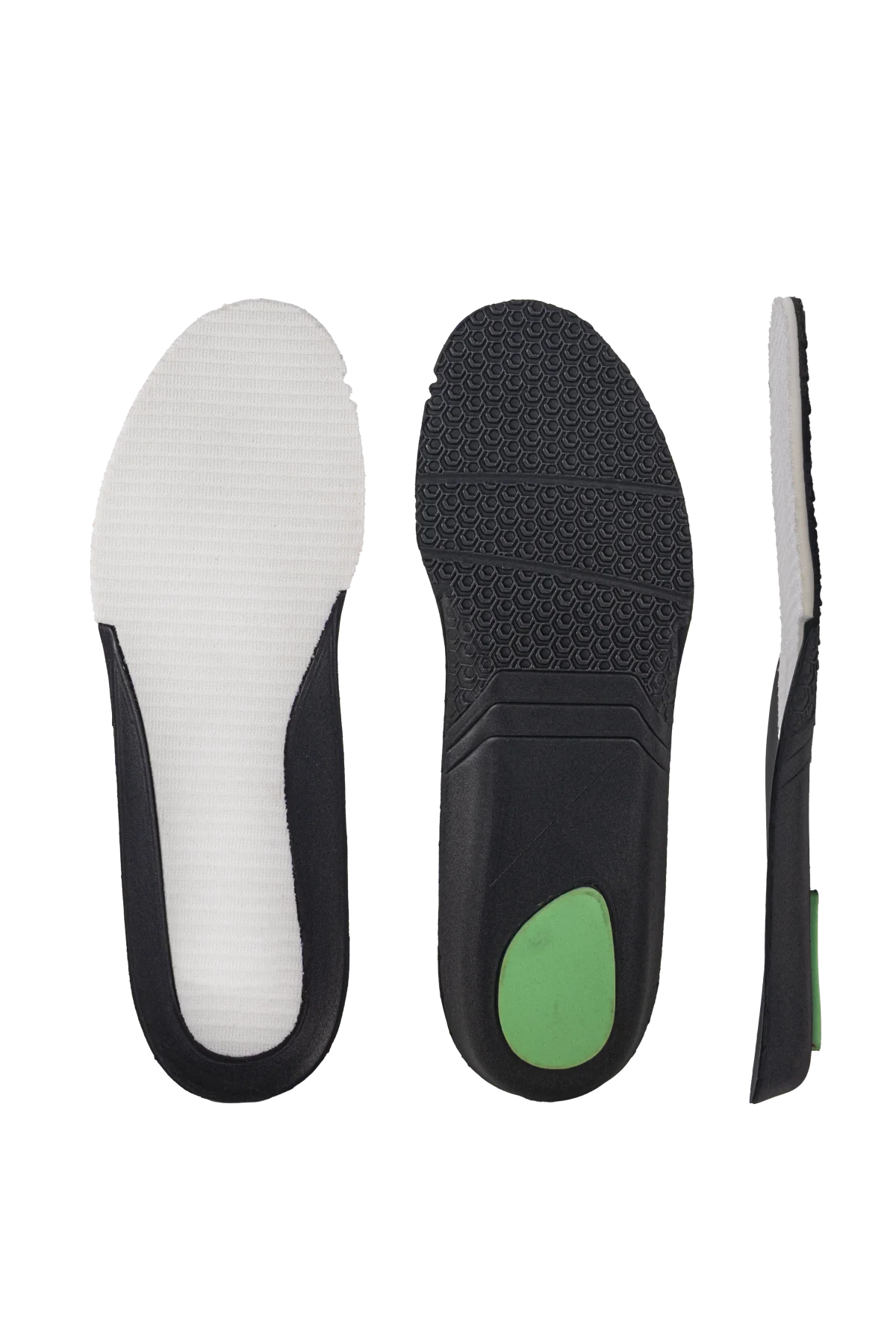
Product overview
Key Features of This ETPU TPEE Cushioning Insole
Responsive Layer System
ETPU and TPEE form a layered structure designed for cushioning and energy return. PORON® supplies a specified comfort layer; final feel depends on target thickness, density, and the full shoe system.
Terry Top Cover
The terry surface provides a soft interface for running or everyday footwear. Alternative covers can be reviewed for moisture behavior, appearance, hand feel, or branding.
Multi-Density Construction
Combining materials lets product teams tune the underfoot feel by zone instead of relying on one foam throughout the insole. Layer geometry is reviewed against the intended shoe.
System-Aware Design
Evaluate insole thickness, contour, and response with the last, upper, midsole, and outsole. This aligns the component with the full shoe instead of attributing every result to the insole.
Applications
Who This Responsive Cushioning Insole Is For
- Running-footwear developers seeking a responsive underfoot feel.
- Athletic-lifestyle teams balancing cushioning with everyday comfort.
- OEM and private-label teams comparing layered ETPU/TPEE constructions.
- Brands that need sample development tied to their complete footwear system.
This construction can support performance or daily-wear concepts. Final material choices should follow the shoe’s positioning, fit, cost requirements, and test plan.
Layered build
Material & Construction for an ETPU TPEE Insole
In footwear, ETPU refers to expanded thermoplastic polyurethane, while TPEE is a thermoplastic polyester elastomer. This product combines those materials with a specified PORON® layer and terry cover in a multi-layer format.
The construction description is not a universal material specification. Density, hardness, thickness, layer geometry, and test requirements are confirmed for each project; no performance number is inferred from an unrelated foam grade.
FX can combine top covers, foam platforms, support components, and branding methods to customer specifications. Production paths may include die cutting, compression molding, multi-density molding, lamination, and assembly after technical review. Explore our broader insole capabilities for adjacent material platforms.
From brief to sampling
OEM Development with FX Footwear
FX manufactures insoles, midsoles, upper components, and other key footwear parts. That scope helps teams review the insole within the shoe, while internal labs support material and product validation.
Start with the shoe type, size run, target feel, and required test plan. Our technical team can review the layer stack, geometry, top cover, fit, color, and branding before sampling.
Buyer questions
Frequently Asked Questions
What is ETPU material?
In footwear, ETPU usually means expanded thermoplastic polyurethane, a foamed form of TPU used for cushioning and rebound. Results still depend on formulation, density, geometry, and the rest of the shoe.
Do insoles affect energy return?
An insole can influence perceived response because it sits directly underfoot. The midsole, outsole, geometry, and overall fit also shape the result, so testing should evaluate the complete shoe.
How do you guarantee that mass production matches the approved sample?
FX uses the approved sample and agreed specifications as production references. Material, dimension, appearance, and functional checks can be included in the control plan, with the test scope confirmed before production.
How do you ensure products meet environmental standards?
Requirements vary by target market and material scope. FX can review requested documentation and coordinate applicable material or third-party testing. Project-specific requirements are defined before sampling; REACH is treated as a regulation, not a certification.
Start a technical review
Develop Your Custom Cushioning Insole
Bring us your shoe brief, reference sample, target construction, and required test plan. We will review the ETPU/TPEE/PORON® stack within the full footwear system and identify the next development step.