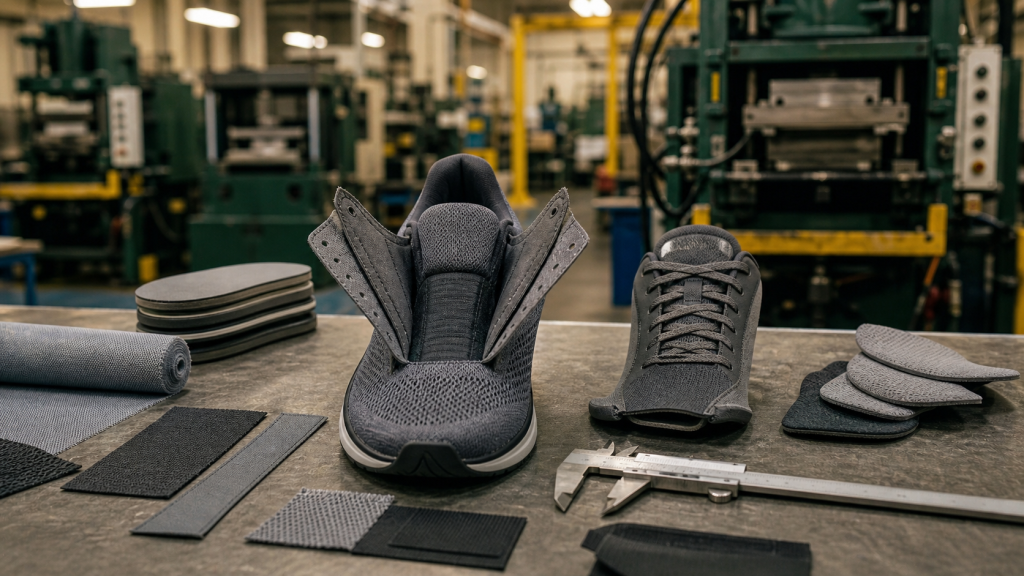
Looking to create a better-fitting running shoe with a gusseted tongue? This simple design feature uses side fabric panels to lock the tongue in place, reduce hot spots, and wrap the foot comfortably. But is a gusset always the best choice? Not necessarily—the width, stretch, and placement must align with your shoe’s specific category. Whether you’re building a lightweight racer or a durable trail shoe, here is what footwear brands need to know about specifying gusseted tongues correctly.
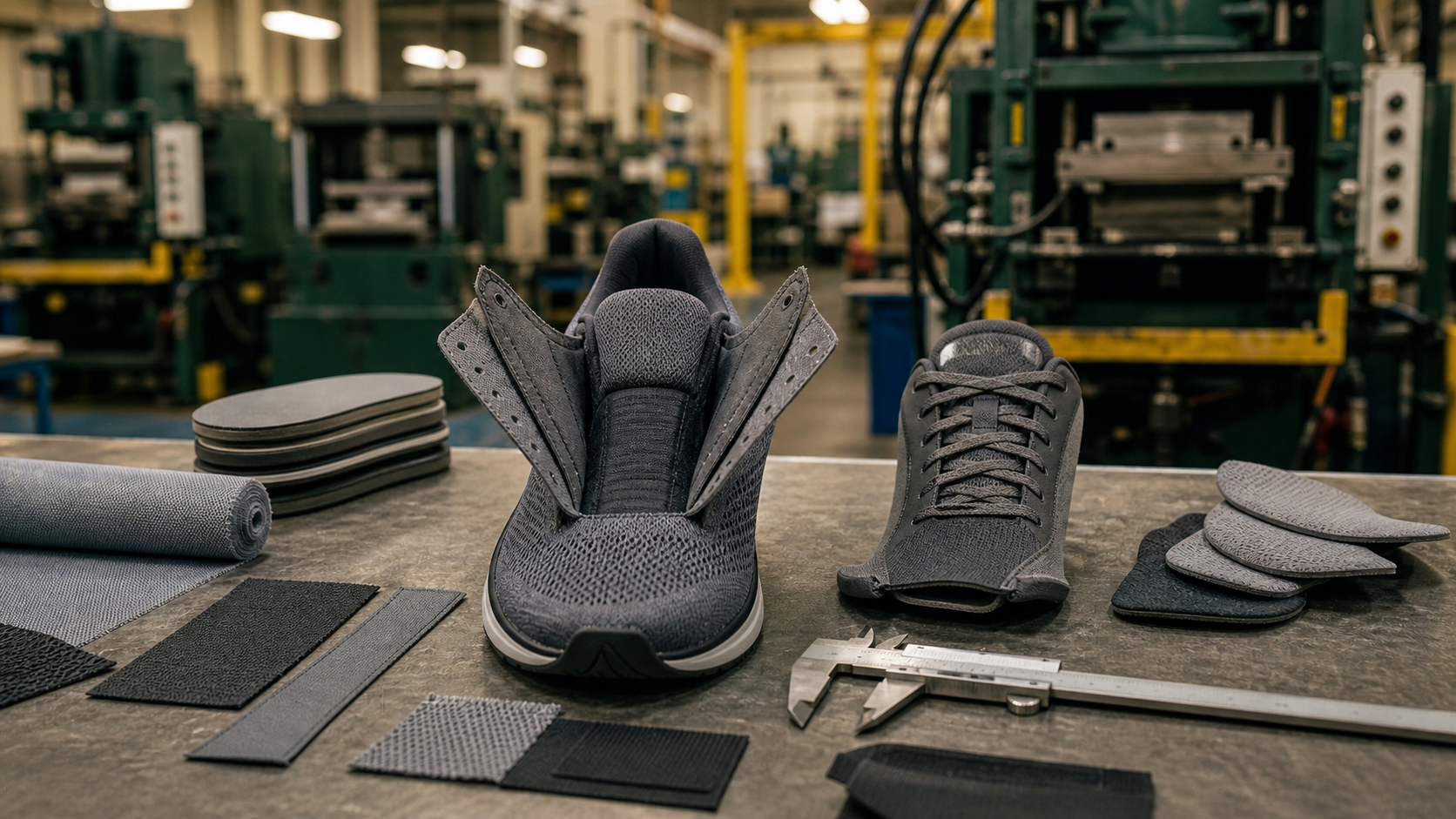
What Is a Gusseted Tongue in a Running Shoe?
A conventional running shoe tongue is normally stitched to the vamp at its lower edge and left free along both sides. A gusseted tongue adds textile wings connecting those sides to the upper. A full gusset extends near the top of the tongue, while a semi-gusset ends lower to reduce weight, improve airflow, or make the shoe easier to put on.
The gusset is not the same as tongue padding. Padding manages lace pressure and instep comfort; the gusset controls tongue position and closes the side openings. They must still be engineered together. A thick padded tongue paired with a narrow, low-stretch gusset may feel restrictive. An ultrathin tongue may wrinkle if its gusset pulls unevenly.
Brands developing contoured or zoned tongue padding can review how compression-molded foam tongues are produced. That process article complements the fit and construction decisions covered here.
What Does a Gusseted Tongue Do During Running?
It Keeps the Tongue Centered
A free tongue can migrate toward the medial or lateral side as the foot flexes. That movement changes lace-pressure distribution and may expose a firm tongue edge. Gusset panels locate the tongue relative to the vamp and eyestay, helping it stay centered through repeated strides.
Reliable centering also improves product evaluation. If wear testers repeatedly reposition the tongue, the development team cannot isolate whether discomfort comes from padding, lace geometry, upper stiffness, or tongue movement.
It Improves Midfoot Lockdown
When the laces tighten, a correctly tensioned gusset helps the tongue and upper wrap the instep as one system. This can reduce excess internal movement without requiring the runner to overtighten the laces.
FX Footwear’s running footwear solutions pair gusseted tongues with zonal upper reinforcement where dynamic lockdown is required. The gusset is only one part of that system: the eyestay, upper reinforcement, last, heel counter, and collar must work with it.
It Reduces Folding and Bunching
A correctly patterned gusset controls loose material along the tongue edges. This helps create a smoother internal surface and reduces the chance of folds forming beneath the laces.
The benefit disappears when the gusset is too long, attached at the wrong angle, or graded poorly. Excess material can gather near the tongue base, while insufficient material can pull the tongue downward or make the shoe difficult to enter.
It Helps Limit Debris Entry
The openings beside a free tongue can admit dust, sand, and small trail debris. Gusset wings reduce these entry paths, making higher-coverage constructions useful in trail-running footwear.
A gusset does not make a running shoe waterproof. Water resistance depends on the membrane, lining continuity, seams, adhesives, and finished-shoe construction. Any waterproof claim should be supported by testing of the complete shoe.
How Should Gusseted Tongues Differ by Running Shoe Type?
Road Racing Shoes
Racing shoes usually prioritize low mass, ventilation, and close fit. A narrow semi-gusset made from lightweight stretch mesh can stabilize an ultrathin tongue without adding unnecessary bulk. The panel must recover after stretching so it continues to hold the tongue in place.
Daily Training Shoes
Daily trainers can use a wider semi-gusset and more tongue padding to balance comfort and lockdown. Because these shoes serve a wider range of foot shapes, development teams should validate the construction across low, average, and high instep volumes.
Stability Running Shoes
A stability shoe may use firmer or more controlled-stretch gusset panels to support consistent midfoot wrap. The gusset should coordinate with medial and lateral upper reinforcement rather than pull disproportionately from one side.
Trail-Running Shoes
Trail shoes often benefit from greater coverage to limit debris entry and stabilize the tongue on uneven terrain. Materials should resist abrasion and recover after repeated flexing. A higher gusset can improve coverage, but it must not trap excessive heat or restrict ankle movement.
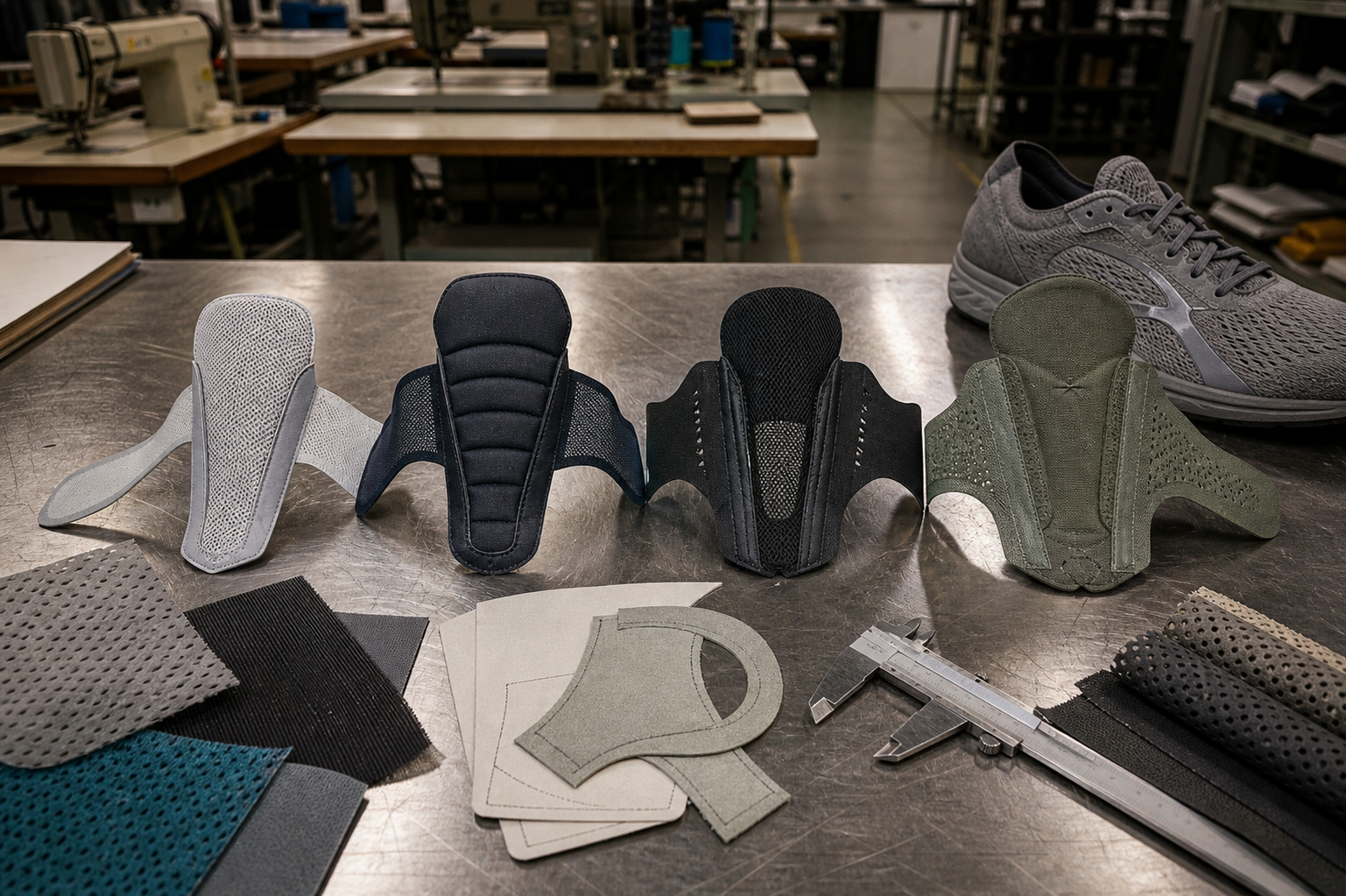
Which Gusseted Tongue Specifications Matter Most?
Gusset Height and Width
Greater coverage improves tongue control and closes more of the opening. Lower coverage usually provides easier entry and better ventilation. The attachment should end smoothly and away from areas where it could rub during ankle flexion.
Stretch and Recovery
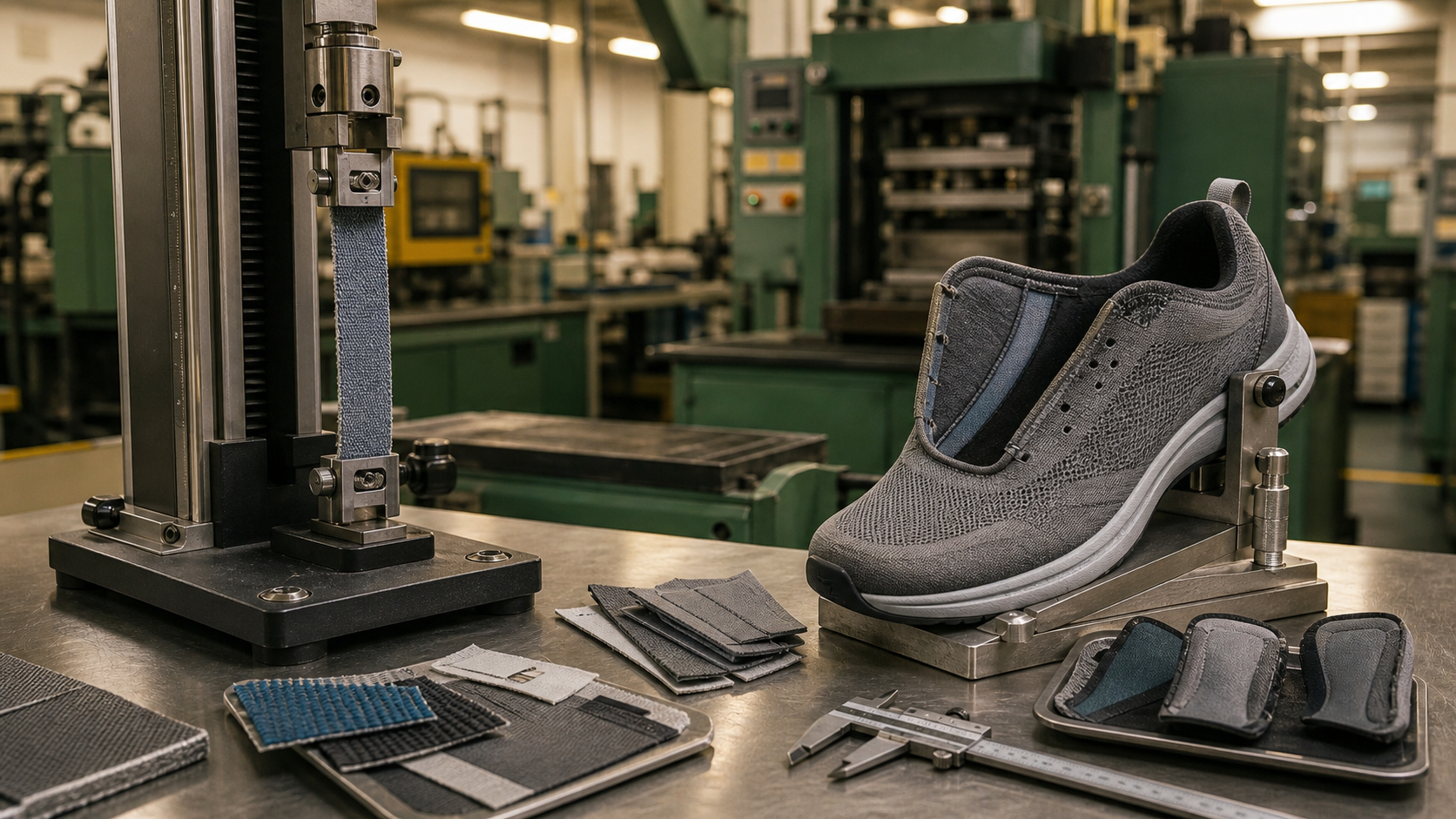
Too little stretch makes the shoe hard to put on and may compress high insteps. Too much stretch weakens lockdown. Material testing should include repeated elongation and recovery, not only the initial stretch of a new swatch.
Seam Placement
Bulky seams can form pressure ridges when compressed by the laces. Flat seams, bonded edges, or carefully positioned allowances help maintain a smooth internal surface. Attachment points must also withstand repeated entry, flexion, and lace tension.
Breathability and Moisture Management
Elastic knit, engineered mesh, and laminated textiles offer different balances of airflow, abrasion resistance, stretch, and moisture movement. Evaluate the gusset together with the lining and upper rather than as an isolated material.
Pattern Grading
A gusset that works in one sample size can become too tight or loose if its dimensions are not graded with the tongue, vamp, and throat opening. Check the smallest, middle, and largest production sizes rather than approving from one reference size.
FX Footwear’s upper component capabilities combine tongues, engineered uppers, collars, and heel structures, allowing these fit-critical interfaces to be evaluated as a system.
How Should Brands Test a Gusseted Running Shoe Tongue?
Before production approval, include the following checks:
- Confirm tongue centering after repeated running and flex cycles.
- Evaluate entry force and fit across target instep volumes.
- Measure gusset stretch recovery after repeated elongation.
- Test seam strength and inspect attachment points for tearing.
- Check internal seams for pressure, rubbing, or bunching.
- Compare lockdown at normal lace tension instead of overtightening.
- For trail shoes, evaluate debris entry in representative conditions.
- If water resistance is claimed, test the complete shoe.
- Verify the construction across the full graded size range.
FAQ About Gusseted Running Shoe Tongues
Is a Gusseted Tongue the Same as a Bootie Construction?
Not always. A gusseted tongue uses side panels connecting the tongue to the upper. A bootie may form a more continuous internal sleeve around the foot. Some running shoes combine both constructions.
Does a Gusseted Tongue Make a Running Shoe Tighter?
It can create a closer wrap, but it should not cause excessive pressure. Panel width, stretch, throat opening, and pattern grading determine how restrictive the construction feels.
Can a Gusseted Tongue Reduce Lace Pressure?
It can improve tongue alignment and make the upper wrap more consistently. However, padding thickness, foam density, lace geometry, and upper stiffness have a more direct effect on peak pressure.
Is a Full Gusset Better for Trail Running?
A fuller gusset usually provides more debris protection and tongue control. The tradeoffs are extra material, potentially more heat, and more resistance during entry.
Why Does a Gusseted Tongue Still Slide Sideways?
Possible causes include overly elastic panels, asymmetric attachment, incorrect grading, uneven lace tension, or a tongue pattern that does not match the upper geometry.
Engineer the Gusset as Part of the Running Upper
A gusseted tongue can improve centering, midfoot lockdown, internal fit, and debris protection. Its performance depends on how well the gusset is coordinated with the tongue padding, lacing system, upper pattern, last, collar, and heel structure.
FX Footwear develops integrated custom footwear material solutions for performance running programs. Bringing the component team into development early helps brands validate gusset geometry, stretch, seams, and graded fit before bulk material and tooling decisions are locked.