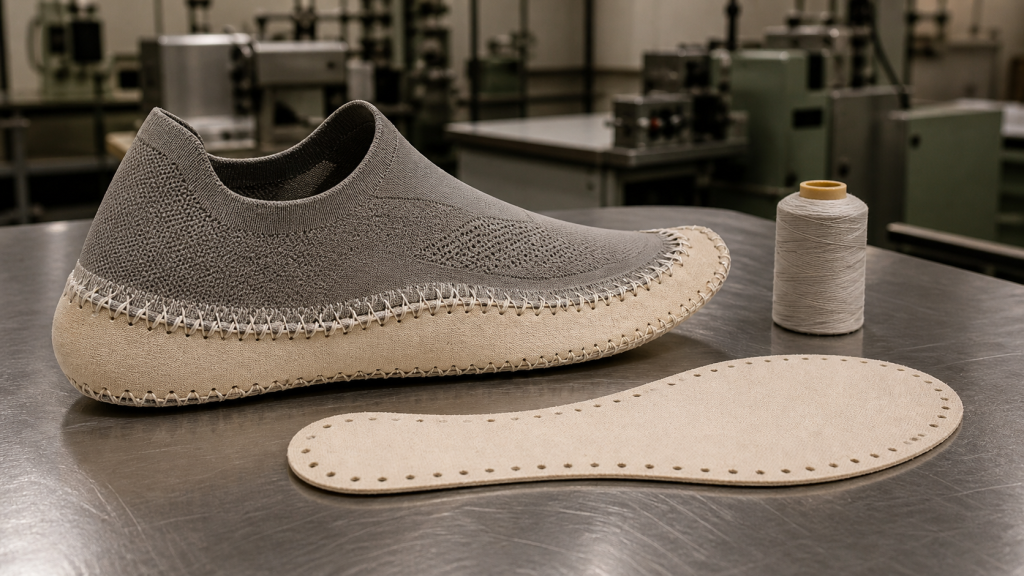
Ever wondered why so many modern running shoes and sneakers feel so flexible and lightweight right out of the box? The secret often lies in Strobel construction—a lasting method where a flexible fabric panel, known as a Strobel board, is stitched directly around the bottom edge of the upper. This creates a sock-like bootie that easily conforms to the natural movement of the foot while keeping overall weight to a minimum. Once bonded to the midsole and outsole assembly, it provides the perfect blend of flexibility, shape retention, and comfort that active footwear demands.
However, Strobel construction isn’t a one-size-fits-all solution for every shoe brand. Its performance depends heavily on your specific shoe category, support targets, material choices, and factory production standards. A lightweight trainer might thrive with a Strobel setup, whereas a heavy-duty hiking boot or a rigid court shoe might require a different lasting approach. In this guide, we break down why product development teams choose Strobel construction, where its design trade-offs lie, and what your brand must specify before moving into the sampling phase.
What Is Strobel Construction in Footwear?
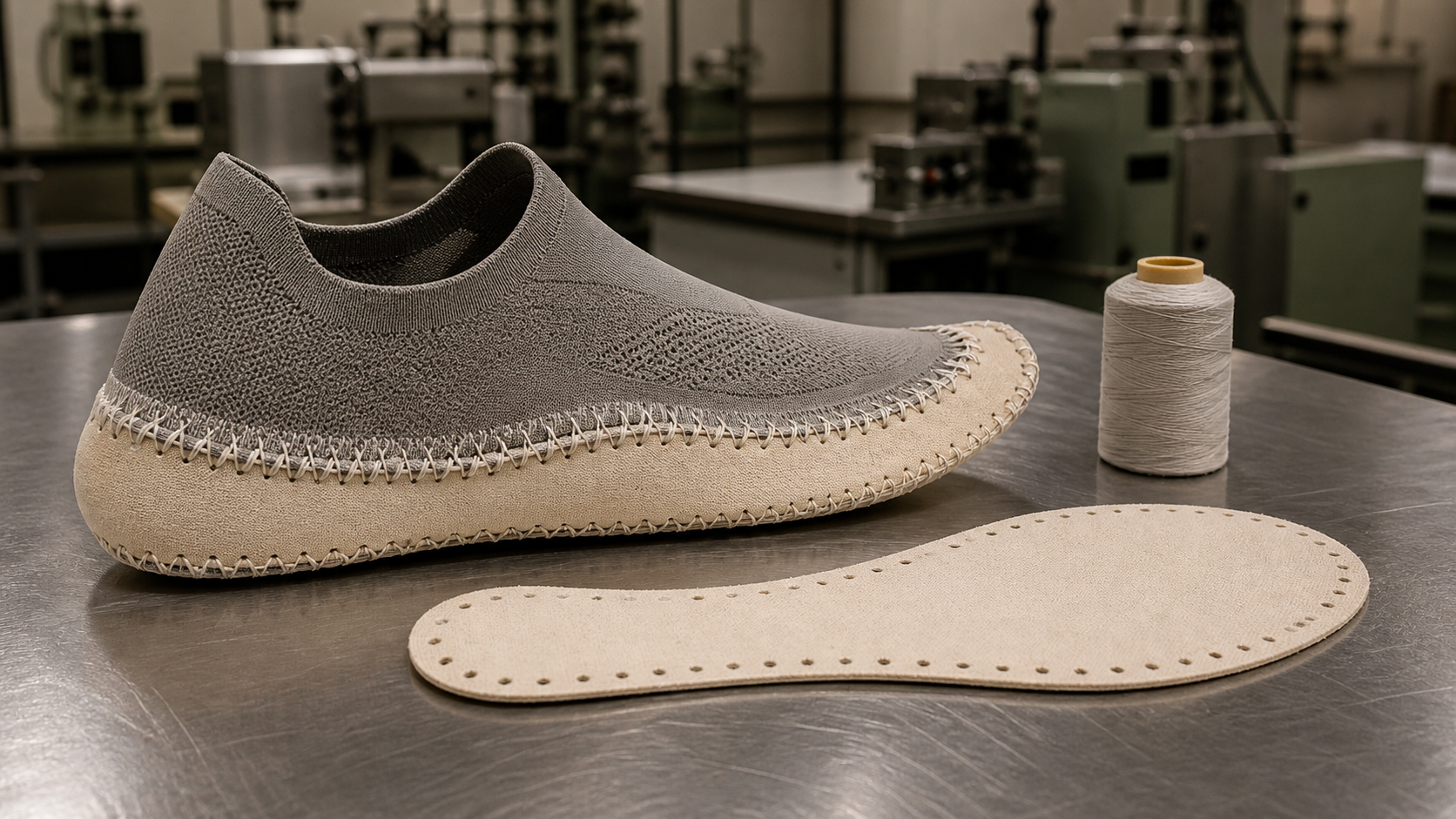
Strobel construction is a method of closing the bottom of a shoe upper by stitching it to a flexible base material. The stitch runs around the perimeter, joining the upper edge and Strobel board into one unit before lasting and bottom attachment.
The basic sequence is:
- Cut and assemble the upper.
- Cut the Strobel board to the required size and shape.
- Stitch the board to the lower perimeter of the upper.
- Pull the closed upper over the last and set its shape.
- Prepare and bond the upper assembly to the midsole or bottom unit.
- Finish and inspect the completed shoe.
This differs from conventional board lasting, where the upper is pulled over a comparatively firm insole board and secured beneath it. It also differs from cemented construction as a broad category: a Strobel-stitched upper may still be cemented to the bottom unit. “Strobel” describes how the upper is closed and prepared, not necessarily the complete sole-attachment system.
Why Is Strobel Construction Common in Athletic Footwear?
1. It Creates a Flexible Underfoot Platform
The flexible board and perimeter seam allow the upper package to move more naturally than a rigid full-length lasting board. That is useful in running, training, walking, and court footwear, where controlled forefoot bending is part of the movement pattern.
Flexibility still depends on the complete shoe. A stiff midsole, plate, outsole geometry, or thick adhesive layer can dominate the final result. Strobel construction gives designers a flexible starting point; it does not guarantee a flexible finished shoe.
2. It Helps Reduce Unnecessary Weight
A thin textile or nonwoven Strobel board can replace a heavier structural board in suitable designs. The construction can also reduce bulky material under the foot and create an efficient transition between the upper and bottom unit.
For an athletic product, those savings matter because the weight target is shared across the upper, midsole, outsole, insole, reinforcements, and adhesives. Development teams should compare complete-shoe weight, rather than assuming that a lighter board alone will deliver the target.
3. It Supports a Sock-Like Fit
Because the upper is closed around a flexible base, the assembly can wrap the last with fewer hard transitions beneath the foot. This supports the close, foot-following fit expected in many modern athletic silhouettes.
Fit quality is not created by the Strobel seam alone. Last shape, upper pattern, material stretch, toe allowance, heel geometry, tongue construction, and upper components must work together. Poor pattern engineering can still cause wrinkles, pressure points, or inconsistent internal volume.
4. It Works with Modern Cushioned Bottom Units
Many athletic shoes rely on a molded foam bottom unit to provide cushioning, stability, and geometry. The Strobel-closed upper presents a relatively clean, flexible surface for attachment to that unit, making the method compatible with a wide range of athletic platforms.
This is especially relevant when a brand wants the midsole to control ride characteristics while the upper provides lightweight containment. FX Footwear’s running footwear solution illustrates how midsoles, insoles, and upper components must be coordinated around the performance brief.
5. It Is Suitable for Repeatable Production
Once the upper pattern, board shape, seam allowance, differential feeding, thread, and machine settings are validated, Strobel stitching can support consistent production at scale. Specialized overlock equipment is designed to sew the base to the upper around complex footwear shapes.
Repeatability depends on process discipline. Operators and quality teams must control alignment, material feeding, stitch formation, seam security, and left-right symmetry. A scalable method still needs clear tolerances and in-line inspection.
What Is a Strobel Board Made From?
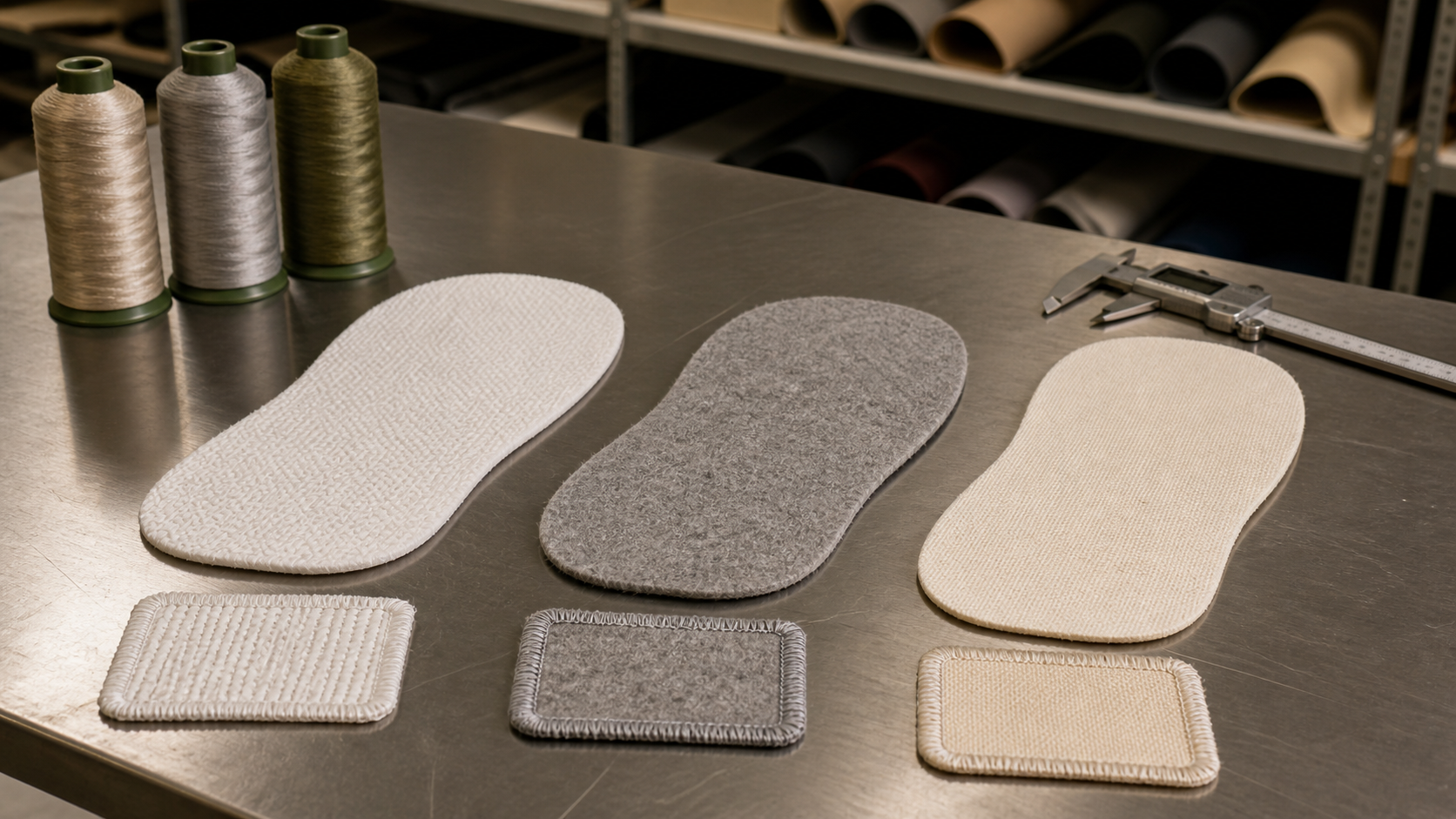
A Strobel board is usually a flexible textile, nonwoven, or engineered sheet selected for the product’s performance and assembly requirements. Important variables include:
- tensile and tear strength;
- stretch and dimensional stability;
- thickness and mass;
- stitch-holding performance;
- bonding compatibility;
- moisture behavior;
- flex durability; and
- compatibility with the last and bottom unit.
A soft, lightweight board may suit a flexible daily trainer, while a more stable substrate may be needed where the shoe must control torsion or support a heavier upper package. The correct specification is therefore application-specific. Brands should not approve a board only from a material name or hand feel; they should evaluate it as part of the complete construction.
What Are the Main Risks of Strobel Shoe Construction?
Seam or Stitch Failure
Incorrect thread, stitch density, needle choice, tension, or seam allowance can weaken the joint. The seam may also be stressed if the upper and board stretch differently during lasting or use.
Misalignment and Shape Variation
If the board is offset or the upper is fed unevenly, the lasted shell can twist, wrinkle, or produce inconsistent internal volume. Alignment marks and controlled differential feed help manage this risk.
Insufficient Stability
A flexible base may not provide enough structure for every athletic category. Stability may need to come from the midsole geometry, sidewalls, shank or plate, heel counter, upper reinforcement, or a localized board element.
Bonding Problems
The stitched shell still needs reliable attachment to the bottom unit. Surface preparation, adhesive selection, open time, pressure, and curing conditions must match the materials being bonded. Excessive seam bulk or contamination can reduce contact quality.
How Should Brands Specify Strobel Construction?
A useful development specification should define more than “use Strobel construction.” Include:
- board material, thickness, weight, stretch direction, and approved color;
- graded board patterns and reference notches;
- seam type, seam allowance, stitch density, thread, and needle requirements;
- permitted alignment deviation and seam appearance criteria;
- lasting tension and dimensional checkpoints;
- bonding preparation and adhesive system;
- target finished-shoe weight and flex behavior; and
- required tests and acceptance limits.
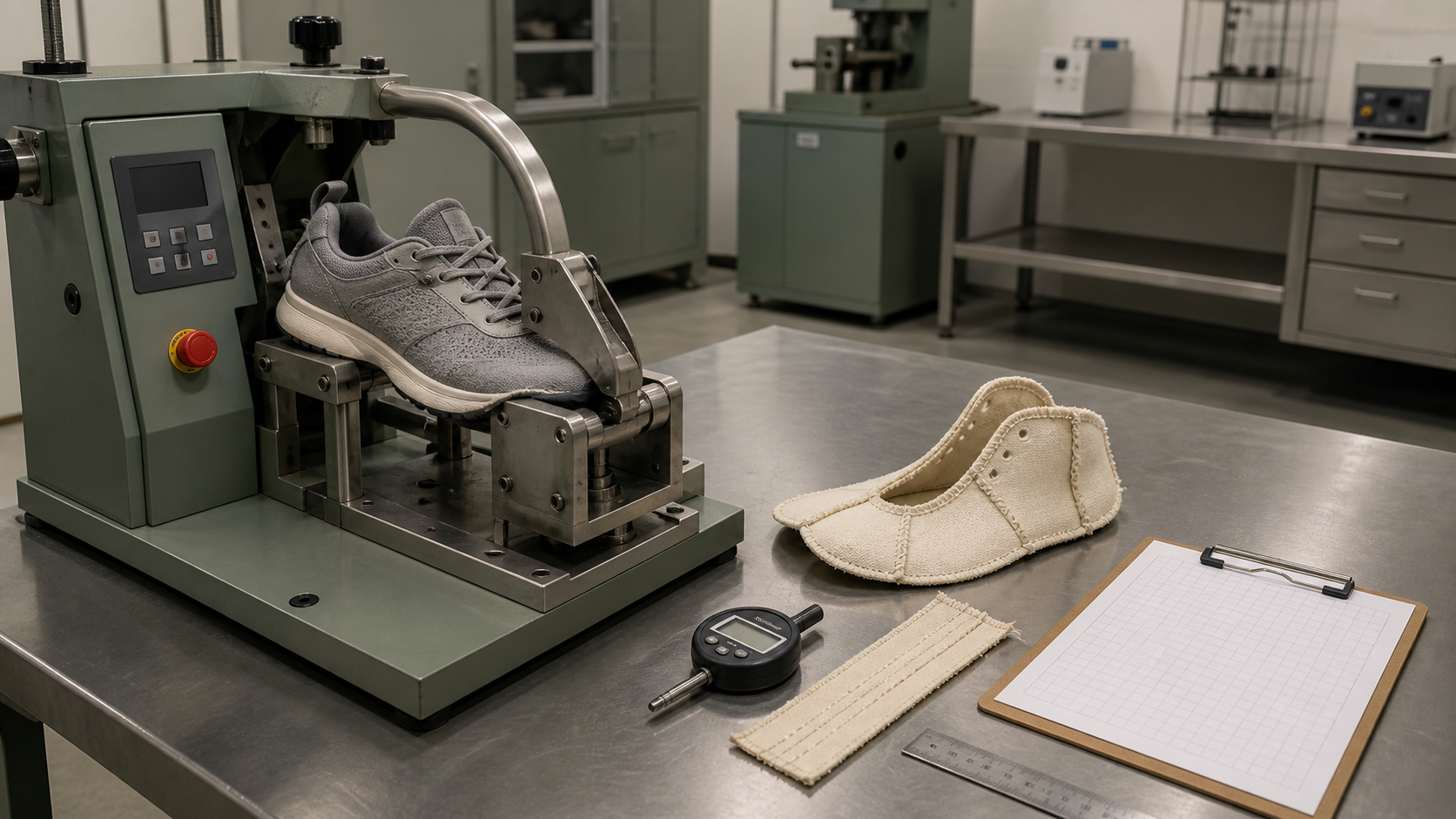
During sampling, inspect the seam before lasting, after lasting, and after bottom attachment. Compare left and right shoes for twist, toe shape, waist alignment, heel seat, and internal feel. Flexing and bond evaluation should be performed on the finished construction because component-level results do not capture all interactions.
FX Footwear’s lab testing page provides context for evaluating footwear materials and assemblies, while its OEM/ODM services page outlines the broader component development workflow. Brands should confirm the exact test methods and pass criteria for their product, destination market, and internal standards before production.
Is Strobel Construction Right for Your Athletic Shoe?
Strobel construction is a strong candidate when the brief prioritizes low weight, controlled flexibility, a close athletic fit, and compatibility with a molded cushioning platform. It is particularly useful when the bottom unit—not a rigid insole board—is intended to provide most of the shoe’s ride and structural behavior.
Choose it deliberately, not by default. If the shoe requires high underfoot rigidity, substantial protective structure, or unusually heavy materials, compare board-lasting or hybrid options during development. The best construction is the one that meets the complete performance, durability, fit, cost, and manufacturing brief.
For brands developing athletic footwear, early coordination between the upper, Strobel board, last, midsole, and bonding process can prevent expensive changes after tooling and wear testing. Share the complete technical target with your component partner before selecting materials or finalizing patterns.
Frequently Asked Questions About Strobel Construction
Is Strobel construction the same as cemented construction?
No. Strobel construction describes stitching a flexible bottom board to the upper. That assembly may then be cemented to a midsole or outsole, so the two terms can describe different stages of the same shoe.
Does Strobel construction make a shoe more flexible?
It generally provides a more flexible base than a rigid full-length lasting board. Final flexibility still depends on the midsole, outsole, plates, reinforcements, adhesives, and geometry.
Can Strobel construction be used in stability shoes?
Yes, provided the required support is engineered through the complete system. Midsole geometry, sidewalls, plates, heel counters, and upper reinforcements can add control while retaining a Strobel base.
What should be tested before production?
Brands should validate seam strength and appearance, dimensional alignment, lasting quality, bond performance, flex durability, finished-shoe weight, and fit. Test methods and acceptance limits should match the intended use and market requirements.