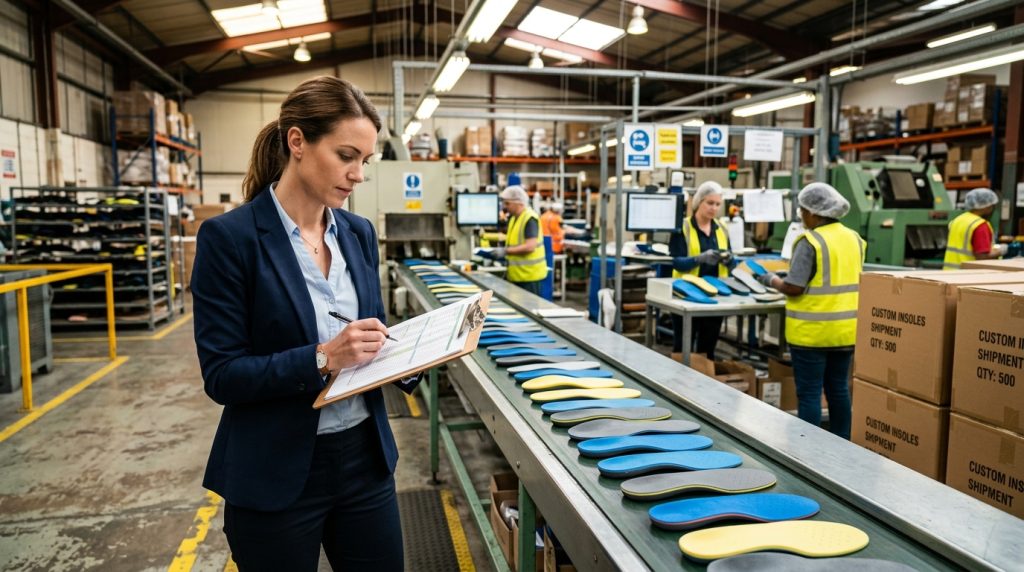
When a footwear brand scales past the prototype phase and enters seasonal production, the sourcing conversation shifts dramatically. You’re no longer looking for a handful of samples — you need a factory that can deliver bulk custom shoe inserts consistently, on spec, and on schedule across tens of thousands (or hundreds of thousands) of pairs. The stakes are higher, the logistics are more complex, and the margin for error shrinks with every additional unit.
This guide breaks down what large-order insole programs actually look like from the inside: how minimum order quantities work, what to look for when vetting a factory, the production timeline you should plan around, and how an integrated manufacturer like FX Footwear (Fuxiang Group) structures bulk programs for US brands. Whether you’re a product development manager placing your first five-figure order or a sourcing director optimizing an existing supply chain, this is the operational roadmap you need.
Bulk Insole Programs Explained
A bulk custom shoe inserts program isn’t simply a bigger version of a sample order. It’s a structured production engagement with defined phases, tolerances, and quality checkpoints that ensure every unit in a 50,000-pair run matches the approved spec. Understanding the anatomy of these programs helps brands avoid surprises and negotiate better terms.
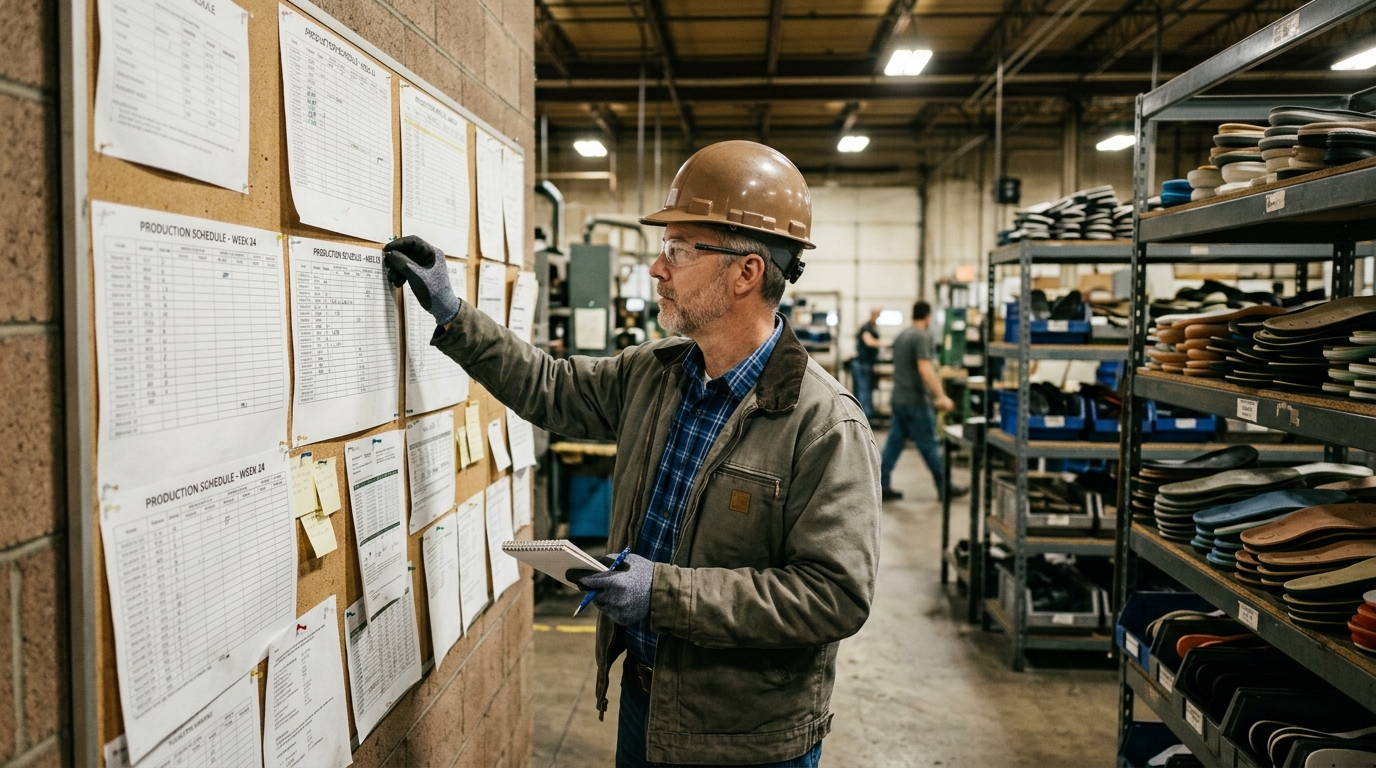
Most large-order programs begin with a technical specification phase, where the brand defines material composition, hardness targets, layer construction, branding placement, and sizing grading. For EVA insoles, this means specifying hardness within the standard 20–45 Asker C range (with a ±3 tolerance), choosing between compression-molded, injection-molded, or die-cut formats, and confirming whether the construction is single-layer or multi-density. For PU insoles, the conversation centers on compression resistance, long-term shape retention, and whether open-cell construction is needed for breathability. Supercritical CO₂ foam insoles — like those in FX’s PulseSport line — require separate planning due to their microcellular structure with predominantly closed cells and the specialized foaming process involved.
After specifications are locked, the program moves into sampling and tooling. If existing tooling fits, die-cut or knife-cut samples can ship in roughly three days. New mold development takes closer to ten business days. Only after sample approval does bulk production begin, and this is where the real capacity conversation matters. A factory handling bulk custom shoe inserts must demonstrate not just the ability to produce at volume, but the ability to hold tolerances, manage color consistency, and execute branding — whether that’s heat transfer print, screen print, or emboss/deboss — across the entire run without drift.
Finally, a well-structured program includes pre-shipment inspection protocols, packing specifications aligned with the brand’s distribution workflow, and clear communication on freight coordination. Brands shipping to the US East Coast from Southeast Asian factories should plan for 18–30 days of ocean transit, which means production timing and order placement must account for seasonal sell-in windows months in advance.
MOQ Considerations for Scale
Minimum order quantities are one of the first questions brands ask — and one of the most misunderstood. MOQs aren’t arbitrary numbers; they reflect the economics of tooling amortization, material batch minimums, production line changeover costs, and the factory’s capacity utilization targets.
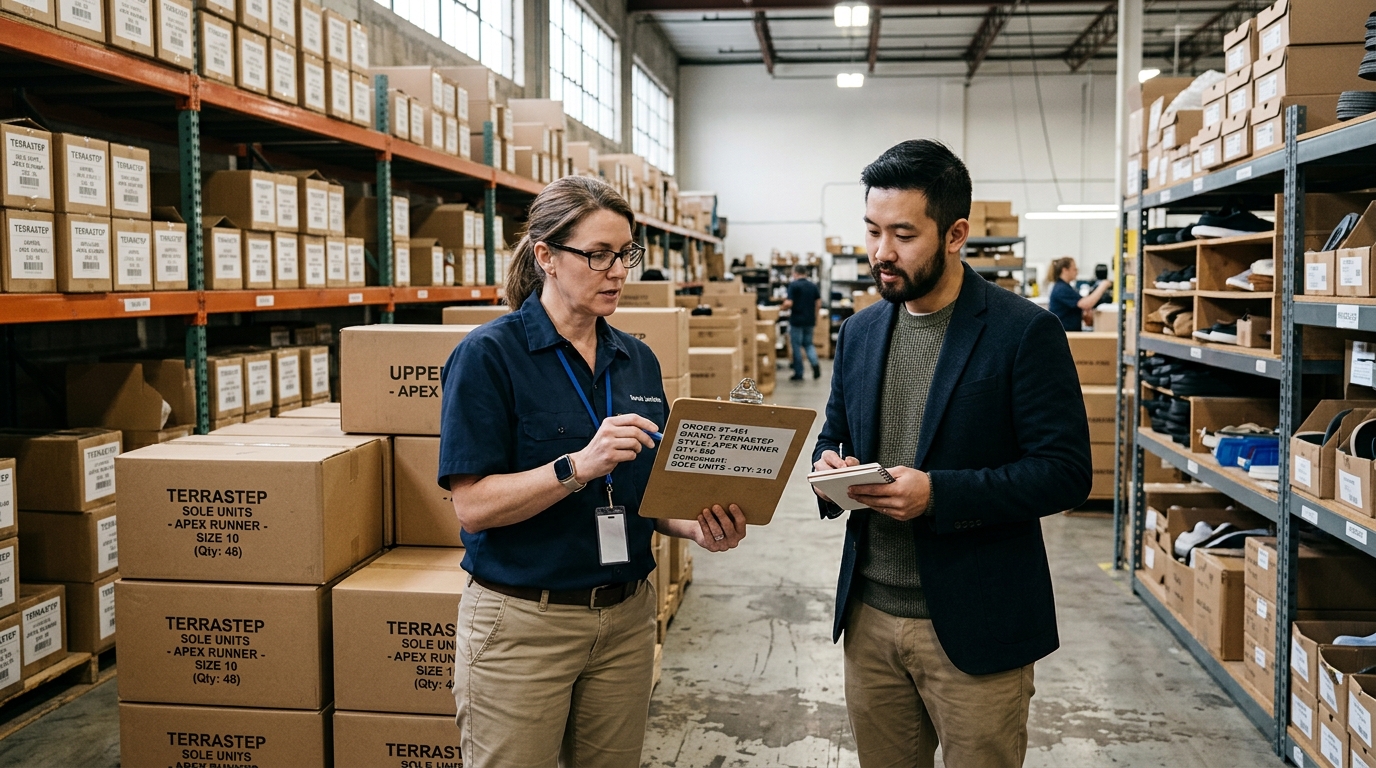
For standard EVA insoles with no heavy customization, many factories set MOQs in the range of 3,000–5,000 pairs per SKU per size run. Custom-molded products with new tooling naturally carry higher minimums because the factory needs to recover tooling investment across the production run. Supercritical CO₂ foam insoles, which involve more specialized processing equipment and longer lead times (30–45 days for production), often have higher MOQs than basic die-cut EVA — sometimes 5,000–10,000 pairs minimum to justify the production setup.
What many brands overlook is the SKU proliferation problem. If you’re ordering insoles across 12 sizes, three colorways, and two material types, your “one insole” is actually 72 SKUs. A factory quoting a 3,000-pair MOQ per SKU is really asking for 216,000 total pairs to fill that matrix. Experienced sourcing teams negotiate MOQs at the order level rather than the SKU level, consolidating volume commitments to unlock better per-unit pricing while maintaining flexibility on size distribution.
FX Footwear’s integrated production model — spanning material foaming through final assembly — provides leverage here. Because FX controls the upstream foam production, there’s less waste in material batch allocation, which means the economics of smaller individual SKU runs improve. This end-to-end production control also means that when you’re working with a shoe insole manufacturer that handles everything in-house, there’s less markup stacking from sub-suppliers at each stage of the process.
Brands entering their first bulk program should also consider blanket order structures: committing to a total annual volume with staggered delivery dates. This gives the factory confidence to reserve capacity and raw materials, often resulting in more favorable pricing and priority scheduling during peak production seasons.
Factory Vetting for Orders
Choosing the wrong factory for a large insole order doesn’t just cost money — it costs time, retailer relationships, and brand credibility. Vetting a bulk custom shoe inserts supplier requires evaluating capabilities across several dimensions that go far beyond price per pair.
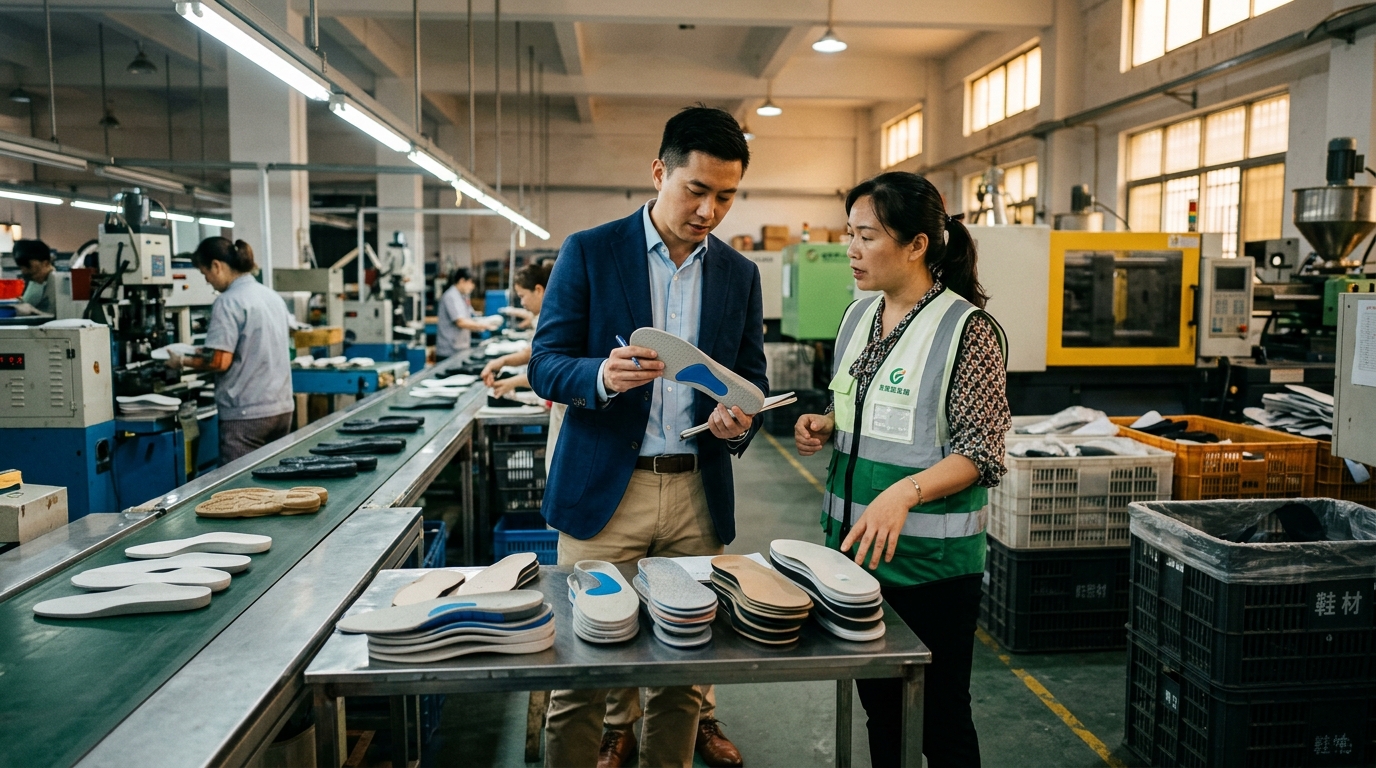
Certifications and compliance infrastructure should be your first filter. For US-market footwear, look for factories that can demonstrate CPSC compliance readiness and California Prop 65 awareness, since these are the regulatory frameworks your retail partners will ask about. The Consumer Product Safety Commission enforces product safety standards that apply to footwear components, and any factory serious about the US market should have testing protocols aligned with these requirements. Beyond regulatory compliance, sustainability certifications like GRS (Global Recycled Standard) and Higg Index participation signal that a factory has invested in traceable, auditable supply chains — increasingly important as major US retailers require sustainability documentation from their suppliers.
For brands producing therapeutic, orthotic, or medical-grade footwear, ISO 13485:2016 certification is essential. This medical-device quality management standard ensures the factory maintains the process controls necessary for products that make health-related performance claims. FX Footwear holds both GRS and ISO 13485:2016, along with Higg Index participation and third-party verification through Intertek and BETA — a combination that covers both the sustainability and quality management sides of the compliance equation.
Production capacity and geographic footprint matter enormously for large orders. A single-facility factory creates concentration risk: one equipment failure, one local regulation change, or one port congestion event can derail your entire delivery schedule. FX Footwear operates across China, Northern Vietnam, Southern Vietnam, and Indonesia — positioned alongside the major Tier 1 footwear manufacturing hubs where brands like HOKA, Clarks, KEEN, UGG, and Teva produce their finished goods. This regional manufacturing footprint enables localized coordination with your Tier 1 assembler, reduces lead times compared to shipping components across regions, and provides geographic diversification that lowers duty exposure and supply chain risk.
In-house testing capability is another critical vetting criterion. Factories that rely entirely on external labs for material validation create bottlenecks during development and risk catching problems too late in the production cycle. An in-house lab enables rapid material testing and product validation — checking foam hardness, density consistency, compression set, and adhesion strength — without the turnaround delays of sending samples to a third-party facility. External lab testing (through organizations like SATRA, SGS, or using ASTM test methods) still plays a role for formal certification and buyer-required test reports, but in-house capability dramatically accelerates the development-to-production timeline.
Finally, request social audit documentation. BSCI and SMETA audits are the standards most US brands and retailers expect, and a factory that proactively maintains these certifications signals operational maturity and ethical manufacturing practices.
Material Options at Volume
Selecting the right material for a bulk insole program involves balancing performance requirements, cost targets, production complexity, and increasingly, sustainability goals. At volume, material choice also affects lead times, tooling requirements, and quality consistency across large production runs.
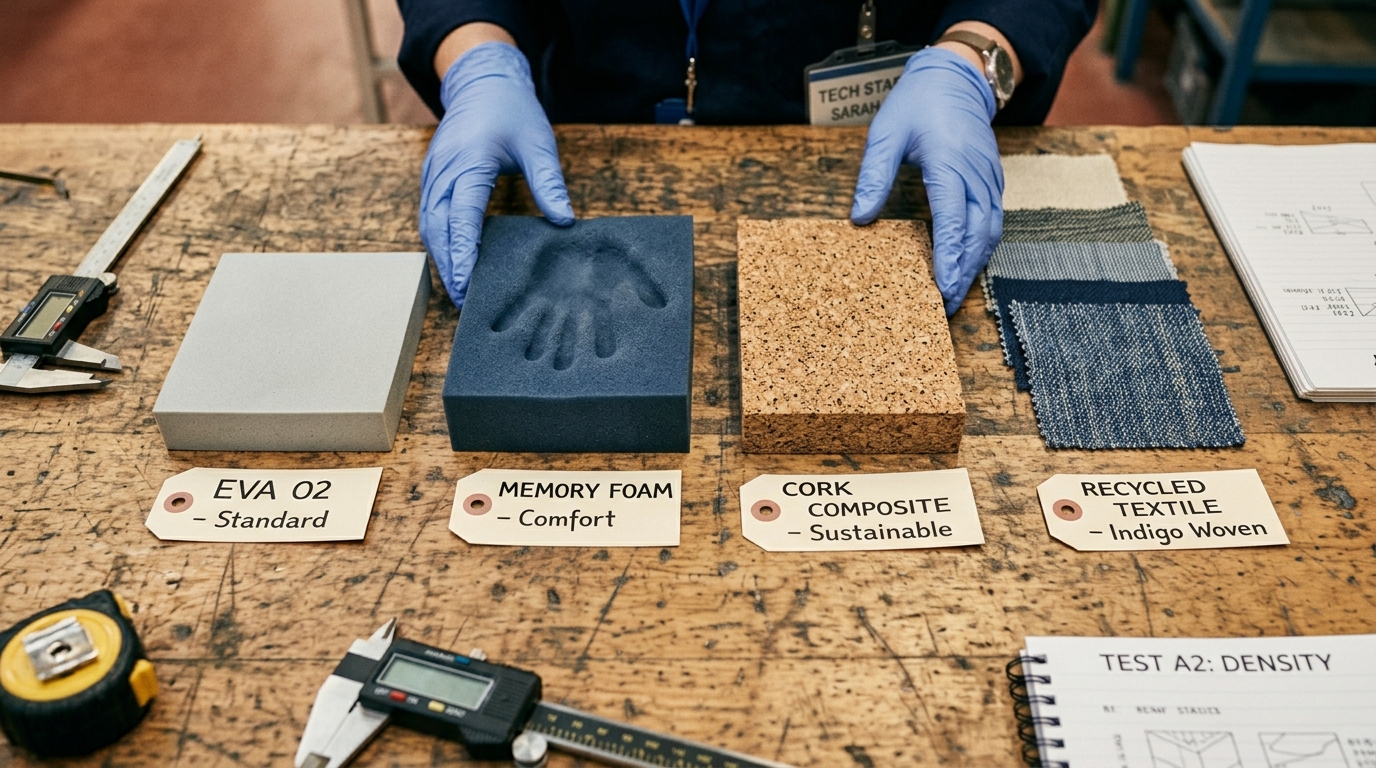
EVA (ethylene-vinyl acetate) remains the workhorse material for bulk insole programs. It’s versatile, cost-effective, and available in compression-molded, injection-molded, and die-cut formats. The standard hardness range of 20–45 Asker C covers everything from soft casual comfort insoles to firmer athletic support configurations. Multi-density EVA constructions — where different foam densities are layered or zoned within a single insole — allow brands to achieve targeted cushioning profiles without moving to more expensive materials. For brands prioritizing sustainability, FX offers sugarcane-based EVA, algae-based EVA (a foam that reduces reliance on petroleum-based materials), and recycled EVA compounds, all sourceable under GRS-compliant supply chains with traceability documentation. The EVA insole manufacturer page provides more detail on FX’s algae-based Everyday line specifically.
PU (polyurethane) is the material of choice when long-term durability and compression resistance are the priority. PU insoles excel at shape retention over extended use — they resist the “bottoming out” that can affect EVA in high-wear applications like work boots or dress shoes. Open-cell PU offers better breathability than closed-cell alternatives, making it suitable for all-day wear applications. For brands seeking sustainable PU options, Susterra®-based formulations provide a bio-based alternative. FX’s OEM insole manufacturer capabilities include PU insoles optimized for cost and scalability — a critical consideration when you’re ordering at volume and need consistent per-unit economics.
Supercritical CO₂ foam represents the performance tier. Produced without traditional chemical blowing agents, this material delivers consistent energy return and impact absorption across repeated use — positioning it above both EVA and PU on the energy return spectrum. The supercritical CO2 foam insole technology behind FX’s PulseSport line is particularly relevant for athletic and performance footwear brands that need measurable cushioning data to support product claims. Because supercritical foam production requires specialized equipment and longer cycle times, brands should plan for 30–45 day production windows and slightly higher MOQs.
Functional and structural insoles — incorporating TPU plates, carbon fiber plates, or multi-material constructions — represent the most complex category. These products, detailed further on FX’s orthotic insoles for running page, require precision tooling and often involve secondary assembly operations. At bulk volumes, the key is working with a manufacturer whose end-to-end production control ensures that the structural components (plates, shanks, reinforcements) integrate consistently with the cushioning layers across every unit in the run.
Production Timeline & Logistics
Understanding the real timeline from specification to delivery is essential for planning seasonal launches, retail commitments, and cash flow. Too many brands underestimate the total sourcing cycle and end up paying air freight premiums that destroy their margin.
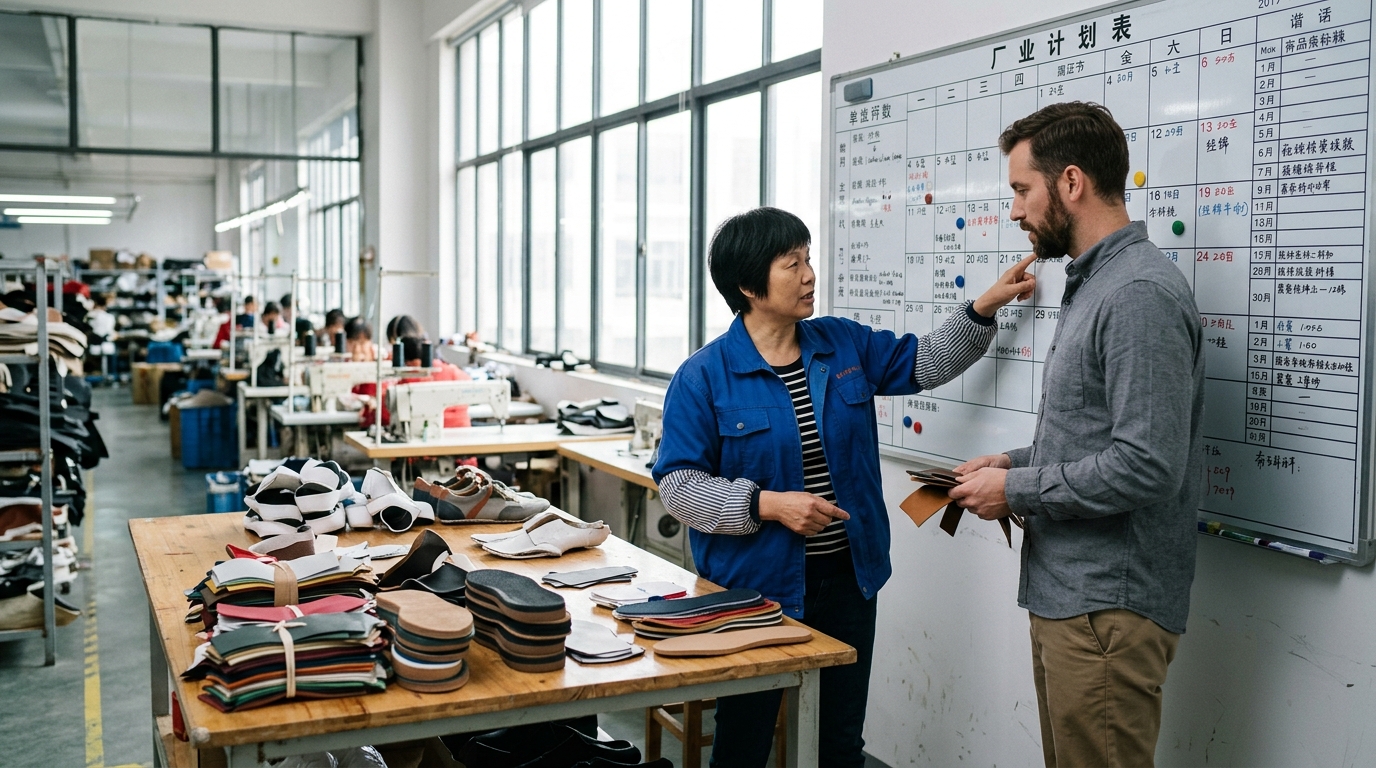
Here’s the realistic timeline breakdown for a first-time custom bulk order:
The sampling phase runs 7–14 days from when confirmed OEM specifications and material approvals are received. If new tooling is required, add approximately 10 business days for mold development. Die-cut samples with existing tooling can turn around in about 3 days — useful for iterating on material selection before committing to custom molds.
Bulk production after sample approval takes approximately 30–40 days for standard custom insoles. Standard EVA insoles without customization run 20–35 days after payment confirmation. Supercritical CO₂ foam insoles require 30–45 days due to the specialized foaming process.
Ocean freight from East Asian manufacturing hubs to US ports takes 18–30 days depending on the port of origin, destination port, and carrier schedule. Air freight door-to-door compresses this to roughly 5–10 days but at significantly higher cost.
Adding these phases together, a total first-time custom sourcing cycle runs approximately 65–100 days from finalized specs to goods arriving at your US warehouse. Repeat orders with existing tooling and approved specs move faster — the sampling phase compresses or disappears entirely, and production scheduling benefits from the factory already having your material formulations and process parameters on file.
For payment planning, standard terms for new customers are 30% deposit upfront with 70% due before shipment. Sampling costs are paid upfront. As order volumes grow and the relationship matures, more flexible terms can be negotiated. Initial quotations for standard constructions with existing tooling and materials are typically returned within 48 hours, with detailed cost breakdowns available after technical evaluation.
The logistics advantage of working with a manufacturer that operates across multiple countries becomes clear during peak season. When Vietnamese factories are at capacity during Q3 production pushes, having the option to allocate portions of your order to Indonesian or Chinese facilities provides scheduling flexibility that single-site suppliers simply cannot offer. This regional manufacturing model — with facilities positioned alongside your Tier 1 footwear assemblers — also enables component delivery directly to the assembly line, eliminating an entire shipping leg from the logistics chain.
Cost Efficiency at Scale
Price per pair is the metric every sourcing team watches, but true cost efficiency in a bulk custom shoe inserts program extends well beyond the unit price on a factory quote. The total cost of ownership includes tooling amortization, quality-related costs, logistics optimization, and supplier consolidation economics.

Tooling amortization is straightforward but often poorly managed. Custom molds represent a fixed cost that spreads across every unit produced. A $2,000 mold amortized across 5,000 pairs adds $0.40 per pair; across 50,000 pairs, it drops to $0.04. Brands that plan multi-season tooling strategies — designing molds that can serve multiple product lines or be modified with inserts for seasonal variations — extract significantly more value from their tooling investment.
Supplier consolidation is where integrated manufacturers create the most dramatic savings. According to McKinsey & Company’s research on footwear supply chains, brands that consolidate their component sourcing reduce procurement overhead, simplify quality management, and gain negotiating leverage through volume aggregation. FX Footwear’s one-stop component manufacturing capability — spanning insoles, midsoles, uppers, and other key footwear parts — means brands can consolidate multiple component categories with a single supplier. Instead of managing separate vendors for insoles, midsoles, and upper materials, each with their own MOQs, payment terms, shipping schedules, and quality control processes, a consolidated approach reduces the administrative burden and unlocks volume-based pricing tiers that wouldn’t be available when ordering each component separately.
Quality-related costs are the hidden budget destroyer. A 2% defect rate on a 100,000-pair order means 2,000 defective pairs — and the cost isn’t just the replacement material. It’s the expedited shipping to meet deadlines, the labor to sort and inspect, the potential chargebacks from retail partners, and the reputational damage if defective products reach consumers. End-to-end production control — where the factory manages everything from material foaming to final assembly — reduces defect rates by eliminating the handoff points between sub-suppliers where specification drift typically occurs. An in-house lab that catches material inconsistencies before they enter the production line is orders of magnitude cheaper than catching them at final inspection or, worse, at the retail shelf.
Freight optimization rounds out the cost picture. Consolidating multiple component types into single shipments from the same manufacturing region reduces per-unit freight costs. Regional manufacturing in Vietnam and Indonesia, positioned near major Tier 1 assembly facilities, can also reduce or eliminate the need to ship components internationally before they reach the assembly line — a logistics savings that compounds across every order.
FAQ
What MOQ applies for bulk orders?
MOQs vary by material and construction but typically start at 3,000–5,000 pairs per SKU for standard EVA insoles; supercritical foam and custom-molded products may require higher minimums due to specialized processing.
How long from order to delivery?
A first-time custom order takes approximately 65–100 days total, including sampling (7–14 days), bulk production (30–40 days), and ocean freight to the US (18–30 days).
What certifications should I verify?
For US-market footwear, prioritize GRS, ISO 13485:2016 (for medical/orthotic applications), Higg Index, CPSC compliance readiness, California Prop 65 awareness, and social audits like BSCI or SMETA.
Can I mix materials in one order?
Yes — integrated manufacturers like FX Footwear can produce EVA, PU, and supercritical foam insoles within a single bulk program, consolidating your sourcing across material types.
What payment terms apply for new customers?
Standard terms are 30% deposit upfront with 70% due before shipment; sampling costs are paid upfront, and flexible terms can be negotiated as order volumes and the relationship grow.
Ready to scope your next bulk insole program? FX Footwear (Fuxiang Group) brings one-stop component manufacturing, regional production across China and Southeast Asia, end-to-end production control, and in-house lab testing to every large-order engagement. Whether you’re sourcing EVA, PU, supercritical foam, or multi-material functional insoles, our team delivers initial quotations within 48 hours for standard constructions. Reach out to start your technical evaluation and see how consolidated sourcing at scale can sharpen your cost position and simplify your supply chain.