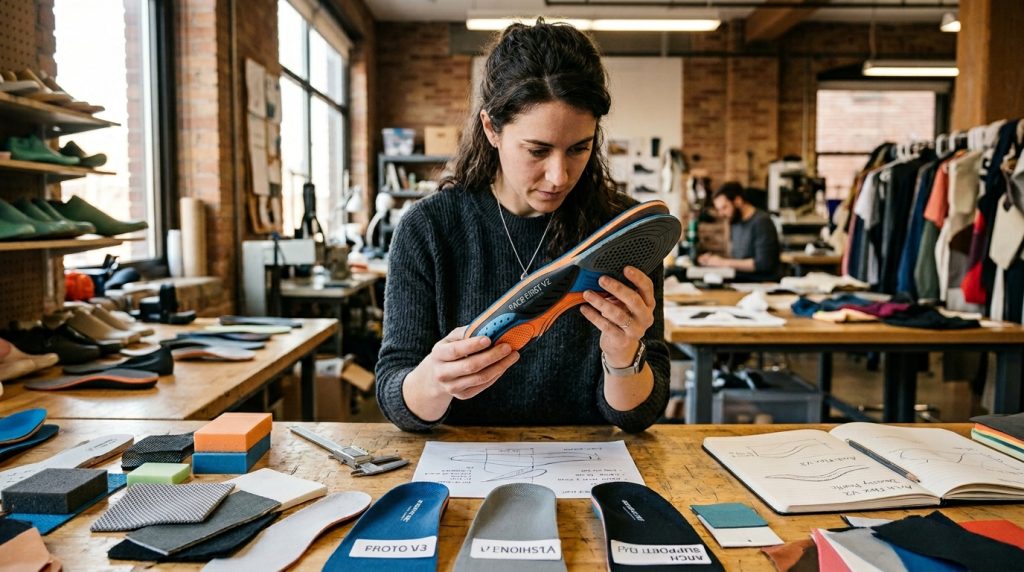
When a running brand decides to develop its own footwear, the insole is one of the most critical — and most scrutinized — components in the entire shoe. It’s the layer that sits closest to the runner’s foot, mediating every impact, every push-off, every mile. That’s why leading brands spend months specifying their custom running insoles, collaborating closely with material scientists and manufacturing partners to get every detail right. Whether you’re a startup launching your first trail runner or an established label refreshing a flagship road shoe, understanding what brands actually prioritize during insole development can save you time, money, and costly production delays.
In this guide, we’ll walk through the seven most important criteria that running brands evaluate when specifying custom running insoles for their product lines. From energy return and weight optimization to testing standards and fit compatibility, each factor plays a direct role in how the finished shoe performs — and how it’s received by runners. Let’s break down what matters most and why.
How Brands Evaluate Custom Insole Partners
Before diving into the seven criteria, it’s worth understanding the broader context of how running brands approach insole specification. Unlike consumer-facing decisions — where a runner might simply pick the most comfortable option off the shelf — brand-level insole selection is a multi-department process. Product designers, biomechanics engineers, sourcing managers, and even marketing teams weigh in on material choices, performance benchmarks, and cost targets.

The process typically begins 12 to 18 months before a shoe hits the market. Brands issue detailed specification sheets that outline performance requirements, and they expect their manufacturing partners to deliver samples that meet or exceed those benchmarks. Working with an experienced wholesale shoe insole manufacturer early in the development cycle helps brands avoid the back-and-forth that delays timelines.
What separates a good insole partner from a great one is the ability to translate brand requirements into manufacturable, consistent products at scale. That means understanding not just the materials but also the biomechanical principles, testing protocols, and market expectations that shape every specification decision.
1. Energy Return Performance
Energy return is arguably the single most discussed insole specification in the running footwear industry today. When a runner’s foot strikes the ground, kinetic energy is absorbed by the midsole and insole materials. The percentage of that energy returned to the runner during toe-off directly impacts running economy — how efficiently a runner moves at a given pace. Brands want insoles that don’t just absorb shock but give something back.

Modern running brands often target energy return rates of 55% to 70% or higher for their insole components, depending on the shoe category. A high-performance racing flat might demand maximum energy return from every layer, while a daily trainer may balance return with durability and cushioning. The key metric here is resilience — the material’s ability to bounce back rapidly after compression. Materials with high resilience, such as advanced TPU foams and supercritical foaming compounds, have become the gold standard for brands chasing podium-level performance.
Testing energy return isn’t guesswork. Brands rely on standardized drop-ball rebound tests, dynamic mechanical analysis (DMA), and in some cases, custom biomechanical testing rigs that simulate real-world heel strike and forefoot loading. If you’re exploring next-generation foam technologies, options like a supercritical CO2 foam insole demonstrate how advanced foaming processes can push energy return metrics significantly beyond traditional EVA compounds. Brands that fail to specify energy return targets upfront often end up with insoles that feel “dead” underfoot — a surefire way to lose credibility with serious runners.
2. Weight Optimization
Every gram matters in running footwear. This isn’t marketing hyperbole — it’s backed by research from institutions like the University of Colorado’s Locomotion Laboratory, which has demonstrated that adding just 100 grams per shoe measurably increases the metabolic cost of running. For brands competing in the performance running segment, insole weight is a specification that gets scrutinized down to the tenth of a gram.
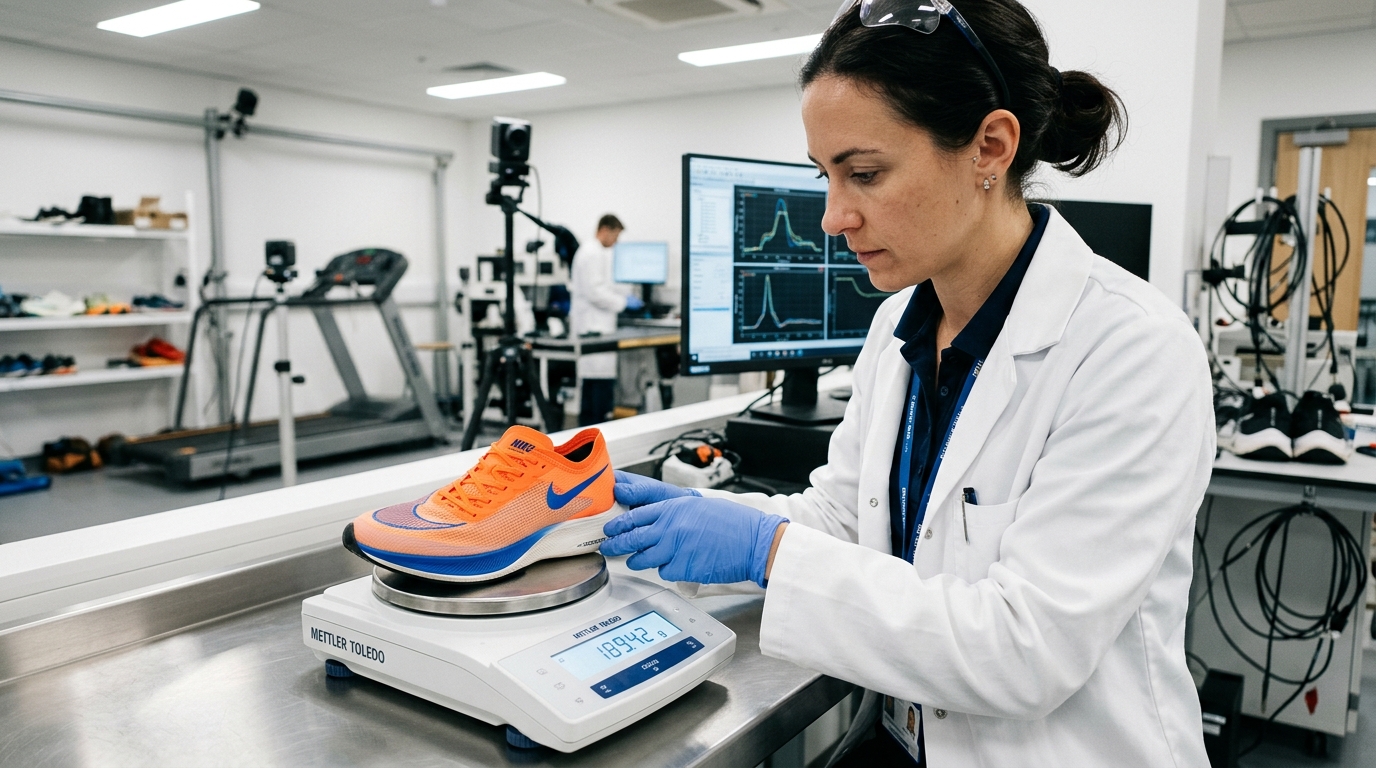
The challenge is that weight reduction can’t come at the expense of performance. Simply making an insole thinner reduces cushioning. Using a lower-density foam might save weight but sacrifice durability and energy return. The brands that get this right work with manufacturers capable of advanced foaming techniques — processes that create micro-cellular structures with high strength-to-weight ratios. Supercritical foaming, nitrogen injection molding, and dual-density constructions all offer pathways to lighter insoles without performance trade-offs.
Brands also think about weight in context. A minimalist 5K racing flat targeting sub-elite runners might specify an insole that weighs under 20 grams per pair, while a maximalist ultra-marathon shoe might allow up to 50 grams if the cushioning and stability benefits justify it. The specification always ties back to the shoe’s intended use case and the runner’s expectations. Manufacturers who can offer multiple material options at different weight points — with clear data on how each performs — earn long-term partnerships with demanding brands.
3. Zoned Cushioning Architecture
Not all areas of the foot experience the same forces during a run. The heel absorbs the highest peak impact loads during rearfoot striking, while the forefoot endures sustained compressive forces during push-off. The metatarsal heads, arch region, and toe area all have distinct pressure profiles that change depending on running speed, gait pattern, and terrain. Brands know this, and they specify custom running insoles with zoned cushioning that addresses each area differently.
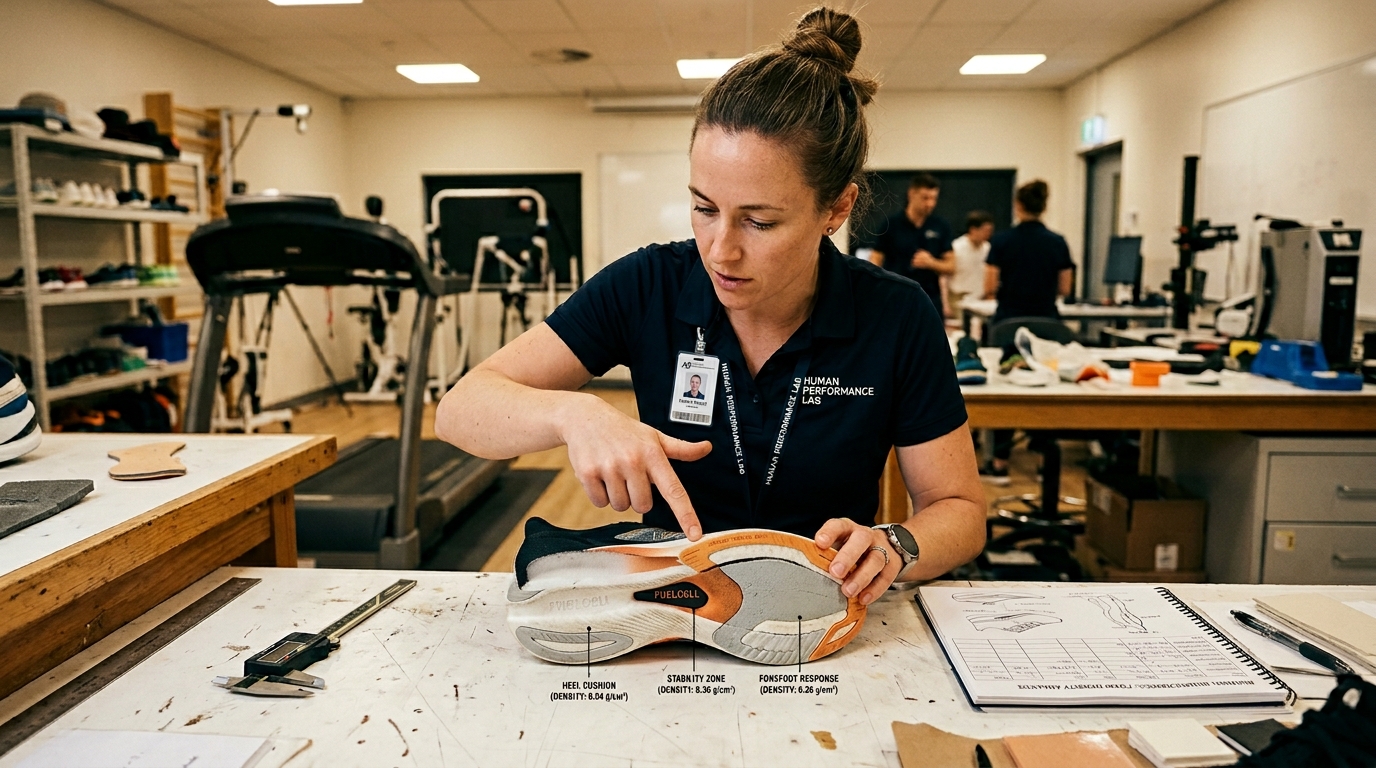
Zoned cushioning architecture can be achieved through several engineering approaches. Dual-density or multi-density foam constructions place softer material under high-impact zones and firmer material where stability is needed. Selective perforation patterns can alter the effective stiffness of specific insole regions without changing the base material. Some brands go further, integrating gel pods, TPU plates, or embedded support structures into the insole to create highly targeted cushioning maps.
The most sophisticated brands provide their insole suppliers with pressure-mapping data from treadmill testing, specifying exact durometer ranges for each zone. For instance, a brand might require 25-30 Asker C hardness under the heel, 30-35 Asker C under the metatarsal heads, and 40-45 Asker C in the midfoot for a neutral daily trainer. Partnering with an OEM insole manufacturer experienced in multi-zone construction ensures these specifications translate accurately from prototype to production. Brands that settle for flat, uniform-density insoles are leaving measurable performance and comfort gains on the table.
4. Fit Compatibility Across Lasts
An insole doesn’t exist in isolation — it has to work within the three-dimensional architecture of a shoe. Fit compatibility refers to how precisely an insole conforms to the shoe’s last shape, sockliner bed, and internal volume. Get this wrong, and even the most advanced material technology will feel awkward, bunch up, or create pressure points that undermine the entire shoe experience.
Running brands invest heavily in last development, and each last has a unique geometry defined by its toe spring, arch height, heel cup depth, and overall volume. When a brand specifies a custom insole, it provides the manufacturer with last data — usually in the form of 3D scans or CAD files — and expects the insole to match those contours precisely. This includes ensuring that the insole sits flat in the shoe without curling at the edges, that the heel cup aligns with the shoe’s heel counter, and that the arch profile provides the intended level of support without feeling intrusive.
Fit compatibility also extends across the size run. An insole that works perfectly in a men’s size 10 might develop fit issues when scaled down to a size 7 or up to a size 13 if the grading isn’t carefully managed. Experienced manufacturers maintain detailed grading tables and use CNC-cut tooling for each size, ensuring dimensional consistency. Brands running multiple shoe models on different lasts need a manufacturing partner capable of managing dozens of distinct insole shapes simultaneously without cross-contamination or sizing errors.
5. Moisture Management & Surface Materials
Runners sweat — a lot. The average foot produces approximately 200 milliliters of perspiration during an hour of vigorous running, according to podiatric research. All of that moisture ends up in direct contact with the insole surface. If the insole can’t manage moisture effectively, it leads to a cascade of problems: slippage inside the shoe, bacterial and fungal growth, odor, material degradation, and blistering. Brands specify moisture management systems in their custom running insoles to prevent every one of these issues.
The insole’s topcover is the first line of defense. High-performance running brands typically specify fabrics with hydrophobic treatments or inherent wicking properties that move moisture away from the skin surface and into the foam body, where it can evaporate. Common topcover choices include antimicrobial-treated polyester mesh, Coolmax-style moisture-wicking fabrics, and in some eco-conscious lines, recycled or bio-based textiles. The bonding method between the topcover and the foam substrate also matters — adhesive failure from repeated moisture exposure is a common failure mode that brands test aggressively.
Beyond the topcover, the foam itself plays a role in moisture management. Open-cell foam structures allow moisture to pass through more readily than closed-cell foams, but they can also retain water and become heavier over time. The best insole designs strike a balance, using semi-open-cell foams or perforated closed-cell structures that allow airflow without becoming waterlogged. Some brands also specify anti-odor treatments — silver-ion antimicrobial technologies are widely used — that maintain freshness across the product’s intended lifespan. These aren’t premium add-ons; for serious running brands, they’re baseline expectations.
6. Durability & Lifecycle Testing
A running insole that feels incredible on mile one but deteriorates by mile 300 is a product failure. Brands think about insole durability in terms of lifecycle performance — how the insole’s cushioning, energy return, shape retention, and surface integrity hold up over the shoe’s expected usage life. For most running shoes, that target is 300 to 500 miles, though some brands design for even longer lifespans in their everyday training models.
Durability testing involves several standardized and proprietary methods. Compression set testing measures how much permanent deformation a foam retains after being subjected to sustained load — a critical predictor of whether an insole will “flatten out” over time. Brands typically specify maximum compression set values of 30% to 50%, depending on the foam type. Flexural fatigue testing simulates the repeated bending that occurs during the gait cycle, often running 100,000 cycles or more to assess material breakdown. Abrasion testing evaluates how the topcover fabric holds up to friction from the foot.
Brands also conduct real-world wear testing, distributing prototype shoes to panels of runners who log miles and provide feedback on how the insole performs over weeks and months. This qualitative data complements laboratory testing and often catches issues — like a topcover that pills after washing, or a foam that develops a squeak — that standardized tests might miss. Organizations like SATRA Technology provide internationally recognized testing frameworks that many brands reference in their specifications. Manufacturers who can run these tests in-house and provide certified results accelerate the development process significantly.
7. Sustainability & Material Traceability
Sustainability has moved from a marketing differentiator to a core procurement requirement for running brands, especially those selling into the US and European markets. When specifying custom running insoles, brands increasingly ask detailed questions about the environmental footprint of every material and process involved. This includes the carbon intensity of foam production, the recyclability of the finished insole, the use of restricted substances, and the overall traceability of raw materials.
Leading brands require their insole suppliers to comply with frameworks like the OEKO-TEX Standard 100, REACH regulations, and in some cases, Bluesign certification for textile components. They also ask for detailed material data sheets that document the chemical composition, country of origin, and environmental certifications for each input material. Some brands go further, requiring life cycle assessments (LCAs) that quantify the carbon footprint of the insole from raw material extraction through end-of-life disposal.
For many brands, EVA remains a go-to material for its balance of performance, cost, and manufacturability, but they want it produced responsibly. Working with an EVA insole manufacturer that has documented environmental management systems and can provide batch-level traceability gives brands the compliance documentation their corporate sustainability teams require. Meanwhile, bio-based foams, recycled content requirements, and designs that facilitate disassembly for recycling are becoming increasingly common specification items. Brands that ignore sustainability in their insole sourcing risk both regulatory exposure and reputational damage with environmentally conscious consumers.
Choosing the Right Insole Manufacturing Partner
With all seven criteria in mind, the question becomes: how do you find a manufacturing partner that can deliver across every dimension? The answer comes down to three things — technical capability, communication, and scalability. A capable insole manufacturer should be able to demonstrate expertise in advanced foaming technologies, multi-density construction, precision grading, and surface material integration. They should also have robust quality management systems and in-house testing capabilities.
Communication is just as important. The insole development process involves constant iteration — refining durometer specs, adjusting cushioning zones, testing new topcovers, and scaling prototypes to production volumes. Brands need a partner that responds quickly, provides clear data, and proactively flags potential issues before they become production problems. The best partnerships feel collaborative, not transactional.
Scalability matters because a running brand’s insole needs aren’t static. A first run might be 5,000 pairs; a successful season could require 500,000 pairs with consistent quality across every unit. Manufacturers with vertically integrated operations, modern production lines, and experience serving global footwear brands can absorb volume fluctuations without compromising quality or timeline commitments. For brands exploring orthotic insoles for running, the right partner should also demonstrate expertise in anatomically contoured designs and support-focused constructions that complement standard cushioning insoles.
FAQ
What are custom running insoles?
Custom running insoles are footwear inserts designed to a brand’s exact specifications for cushioning, fit, materials, and performance, rather than off-the-shelf generic components.
Why does energy return matter in insoles?
Higher energy return means more of the impact energy is given back to the runner during push-off, improving running economy and reducing fatigue over long distances.
How long should running insoles last?
Most brands design running insoles to maintain performance for 300 to 500 miles, aligning with the typical replacement cycle of a running shoe.
What sustainability certifications apply to insoles?
Common certifications include OEKO-TEX Standard 100 for chemical safety, REACH compliance for the European market, and Bluesign for environmentally responsible textile production.
Can one insole design work for multiple shoe models?
Typically no — each shoe last has unique geometry, so insoles must be designed and graded specifically for each model to ensure proper fit and performance.
When you’re ready to bring your next running shoe to life, choosing the right insole partner is one of the most impactful decisions you’ll make. FX Footwear (Fuxiang Group) works with running brands at every stage of development — from initial material selection and prototype sampling to full-scale production — delivering custom running insoles that meet the rigorous performance, quality, and sustainability standards today’s market demands. Reach out to our team to discuss your next project and discover how the right insole can elevate your entire footwear line.