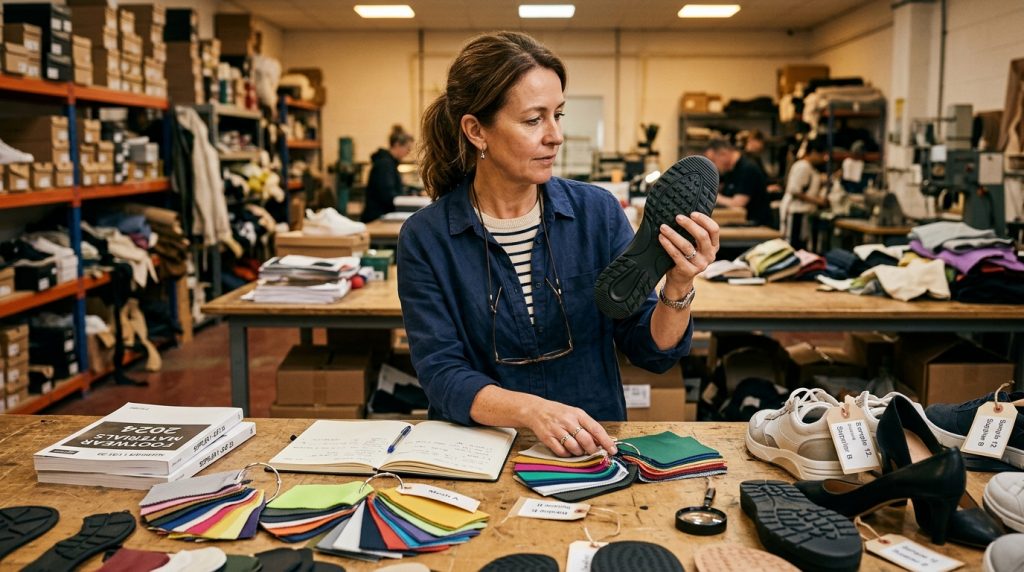
The difference between a footwear product that performs and one that fails usually isn’t design — it’s component sourcing. The footwear component supplier you choose determines your foam quality, your lead time reliability, your compliance exposure, and ultimately your margin. Yet most brands spend far more time on aesthetic decisions than on the supplier evaluation framework that underpins all of them.
This guide gives you a structured approach to evaluating footwear component suppliers — from manufacturing capability audits and certification checklists to pricing analysis and partnership terms. Use it as a qualification template the next time you’re adding a new supplier to your roster or reconsidering an existing one.
Step 1: Define Your Component Requirements Before You Evaluate Anyone
The most common mistake in supplier selection is starting with “who can make this?” before fully defining “what exactly needs to be made?” A vague RFQ produces vague quotes that can’t be compared. Before you contact any supplier, document:

- Component category: insoles, midsoles, heel counters, uppers, or a combination
- Material type: EVA (die-cut, injection-molded, compression-molded), PU, supercritical CO₂ foam, or structural materials (TPU, carbon fiber)
- Performance targets: hardness (in Asker C for flexible foam), density, energy return category, compression fatigue threshold
- Construction complexity: single-layer, multi-density, co-molded, plate-integrated
- Required certifications: GRS for recycled content, ISO 13485 for therapeutic/orthotic, CPSC/Prop 65 for US retail, REACH for EU markets
- Annual volumes and seasonal peaks: this determines whether you need a factory with large-batch capability or one that handles flexible smaller runs
- Target markets: US distribution requirements differ from EU; confirm which compliance standards apply
A two-page technical brief produces better quotes, faster, from better suppliers. It also filters out factories that can’t actually meet your requirements before you spend time on calls.
Step 2: Evaluate Manufacturing Capability — Not Just Capacity
Factory size is the wrong proxy for capability. A large factory with limited material expertise is a worse choice than a smaller specialist. Capability evaluation should cover:
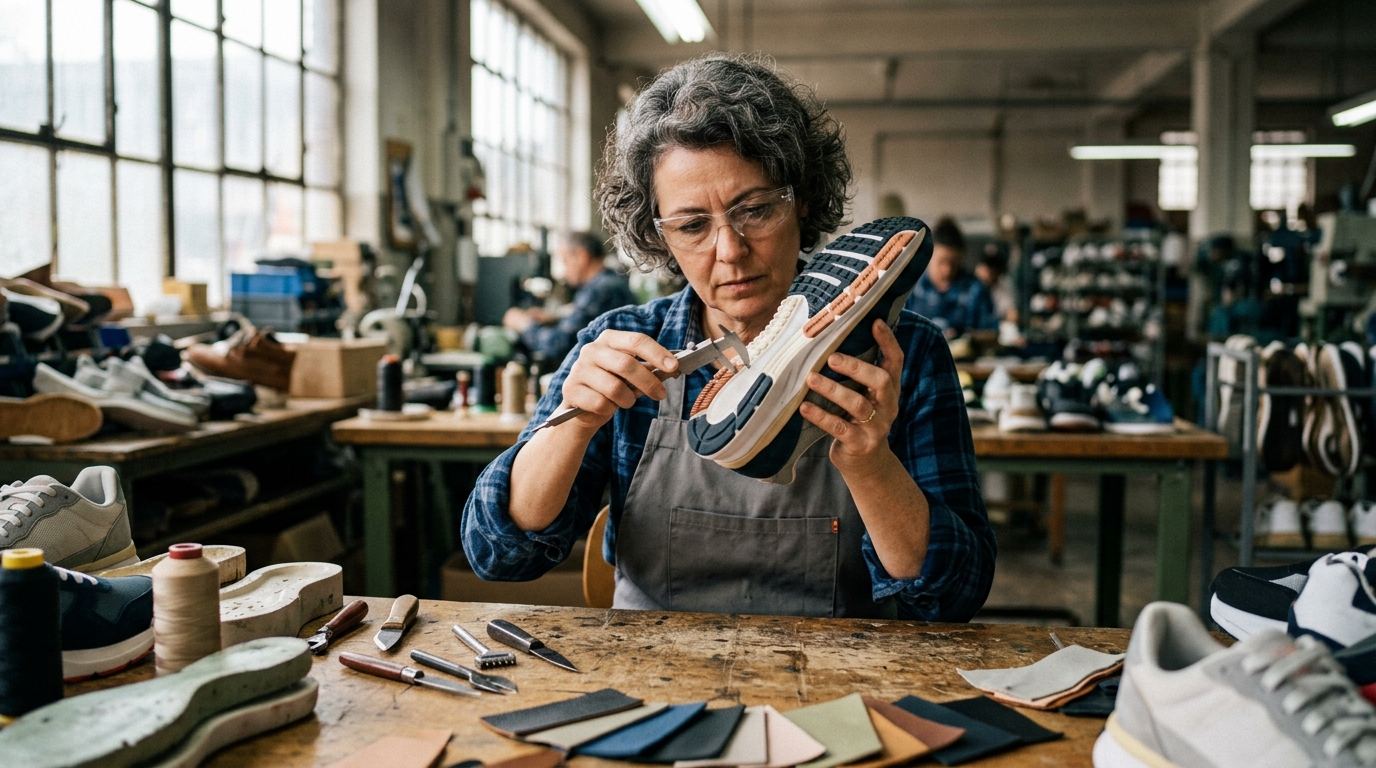
Material technology range. Can the supplier produce across the specific material types your product requires? EVA, PU, and supercritical CO₂ foam require different equipment, process expertise, and quality control infrastructure. A supplier that produces all three has broader design flexibility for future product iterations.
Multi-density and co-molding capability. Performance insoles and midsoles often require density gradients — softer heel, firmer forefoot, graduated arch support. Co-molding two or more foam densities in a single pressing cycle requires specific tooling and process controls. Confirm this is a standard production capability, not an exception the factory has done once.
Tooling ownership and IP control. Factories that own their molds maintain them, control their condition, and make iteration decisions on your timeline. Factories that outsource tooling to external providers introduce an extra coordination layer. More importantly, in a true OEM relationship, your tooling designs should remain your IP — confirm this in writing before sharing any technical drawings.
In-house testing laboratory. A factory with its own lab can measure hardness, compression set, abrasion resistance, and moisture wicking internally — meaning development iterations get validated faster without waiting for external lab scheduling. Ask specifically about durometer (Asker C) measurement capability and compression fatigue testing.
Geographic location relative to your assembly factories. If your uppers are assembled in Vietnam and your insoles are sourced from a factory three time zones away, logistics coordination adds cost and delay. Suppliers with manufacturing in China, Northern Vietnam, Southern Vietnam, and Indonesia can position component production adjacent to the major Tier 1 assembly hubs.
> Evaluating suppliers for your next season? FX Footwear produces insoles, midsoles, and upper components across facilities in China and Southeast Asia. Request a factory profile and capability overview →
Step 3: Certifications — Match to Your Market and Product Type
Certifications are supply chain signals — not branding claims. The ones that matter depend on what you’re making and where you’re selling it.
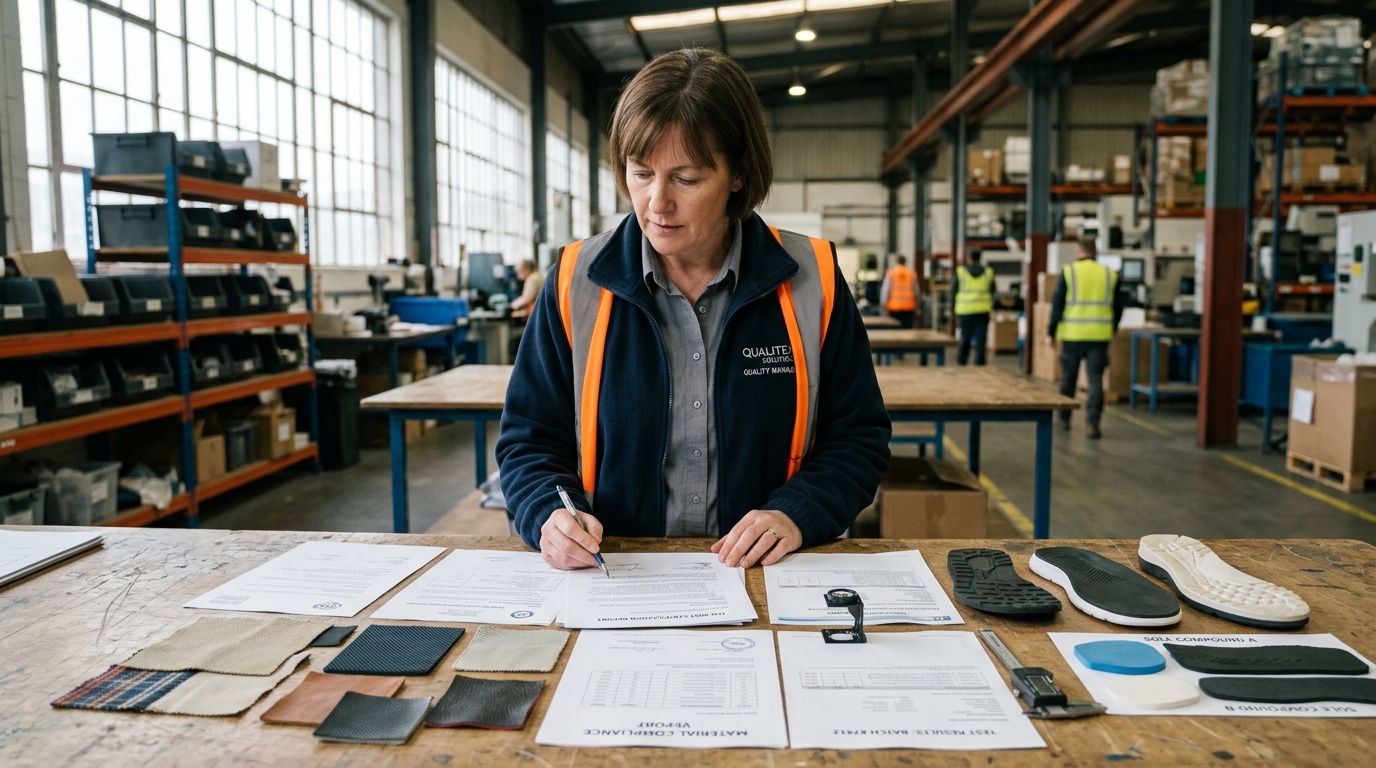
GRS (Global Recycled Standard): Required if your product makes recycled content claims. GRS-certified suppliers can provide material traceability documentation from recycled feedstock through finished component. Without GRS, recycled content marketing claims are unverifiable and expose brands to greenwashing complaints.
ISO 13485:2016: The medical-device quality management standard. Required if you’re developing orthotic footbeds, therapeutic insoles, or any product positioned in the medical or podiatric channel. This is a distinct certification from general manufacturing quality management.
Higg Index: A supply chain sustainability measurement system increasingly required during vendor onboarding at major US and European retail buyers. Familiarity with Higg scoring and its documentation requirements is a baseline expectation for suppliers serving the premium retail channel.
CPSC compliance and California Proposition 65: Non-negotiable for US retail distribution. Confirm your supplier understands the chemical restriction lists and maintains compliant material sourcing. Ask for documentation of how Prop 65-listed substances are screened in their foam formulations and adhesives.
REACH (EU markets only): An EU chemical regulation requiring compliance testing and documentation. It is not a factory-level certification — but for brands distributing in Europe, your supplier needs to be able to support the REACH compliance process for EU-destined goods. This is best handled on a project basis with a supplier experienced in EU market entry requirements.
Social compliance (BSCI / SMETA): Major US retailers increasingly require current social audit results before adding new vendors to their approved supplier lists. Ask for audit documentation and how the factory handles remediation when findings arise. A factory with a clean audit and no remediation history is not necessarily better than one with findings and documented improvement — the latter at least demonstrates transparency.
Step 4: Understand Pricing Structure and Total Cost of Ownership
Price per unit is the wrong metric for supplier evaluation. Total cost of ownership — across sampling, tooling, freight, duties, and the cost of delays — is what actually determines supplier economics.

When comparing footwear component suppliers, include:
Tooling fees and amortization. New mold development typically involves an upfront cost. Understand whether this cost is one-time or amortized across the order, and who owns the tooling after payment.
Sampling costs. Sample charges vary by construction complexity. Die-cut or knife-cut samples (no new tooling) are typically low-cost. Samples requiring new molds involve tooling and development time. Confirm sampling costs upfront — and understand they are typically paid in advance.
Payment terms. Standard terms for new relationships are 30% deposit upfront, 70% before shipment. Terms typically become more flexible as order volumes and the relationship grow. Unusual payment requests (large upfront payments, full payment before sampling) are red flags.
Lead time reliability. A supplier that quotes 25 days but delivers in 40 consistently is more expensive than one that quotes 35 days and delivers in 35. Ask for data on on-time delivery rates, not just nominal lead time figures.
Freight and logistics. EXW (Ex Works) pricing puts logistics cost and risk on you; DDP (Delivered Duty Paid) transfers it to the supplier. Understand what’s included in any quote you receive, and model total landed cost — not factory gate cost.
Step 5: Evaluate Supply Chain Resilience
Single-factory dependency is the most common structural risk in footwear component sourcing. If your supplier has one production facility and it faces a capacity constraint, labor shortage, or weather event, your supply chain stops.

Suppliers with multiple facilities across different geographies can shift production within their network. For brands sourcing from Asia, a manufacturing footprint that spans China and Southeast Asia (Vietnam, Indonesia) provides structural redundancy without requiring you to manage multiple vendor relationships.
Also evaluate financial stability. A supplier that quotes aggressively and immediately accepts your terms without negotiation may be managing cash flow pressure — which translates into production shortcuts or delayed material procurement on your orders.
Step 6: Vet Partnership Terms Before the First Purchase Order
Supplier agreements that are negotiated at the start of a relationship are cleaner and cheaper to enforce than ones litigated after a problem occurs. Before your first production order, confirm in writing:

- Tooling IP ownership: who owns the molds, and can you transfer them to another factory?
- Change order process: how are design revisions handled post-sampling? What costs apply?
- Failed QC remediation: who bears cost if a production run fails agreed quality standards?
- Delivery penalty clauses: what happens if bulk production misses the agreed ship date?
- Exclusivity provisions: does the supplier agree not to sell your tooling-derived designs to competitors?
These terms are standard in established OEM relationships. A supplier that resists them is either inexperienced with sophisticated buyers or has reasons for that resistance — neither is a good sign.
Choosing a One-Stop Footwear Component Supplier
For brands sourcing multiple component types, a one-stop supplier that produces insoles, midsoles, and upper components under one manufacturing umbrella offers meaningful structural advantages: fewer vendor relationships to manage, better cross-component fitment (parts tested together before production), consolidated purchase order flow, and a single QC review process.
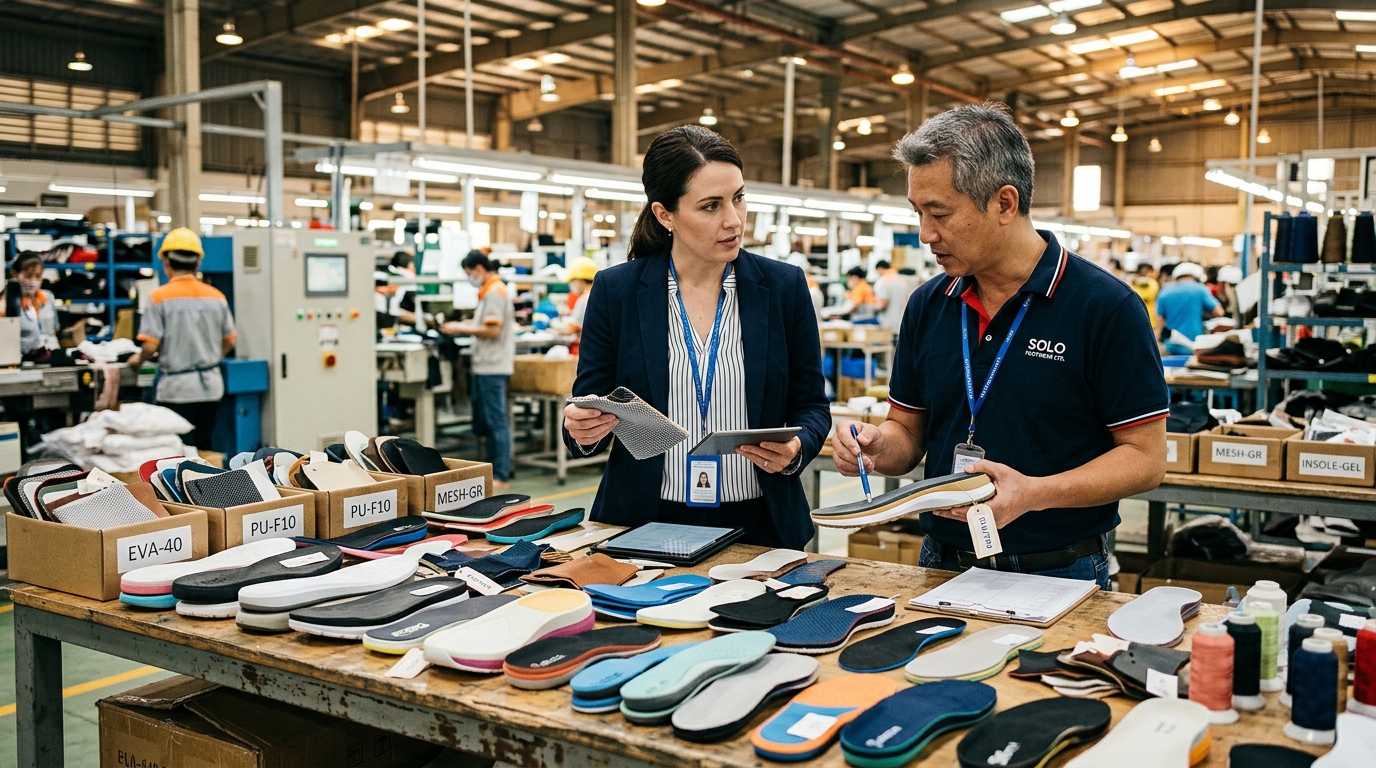
The tradeoff is dependency — so vetting a one-stop supplier to the standard above is even more important than vetting a category specialist. Confirm multi-category capability is genuine (not a capability deck claim) by requesting samples across each component type you intend to source.
> Looking for a footwear component supplier that covers insoles, midsoles, and upper components?
>
> FX Footwear produces across all three categories from facilities in China, Northern Vietnam, Southern Vietnam, and Indonesia. Our team responds to sourcing inquiries within 48 hours with a tailored quote based on your specifications.
>
> Submit your sourcing inquiry →
FAQ
What is the most important factor when choosing a footwear component supplier?
Manufacturing capability aligned to your specific component and material requirements. A supplier that can produce your exact construction — correct material, correct density, correct certifications — at your required volume and timeline is more valuable than one that scores well on general metrics but can’t reliably deliver your specific product.
How many suppliers should a footwear brand use for components?
There’s no universal answer, but the sourcing risk of over-reliance on a single supplier must be weighed against the coordination cost of managing too many. Many mid-sized brands work toward a primary supplier that covers multiple component categories plus a secondary source for the highest-volume SKUs. One-stop manufacturers that span insoles, midsoles, and uppers allow consolidation without creating a single point of failure across all categories.
How do I compare quotes from multiple footwear component suppliers?
Build a total landed cost model that includes: unit price, tooling, sampling, freight (at current carrier rates), import duties (tariff classification matters), and a probability-weighted cost of delay. Apply this consistently across all quotes. The supplier with the lowest unit price is rarely the one with the lowest total cost.
What certifications are most important for US footwear brands?
CPSC compliance and California Proposition 65 chemical restrictions are non-negotiable for US retail distribution. GRS certification matters if you make recycled content marketing claims. ISO 13485 is required for therapeutic or orthotic footwear categories. Social compliance (BSCI or SMETA) is increasingly required by major US retail buyers as a condition of vendor approval.
How do I evaluate a footwear component supplier without visiting the factory?
Request a detailed factory profile, production videos of key manufacturing and testing areas, third-party audit reports (social and quality), and recent test certificates from accredited labs. Place a development sample order and evaluate the supplier’s communication speed, accuracy to your specs, and packaging quality. Performance on a sample order is strongly predictive of bulk production performance.
What lead times should I plan for with a new OEM footwear component supplier?
For a custom, first-time component order: plan 65–100 days from confirmed specs to US port delivery. This includes: 3–10 business days for samples (depending on tooling requirements), 7–14 days for fit/performance iterations, 30–40 days for bulk production, and 18–30 days for ocean freight. Air freight reduces transit to 5–10 days but at significant cost premium.