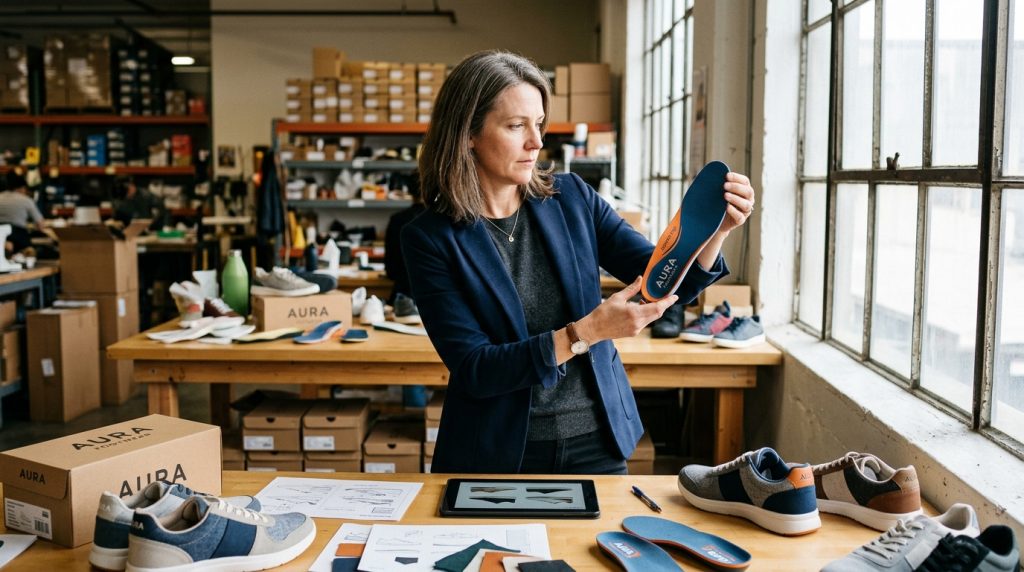
Launching a branded insole line is one of the fastest ways for retail brands to expand into the footwear comfort category — without building shoes from scratch. Whether you’re a DTC brand exploring foot care, a retailer adding store-brand accessories, or an established footwear company extending your product range, private label insoles offer high margins, repeat purchases, and strong customer loyalty.
But the success of any private label insole program depends almost entirely on the manufacturer behind it. The right private label insoles manufacturer handles formulation, tooling, branding, quality control, and logistics — freeing your team to focus on marketing and sales. The wrong one delivers inconsistent quality, missed deadlines, and products that erode your brand’s reputation.
This guide explains what private label insoles actually are, how retail brands successfully launch insole lines, and what to look for in a manufacturing partner. We’ll also explain why FX Footwear (Fuxiang Group) is built to serve brands at every stage of private label development.
What Are Private Label Insoles?
Private label insoles are cushioning, support, or performance inserts manufactured by a third party but sold under your brand name. Unlike white-label products (which are generic and identical across buyers), true private label insoles can be customized — from the foam formulation and density to the top cloth material, color, logo placement, and packaging.
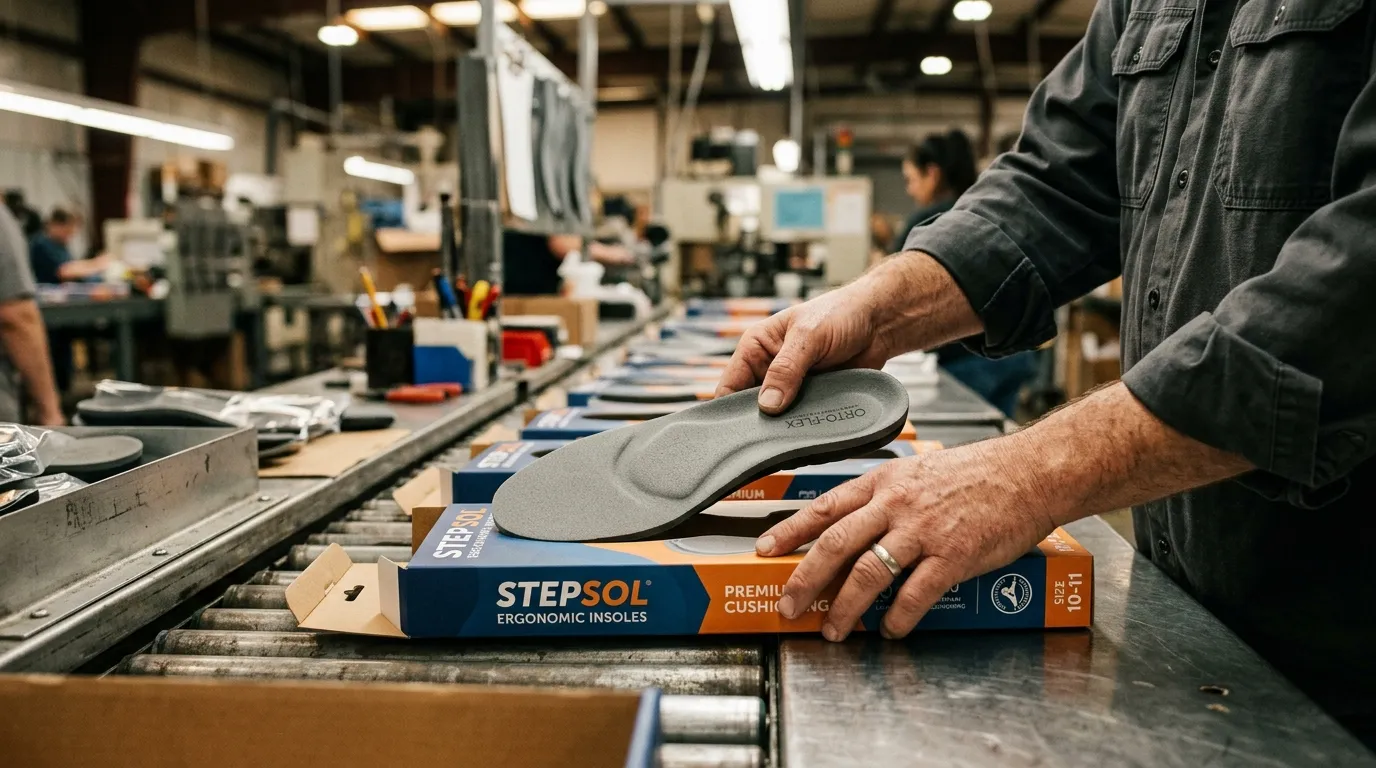
This distinction matters for retail brands. White-label insoles are commodities. Private label insoles are brand assets. When a customer pulls your insole out of the box and sees your logo heat-transferred onto a high-quality top cloth, that product becomes part of your brand experience. They associate the comfort, the fit, and the quality with your name — not a factory’s.
The private label model is especially powerful in the insole category because of repurchase behavior. Unlike shoes, insoles wear out and need replacement every 6–12 months depending on usage. A customer who buys your branded insole and loves it will come back for a second pair — and a third. That’s recurring revenue attached directly to your brand, manufactured by a partner who handles the complexity behind the scenes.
For brands evaluating the insole market, it helps to understand the broader manufacturing landscape first. Our breakdown of global insole manufacturers covers the key players and what differentiates them by region, capability, and specialization.
Why Retail Brands Launch Insole Lines
The insole market is projected to grow steadily through the rest of this decade, driven by increasing consumer awareness of foot health, the athleisure trend, and an aging population seeking comfort solutions. According to Grand View Research, the global insole market was valued at over $40 billion in recent years and continues to expand, particularly in North America.
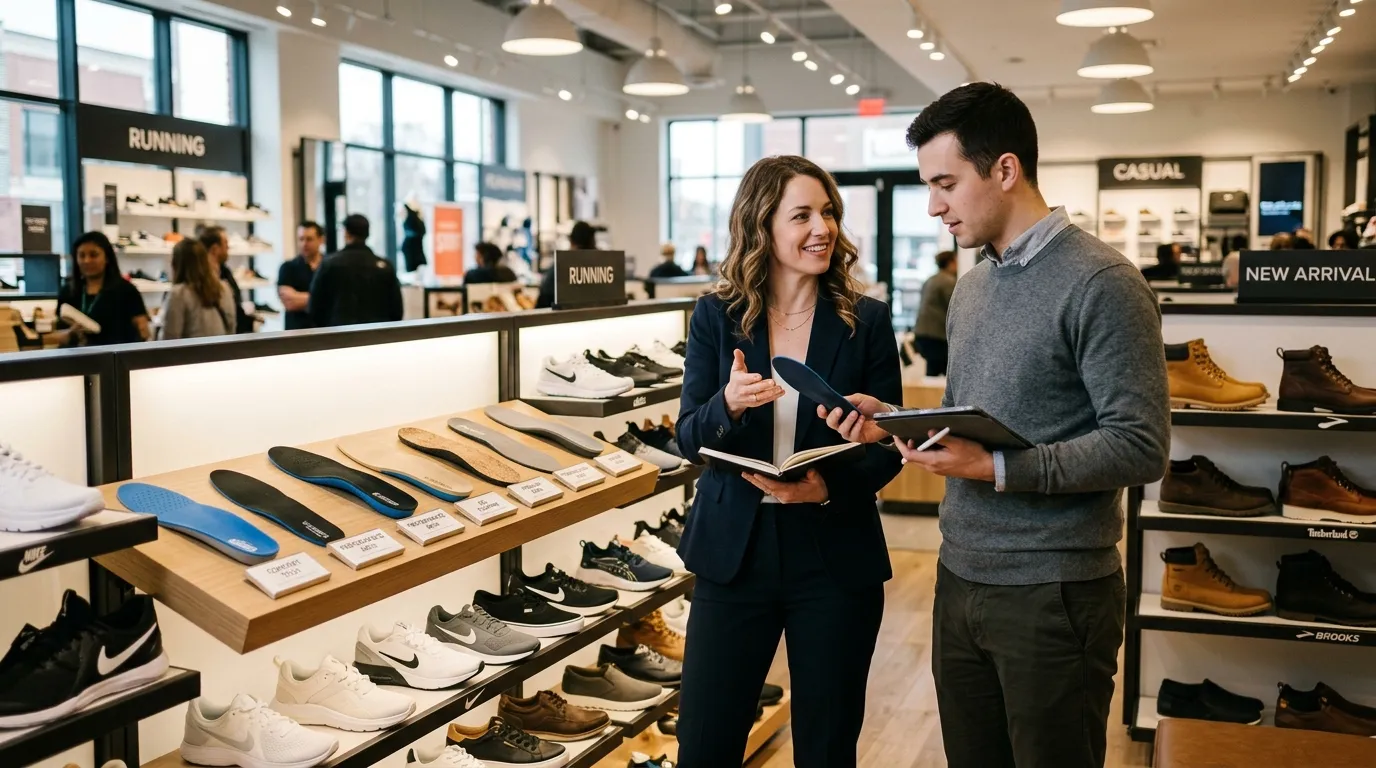
For retail brands, the opportunity breaks down into several clear advantages:
High margins with low entry barriers. Insoles don’t require the complex multi-component assembly of a full shoe. Tooling costs are lower, MOQs are more accessible, and the per-unit manufacturing cost leaves substantial room for markup — especially in the performance and comfort segments where consumers willingly pay $25–$50 per pair at retail.
Category adjacency. If you already sell footwear, activewear, work gear, or health and wellness products, insoles are a natural extension. They complement existing products without cannibalizing sales. A workwear brand adding a fatigue-reducing insole, or a running brand offering a performance upgrade insole, is meeting a real customer need while deepening brand engagement.
Repeat purchase dynamics. Unlike most footwear accessories, insoles are consumable. Customers replace them regularly, creating predictable demand cycles that support inventory planning and revenue forecasting. Subscription models for insole replacement programs are gaining traction among DTC brands.
Brand differentiation. The insole wall at most retail stores is dominated by a handful of legacy brands. A private label offering with strong branding, genuine material innovation, and competitive pricing can carve out meaningful shelf space — both physical and digital.
The brands that succeed in this space share one thing in common: they partner with a private label insoles manufacturer that can execute on both product quality and production logistics at scale.
Key Materials for Private Label Insoles
Material selection defines the performance, price point, and market positioning of your private label insole. Understanding the core material options — and their trade-offs — ensures you brief your manufacturer accurately and launch a product that matches your brand promise.
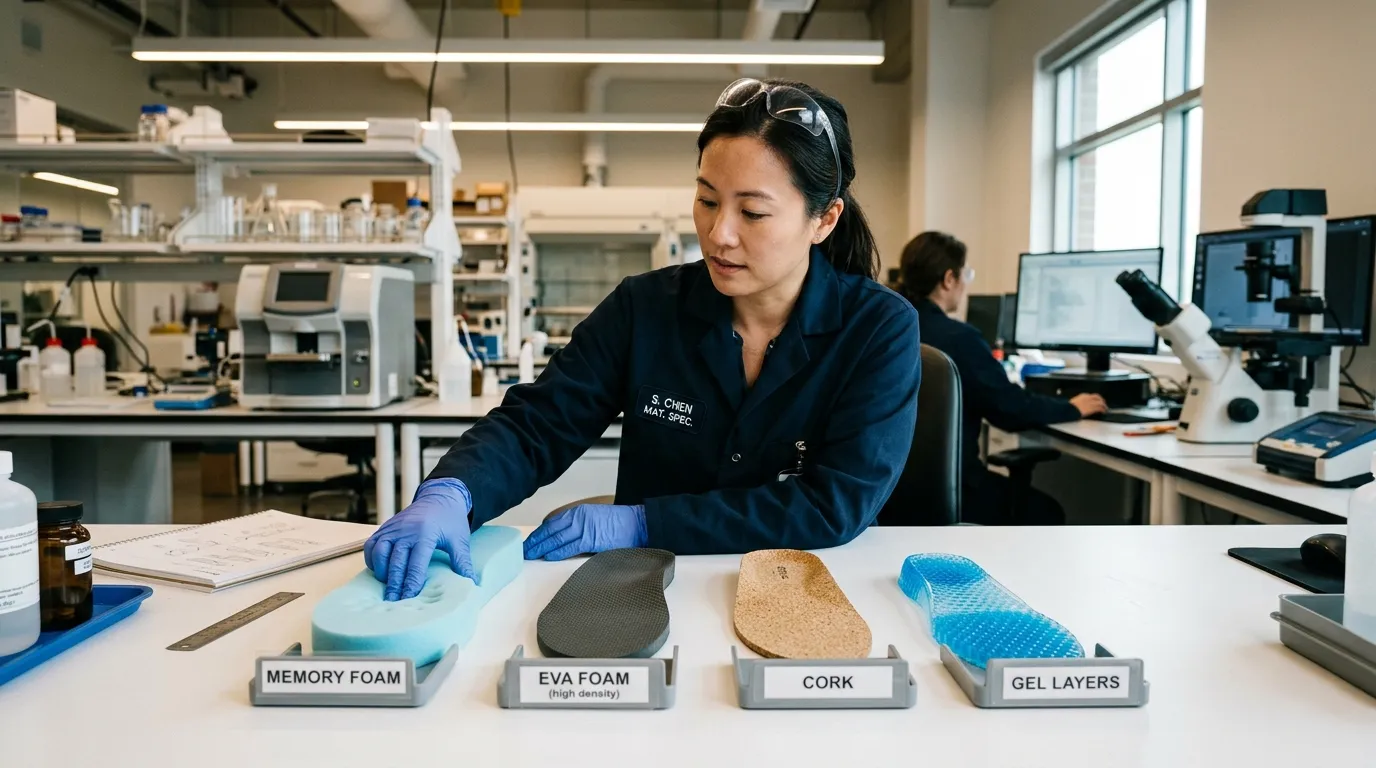
EVA (Ethylene-Vinyl Acetate)
EVA is the workhorse of the insole industry. It’s lightweight, versatile, and available across a wide hardness range — typically 20–45 Asker C (±3 tolerance) for insole applications. EVA insoles can be compression-molded, injection-molded, or die-cut, making them adaptable to everything from athletic footwear to casual everyday shoes and demanding workwear environments.
For private label programs, EVA’s advantage is cost efficiency combined with formulation flexibility. Single-layer constructions suit budget-friendly retail insoles, while multi-density builds deliver performance characteristics that compete with much more expensive alternatives. Brands looking to incorporate sustainability can specify sugarcane-based EVA, algae-based EVA (which reduces reliance on petroleum-based materials), or recycled EVA compounds — all available through GRS-compliant supply chains with traceability documentation. FX Footwear produces these across its facilities, and you can explore the range through their shoe insole manufacturer product page.
PU (Polyurethane)
PU insoles excel in compression resistance and long-term shape retention. Where EVA may pack out over time under heavy daily use, PU maintains its cushioning profile significantly longer — making it ideal for work boot insoles, all-day comfort applications, and brands marketing durability as a core feature.
Open-cell PU formulations offer better breathability than closed-cell alternatives, which is a meaningful selling point for brands targeting warm-climate markets or customers who prioritize moisture management. PU delivers a soft, comfortable feel underfoot that many consumers prefer for standing and walking applications.
It’s worth noting that PU is not a high-energy-return material. If your brand positioning emphasizes athletic performance and energy feedback, supercritical foam is the stronger choice. PU’s strengths lie in comfort longevity and consistent cushioning over thousands of steps.
Supercritical CO₂ Foam
For brands targeting the performance segment, supercritical CO₂ foam represents the cutting edge in insole material technology. This foam is produced using supercritical carbon dioxide as the expansion medium — without traditional chemical blowing agents — resulting in a microcellular structure with predominantly closed cells.
The performance profile is distinct: supercritical foam delivers the highest energy return of these three material families (ranking above both EVA and PU), along with excellent impact absorption that remains consistent across repeated use cycles. This makes it the right material choice for running, training, and athletic lifestyle insoles where consumers expect measurable performance benefits. FX Footwear’s supercritical CO₂ foam insole line, PulseSport, is specifically designed for this application.
Sustainable Material Options
Sustainability isn’t a separate product line — it’s a material decision within each product type. Brands can specify sugarcane-based EVA, algae-based EVA, recycled EVA compounds, or Susterra®-based bio-PU formulations. These options integrate into standard EVA or PU insole constructions and can be sourced under GRS-certified supply chains. For US brands navigating retail buyer sustainability requirements, having GRS traceability documentation is increasingly a table-stakes expectation.
Choosing a Private Label Partner
Not all insole manufacturers are equipped for private label work. Contract manufacturing and private label development require different capabilities — and the gaps between them cause most program failures. Here’s what to evaluate:
Formulation & Customization Depth
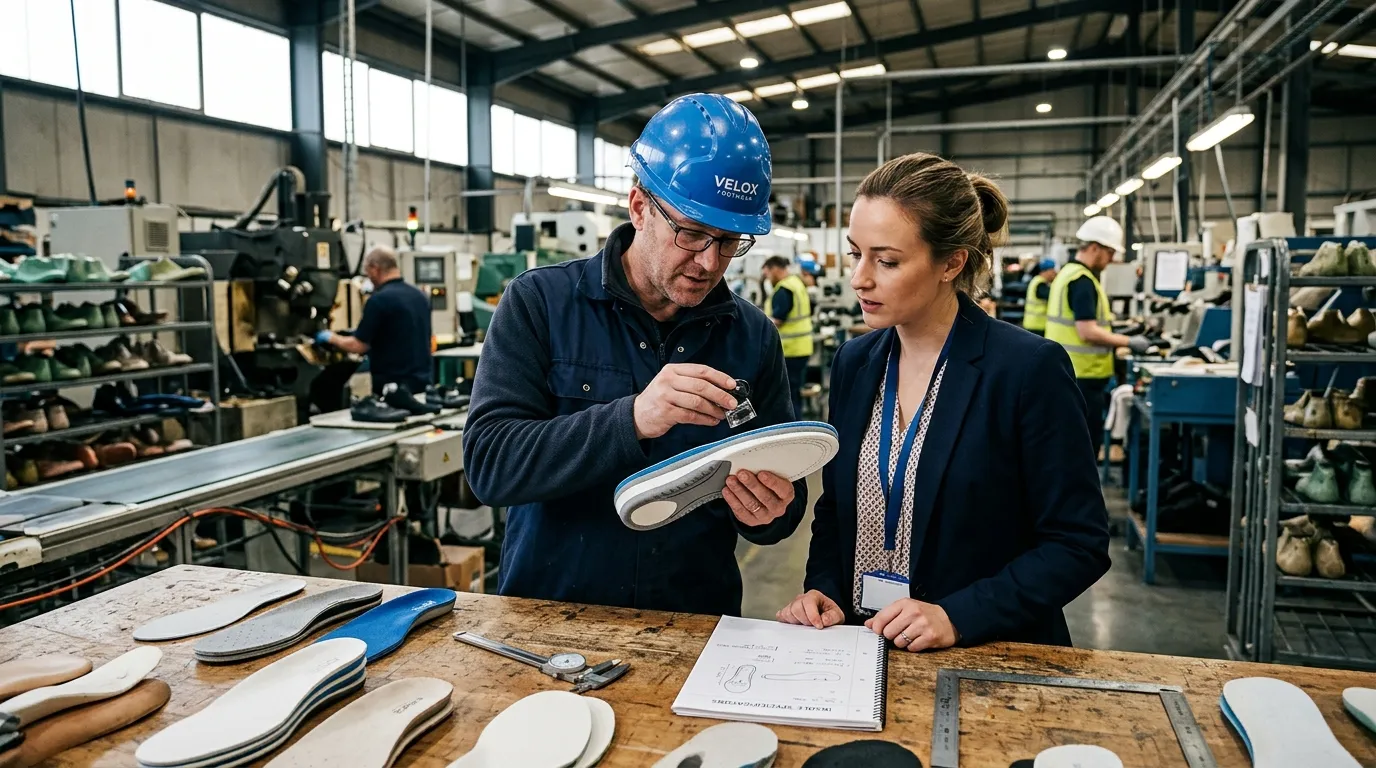
A true private label partner doesn’t just stamp your logo on an existing product. They collaborate on foam density, hardness, heel cup geometry, arch profile, top cloth selection, and construction method to create a product that matches your brand specification. Ask potential manufacturers whether they can adjust formulations to your spec — including custom Asker C hardness within the standard range — or whether you’re limited to choosing from a fixed menu.
Branding & Surface Finishing Capabilities
Your insole’s visual identity matters as much as its material performance. Standard branding methods for insole surfaces include heat transfer print (the most common for top cloth graphics), screen print (for logo application), and emboss/deboss for structural components like heel cups. Confirm that your manufacturer supports the specific branding method your design requires — and request physical samples before committing to bulk production.
Testing & Compliance Infrastructure
For US-market insoles, your manufacturer should understand and support CPSC compliance, California Prop 65 requirements, and relevant ASTM test standards. Third-party testing through labs like SATRA, SGS, or Intertek provides the documentation retailers need. An in-house lab is a significant advantage — it enables rapid material testing and product validation during development without relying solely on external labs, which can add weeks to your timeline.
Production Scale & Regional Footprint
Consolidating your supply chain matters. A manufacturer with facilities across multiple regions — China, Vietnam, Indonesia — gives you flexibility to produce closer to your Tier 1 shoe factories, reduce duty exposure, and shorten lead times. This is especially valuable for brands managing seasonal product launches with firm delivery windows.
Certifications That Matter
In the insole OEM space, relevant certifications include GRS (for recycled-material supply chains), ISO 13485:2016 (for therapeutic or orthotic applications), and Higg Index scoring for supply chain sustainability measurement. Social audits such as BSCI or SMETA are increasingly required by major US retailers. Third-party verification through organizations like Intertek or BETA adds another layer of credibility. CPSC compliance and Prop 65 adherence should be non-negotiable for any manufacturer targeting the US market.
Private Label Launch Process
Understanding the typical timeline from concept to delivery helps brands plan product launches accurately and set realistic expectations with retail buyers.
Phase 1: Specification & Material Selection
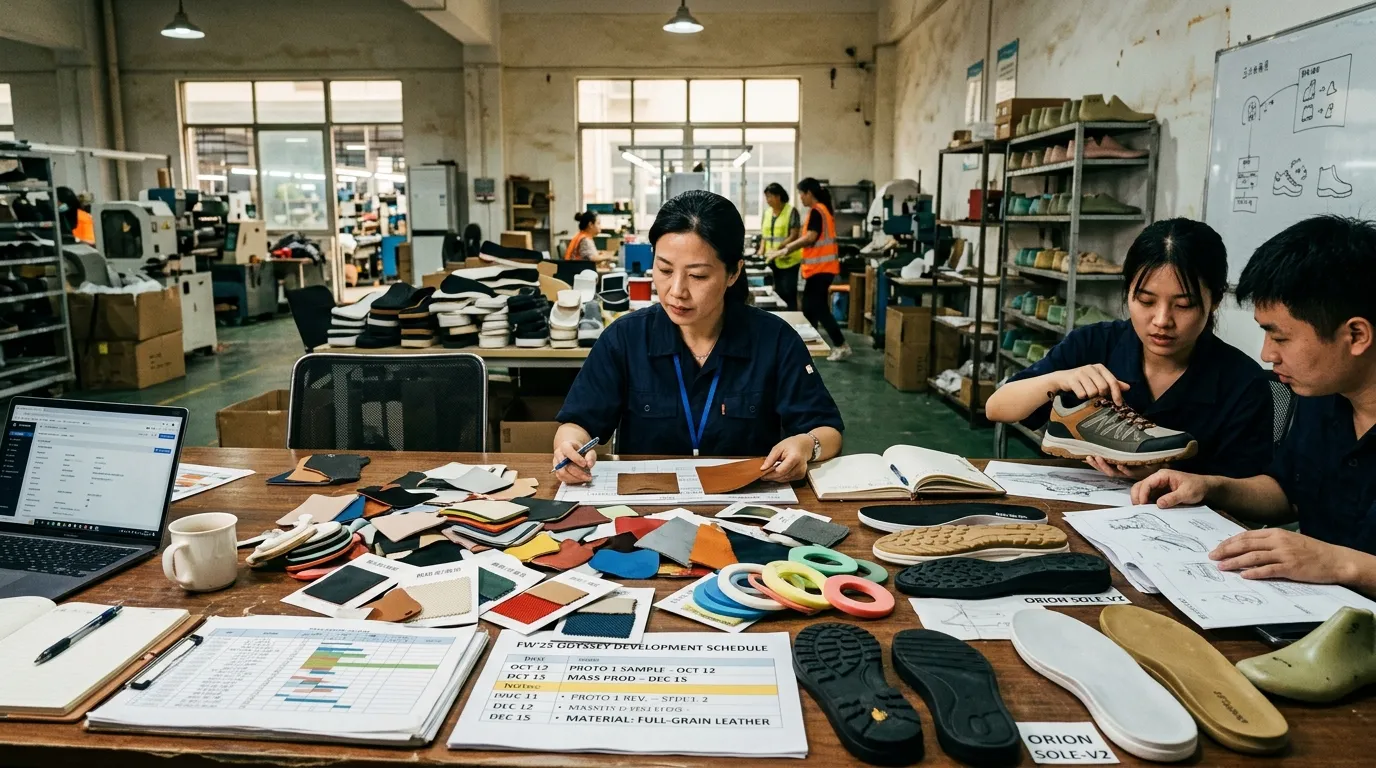
This phase involves defining your insole’s target market segment, performance requirements, material preferences, size range, and branding approach. A good manufacturer will guide you through this process, recommending materials and constructions based on your positioning and price targets. This phase typically takes 1–2 weeks of back-and-forth communication.
Phase 2: Sampling
Once specifications are confirmed and materials approved, sampling begins. For die-cut or knife-cut samples where no new tooling is required, expect approximately 3 days. If a new mold or custom tooling is needed, plan for around 10 business days. The sampling phase — including revisions — typically spans 7–14 days total. Initial quotations for standard constructions with existing tooling and materials are provided within 48 hours; detailed cost breakdowns are available after technical evaluation.
Phase 3: Sample Approval & Production
After you approve the sample, bulk production begins. Standard EVA insoles typically require 20–35 days after payment confirmation. Supercritical CO₂ foam insoles need 30–45 days due to the more specialized production process. Custom insoles generally take 30–40 days for bulk production after sample approval.
Phase 4: Shipping & Delivery
Ocean freight from East Asia to US ports runs 18–30 days. Air freight door-to-door takes approximately 5–10 days for urgent orders. For a first-time custom order, the total sourcing cycle — from finalized spec to goods in your warehouse — runs approximately 65–100 days.
Payment Structure
Standard terms for new customers are 30% deposit upfront with 70% due before shipment. Sampling costs are paid upfront. As the relationship and order volumes grow, flexible terms can be negotiated.
FX Footwear: Your Manufacturing Partner
FX Footwear (Fuxiang Group) is built for private label insole programs. As a one-stop footwear component manufacturer — producing not just insoles but also midsoles, uppers, and other key footwear parts — FX enables brands to consolidate suppliers across multiple categories with a single partner.
What sets FX apart for private label work:
Regional manufacturing across Asia. With facilities in China, Northern Vietnam, Southern Vietnam, and Indonesia, FX is positioned alongside major Tier 1 footwear manufacturing hubs. This means faster lead times, localized coordination with your existing shoe factories, and lower duty exposure through strategic production placement.
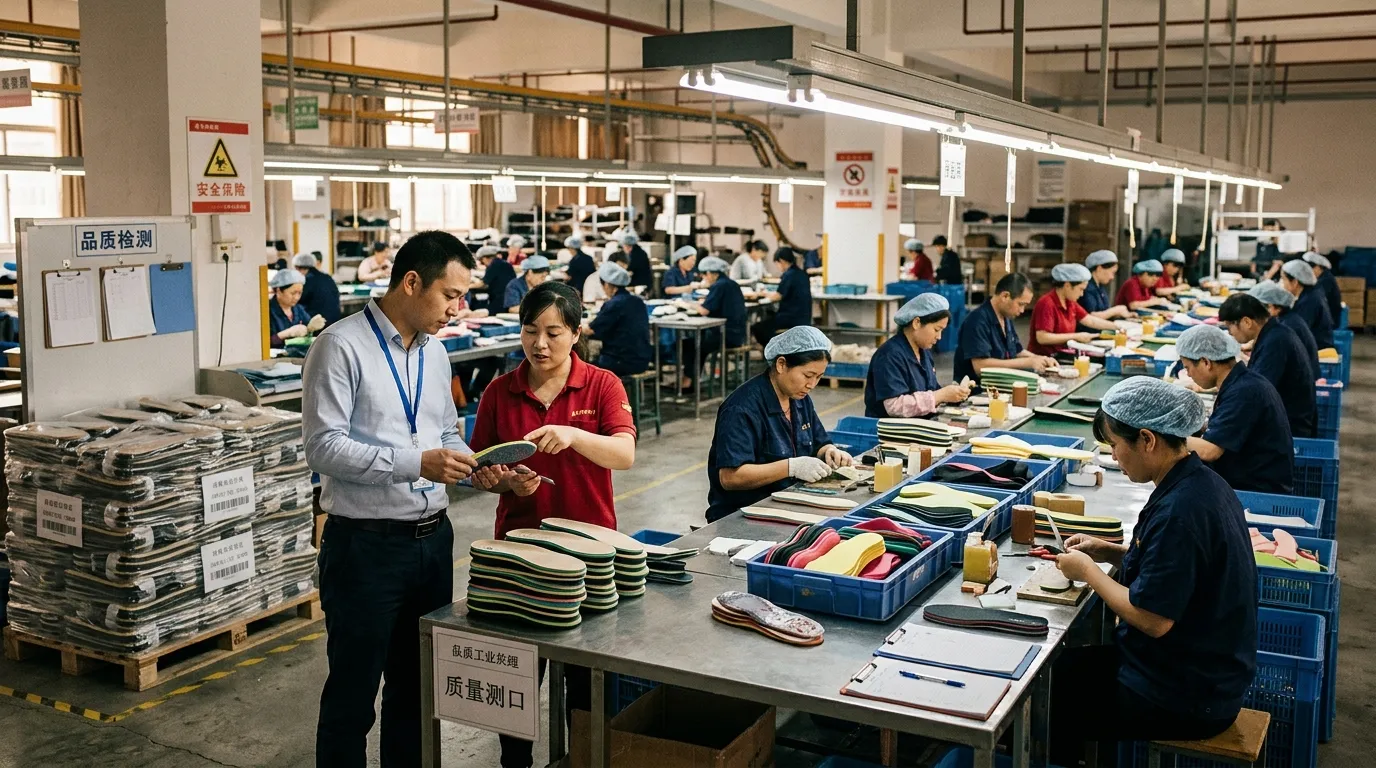
End-to-end production control. FX manages the entire process from material foaming to final assembly. This vertical integration delivers consistent quality, stable supply, and tighter control over performance specifications across production batches — critical for private label brands where every pair must match your standard.
In-house lab capabilities. Rapid material testing and product validation happen on-site, accelerating your development timeline and catching issues before they reach bulk production. Third-party verification through Intertek and BETA testing adds independent quality assurance.
Proven brand partnerships. FX manufactures for brands including HOKA, Clarks, KEEN, UGG, On, Arjat, and Teva — companies that demand consistent quality, reliable supply chains, and manufacturing partners who can scale with their growth. That same infrastructure supports private label programs from emerging brands through to large retail accounts.
Material breadth. Whether your private label line needs standard EVA at competitive price points, premium supercritical CO₂ foam for performance positioning, durable PU for work and comfort segments, or OEM insole solutions with sustainable material options optimized for cost and scalability, FX has the formulation capability and production capacity to deliver.
GRS certification and sustainability documentation. For brands with sustainability commitments — or retailers requiring supply chain transparency — FX’s GRS certification and Higg Index participation provide the traceability and documentation your buyers expect.
FAQ
What are private label insoles?
Private label insoles are manufactured by a third-party factory but sold under your brand name, with customization available for materials, construction, branding, and packaging.
What’s the minimum order for private label?
MOQs vary by construction and customization level — contact FX Footwear directly for specific quantities based on your product specifications and target price point.
How long does a private label insole launch take?
A first-time custom order from finalized specification to goods ready for delivery typically takes 65–100 days, including sampling, production, and ocean freight to the US.
Which insole material is best for retail brands?
It depends on your positioning — EVA offers versatility and cost efficiency, PU delivers long-term compression resistance, and supercritical CO₂ foam provides the highest energy return for performance lines.
Can FX Footwear add my brand’s logo to insoles?
Yes — FX supports heat transfer print, screen print, and emboss/deboss branding methods on insole surfaces and structural components.
Ready to launch your private label insole line with a manufacturer trusted by leading global footwear brands? FX Footwear (Fuxiang Group) offers the material expertise, regional production flexibility, and end-to-end quality control to bring your branded insole program from concept to shelf. Reach out to the FX team today to start your project consultation.