
Consumer demand for sustainable products has reshaped the footwear industry. According to the World Footwear Yearbook, global footwear production exceeds 23 billion pairs annually — and brands are under increasing pressure to reduce the environmental footprint of every single pair. For product developers and sourcing managers, integrating recycled content footwear components into your supply chain is no longer a nice-to-have; it’s a competitive necessity. Whether you’re building a sustainability-first brand or adding eco-conscious SKUs to an existing line, understanding which recycled and bio-based materials are commercially viable — and how to verify their claims — is the first step toward meaningful progress.
This article breaks down the primary types of recycled and sustainable footwear components available today, the certifications that matter for US brands, and how to work with a manufacturing partner that can actually deliver on sustainability promises at scale.
Recycled & Bio-Based Material Types
The term “recycled content footwear components” covers a broad range of materials and construction methods. Not all sustainable options are equal in performance, cost, or environmental impact, so it’s worth understanding each category on its own terms.

Recycled EVA compounds represent one of the most commercially mature options in the market. Post-industrial EVA scrap — generated during die-cutting and molding — is reground and blended back into new EVA formulations. When processed correctly, recycled EVA delivers cushioning properties comparable to virgin EVA across a standard hardness range of 20–45 Asker C (±3 tolerance). It’s suitable for insoles, midsoles, and other cushioning layers in athletic, casual, and workwear applications. The key advantage here is that the material fits seamlessly into existing production processes: compression molding, injection molding, and die-cutting all accommodate recycled EVA without significant retooling.
Sugarcane-based EVA takes a different approach. Rather than recycling post-industrial waste, it replaces a portion of petroleum-derived ethylene with ethylene sourced from sugarcane ethanol. The resulting foam performs identically to conventional EVA in cushioning and durability but carries a measurably lower carbon footprint. For brands looking to make verifiable sustainability claims without altering product feel, sugarcane-based EVA is one of the most practical paths forward.
Algae-based EVA is another option gaining traction. This foam reduces reliance on petroleum-based materials by incorporating algae biomass harvested from freshwater sources. It’s worth noting that while algae-based formulations are commercially available, brands should be cautious about environmental marketing claims — US FTC Green Guides and EU advertising standards scrutinize phrases like “ocean-friendly” or “saves waterways.” Stick to factual, measurable language: “reduces petroleum content by X%” is defensible; broad ecological claims often aren’t.
Bio-based PU using Susterra® technology offers a sustainable alternative for PU insole applications. PU’s strengths — compression resistance, long-term shape retention, and a soft, comfortable feel — are maintained while incorporating bio-derived polyols. Open-cell PU versions also provide better breathability, making them appealing for everyday and comfort footwear categories. If you’ve explored eco-friendly insole materials, you’ll recognize these as some of the most scalable options available for private-label programs.
Natural rubber continues to play a role in sustainable outsole and component manufacturing. As a renewable resource, it has inherent advantages over synthetic rubber in carbon accounting. However, natural rubber supply chains require their own due diligence around responsible sourcing and deforestation concerns.
It’s also important to clarify what’s not yet mainstream. Bio-based TPU shells, for example, remain very niche with minimal commercial production — they’re an emerging option worth monitoring but not something to build a product line around today. Similarly, phase-change material (PCM) linings appear in marketing materials far more often than they appear in mass-produced footwear.
Certifications That Verify Claims
Sustainability claims without third-party verification are a liability. In an era of heightened scrutiny from regulators, retailers, and consumers, the certifications behind your recycled content footwear components matter as much as the materials themselves.
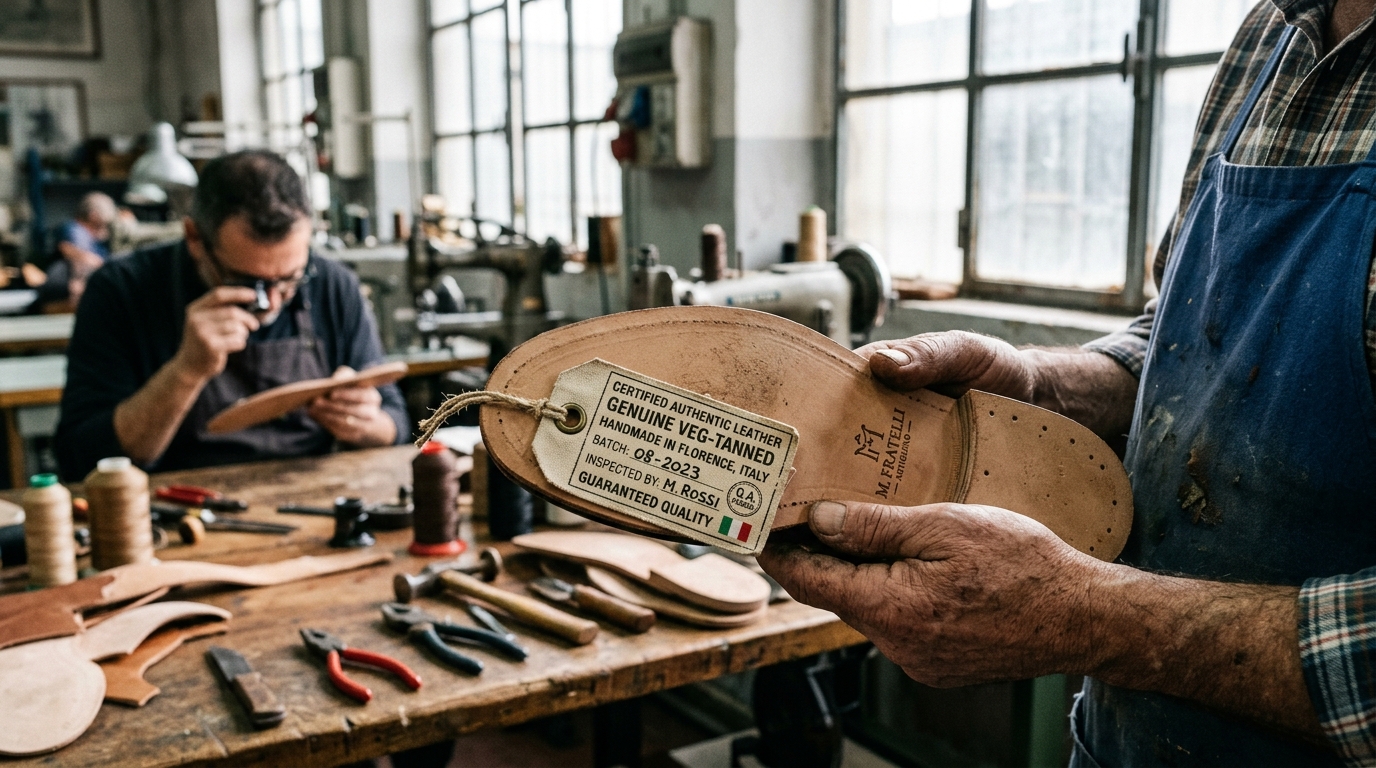
GRS (Global Recycled Standard) is the gold standard for verifying recycled content in supply chains. GRS certification traces recycled inputs from the raw material stage through manufacturing, ensuring that percentage claims — “30% recycled content,” for example — are backed by auditable documentation. For any brand making recycled-content claims on packaging or marketing, GRS-certified supply chains provide the strongest defense against greenwashing accusations.
The Higg Index, developed by the Sustainable Apparel Coalition, measures environmental and social performance across the supply chain. Rather than certifying a single material, Higg provides a standardized scoring framework that allows brands to compare suppliers and track improvement over time. It’s increasingly used by major US retailers as part of vendor qualification processes, making it a practical tool beyond its environmental value.
CPSC compliance and California Proposition 65 are non-negotiable for the US market. While not sustainability certifications per se, they ensure that recycled and bio-based materials meet the same safety thresholds as conventional ones. Recycled content introduces variability — reground EVA, for example, must be tested to confirm that contaminant levels from mixed feedstocks remain within acceptable limits. Leading shoe insole manufacturers routinely run these tests as part of standard production protocols.
SATRA, SGS, and ASTM test reports provide material-level performance verification. When you’re substituting recycled EVA for virgin EVA or incorporating bio-based PU, you need data showing that compression set, tensile strength, abrasion resistance, and hardness meet spec. Third-party test reports from recognized labs — or validated results from an in-house testing facility — give your product development team confidence that sustainability gains don’t come at the cost of product performance.
Social audits (BSCI/SMETA) round out the picture. Sustainable materials sourced from factories with poor labor practices undermine the entire proposition. For US brands selling through major retail channels, social audit compliance is typically a gating requirement alongside material certifications.
One common misconception: ISO 9001 is often cited as a baseline certification for quality management in manufacturing, but it’s not universally held or required across the footwear component space. More relevant for component manufacturers serving therapeutic or orthotic applications is ISO 13485:2016, which addresses medical-device quality management systems — a meaningful differentiator for brands developing comfort or health-oriented footwear lines.
Integrating Recycled Components at Scale
Moving from a pilot sustainability program to scaled production of recycled content footwear components introduces challenges that paper specifications alone can’t solve. The gap between “material is available” and “material is in your product at competitive cost and consistent quality” is where manufacturing partnerships matter most.
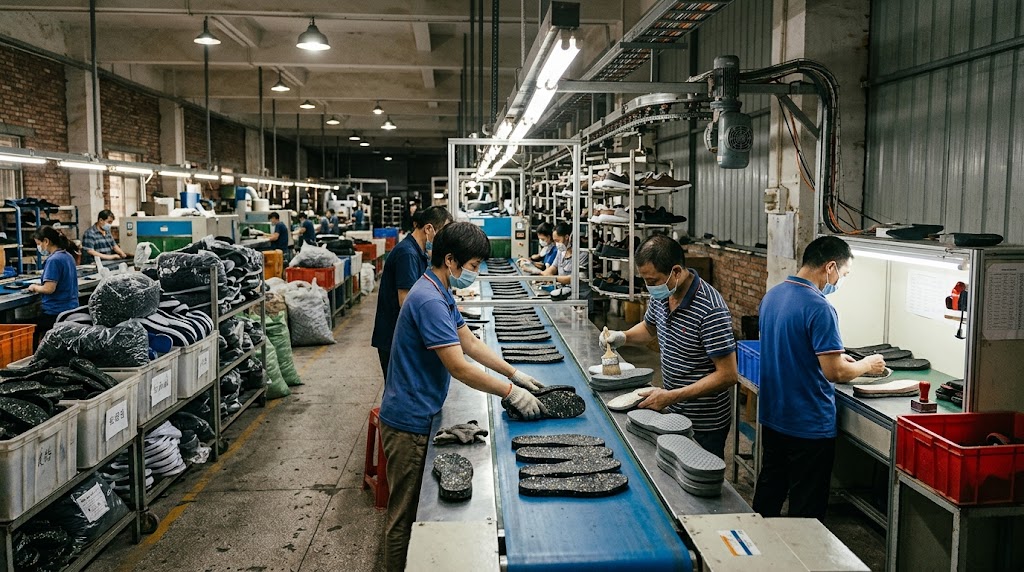
Material consistency is the first hurdle. Recycled feedstocks — particularly post-consumer streams — vary in composition batch to batch. Post-industrial recycled EVA is more predictable because the source material is known and controlled, but even here, blending ratios must be carefully managed. A manufacturer with end-to-end production control, from material foaming through final assembly, can monitor density, hardness, and cell structure at every stage. This matters more with recycled content than with virgin materials because the margin for input variability is tighter.
Tooling and format compatibility is another consideration. The good news is that most sustainable material substitutions — recycled EVA, sugarcane-based EVA, bio-based PU — work with existing mold tooling and production formats. Compression-molded, injection-molded, and die-cut insoles can all incorporate recycled content without new capital investment. This makes the transition from conventional to sustainable components financially practical, especially when working with a partner that already has tooling libraries and validated production parameters for these materials.
Cost management is the conversation every sourcing manager needs to have honestly. Sustainable materials typically carry a premium over conventional equivalents — sugarcane-based EVA, for example, may cost 10–20% more at the resin level. However, this premium can be partially or fully offset through integrated manufacturing that eliminates middlemen, regional production that reduces logistics costs, and scale efficiencies when sustainable SKUs grow beyond niche volumes. Brands that consolidate insole, midsole, and upper sourcing with a single component manufacturer often find that the per-unit cost of sustainability is lower than expected because overhead and coordination costs drop.
Supply chain traceability is where GRS certification pays for itself operationally. When your manufacturing partner holds GRS certification, every batch of recycled material is tracked through the system with transaction certificates. This documentation flows directly into your brand’s sustainability reporting and retailer compliance filings. Without it, you’re relying on supplier self-declarations — which regulators and retail partners increasingly reject as insufficient.
Sustainable Midsoles & Uppers
The conversation around recycled content footwear components often starts with insoles, but the biggest material-volume impact comes from midsoles and uppers. These components represent the majority of material weight in a finished shoe, so shifting them toward recycled or bio-based content multiplies the sustainability benefit.
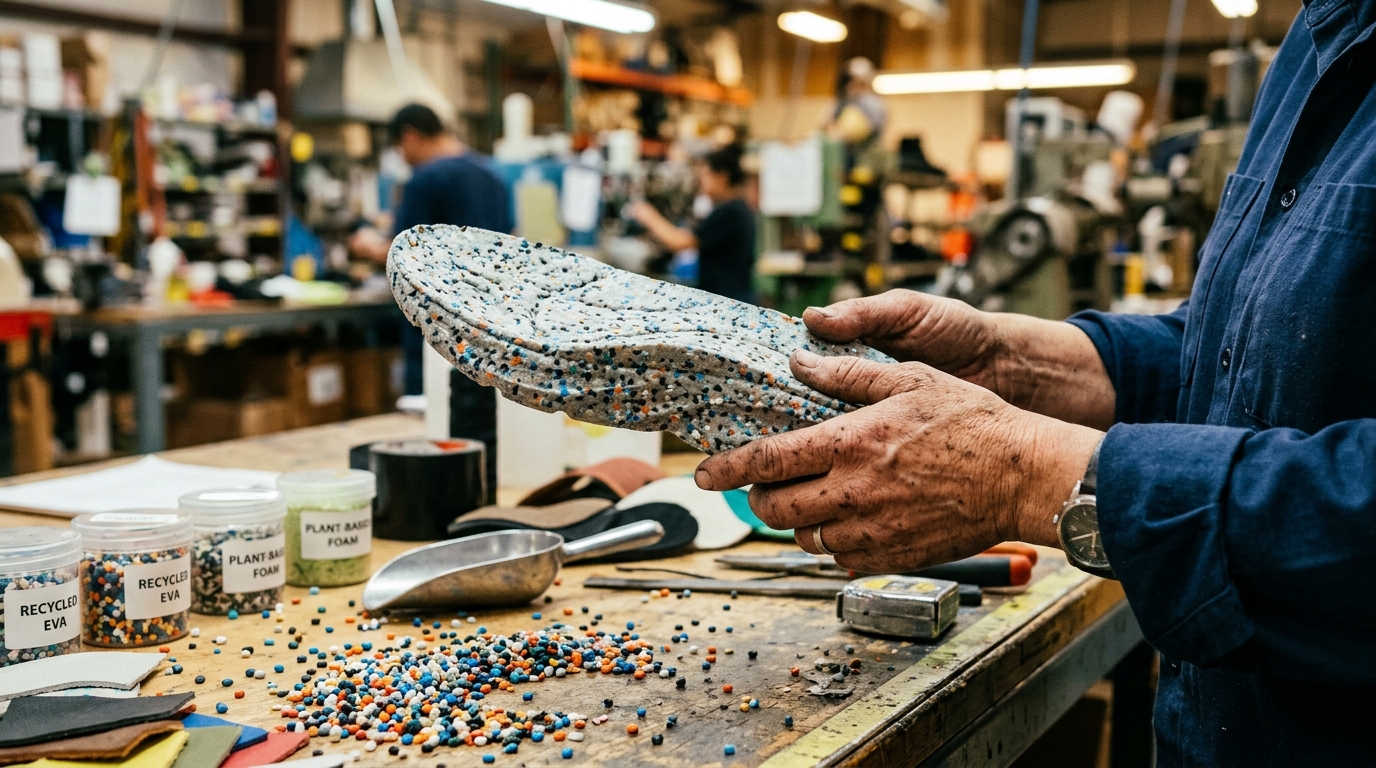
Recycled and sugarcane-based EVA midsoles follow the same material science as their insole counterparts but at higher densities and in larger volumes. Midsoles require tighter compression-set specifications because they bear the full load of the wearer over thousands of wear cycles. Validated ASTM test data showing that recycled-content midsoles meet the same durability thresholds as virgin-material versions is essential for brand confidence — and for retailer acceptance.
For performance categories, supercritical CO₂ foam insoles represent an inherently more sustainable foaming process. Supercritical foaming uses carbon dioxide in a supercritical state as the expansion medium, without traditional chemical blowing agents. The resulting microcellular structure with predominantly closed cells delivers consistent energy return and impact absorption — and the process itself generates less chemical waste than conventional foaming. While the primary value proposition is performance, the environmental co-benefits are real and increasingly marketable.
Uppers offer perhaps the widest range of recycled content opportunities: recycled polyester mesh, recycled nylon, and even recycled TPU films for overlays. The challenge with uppers is aesthetic consistency — recycled yarns can vary in color and texture more than virgin equivalents. A component manufacturer with in-house testing capabilities can validate color fastness, abrasion resistance, and hand-feel across recycled upper materials before they enter production, reducing the risk of quality issues at scale.
The strategic advantage of working with a one-stop footwear component manufacturer — rather than separate insole, midsole, and upper suppliers — becomes especially clear in sustainability programs. Coordinating recycled-content specifications, GRS documentation, and testing protocols across three or four independent suppliers is exponentially more complex than managing it through a single partner with regional facilities across China, Vietnam, and Indonesia.
US Market Compliance Essentials
For brands selling into the US market, recycled content footwear components must meet the same regulatory requirements as conventional materials — plus additional scrutiny around recycled-content claims themselves.
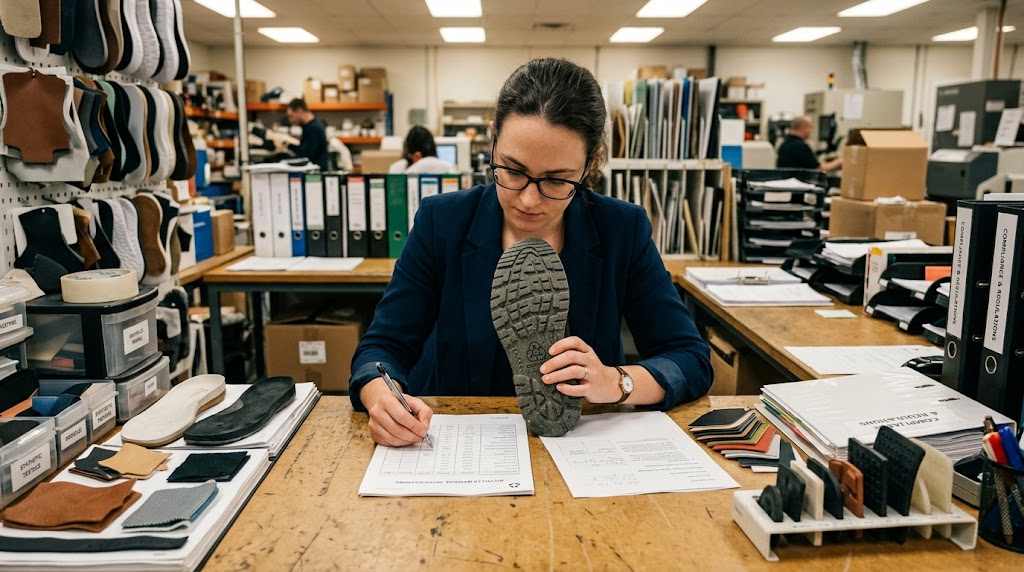
CPSC (Consumer Product Safety Commission) requirements apply to all footwear sold in the United States. Materials used in children’s footwear face particularly stringent testing requirements for lead content and phthalates. When recycled feedstocks enter the supply chain, the testing burden increases because the provenance of recycled inputs may be less controlled than virgin materials. Any reputable manufacturer will run these tests as standard practice, but brands should explicitly confirm CPSC testing protocols as part of supplier qualification.
California Proposition 65 requires warnings for products containing chemicals known to cause cancer or reproductive harm above specified thresholds. Recycled materials, depending on their source, can carry trace contaminants that virgin materials do not. This isn’t a reason to avoid recycled content — it’s a reason to work with manufacturers that test proactively. An in-house lab capable of rapid material testing and product validation provides a significant advantage here, catching potential Prop 65 issues before materials enter production rather than after finished goods reach the warehouse.
FTC Green Guides govern environmental marketing claims in the United States. If you claim “made with recycled content,” you must be able to substantiate the percentage and type (post-consumer vs. post-industrial) of recycled material. Vague claims like “eco-friendly” or “green” without qualification can trigger FTC enforcement action. GRS transaction certificates, batch-level material documentation, and third-party test reports create the evidentiary foundation your legal and marketing teams need to make defensible claims.
For brands also selling into the EU, REACH compliance becomes relevant. REACH is an EU chemical regulation — not a certification or test standard — that restricts certain substances in products sold within the European Union. For EU-destined products, materials can be sourced to meet REACH requirements based on customer specifications, with the compliance process coordinated on a project basis. Since the US is the primary market for most FX customers, REACH is addressed as needed rather than applied across all production.
Third-party verification through organizations like Intertek and BETA adds another layer of credibility. These bodies provide independent testing and certification that retailers and brand compliance teams recognize globally. Having your component supplier already verified by these organizations streamlines the onboarding process significantly.
Choosing a Sustainable Component Partner
Selecting a manufacturing partner for recycled content footwear components requires evaluating capabilities that go beyond basic production. Here’s what to prioritize.
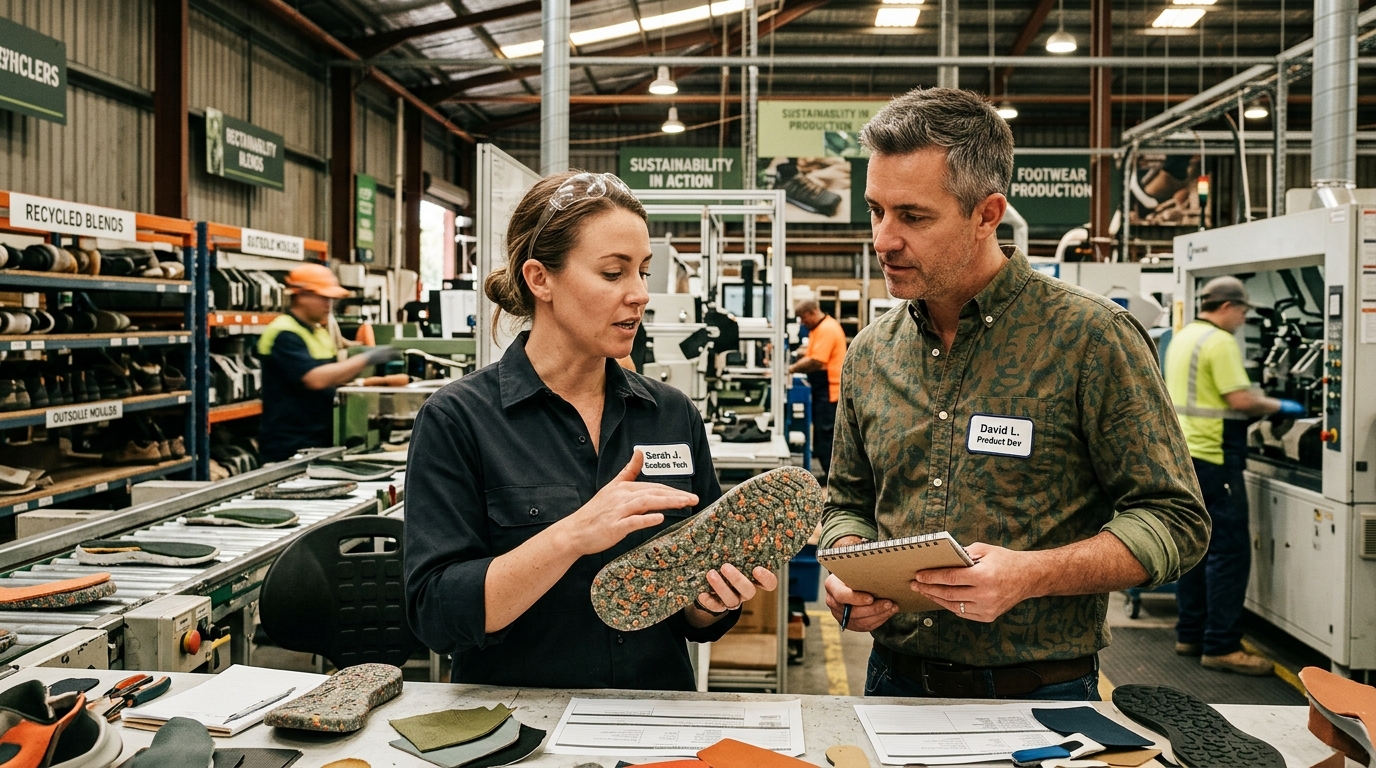
Certification alignment is the starting point. Your component supplier should hold GRS certification at minimum if you’re making recycled-content claims. Higg Index participation signals a commitment to continuous improvement. ISO 13485:2016 matters if your product line includes therapeutic or orthotic applications. Verify these certifications directly — request certificate numbers and audit dates rather than relying on website claims.
Regional manufacturing presence affects both cost and sustainability. A supplier with facilities positioned near major Tier 1 footwear manufacturing hubs — in China, Northern Vietnam, Southern Vietnam, and Indonesia — can coordinate with your Tier 1 factory more efficiently, reducing logistics-related emissions and transit time. Regional diversification also provides supply chain resilience and flexibility around duty exposure for US-bound goods.
Technical capability separates partners who can deliver sustainable materials from those who merely source them. Look for manufacturers with end-to-end production control — from material foaming to final assembly — because this allows tighter quality management across batches. An in-house testing lab is particularly valuable for sustainable material programs, where incoming material variability must be caught early. The ability to produce EVA insoles alongside midsoles, uppers, and structural components means sustainability goals can be applied across the full bill of materials, not just one component.
Sampling speed and transparency indicate operational maturity. For standard die-cut or knife-cut samples (no new tooling required), expect approximately 3 days. When new molds or tooling are involved, approximately 10 business days is realistic. Initial quotations for standard constructions with existing tooling should arrive within 48 hours. These timelines matter because sustainability programs often involve iterative sampling as recycled-content ratios are optimized.
Documentation capability is the often-overlooked differentiator. Your partner needs to generate and maintain GRS transaction certificates, batch-level test reports, material safety data sheets for recycled formulations, and social audit documentation — and deliver these in formats your compliance team can use. This operational infrastructure is what transforms a “sustainable material option” into a scalable, auditable, retail-ready program.
FAQ
What recycled materials work for insoles?
Recycled EVA compounds, sugarcane-based EVA, algae-based EVA, and bio-based PU (such as Susterra®-based formulations) are all commercially viable and scalable for insole production today.
Which certification verifies recycled content?
GRS (Global Recycled Standard) is the most widely recognized certification for verifying recycled content percentages and supply chain traceability in footwear components.
Do recycled components cost more?
Recycled and bio-based materials typically carry a 10–20% raw material premium, but integrated manufacturing and supplier consolidation can offset much of this through reduced overhead and logistics costs.
Are recycled insoles as durable?
Yes — when properly formulated and tested, recycled EVA and bio-based PU insoles meet the same ASTM performance benchmarks for compression set, hardness, and durability as their virgin-material equivalents.
What US regulations apply to recycled footwear?
CPSC safety requirements, California Proposition 65 chemical thresholds, and FTC Green Guides for environmental marketing claims all apply to recycled content footwear components sold in the United States.
Ready to integrate recycled content footwear components into your next product line? FX Footwear (Fuxiang Group) offers GRS-certified manufacturing across China, Vietnam, and Indonesia — with the material expertise, in-house testing, and end-to-end production control to turn your sustainability goals into commercially viable products. Reach out to our team to discuss your specifications and start the sampling process.
Browse more articles in Sustainability & Innovation.