
Recycled EVA midsoles deliver performance on par with virgin EVA while cutting petroleum dependence and diverting factory waste from landfills. For footwear brands sourcing midsole components, the question isn’t whether recycled EVA works — it’s whether your supply chain can trace it, certify it, and scale it without blowing up your unit cost or timeline.
That’s the part most sustainability content skips. Let’s get into the specifics.
What Recycled EVA Actually Is
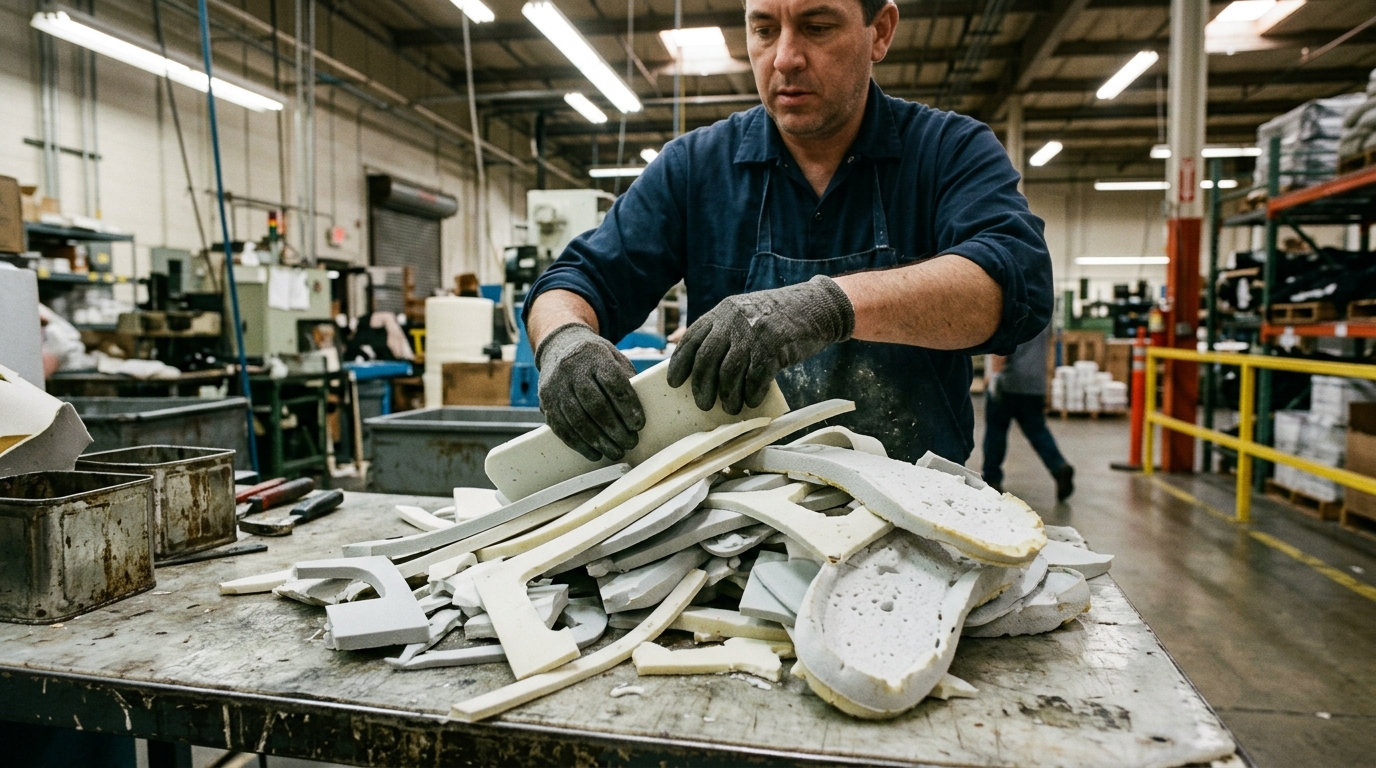
Recycled EVA compounds start as post-industrial or post-consumer ethylene-vinyl acetate scrap — trim waste from die-cutting, defective midsoles pulled off the line, or end-of-life footwear collected through take-back programs. That material gets ground, re-pelletized, and blended back into new EVA formulations at controlled ratios, typically ranging from 20% to 70% recycled content by weight depending on the target application and performance spec.
Here’s a detail that matters more than most brands realize: the recycled content percentage directly affects your GRS (Global Recycled Standard) eligibility. GRS certification requires a minimum of 20% recycled input material by weight, but the real value of GRS lies in the chain-of-custody documentation — every handoff from scrap collector to compounder to molder gets tracked and audited. Without that documentation trail, you’re making a marketing claim with no verification behind it, and that’s exactly the kind of thing that triggers FTC scrutiny under their updated Green Guides.
The compounding process itself isn’t mysterious. Recycled EVA pellets get blended with virgin EVA resin, crosslinking agents, and foaming additives, then processed through standard compression molding or injection molding equipment. The ratio of recycled to virgin content gets dialed in based on your hardness target (measured in Asker C for EVA — not Shore C, which is a common spec-sheet error), density requirements, and durability expectations.
One thing worth understanding: not all recycled EVA feedstock is equal. Post-industrial trim waste from a controlled factory environment is cleaner, more consistent, and easier to compound than post-consumer material scraped off old running shoes. Most recycled EVA midsoles on the market today use post-industrial feedstock for exactly this reason. Post-consumer recycling sounds better in a press release, but the contamination and sorting challenges make it significantly harder to hit tight mechanical tolerances.
Performance: Recycled vs. Virgin EVA
| Property | Virgin EVA Midsole | Recycled EVA Midsole (40% rEVA) |
|---|---|---|
| Density range | 0.15–0.30 g/cm³ | 0.16–0.32 g/cm³ |
| Hardness range | 20–45 Asker C (±3) | 22–45 Asker C (±3) |
| Compression set (50°C, 6h) | 40–55% | 42–58% |
| Energy return | Baseline | ~95–98% of baseline |
| Tensile strength | Baseline | ~90–95% of baseline |
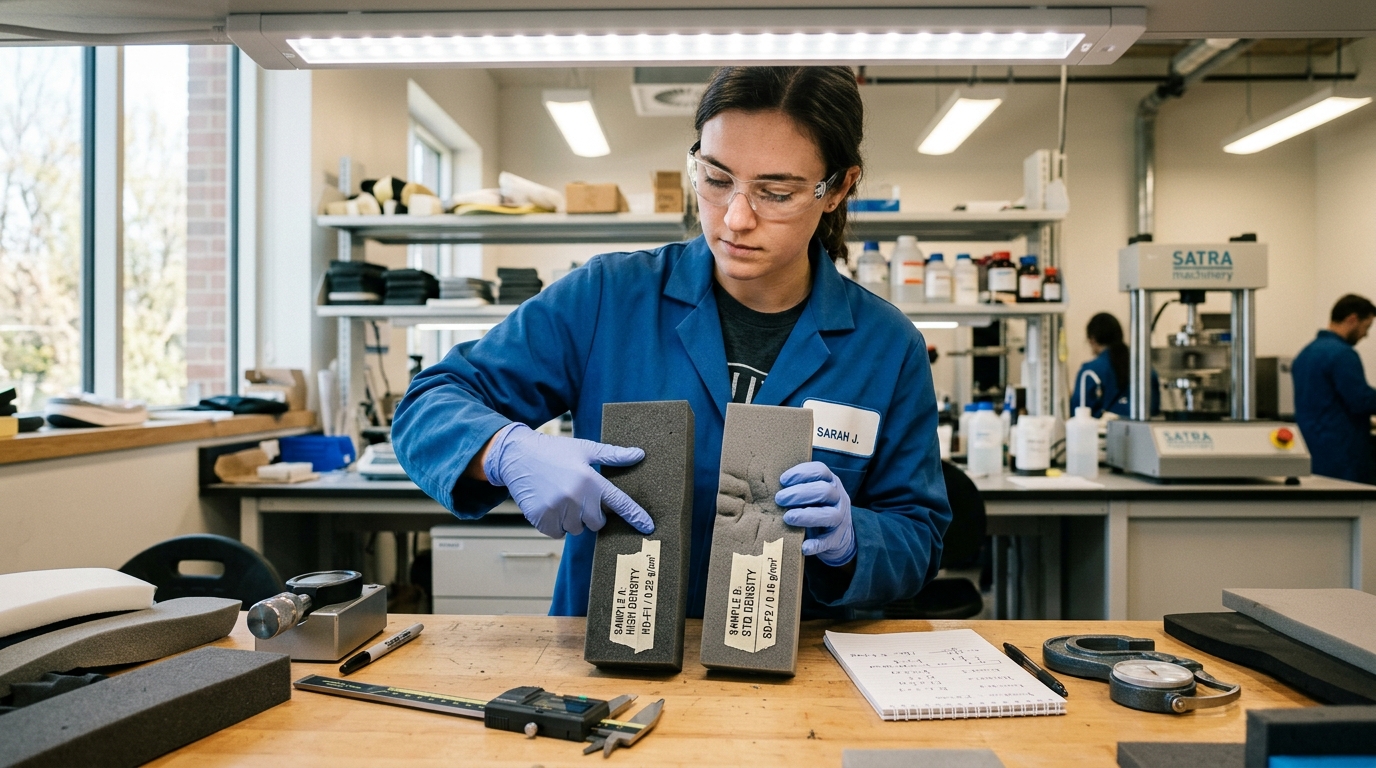
The numbers tell the story pretty clearly. At 40% recycled content — which is a common commercial blend — you’re looking at near-identical cushioning performance with a slight trade-off in compression set and tensile strength. For athletic footwear, that’s a negligible difference. For casual and lifestyle categories, it’s essentially invisible to the end consumer.
Where you’ll notice a real gap is at very high recycled content ratios. Push above 60% recycled EVA, and compression set starts creeping up meaningfully, which means the midsole loses its bounce-back faster over the shoe’s lifetime. That’s fine for a $40 casual sneaker with a 6-month expected wear cycle. It’s a problem for a $160 trail runner that needs to hold up for 500+ miles.
The honest answer: recycled EVA midsoles work beautifully for most applications, but they’re not universally interchangeable with virgin EVA at every blend ratio and every performance tier. If you’re developing a competitive running shoe where energy return is a primary selling point, you’d likely look at nitrogen foamed EVA insoles or supercritical CO₂ foam instead. For the 80% of SKUs that don’t require top-tier athletic performance? Recycled EVA hits the mark.
GRS Supply Chain Requirements
Getting GRS certification for your recycled EVA midsoles isn’t a one-step checkbox. It’s a chain — and every link needs to hold.
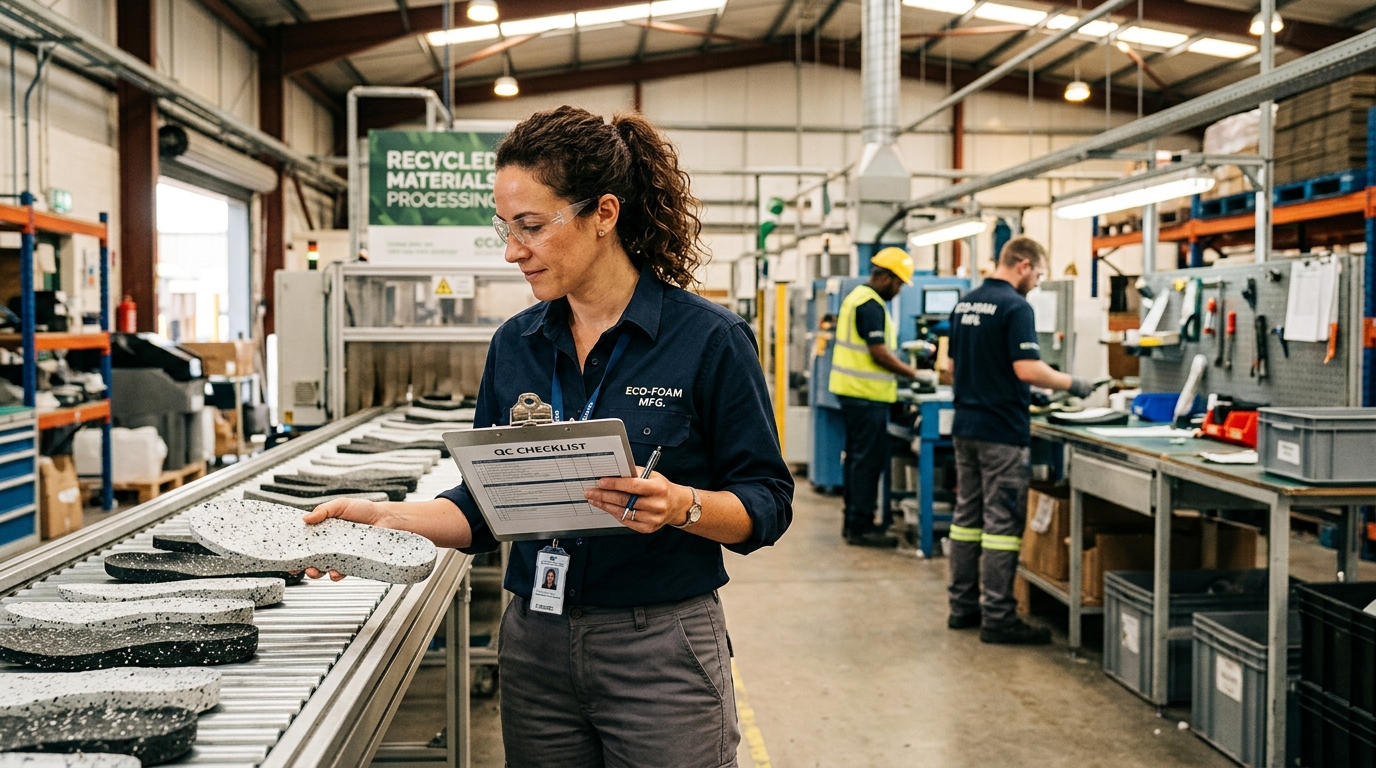
GRS (administered by Textile Exchange) requires certification at each stage of the supply chain: the scrap collector/aggregator, the recycling processor who grinds and re-pelletizes, the compounder who blends the recycled pellets with virgin resin, and the manufacturer who molds the final midsole. If any one of those entities lacks a valid GRS certificate, your chain of custody breaks and the finished product can’t carry the GRS claim.
For B2B buyers, this means your supplier selection directly determines whether you can make verified recycled-content claims on your packaging or marketing materials. You can’t just buy “recycled EVA pellets” from a broker and call it GRS-compliant. The documentation has to trace back through every transaction.
At FX Footwear, our GRS certification covers the production and supply chain stages we control. When we source recycled EVA compounds, we work with GRS-certified compounders and maintain the transaction certificates that connect our finished midsoles to verified recycled feedstock. That paper trail is what your compliance team actually needs — not just a verbal assurance that “yeah, it’s recycled.”
> Quick GRS checklist for brand sourcing teams:
> – Confirm your midsole supplier holds a current GRS scope certificate (check on Textile Exchange’s database)
> – Request transaction certificates for each PO specifying recycled content percentage
> – Verify that the compounder (not just the molder) is also GRS-certified
> – Confirm the recycled content meets or exceeds the minimum you’ll claim publicly
The FTC’s Green Guides require that environmental marketing claims be substantiated and specific. Saying “made with recycled materials” without specifying the percentage — or without third-party verification — is the kind of vague claim that draws enforcement action. GRS chain-of-custody documentation protects your brand from that risk.
Sourcing: Cost & Lead Times
Let’s talk money, because that’s usually where sustainability conversations get uncomfortable.
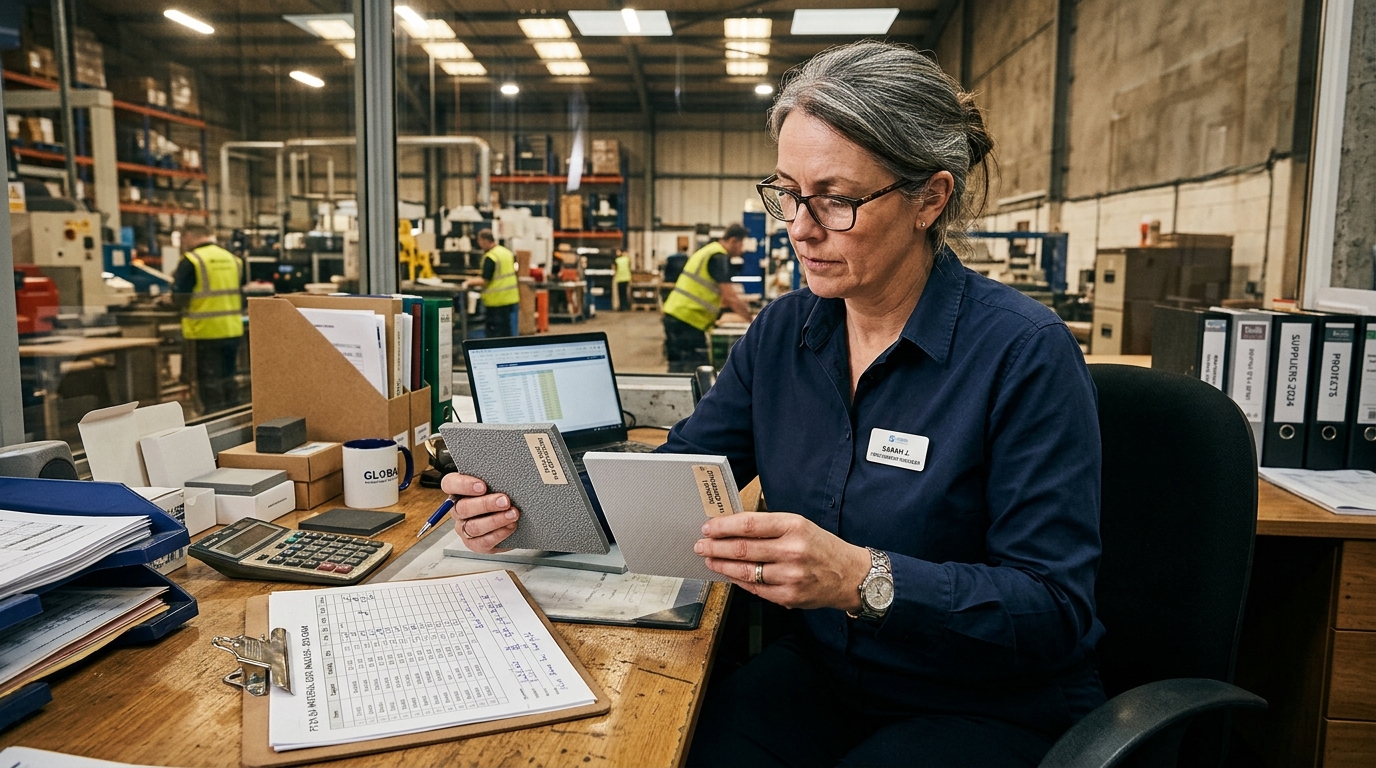
Recycled EVA compounds currently cost roughly 5–15% more than standard virgin EVA resin, depending on the recycled content ratio, the feedstock source (post-industrial vs. post-consumer), and order volume. That premium has been narrowing over the past two years as recycled EVA supply has scaled up, particularly in Southern China and Vietnam where major footwear manufacturing clusters generate enormous volumes of usable EVA trim waste.
The cost delta shows up in the raw material, not in the manufacturing process. You’re still running the same compression molds, the same molding temperatures, the same cycle times. If your midsole tooling already exists, switching from virgin to recycled EVA compound doesn’t require new molds or equipment changes — it’s a material swap. That’s a big deal for brands looking to convert existing SKUs to recycled content without re-engineering the entire product.
Lead times for recycled EVA midsoles track closely with standard EVA production:
- Standard recycled EVA midsoles (existing tooling): 20–35 days after payment confirmation
- Custom recycled EVA midsoles (new tooling + sampling): 45–70 days spec to goods ready
- Ocean freight to US ports: 18–30 days
- First-time custom order, total cycle: approximately 65–100 days
Those timelines assume your recycled EVA compound is in stock at the compounder. If you’re specifying an unusual blend ratio or a niche feedstock (say, post-consumer ocean-bound EVA), add 2–3 weeks for material procurement. This is another reason post-industrial recycled EVA dominates the commercial market — supply is more predictable.
For brands consolidating their component sourcing, working with a shoe insole manufacturer that also produces midsoles, uppers, and other footwear parts means you can coordinate recycled-content specs across multiple components from a single supplier. That consolidation cuts logistics complexity and makes your sustainability story more consistent across the full BOM.
Where Recycled EVA Fits (And Doesn’t)
Recycled EVA midsoles make the most sense for:
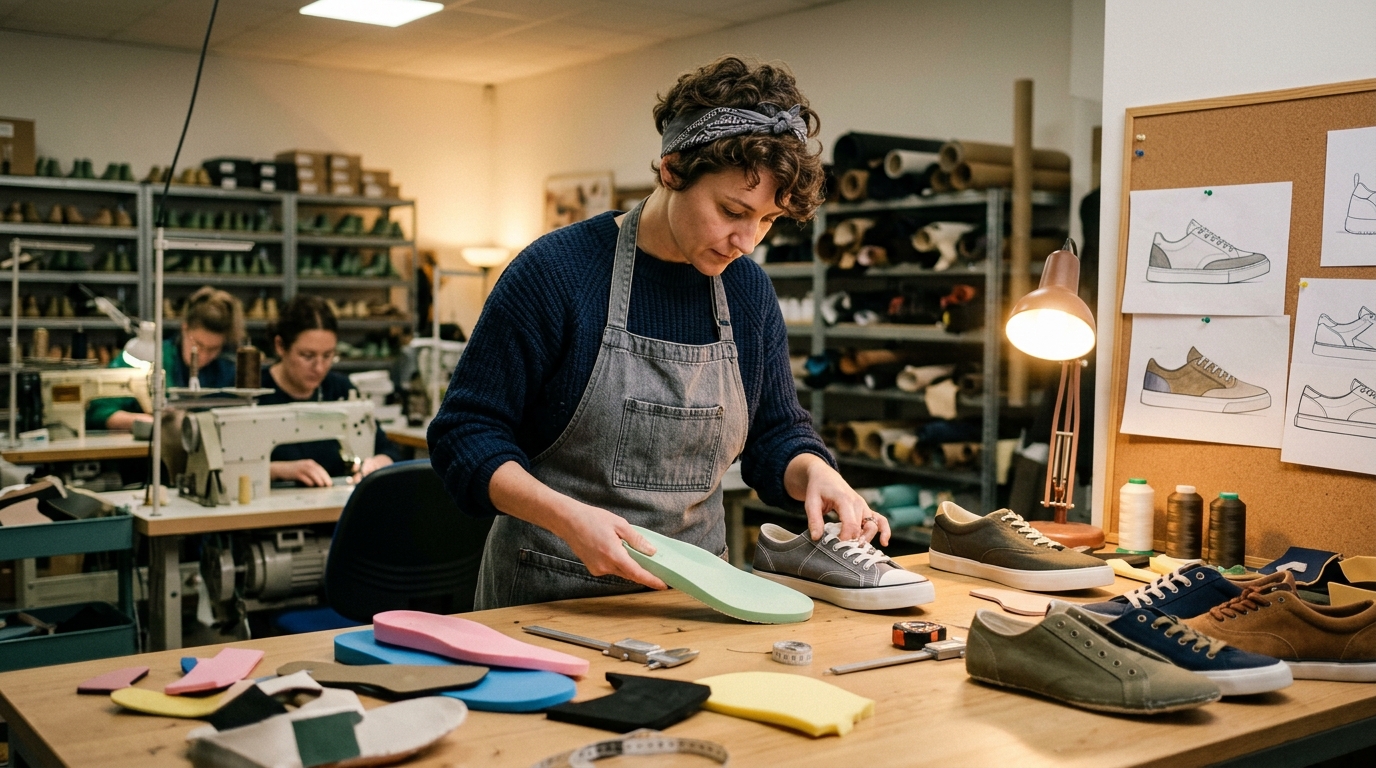
- Casual and lifestyle footwear — where compression set tolerances are wider and consumers prioritize the sustainability story
- Work shoes and boots — where durability matters but elite energy return doesn’t
- Children’s footwear — shorter product lifecycle means the slight compression set trade-off is irrelevant
- Value-tier athletic shoes — everyday trainers, gym shoes, walking shoes
They’re a harder sell for:
- Competition running shoes — where every percentage point of energy return affects performance claims (look at supercritical foam or PEBA-based solutions instead)
- Technical hiking/mountaineering — where temperature extremes and long-term compression resistance are critical
- Orthotic/therapeutic footwear — where ISO 13485 compliance and precise durometer control leave less room for material variability
That last point deserves a quick note. If you’re developing therapeutic footwear that requires ISO 13485:2016 quality management, the material qualification process for recycled EVA is more involved because you need to demonstrate batch-to-batch consistency in mechanical properties. It’s doable — we hold ISO 13485:2016 certification — but plan for additional testing and documentation during the qualification phase.
The broader industry direction is clear. Brands like HOKA and KEEN have publicly committed to increasing recycled content across their product lines. The EU’s proposed Ecodesign for Sustainable Products Regulation (ESPR) will likely mandate minimum recycled content thresholds for footwear sold in Europe. And in the US, while CPSC and Prop 65 compliance don’t specifically address recycled content, consumer demand and retailer sustainability scorecards (Walmart’s Project Gigaton, Target’s Target Forward) are pushing brands toward verified recycled materials regardless of regulation.
Understanding how nitrogen foaming technology interacts with recycled feedstocks is also becoming relevant — several material suppliers are experimenting with SCF-processing recycled EVA pellets, though this remains early-stage compared to virgin-resin SCF applications.
Testing & Validation Protocols
Don’t assume recycled EVA midsoles will pass the same test reports as your existing virgin EVA spec. Run fresh testing.

Relevant test standards for US-market recycled EVA midsoles:
- ASTM D2632 — resilience (ball rebound test)
- ASTM D395 — compression set
- ASTM D2240 — hardness (use Asker C scale for EVA, per industry standard)
- ASTM D412 — tensile strength and elongation
- CPSC compliance — applicable to children’s footwear (lead content, phthalates)
- California Prop 65 — heavy metals and chemical compounds screening
Our in-house lab can run preliminary material validation on recycled EVA compounds before you commit to external SATRA or SGS testing. That catches spec issues early — before you’ve spent $2,000+ on third-party lab reports for a compound that doesn’t hit your hardness target.
For brands producing recycled material insole and midsole combinations, coordinating material testing across both components from a single supplier reduces redundant testing costs and ensures material compatibility.
One practical tip: request compression set data at both standard (23°C) and elevated (50°C) temperatures. Recycled EVA’s compression set tends to diverge from virgin EVA more noticeably at elevated temperatures. If your product is destined for hot-climate markets, this data point matters.
FAQ
Does recycled EVA cost more than virgin EVA?
Yes, typically 5–15% more for the raw compound, though the gap is narrowing as post-industrial EVA scrap supply increases. Manufacturing costs (molding, tooling) remain the same.
What recycled content percentage qualifies for GRS?
GRS requires a minimum of 20% recycled input material by weight, with chain-of-custody certification at every supply chain stage from scrap collector through final manufacturer.
Can recycled EVA midsoles match virgin EVA performance?
At 40% recycled content, performance is within 2–5% of virgin EVA on key metrics like hardness, density, and energy return. Above 60% recycled content, compression set increases noticeably.
Is post-consumer recycled EVA available at scale?
Post-consumer recycled EVA exists but remains limited in commercial midsole applications due to contamination and sorting challenges. Post-industrial recycled EVA (factory trim waste) dominates current supply.
What certifications should I verify from my recycled EVA supplier?
Confirm GRS scope certificates (check Textile Exchange’s public database), request transaction certificates per order, and verify CPSC compliance and Prop 65 screening for US-market products.
Ready to spec recycled EVA midsoles for your next product line? FX Footwear (Fuxiang Group) compounds and molds recycled EVA midsoles across our facilities in China, Vietnam, and Indonesia — all under GRS-certified supply chains with full traceability documentation. Contact our team for material spec sheets, sample requests, and detailed cost breakdowns tailored to your volume and timeline.
Browse more articles in Sustainability & Innovation.