
A great running shoe insole does three things: absorbs impact where your foot hits hardest, returns energy so your stride doesn’t feel dead, and supports your arch without forcing it into a shape it doesn’t want. That’s it. Everything else—material choice, density, thickness, surface texture—exists to serve those three jobs.
But here’s the problem. Most runners never think about the insole inside their shoe until something hurts. The stock insole that ships with a $160 running shoe? It’s usually a 3mm slab of single-density EVA that cost the manufacturer under a dollar. It works fine for the first 50 miles. After that, it’s compressed foam pretending to be cushioning.
Whether you’re a brand sourcing insoles for your next running shoe line or a runner wondering why your feet ache after mile eight, the difference between a mediocre insole and a great one comes down to measurable properties—not marketing language. Let’s get specific.
Five Properties That Define Performance
A running shoe insole is only as good as its weakest property. Five measurable characteristics separate a high-performing insole from the throwaway foam most shoes ship with: impact absorption, energy return, compression resistance, weight, and moisture management.
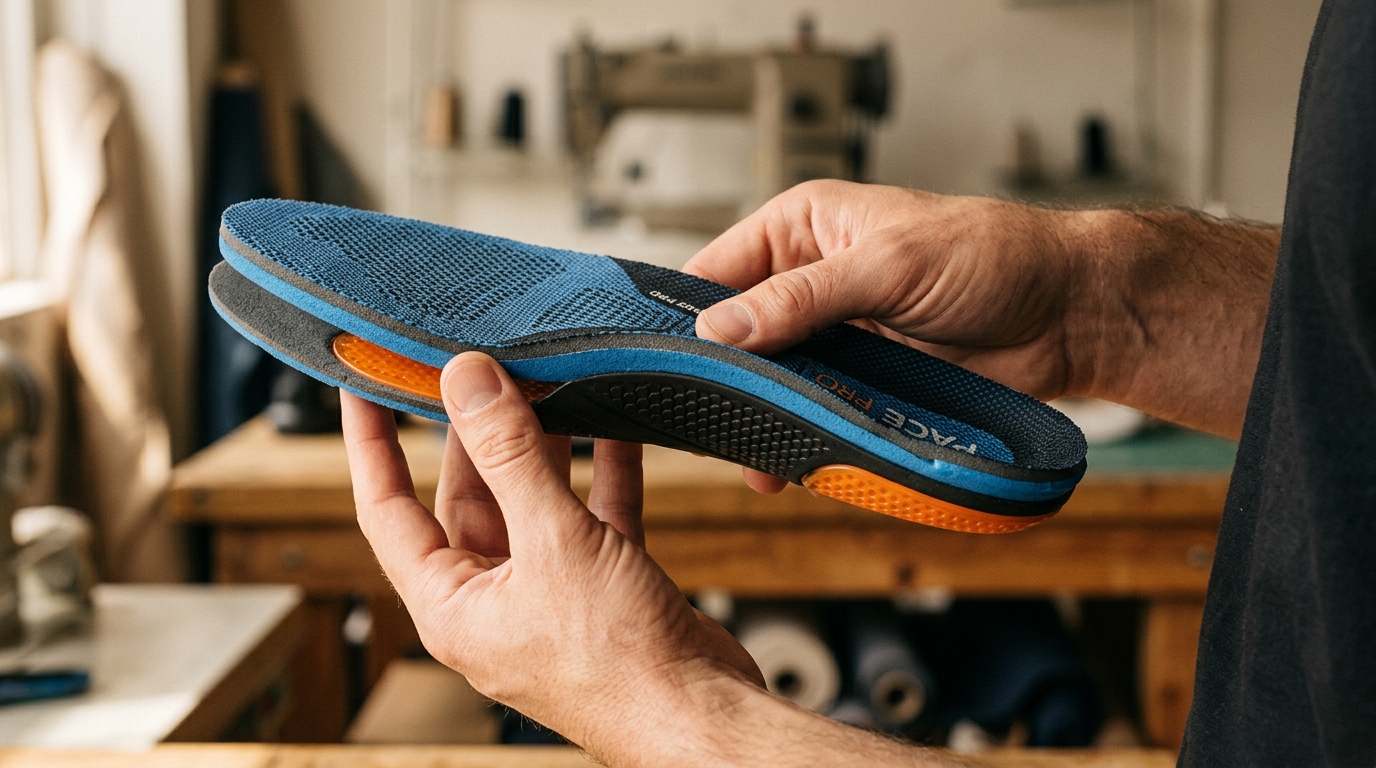
Impact absorption is the obvious one. Your heel strikes the ground with roughly 1.5 to 3 times your body weight on every stride (Lieberman et al., Nature, 2010). A great insole distributes that force across a wider area and converts kinetic energy into heat rather than letting it travel straight up your tibia. But absorption alone isn’t enough. A marshmallow absorbs impact beautifully—and you’d hate running on one.
Energy return is what makes a run feel alive instead of sluggish. It’s the percentage of impact energy the material gives back to your foot. Supercritical foams can hit 80%+ rebound rates; standard EVA sits closer to 40–55%. That gap is enormous over a 10K. If you’re evaluating insole materials for a performance running line, energy return is the spec that separates “comfortable” from “fast.”
Compression resistance determines how long the insole actually performs. PU foam excels here—it maintains its shape and thickness hundreds of cycles longer than basic EVA. An insole that tests well on day one but packs out by week six isn’t great; it was great briefly.
| Property | What It Measures | Why Runners Care |
|---|---|---|
| Impact absorption | Force reduction at heel strike | Joint protection, comfort on long runs |
| Energy return | % of energy given back per stride | Reduced fatigue, faster turnover |
| Compression resistance | Shape retention after repeated loading | Consistent performance over months |
| Weight | Grams per insole | Cumulative effect over thousands of strides |
| Moisture management | Breathability, wicking speed | Blister prevention, hygiene |
Weight matters more than people think. An extra 30 grams per foot doesn’t sound like much until you multiply it by 1,500 strides per mile, then by 26.2 miles. A study from the University of Colorado (2016) found that every 100g added to a shoe increased the metabolic cost of running by about 1%. For competitive runners, that’s the difference between a PR and a near-miss.
Moisture management is the unsexy one, but blisters end more training plans than overuse injuries do. Open-cell PU foams breathe better than closed-cell EVA. Top cloth material matters too—a hydrophobic polyester mesh will outperform a cotton-blend fabric every time in a running application.
EVA vs. PU vs. Supercritical Foam
Not all foams are created equal, and the material you choose (or the material your shoe brand chose for you) determines which of those five properties you’ll actually get.
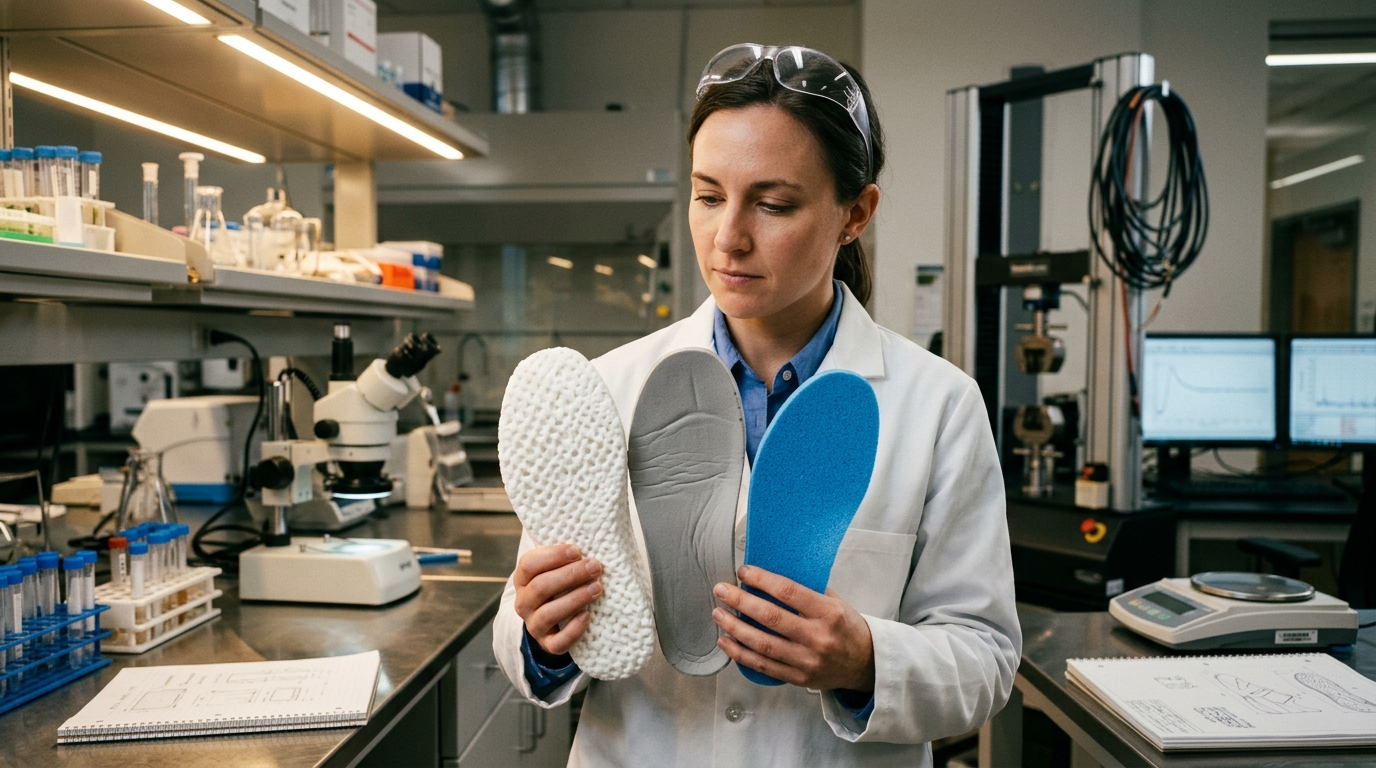
EVA (ethylene-vinyl acetate) is the workhorse. It’s lightweight, inexpensive, and easy to mold into multi-density constructions. A compression-molded EVA insole in the 25–35 Asker C hardness range (that’s the correct scale for EVA—not Shore C, which you’ll see misquoted constantly) provides decent cushioning for casual and daily training shoes. It’s the most common insole material on the planet for good reason: it works, it’s cheap, and any wholesale shoe insole manufacturer can produce it at scale.
The tradeoff? EVA compresses permanently under repeated loading faster than PU or supercritical foams. If you run 30+ miles per week, a standard EVA insole starts losing measurable cushioning performance within 8–12 weeks. Some runners describe it as the shoe “going flat”—that’s the insole, not the midsole, giving up first.
PU (polyurethane) flips the script on durability. Its compression resistance is genuinely superior to EVA—PU insoles hold their shape and thickness far longer, making them a better choice for heavier runners or anyone who wants consistent performance across a shoe’s full lifespan. Open-cell PU also offers better breathability than EVA, which matters during summer training blocks or for runners who overheat easily.
But PU is heavier than EVA, gram for gram. And here’s the part nobody puts in their marketing copy: PU’s energy return is lower than both EVA and supercritical foam. It absorbs impact well and resists compression, but it doesn’t spring back the way newer foams do. For a recovery shoe or a long-shift work shoe? PU is outstanding. For a race-day flat? It’s the wrong material. You can explore PU-based insole construction and how brands like FX approach OEM insole manufacturing with durability-first specs.
Supercritical CO₂ foam is the newest player, and it’s the one changing the conversation. The foaming process uses CO₂ or N₂ as the blowing agent—without traditional chemical blowing agents—and creates a microcellular structure with predominantly closed cells. The result? Foam densities as low as 0.07 g/cm³ and rebound rates above 80%.
To put that in perspective: standard EVA rebounds around 40–55%. Supercritical foam gives back nearly twice as much energy per stride.
The base resin matters enormously in supercritical foaming. EVA is the most mature and cost-effective option. TPU adds durability and is often blended with EVA to balance weight and rebound. PEBA (polyether block amide) sits at the top—it’s the material behind the Adidas ADIZERO ADIOS PRO EVO series, foamed by Shincell (申赛新材料) out of Suzhou. PEBA delivers the highest energy return of any commercially available foam resin, but it’s also the most expensive. You won’t find it in a $90 daily trainer; it belongs in elite racing shoes where grams and milliseconds matter.
The performance hierarchy for supercritical foam by base resin, from highest to lowest energy return: PEBA > TPEE > TPU-blend > EVA.
FX Footwear produces a supercritical CO₂ foam insole under the PulseSport line—it’s designed for performance running where consistent energy feedback and impact absorption across repeated use are the priority. It’s a different animal than an EVA insole and shouldn’t be described with EVA-style language. The foam feels different underfoot: less squishy, more responsive, like the ground is pushing back.
Arch Support: Matched, Not Forced
Here’s where most insole advice goes wrong. Articles will tell you to “identify your arch type” and then pick the corresponding insole, as if every flat-footed runner needs a rigid medial post and every high-arched runner needs maximum cushioning.

Reality is messier.
Your arch type (low, neutral, high) tells you something about foot structure, but it tells you almost nothing about how your foot actually moves when you run. A runner with flat feet might pronate excessively, moderately, or barely at all. A runner with high arches might be perfectly stable or might supinate aggressively. The insole needs to match the movement pattern, not just the static shape.
That said, broad categories still help narrow the options:
Low arches / overpronation: Look for insoles with a firmer medial post or dual-density construction—denser foam on the inside edge, softer on the outside. This doesn’t “correct” pronation (despite what some brands claim); it slows the rate of pronation so your foot has time to stabilize before toe-off. Multi-density EVA or PU work well here because they can be compression-molded into zone-specific firmness maps.
Neutral arches: Most runners fall here, and most stock insoles are designed for this group. A moderate arch contour with consistent cushioning density across the insole does the job. This is where material choice matters most—because the arch support isn’t doing the heavy lifting, the foam properties are.
High arches: The foot doesn’t distribute force efficiently, so the heel and forefoot take disproportionate load. A deeper heel cup, pronounced arch contour, and softer cushioning compound under the metatarsal heads help spread the pressure. If you’re a brand considering how to engineer custom insoles for high arches, the construction gets more complex—multi-material laminations, contoured heel cups, and sometimes TPU structural plates to control flex.
One thing arch support shouldn’t do: hurt. If an insole feels aggressively corrective right out of the box, it’s probably too much. A properly matched arch support feels like it fills a gap you didn’t know existed. You notice it by what stops happening (arch fatigue, medial knee pain) rather than by what you feel directly.
For runners with diagnosed biomechanical issues (plantar fasciitis, posterior tibial tendon dysfunction, chronic metatarsalgia), off-the-shelf arch support often isn’t enough. That’s where functional insoles come in—structural constructions with TPU plates, carbon fiber reinforcement, or 3D-printed custom geometries. These sit in a category closer to medical devices than athletic accessories, and manufacturing them requires quality systems like ISO 13485:2016 for therapeutic and orthotic applications.
When Stock Insoles Aren’t Enough
You bought great shoes. They felt perfect during the store try-on. Three weeks into training, your left heel aches after every run. What happened?

Probably nothing dramatic. The stock insole compressed to the shape of your foot (or more accurately, to the shape of your heaviest pressure points), lost 15–20% of its original thickness in the heel zone, and now provides significantly less cushioning than it did on day one. This is normal for single-density EVA insoles in the 30–40 Asker C range—they’re designed to a cost target, not a performance lifecycle target.
Signs it’s time to upgrade or replace your insole:
- Visible compression marks that don’t bounce back after 24 hours
- Heel pain that wasn’t present during the first month of wear
- The insole feels noticeably thinner in the heel vs. the midfoot
- Fabric separation or wrinkling on the top surface
- You’ve logged 300+ miles on the same pair
Some runners swap insoles every 200–300 miles regardless—roughly the same cadence as replacing the shoes themselves. Others rotate two sets of insoles across training cycles, which extends the life of each set (foam recovers better with 48 hours of rest between uses, similar to midsole foam).
If you’re running more than 25 miles per week, upgrading from a stock EVA insole to a supercritical foam or multi-density PU construction is one of the highest-impact, lowest-cost performance changes you can make. A quality aftermarket insole runs $25–50 at retail. That’s less than a single sports massage and delivers measurable benefit for months.
For brands and product developers: engineering the insole as a performance component rather than a cost-reduction opportunity is how you differentiate. The shoe market is saturated with midsole technology marketing (nitrogen-infused this, carbon-plated that), but the insole—the part that actually touches the runner’s foot—often gets the least R&D attention. That gap is an opportunity.
Choosing the Right Insole by Running Style
Not every runner needs the same insole, and not every run demands the same properties. Here’s how running style should influence insole selection:
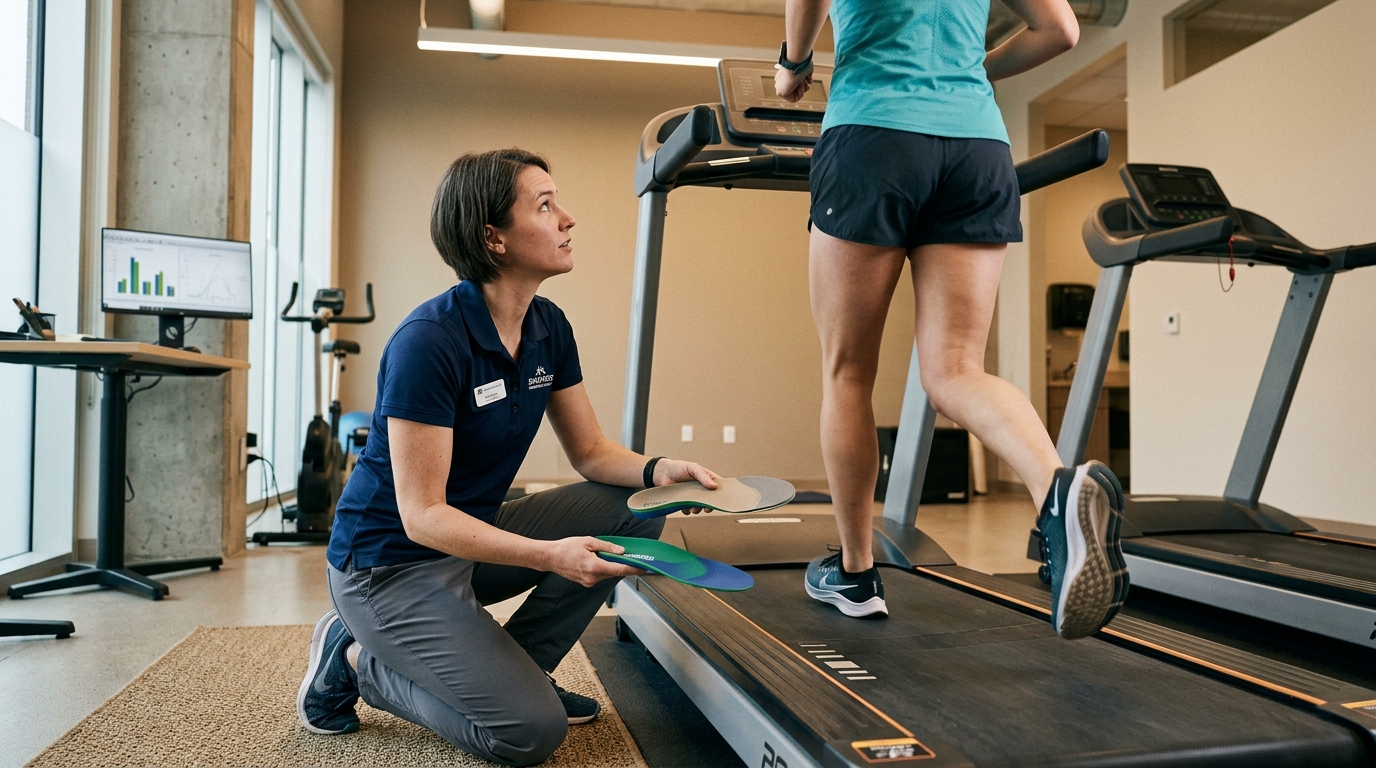
Daily training (easy/moderate pace, 5–10 miles): Prioritize durability and consistent cushioning over maximum energy return. A multi-density EVA insole (25–35 Asker C) or open-cell PU provides the right balance of comfort, breathability, and longevity. These insoles need to perform across 300+ miles without dramatic degradation. For brands sourcing at volume, an EVA insole manufacturer like FX can produce these in compression-molded, injection-molded, or die-cut formats depending on performance specs and price targets.
Speed work and racing: Energy return dominates every other consideration. Supercritical foam (EVA-based or TPU-blend) makes the most sense here. The weight savings compound: a pair of supercritical foam insoles might save 15–25 grams over PU equivalents—small in isolation, meaningful over a half marathon. For elite racing applications, PEBA-based supercritical foam represents the absolute peak of insole rebound performance, though the cost makes it viable only for premium price points.
Trail running: Impact absorption and stability matter more than energy return. Uneven terrain means your foot lands at varying angles, so the insole needs to distribute force even when loading isn’t centered. A moderate-density EVA with a contoured heel cup works well. Some trail runners prefer a thin, firm insole that lets them feel the ground; others want maximum protection for rocky ultras. There’s no universal answer here, which is why offering multiple density and contour options within the same insole platform is smart product strategy.
Recovery runs and easy miles: Soft, breathable, supportive. This is PU’s sweet spot. The lower energy return doesn’t matter at a 10:00/mile pace, and the superior compression resistance means the insole stays consistent even when you’re shuffling through a post-long-run recovery jog. Open-cell PU breathes well enough to handle slow, sweaty miles.
| Running Style | Priority Properties | Best Material Fit |
|---|---|---|
| Daily training | Durability, consistent cushioning | Multi-density EVA, open-cell PU |
| Speed work / racing | Energy return, low weight | Supercritical foam (EVA or TPU-blend base) |
| Trail running | Impact absorption, stability | Contoured EVA with heel cup |
| Recovery | Soft feel, breathability | Open-cell PU |
Testing Before You Commit
Whether you’re a runner testing a new insole or a brand evaluating prototypes, the same principle applies: don’t judge an insole in the store. Judge it after a week of runs.

First-run feel is misleading. A soft insole feels luxurious on initial contact but might compress too quickly under load. A firmer insole feels underwhelming at first but can deliver better energy return and last twice as long. The properties that matter for running performance only reveal themselves under repeated stress cycles.
For brands evaluating insole suppliers, ask for material test data: rebound resilience (ASTM D2632 or equivalent), compression set after aging, density tolerance, and hardness consistency across production batches. We test these in our in-house lab at FX Footwear before materials hit production—rapid validation without waiting on external lab queues.
A few questions worth asking any insole manufacturer:
- What’s the hardness tolerance? (For EVA, ±3 Asker C is standard; tighter than that gets expensive.)
- Can you produce multi-density constructions in a single mold cycle?
- What certifications back your supply chain? (For FX, that’s GRS, ISO 13485:2016, Higg Index, and third-party testing through Intertek and BETA.)
- Where are you manufacturing? (Proximity to Tier 1 shoe factories in Vietnam or Indonesia matters for lead times and freight costs.)
The answers to these questions tell you more about insole quality than any product page ever will.
FAQ
How often should I replace running insoles?
Replace running insoles every 200–300 miles or when you see permanent compression marks in the heel that don’t recover after 24 hours of rest. Performance degradation is gradual, so many runners don’t notice until pain appears.
Are supercritical foam insoles worth the cost?
Yes, for speed-focused training and racing. Supercritical foam delivers 80%+ energy return versus 40–55% for standard EVA. For easy daily training where durability matters more than rebound, a quality EVA or PU insole performs well at lower cost.
What insole material is best for heavy runners?
PU offers the best compression resistance and long-term shape retention for runners over 180 lbs. It outlasts EVA under high repeated loading. The tradeoff is slightly more weight and lower energy return compared to supercritical foam.
Do I need custom insoles or will off-the-shelf work?
Off-the-shelf insoles work for most runners with neutral to moderate arch profiles and no diagnosed foot conditions. Custom or orthotic insoles for running become necessary when you have specific biomechanical issues like severe overpronation, plantar fasciitis, or significant leg-length discrepancy.
What’s the difference between Asker C and Shore C hardness?
Asker C is the correct hardness scale for soft foams like EVA insoles (standard range: 20–45 Asker C). Shore C is a different scale that measures harder materials. They’re not interchangeable, and using the wrong scale leads to incorrect spec comparisons between suppliers.
Ready to develop a running insole that performs as hard as your customers train? FX Footwear (Fuxiang Group) is a one-stop footwear component manufacturer with production facilities in China, Northern Vietnam, Southern Vietnam, and Indonesia—positioned alongside the same Tier 1 factories building your shoes. From EVA daily trainers to supercritical CO₂ foam race-day insoles, we handle everything from material foaming to final assembly. Reach out to our team for a quote within 48 hours on standard constructions.
Browse more articles in Insoles & Footbeds.