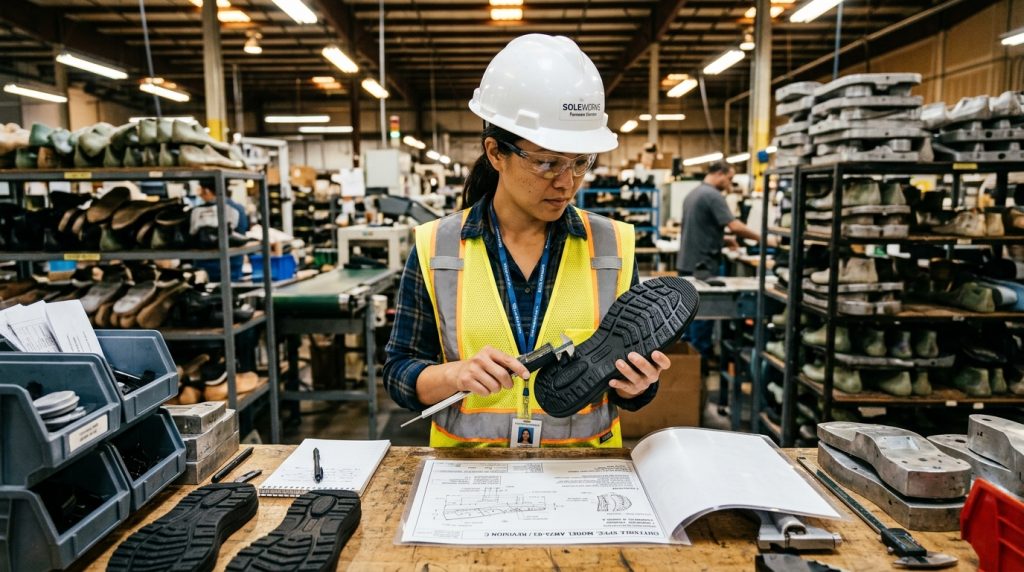
Bringing a footwear product to market involves far more than designing a great-looking shoe. Behind every pair sits a supply chain of precision-manufactured components — insoles, midsoles, uppers, outsoles, heel counters, shanks — each with its own material science, tooling, and quality requirements. For brands that want to focus on design, marketing, and distribution rather than operating factories, shoe part contract manufacturing is the strategic backbone that makes it all work.
Whether you’re a heritage brand scaling a new product line or a DTC startup launching your first collection, understanding how contract manufacturing works for footwear components — and how to choose the right partner — can determine your product quality, margins, and speed to market. This guide breaks down exactly what shoe part contract manufacturing involves, the components typically outsourced, how to evaluate a manufacturer, and why leading brands trust partners like FX Footwear (Fuxiang Group) to deliver at scale.
What Contract Manufacturing Means
In the footwear industry, contract manufacturing refers to an arrangement where a brand outsources the production of specific shoe components — or entire assemblies — to a specialized manufacturer. The brand retains ownership of the design, specifications, and intellectual property, while the contract manufacturer handles material sourcing, tooling, production, quality control, and often logistics coordination.
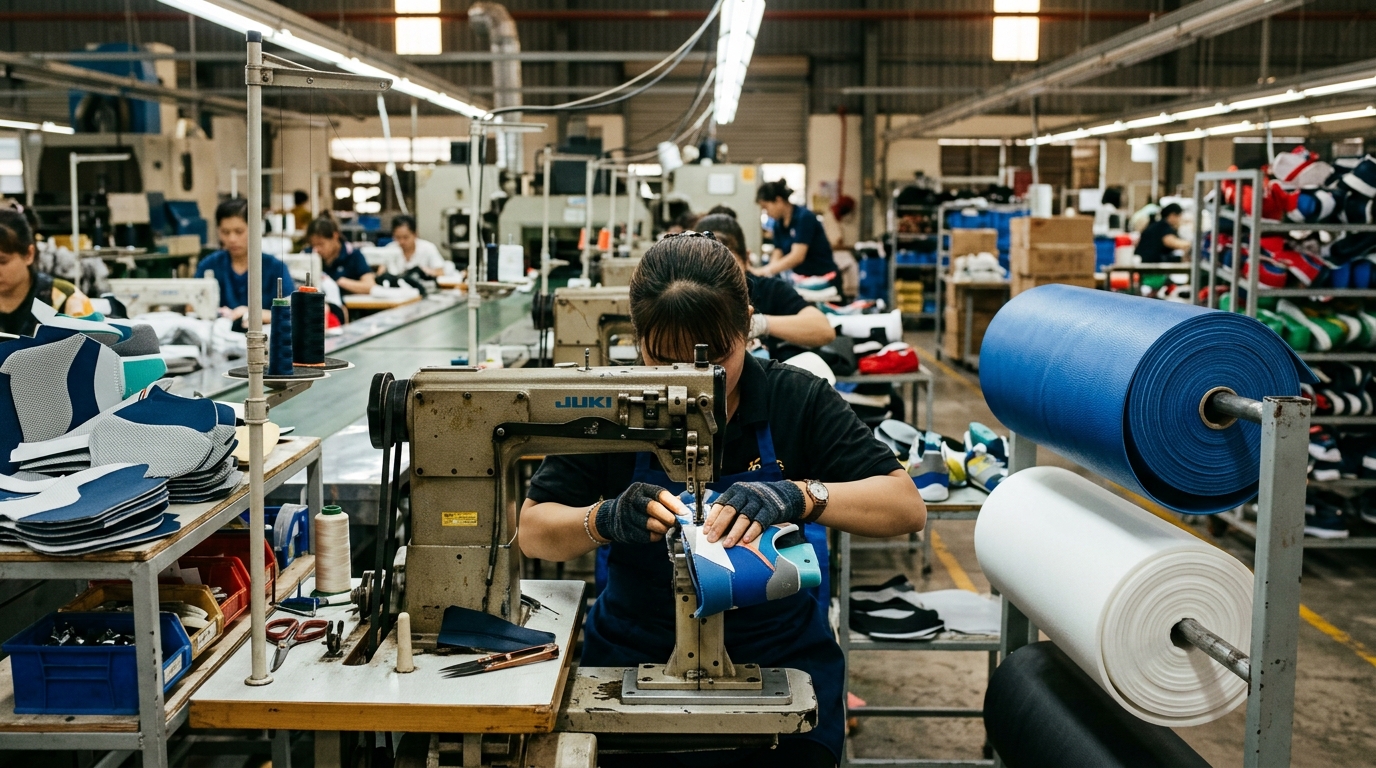
This model differs from simply buying off-the-shelf parts. In a true shoe part contract manufacturing relationship, the manufacturer produces components to the brand’s exact specifications: custom durometers, proprietary foam formulations, branded surface finishes, and precise dimensional tolerances. The manufacturer becomes an extension of the brand’s product development team, translating design intent into physical components that meet performance and cost targets.
For footwear brands, the appeal is straightforward. Building and operating foam compounding lines, injection-molding cells, CNC tooling shops, and fabric lamination facilities requires enormous capital investment and deep technical expertise. Contract manufacturing lets brands access world-class production capabilities without owning the assets — and without the overhead of managing factory operations across multiple countries. It’s a model that scales: the same partner who produces 10,000 pairs of insoles for a test run can ramp to 500,000 pairs when the product takes off.
Key Footwear Components Outsourced
Not all shoe parts carry the same complexity or sourcing challenges. Understanding which components are most commonly contract-manufactured — and why — helps brands make smarter decisions about where to consolidate suppliers.
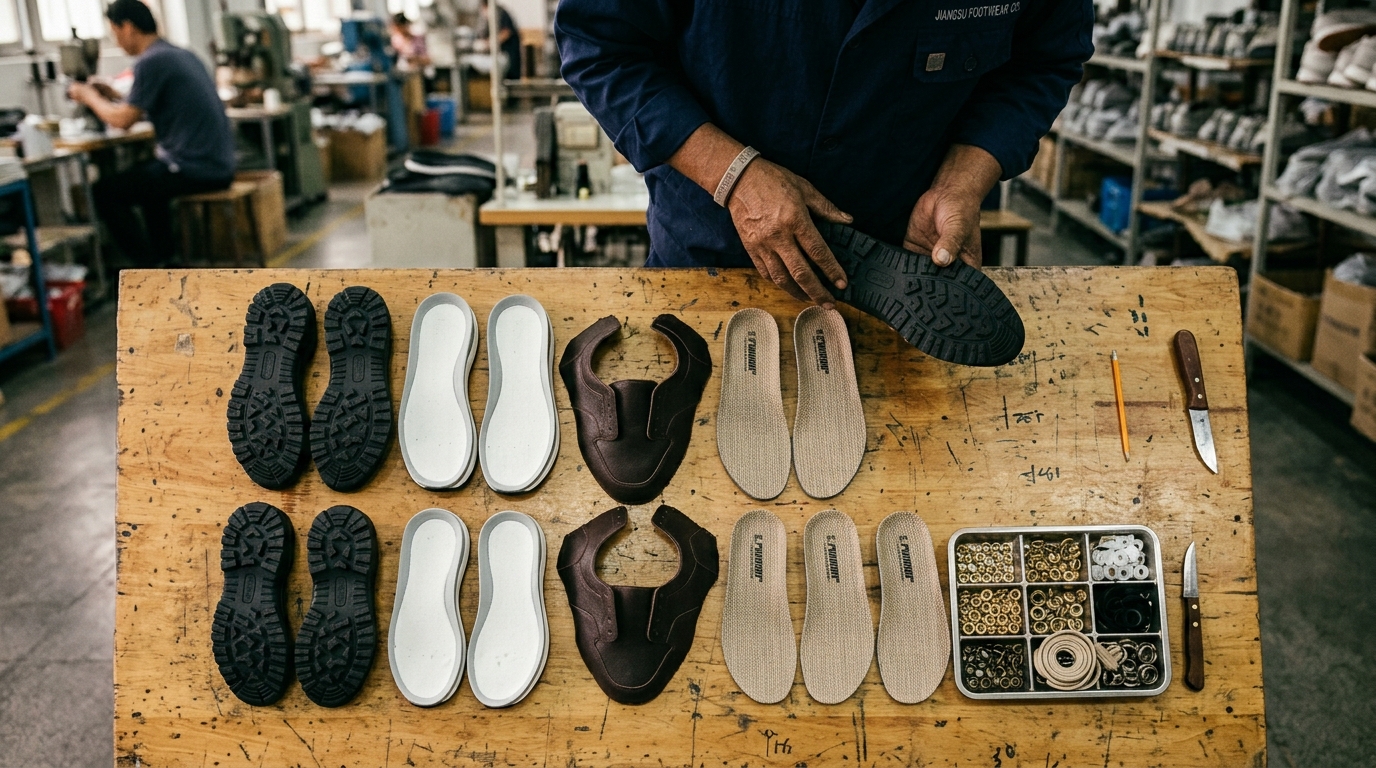
Insoles represent one of the highest-value outsourced components. They directly affect comfort, fit, and brand perception. Materials range from compression-molded EVA (typically 20–45 Asker C hardness) to open-cell PU for breathability and compression resistance, to advanced supercritical CO₂ foam for consistent energy return in performance applications. Each material requires different processing equipment and quality controls. Working with a dedicated shoe insole manufacturer ensures access to the right foaming technology, mold engineering, and surface finishing capabilities — heat transfer printing, screen printing, or embossing — that match the brand’s specifications.
Midsoles are the structural heart of cushioning systems. They demand precise density control, consistent cell structure, and tight dimensional tolerances to ensure each pair performs identically. Whether the midsole is single-density EVA, dual-density, or a supercritical foam construction, the foaming and molding processes require specialized equipment and rigorous batch-to-batch quality monitoring.
Uppers involve a different manufacturing discipline entirely — cutting, stitching, bonding, and sometimes knitting or thermoforming. Outsourcing uppers to a contract manufacturer with textile and assembly expertise allows brands to access engineered mesh, woven materials, synthetic leathers, and sustainable textile options without investing in sewing lines or knitting machines.
Structural and functional components round out the picture: TPU heel counters, carbon fiber or TPU stability plates, shanks, and complex multi-material constructions that combine rigid and flexible elements. These parts often require injection molding, thermoforming, or CNC machining — processes that are capital-intensive and best handled by manufacturers with in-house tooling capabilities.
The strategic advantage for brands comes when multiple component categories can be sourced from a single manufacturer. Consolidating insoles, midsoles, and uppers under one roof eliminates the coordination headaches of managing three or four separate suppliers across different countries, each with their own lead times, quality standards, and communication styles.
How to Vet a Manufacturer
Selecting the right contract manufacturer is one of the most consequential decisions a footwear brand makes. A poor choice shows up in delayed launches, inconsistent quality, compliance failures, and eroded margins. Here’s a structured approach to evaluating potential partners.
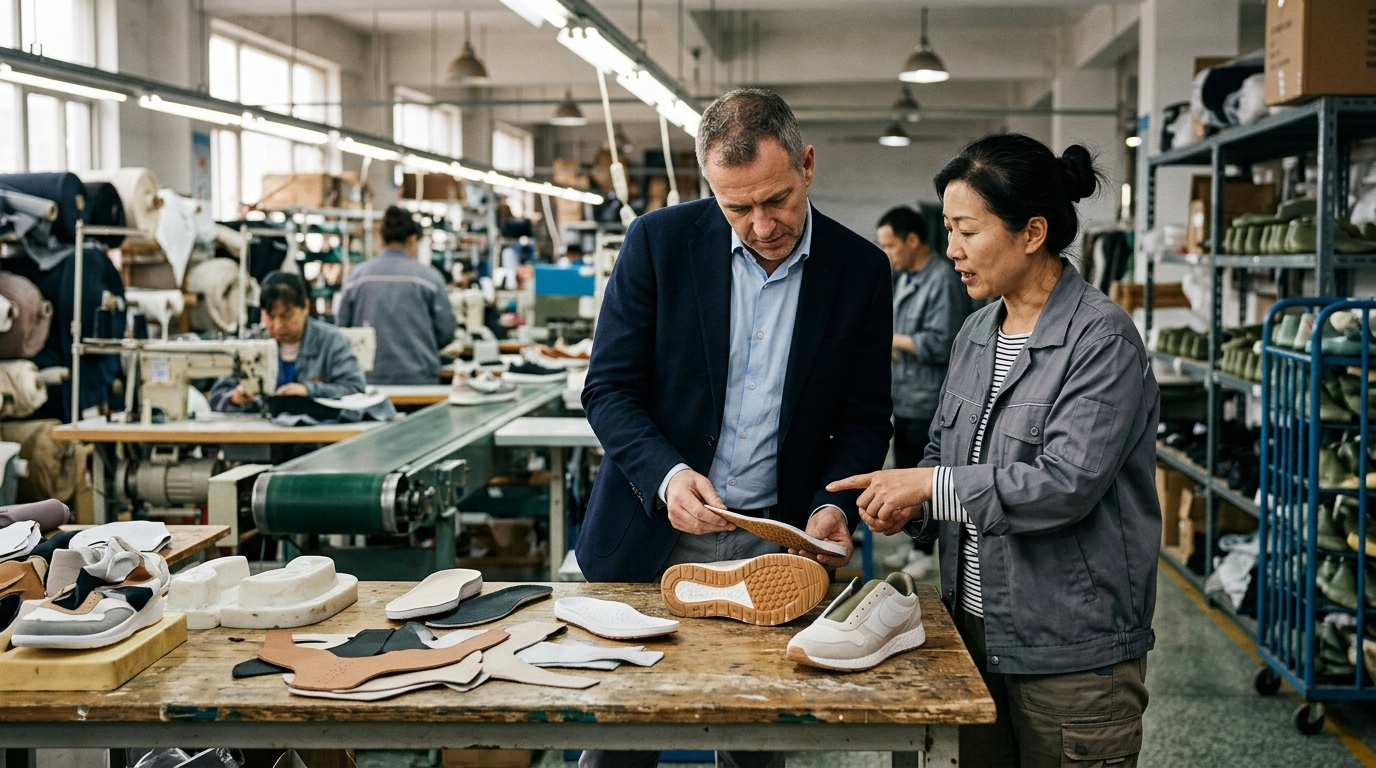
Certifications and compliance infrastructure should be your first filter. For US-bound footwear, manufacturers need demonstrated familiarity with CPSC requirements and California Proposition 65 chemical restrictions. GRS (Global Recycled Standard) certification matters if your brand makes sustainability claims about recycled content — it verifies the chain of custody from raw material to finished component. ISO 13485:2016 certification is relevant if your product line includes therapeutic, orthotic, or medical-grade footwear applications. Third-party testing partnerships with organizations like Intertek, SATRA, or SGS provide independent verification of material performance claims. Social compliance audits — BSCI or SMETA — demonstrate ethical labor practices across the supply chain. According to the U.S. Consumer Product Safety Commission, all consumer products sold in the United States must meet applicable safety standards, making supplier compliance infrastructure non-negotiable.
Material and process capabilities determine what you can actually build. Ask potential manufacturers about their foaming technologies (compression molding, injection molding, supercritical foaming), the range of materials they process (EVA, PU, supercritical CO₂ foam, sustainable alternatives like sugarcane-based EVA or algae-based EVA), and whether they can handle multi-material constructions. An in-house testing lab is a significant advantage — it enables rapid material validation and iterative development without the delays and costs of sending every sample to an external facility.
Manufacturing footprint and geographic positioning directly affect lead times, duties, and supply chain resilience. Manufacturers with facilities across multiple regions — China, Vietnam, Indonesia — give brands the flexibility to produce closer to Tier 1 assembly factories, reduce freight costs, and mitigate risk from trade policy shifts or regional disruptions. A manufacturer positioned in Northern Vietnam, Southern Vietnam, and Indonesia alongside major footwear assembly hubs can coordinate directly with the factories stitching and lasting your finished shoes.
Communication and project management rigor are harder to assess from a spec sheet but equally important. Request references from current customers. Evaluate response times during the quoting process — a manufacturer that provides initial quotations within 48 hours for standard constructions signals operational discipline. Ask about their sampling workflow: die-cut samples that don’t require new tooling should ship in approximately 3 days, while samples requiring new molds typically take around 10 business days. These timelines reveal how well the manufacturer manages its tooling queue and production scheduling.
Production Timelines & Planning
Understanding realistic lead times prevents the single most common frustration in shoe part contract manufacturing: missed launch dates. Brands that plan around accurate timelines gain a genuine competitive advantage.
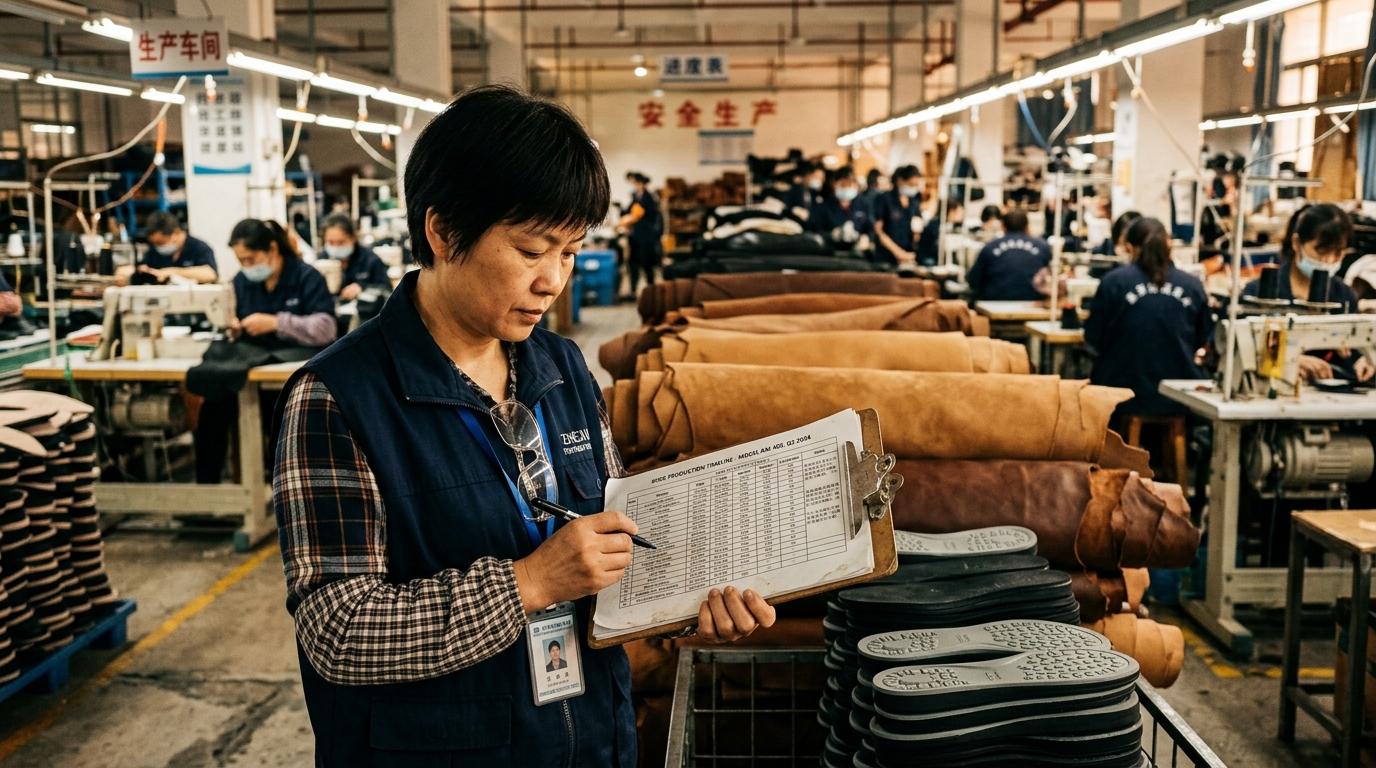
For standard EVA insoles with no customization and existing tooling, expect 20–35 days from payment confirmation to goods ready. Supercritical CO₂ foam insoles require longer processing — typically 30–45 days — due to the specialized foaming process and tighter quality controls involved. Custom insoles follow a two-phase timeline: a sampling phase of 7–14 days followed by bulk production of approximately 30–40 days after sample approval. The total custom order cycle from specification to goods ready typically runs 45–70 days.
Factor in logistics. Ocean freight from East Asian manufacturing hubs to US ports takes 18–30 days. Air freight can compress that to 5–10 days for urgent orders, though at significantly higher cost. For a first-time custom order, the total sourcing cycle — from initial specification through production and delivery — runs approximately 65–100 days. Brands launching seasonal collections should work backward from their retail delivery dates and build in buffer for sample revisions, material approvals, and potential shipping delays.
Payment structure also affects scheduling. Standard terms for new customers are typically 30% deposit upfront with 70% due before shipment, and sampling costs are paid upfront. These terms are standard across the industry and ensure production slots are secured. As relationships mature and order volumes grow, more flexible arrangements can often be negotiated — but for initial orders, having capital ready to trigger production on time is essential to maintaining your timeline.
Why Brands Choose FX Footwear
When evaluating shoe part contract manufacturing partners, several factors consistently separate FX Footwear (Fuxiang Group) from insole-only suppliers and generic component vendors. The distinction matters because it directly impacts how efficiently brands can develop and deliver products.
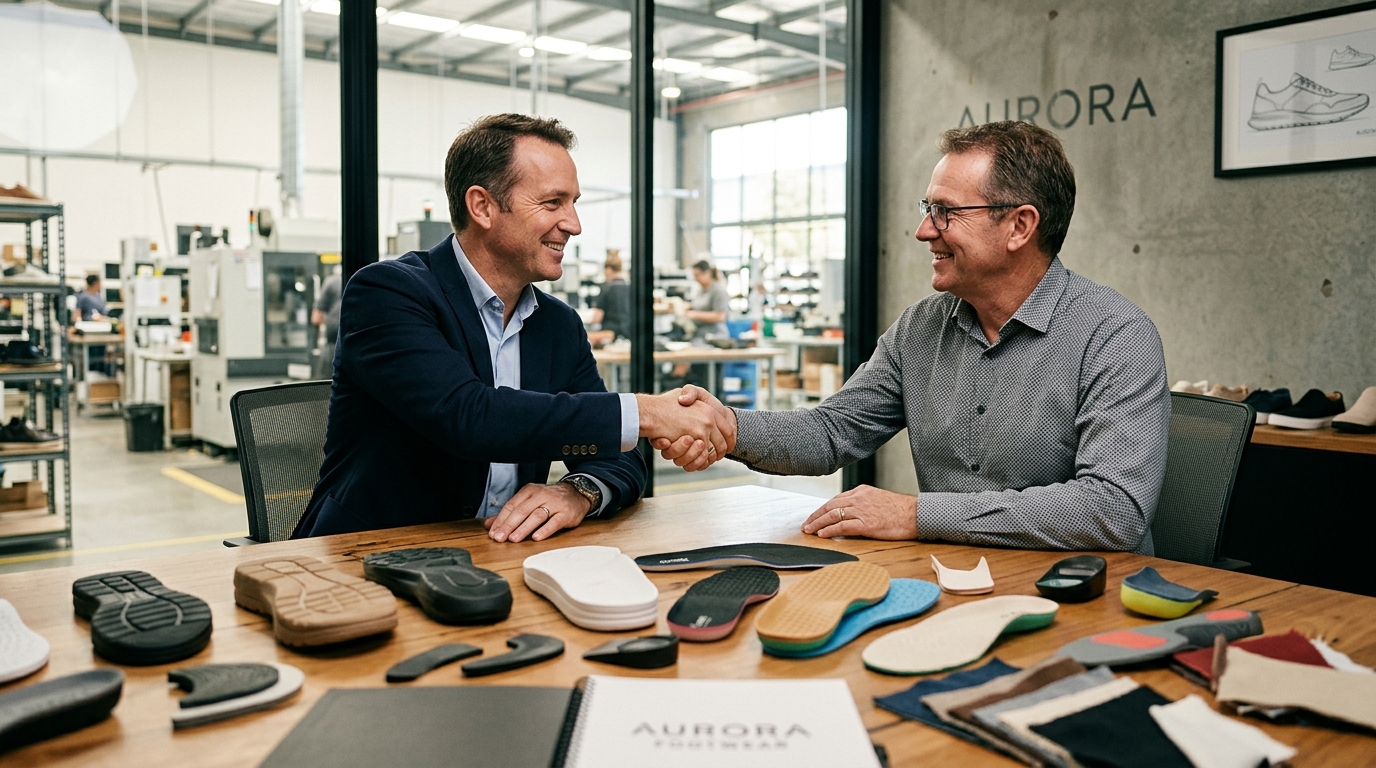
One-stop component manufacturing is FX Footwear’s foundational advantage. Rather than sourcing insoles from one factory, midsoles from another, and uppers from a third, brands can consolidate multiple component categories with a single partner. This eliminates the coordination overhead of managing separate suppliers — different quality standards, different communication channels, different production calendars — and creates a unified development pipeline where material compatibility across components is verified from the start. If you’ve explored our roundup of global insole manufacturers, you’ll notice that most suppliers specialize in a single component; FX’s breadth across insoles, midsoles, and uppers is a genuine differentiator.
Regional manufacturing across China and Southeast Asia positions FX’s facilities alongside the world’s largest Tier 1 footwear assembly hubs. With operations in China, Northern Vietnam, Southern Vietnam, and Indonesia, FX can produce components closer to where finished shoes are assembled — shortening lead times, reducing freight costs, and lowering duty exposure. This geographic spread also provides supply chain resilience: if disruptions affect one region, production can shift to maintain continuity.
End-to-end production control — from raw material foaming through final assembly — means FX controls quality at every stage rather than relying on sub-suppliers for critical processes. This vertical integration delivers consistent quality across batches, stable supply even during peak production seasons, and better control over performance specifications. When a brand specifies a 30 Asker C EVA insole with a ±3 tolerance, end-to-end control is what ensures the thousandth pair matches the first.
In-house laboratory capabilities enable rapid material testing and product validation. Rather than shipping samples to external labs for every iteration — adding days or weeks to development cycles — FX’s lab team can validate hardness, density, compression set, and other critical parameters internally. This accelerates the development loop, letting brands move from concept to approved sample faster.
For brands prioritizing sustainability, FX’s GRS certification and Higg Index participation support verified claims about recycled and bio-based content. Available sustainable material options include sugarcane-based EVA, algae-based foam that reduces reliance on petroleum-based materials, recycled EVA compounds, and Susterra®-based PU formulations. These materials integrate into existing product types — they’re options within FX’s standard production capabilities, not separate product lines requiring different manufacturing processes.
Performance-focused brands benefit from FX’s supercritical CO₂ foam insole technology, which delivers consistent energy feedback and impact absorption across repeated use — a step beyond conventional EVA in applications where cushioning performance is a product differentiator. Confirmed brand partnerships with HOKA, Clarks, KEEN, UGG, On, Arjat, and Teva demonstrate FX’s capability to meet the quality, volume, and compliance standards that major footwear brands require.
Contract Manufacturing vs. In-House
For footwear brands weighing whether to invest in their own component production versus partnering with a contract manufacturer, the decision comes down to capital efficiency, expertise, and strategic focus.
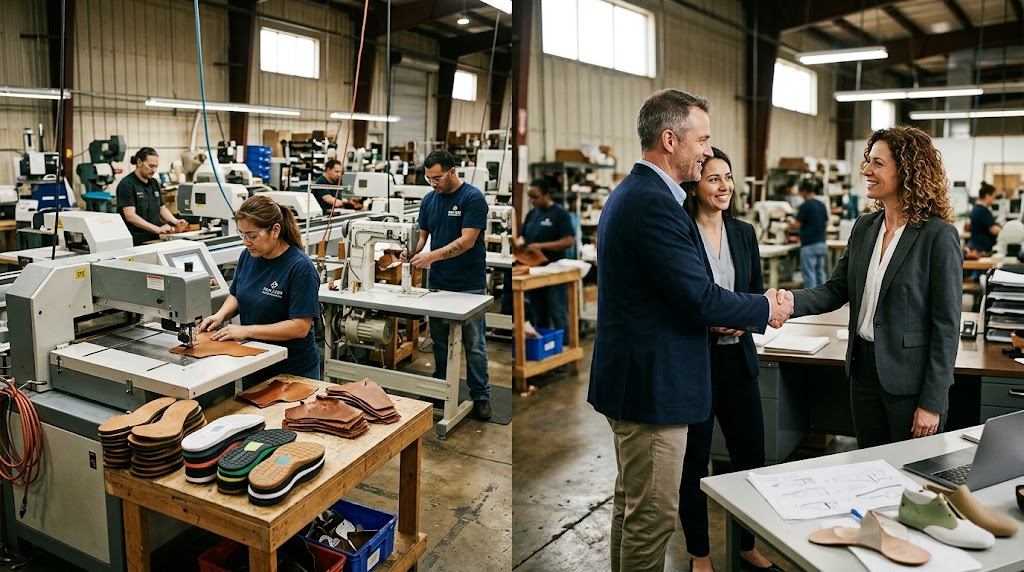
Building in-house foam compounding and molding capability requires millions of dollars in equipment — EVA injection presses, compression molds, CNC tooling machines, mixing lines, testing instruments — plus the ongoing costs of facility maintenance, skilled operators, quality engineers, and raw material inventory management. For a brand producing fewer than several million pairs annually, the economics rarely justify this investment. Even large brands often find that their capital generates better returns invested in product development, marketing, and retail expansion rather than factory infrastructure.
Contract manufacturing provides access to production expertise that takes decades to build. A manufacturer like FX Footwear has refined its foaming processes, tooling design, and quality systems across thousands of projects for dozens of brands. That accumulated knowledge translates into fewer production issues, faster problem resolution, and material recommendations that a brand’s in-house team might not have the exposure to suggest. The Footwear Distributors and Retailers of America notes that the vast majority of footwear sold in the US is manufactured overseas, underscoring how deeply the industry relies on specialized contract manufacturing partnerships.
The hybrid model — where brands maintain design and development control in-house while outsourcing production — has emerged as the dominant approach across the industry. It preserves the brand’s intellectual property and creative direction while leveraging the contract manufacturer’s scale, equipment, and regional manufacturing presence. The key to making this model work is selecting a manufacturing partner with the technical depth, communication discipline, and compliance infrastructure to function as a true extension of the brand’s team rather than a transactional vendor.
FAQ
What is shoe part contract manufacturing?
It’s an arrangement where a footwear brand outsources the production of specific shoe components — insoles, midsoles, uppers, or structural parts — to a specialized manufacturer who builds them to the brand’s exact specifications.
Which shoe components are commonly outsourced?
Insoles, midsoles, uppers, heel counters, shanks, and structural plates (TPU or carbon fiber) are the most frequently contract-manufactured footwear components.
How long does a custom insole order take?
A first-time custom order typically takes 45–70 days from specification to goods ready, plus 18–30 days for ocean freight to US ports.
What certifications should a manufacturer have?
For US-market footwear, look for GRS certification, CPSC and Prop 65 compliance capability, third-party testing partnerships (Intertek, SATRA, SGS), and social audit credentials like BSCI or SMETA.
Can FX Footwear supply more than insoles?
Yes — FX Footwear manufactures insoles, midsoles, uppers, and other key footwear components, functioning as a one-stop supplier that allows brands to consolidate multiple component categories with a single partner.
Ready to streamline your footwear component supply chain with a partner who manufactures insoles, midsoles, and uppers across four regional hubs in Asia? FX Footwear (Fuxiang Group) combines one-stop manufacturing capability, end-to-end production control, and proven partnerships with leading global brands. Reach out to the FX Footwear team to discuss your project specifications and receive a detailed quotation within 48 hours for standard constructions.
Browse more articles in Sourcing & OEM Solutions.