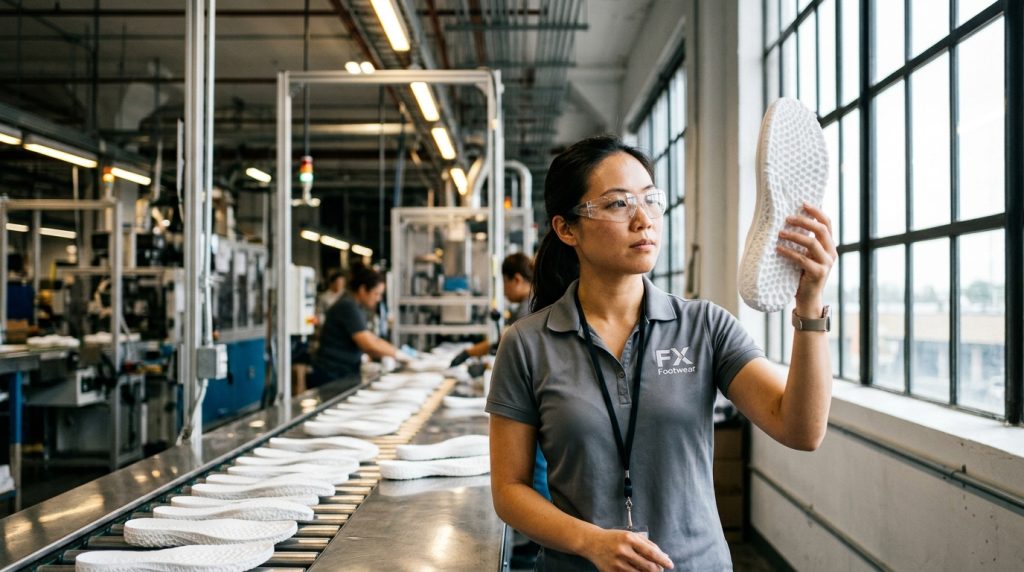
The footwear industry is undergoing a quiet revolution, and it starts from the ground up — literally. Brands that once relied on conventional foam manufacturing are increasingly making the switch to supercritical CO2 foam insole technology, and the reasons go well beyond trend-chasing. From dramatic weight reductions to measurable sustainability wins, supercritical foaming is reshaping how footwear companies think about cushioning, performance, and environmental responsibility. If you’re evaluating your next insole sourcing decision, this guide breaks down exactly what’s driving the shift and what it means for your product line.
What Is Supercritical CO2 Foaming?
Supercritical foaming is a physical foaming process that uses carbon dioxide in its supercritical state — a unique phase where CO2 behaves simultaneously as both a liquid and a gas — as the blowing agent to expand polymer materials into a lightweight, cellular foam structure. Unlike traditional chemical foaming, which relies on chemical additives and heat-triggered reactions to create foam cells, supercritical CO2 foaming is driven entirely by pressure changes. The result is a remarkably uniform cell structure that translates directly into consistent cushioning performance across every unit produced.
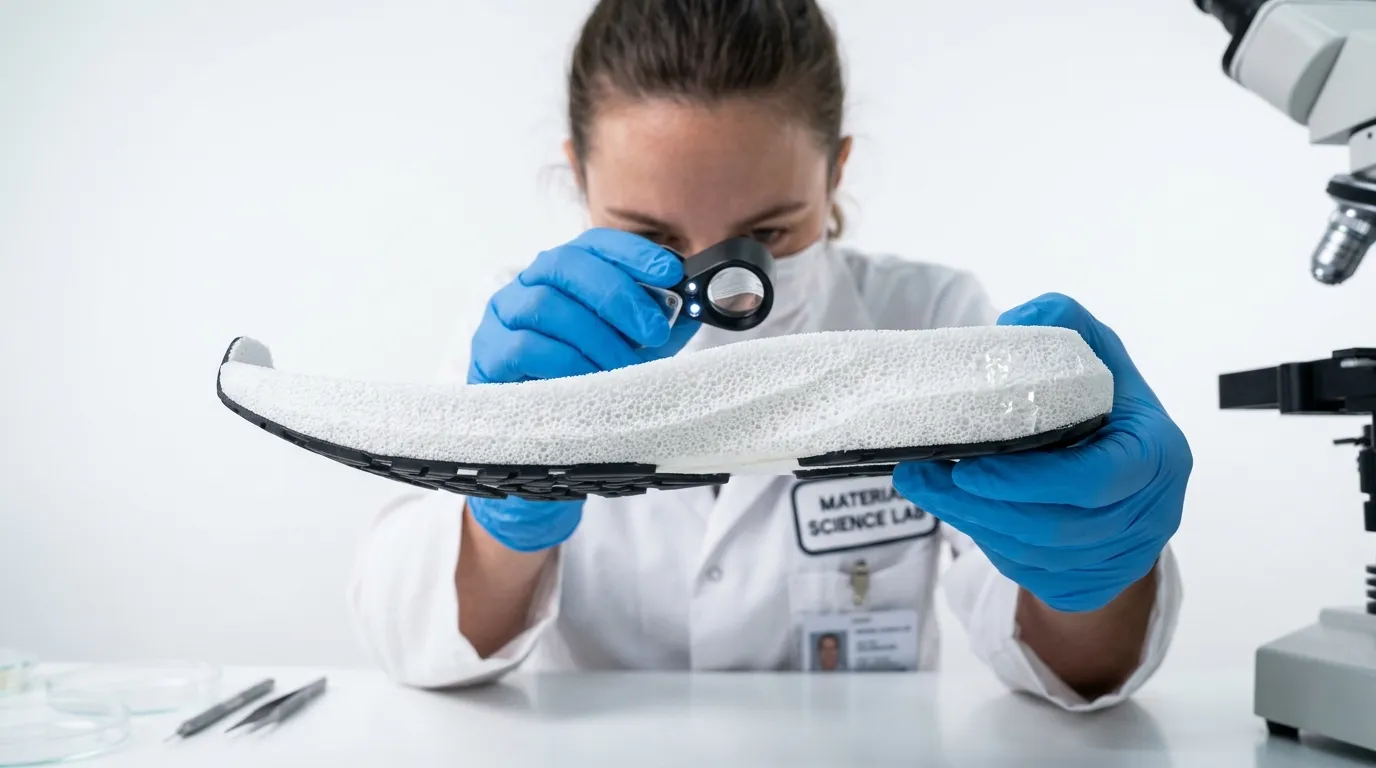
The process works by saturating a solid polymer — typically TPU (thermoplastic polyurethane) or EVA — under high pressure with CO2 until the gas is absorbed into the material at the molecular level. When the pressure is rapidly released, the dissolved CO2 expands, forming millions of tiny, evenly distributed cells throughout the material. This controlled expansion produces a foam that is both lighter and more resilient than what conventional processes typically achieve at comparable densities.
What makes this especially relevant for footwear brands is the repeatability and precision of the output. Because the foaming reaction is governed by physical parameters — pressure, temperature, and saturation time — rather than chemical formulations that can vary batch to batch, manufacturers can dial in exact density, hardness, and rebound characteristics with remarkable consistency. For brands that compete on performance claims, that reliability is a genuine differentiator.
Sustainability Advantages Over Conventional Foam
One of the most compelling reasons footwear brands are switching to supercritical CO2 foam insole production is the sustainability profile. Traditional foam manufacturing — particularly chemical blowing agent (CBA) processes — releases volatile organic compounds (VOCs) and other harmful byproducts into the atmosphere during production. Supercritical CO2 foaming eliminates this entirely. The CO2 used as the blowing agent is either captured industrial gas or, increasingly, reclaimed CO2, and it leaves no chemical residue in the finished product.
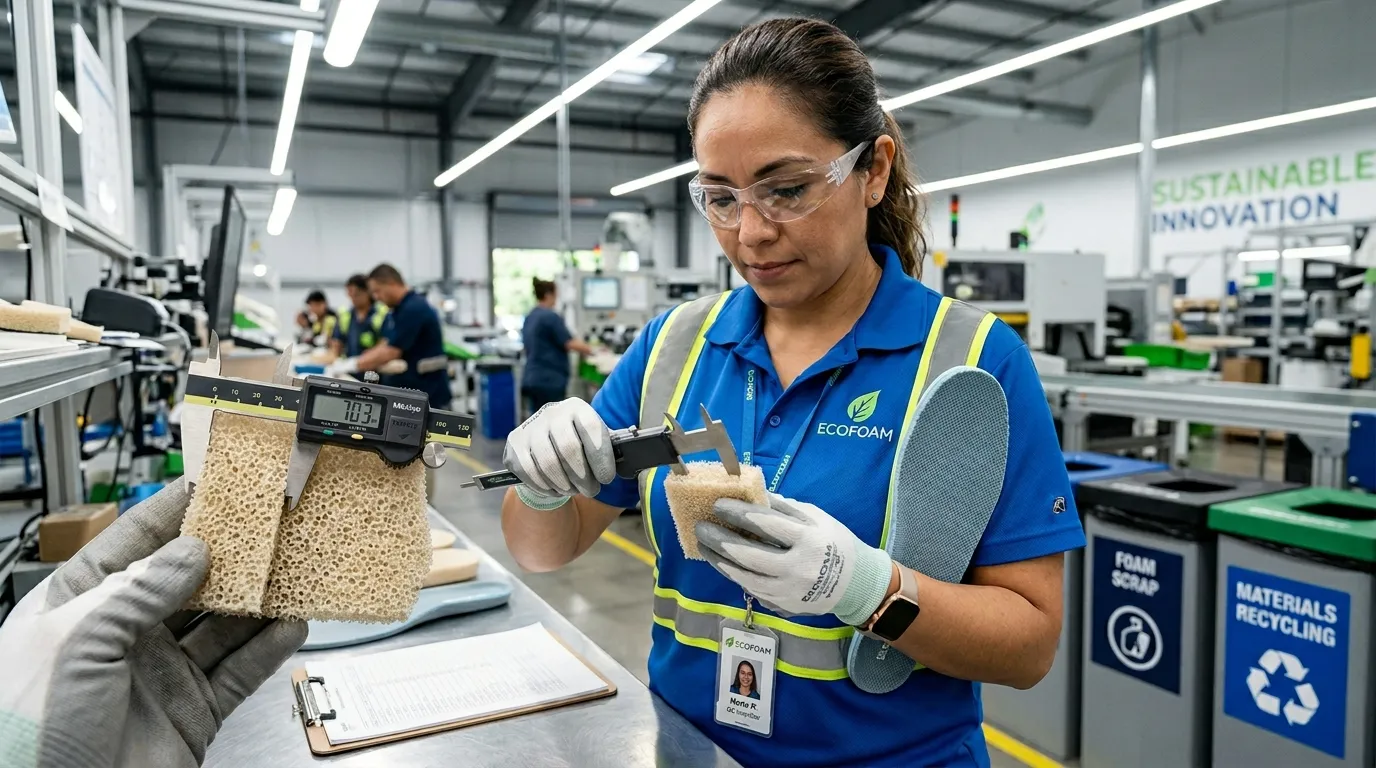
This matters enormously as brands face growing pressure from both regulators and consumers to clean up their supply chains. Footwear companies targeting the US market are increasingly required to demonstrate material transparency and reduced chemical exposure — especially for products designed for children or athletes with extended wear times. Insoles produced through supercritical foaming contain no residual chemical blowing agents, making them easier to certify against standards like OEKO-TEX or REACH, and simpler to market as cleaner, safer products.
Beyond the manufacturing process itself, supercritical CO2 foam insoles often use mono-material constructions — a single polymer like TPU — which dramatically improves end-of-life recyclability. When a product is made from one material family rather than laminated layers of different plastics and foams, it’s far easier to recycle or recover at the end of its useful life. For brands building circular product strategies, this is a foundational advantage that conventional foam structures simply can’t match.
Performance Benefits for Athletic Footwear
The performance story behind supercritical foaming is just as strong as the sustainability narrative. The fine, uniform cell structure created by the CO2 expansion process produces foam with an exceptional energy return profile. In practical terms, this means the insole compresses under foot load and then rebounds quickly and completely — delivering the kind of responsive cushioning that athletes and active consumers expect from premium footwear. Comparative testing consistently shows supercritical CO2 foam outperforming traditional EVA and PU foams on energy return metrics at equivalent weight.

Weight is the other headline advantage. Because the expansion process can achieve very high foam ratios — meaning a small amount of base material produces a large volume of finished foam — supercritical CO2 insoles are significantly lighter than their conventional counterparts. In a category where every gram matters (running shoes, trail footwear, performance athletic), the ability to offer the same cushioning protection at 20–40% less weight is a meaningful competitive advantage. Brands can use this to improve overall shoe weight ratings, which is a key purchasing driver in the performance segment.
Durability also benefits from the process. The interconnected cell walls formed during supercritical expansion tend to be stronger and more fatigue-resistant than those produced by chemical foaming, which often creates uneven cell sizes and thinner wall structures. An insole that maintains its cushioning properties through thousands of compression cycles — rather than compressing out after a few months of wear — reduces returns, boosts brand reputation, and supports premium price positioning. For brands working with a custom shoe insole manufacturer to develop performance-tier products, that durability story is worth building into your marketing.
Cost & Scalability Considerations for Brands
A common misconception is that supercritical CO2 foaming is inherently more expensive than conventional foam manufacturing. The reality is more nuanced. Initial tooling and equipment investment for supercritical foaming is higher than for basic EVA injection molding, and not every manufacturer has made the capital investment required to run the process at scale. However, when you factor in the total cost picture — including material waste reduction, elimination of chemical blowing agent procurement, and reduced post-processing requirements — the per-unit cost gap narrows considerably at production volumes above a few thousand pairs per style.
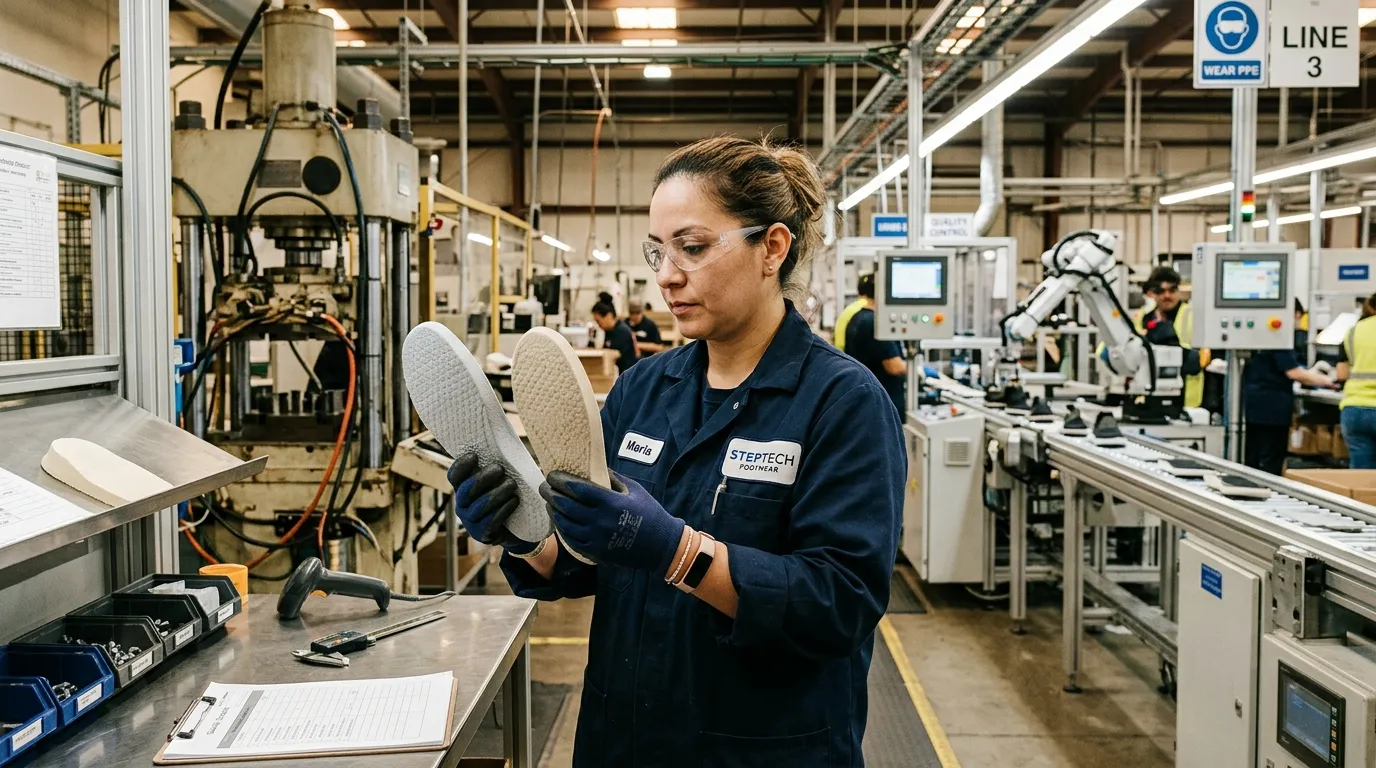
For footwear brands that are sourcing insoles in the mid-to-high volume range (typically 5,000+ units per SKU), supercritical CO2 foam production becomes increasingly cost-competitive with premium conventional foam options. The key is working with a manufacturing partner that has invested in the right equipment and developed repeatable processing protocols for the specific polymers and density ranges you need. Not all factories that claim supercritical foaming capability are running true batch processes at consistent quality levels — due diligence in factory evaluation is essential.
Scalability is genuinely strong once you’re working with a qualified supplier. Unlike some advanced manufacturing processes that hit output ceilings quickly, supercritical foaming can be scaled by adding autoclave capacity or transitioning to continuous extrusion foaming lines for very high volumes. Brands planning product launches with significant first-order quantities — or planning to roll supercritical insoles across multiple SKUs — should discuss scale ramp timelines explicitly with their manufacturing partner during the sourcing process.
Choosing the Right Manufacturing Partner
Not every insole factory is equipped to deliver supercritical CO2 foam insoles at the quality and consistency level that branded footwear requires. When evaluating manufacturing partners, start with equipment verification — specifically whether the factory runs genuine supercritical CO2 batch foaming or autoclave processes, rather than standard nitrogen or chemical foaming that’s occasionally mislabeled. Ask for technical data sheets showing density measurements, Shore hardness values, and energy return test results from production batches, not just sample runs.
Certifications and quality systems matter equally. Look for factories that hold ISO 9001 certification as a baseline, and check whether they have experience certifying foam materials to standards relevant to your target markets — ASTM, EN, or specific retailer compliance requirements. A capable partner should be able to walk you through their process controls, testing protocols, and how they manage batch-to-batch consistency. If a supplier struggles to answer detailed technical questions, that’s a clear signal to look elsewhere.
Finally, consider the full-service capability of your manufacturing partner. Brands that source through a vertically integrated shoe insole manufacturer — one that handles material development, foaming, cutting, lasting, and finishing under one roof — typically experience faster development cycles, better QC outcomes, and more responsive troubleshooting than brands managing multi-supplier chains. You can explore the full scope of FX Footwear’s supercritical CO2 foam insole capabilities to understand what a fully integrated development and production process looks like in practice.
FAQ
What polymers work with supercritical CO2 foaming?
The most commonly used polymers in supercritical CO2 foaming for footwear are TPU (thermoplastic polyurethane) and EVA (ethylene-vinyl acetate). TPU is particularly well-suited to the process because it absorbs CO2 efficiently under pressure and produces a very fine, uniform cell structure with excellent rebound properties. Some manufacturers also work with PEBA (polyether block amide) and bio-based polymers for brands targeting advanced sustainability specifications. The choice of base polymer significantly affects the final foam’s hardness, energy return, weight, and durability — so material selection should happen early in the development process, ideally with direct input from your manufacturing partner’s technical team.
How does supercritical foaming compare to Adidas Boost technology?
Adidas Boost uses a bead foaming process where individual TPU pellets are expanded and then fused together to form the midsole structure. Supercritical CO2 foaming, as used in insoles, typically involves batch or continuous foaming of sheet or block stock rather than bead fusion. Both technologies leverage physical foaming principles and both produce lightweight, high-rebound TPU foam — but they differ in process architecture, equipment requirements, and the physical form of the finished component. Supercritical sheet or block foaming is generally better suited for insole production, while bead foaming is more commonly used for full midsole construction.
Are supercritical CO2 foam insoles recyclable?
Yes — particularly when made from mono-material TPU constructions, supercritical CO2 foam insoles are recyclable within existing TPU recovery streams. Because the foaming process uses only CO2 as the blowing agent and leaves no chemical residue, the base polymer remains relatively pure and is easier to reprocess than chemically foamed materials that may contain crosslinking agents or other additives that complicate recycling. Brands pursuing take-back programs or closed-loop product strategies should confirm with their manufacturing partner that the specific formulation used is free of incompatible additives before making recyclability claims in marketing materials.
What MOQ is typical for supercritical insole production?
Minimum order quantities for supercritical CO2 foam insoles vary by manufacturer and process type. For batch autoclave foaming processes, MOQs typically range from 500 to 2,000 pairs per SKU at the development and initial production stage, with better unit economics kicking in above 5,000 pairs. Continuous extrusion foaming lines, which some larger manufacturers operate, may have higher MOQs but offer significantly faster cycle times and lower per-unit costs at volume. It’s worth discussing your projected annual volume across all SKUs when negotiating MOQs — manufacturers often have flexibility when they can see a larger program commitment rather than evaluating each SKU in isolation.
How long does supercritical insole development take?
Development timelines for a supercritical CO2 foam insole typically range from 6 to 14 weeks from brief to production-ready sample, depending on the complexity of the specification. Simple density and hardness matching against a reference insole can move quickly if the manufacturer has an existing formulation library. Custom performance profiles — specific energy return curves, zonal density variation, or novel material combinations — require more iterative testing and will extend the timeline. Tooling for custom shapes adds 3–5 weeks depending on complexity. Brands should build at least one additional iteration round into their project timeline as a buffer, particularly if they are switching from a conventional foam construction for the first time.
If your brand is ready to evaluate supercritical foaming as part of your next insole development program, FX Footwear (Fuxiang Group) offers full-service development and manufacturing capabilities — from material selection and prototype foaming through to finished insole production at scale. With deep technical expertise in advanced physical foaming processes and a commitment to sustainable, high-performance footwear components, FX Footwear is equipped to help you bring better insoles to market faster. Reach out to the team to discuss your next project, and discover why leading footwear brands trust FX Footwear as their long-term manufacturing partner.