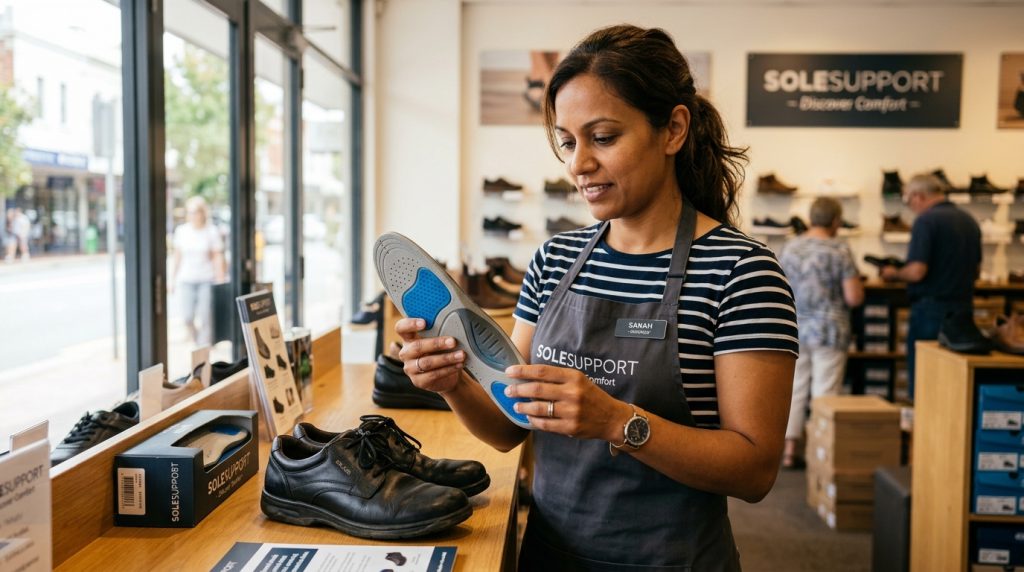
If you spend hours on your feet every day — whether on a warehouse floor, retail counter, or job site — you already know the toll it takes. Sore heels, aching arches, and tired legs aren’t just discomfort; they affect productivity, safety, and long-term health. Finding the best insoles for standing long shifts is one of the smartest investments workers and footwear brands can make. But what actually makes an anti-fatigue insole work? This technical deep-dive breaks down the real science behind standing comfort, from pressure distribution to material engineering, so you can make informed decisions about what goes inside the shoe.
Fatigue Mechanics: What Happens Standing
When you stand still, your body works harder than you might expect. Static posture forces your muscles to fire continuously to maintain balance and alignment, rather than alternating load as they do when you walk. Blood circulation slows in the lower extremities, and pressure concentrates at specific points — typically the heel, ball of the foot, and metatarsal heads.

Over time, this concentrated pressure causes microfatigue in soft tissue, triggers inflammation in the plantar fascia, and sends stress signals up the kinetic chain to the knees, hips, and lumbar spine. Research in occupational health consistently links prolonged standing to musculoskeletal disorders affecting the lower back and lower limbs.
The insole’s role is to interrupt this cycle — redistributing load, promoting micro-movement, and absorbing the mechanical energy that would otherwise accumulate in joints and soft tissue. Understanding that cycle is the first step to understanding why insole design matters so profoundly.
Pressure Distribution & Arch Support
The human foot has three primary contact zones: the heel, the lateral midfoot, and the forefoot. In a well-supported foot, pressure is shared across these zones in a balanced way. Without proper support, the arch collapses slightly under sustained load, shifting pressure toward the heel and forefoot and straining the plantar fascia.
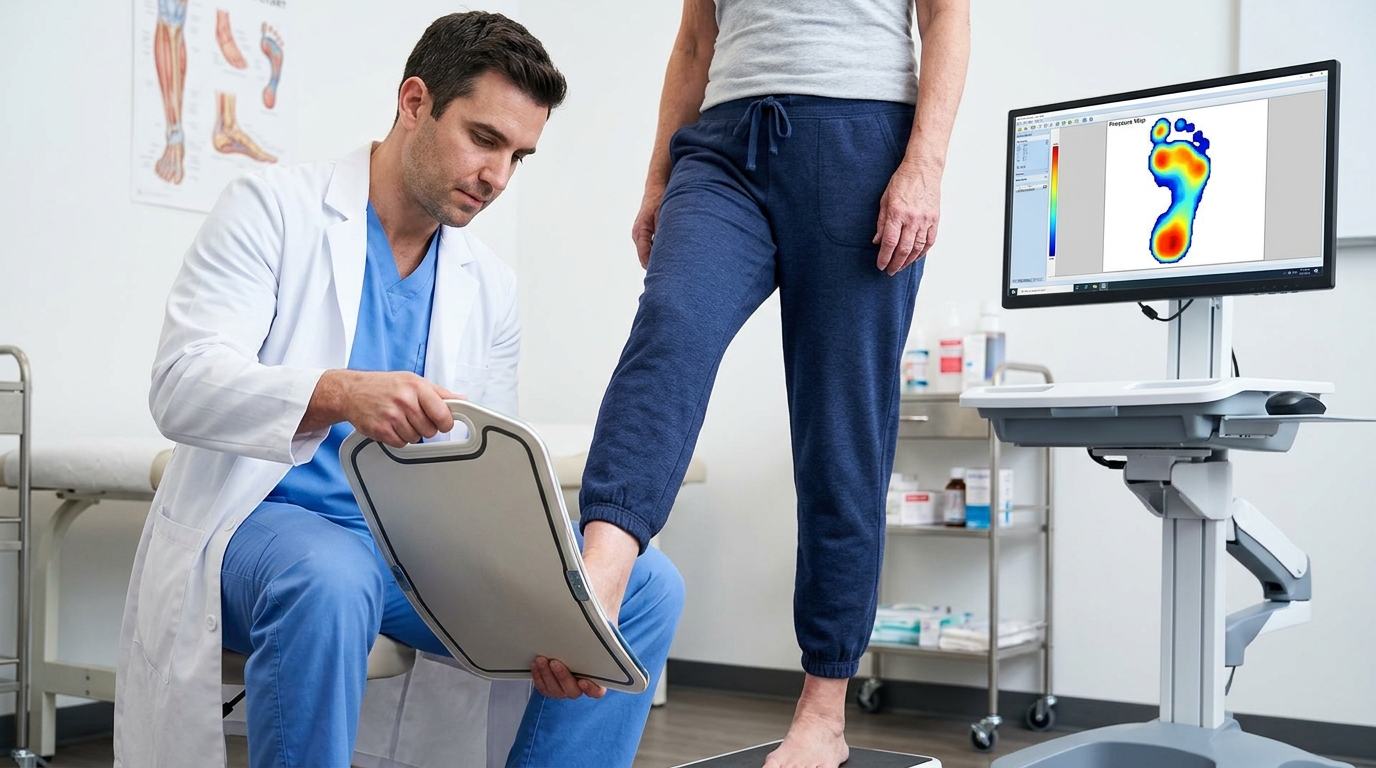
Arch support in an anti-fatigue insole works by filling the gap beneath the medial longitudinal arch, reducing the degree of collapse and redistributing load across a broader surface area. This mechanical advantage reduces peak plantar pressure — a measurement directly linked to foot fatigue and pain in occupational studies.
Insole geometry matters as much as material here. A well-designed arch profile — neither too aggressive nor too flat — works with natural foot mechanics rather than forcing the foot into an unnatural position. That’s why quality-focused footwear brands and procurement teams often consult directly with a shoe insole manufacturer to develop geometry tailored to their specific worker populations and use cases.
Material Science: Foam, Gel & Beyond
The material an insole is made from determines how it absorbs and returns energy, how long it holds up under repeated compression, and how it responds to temperature changes on the job. Three primary categories dominate anti-fatigue insole construction: polyurethane (PU) foam, ethylene-vinyl acetate (EVA) foam, and gel compounds.
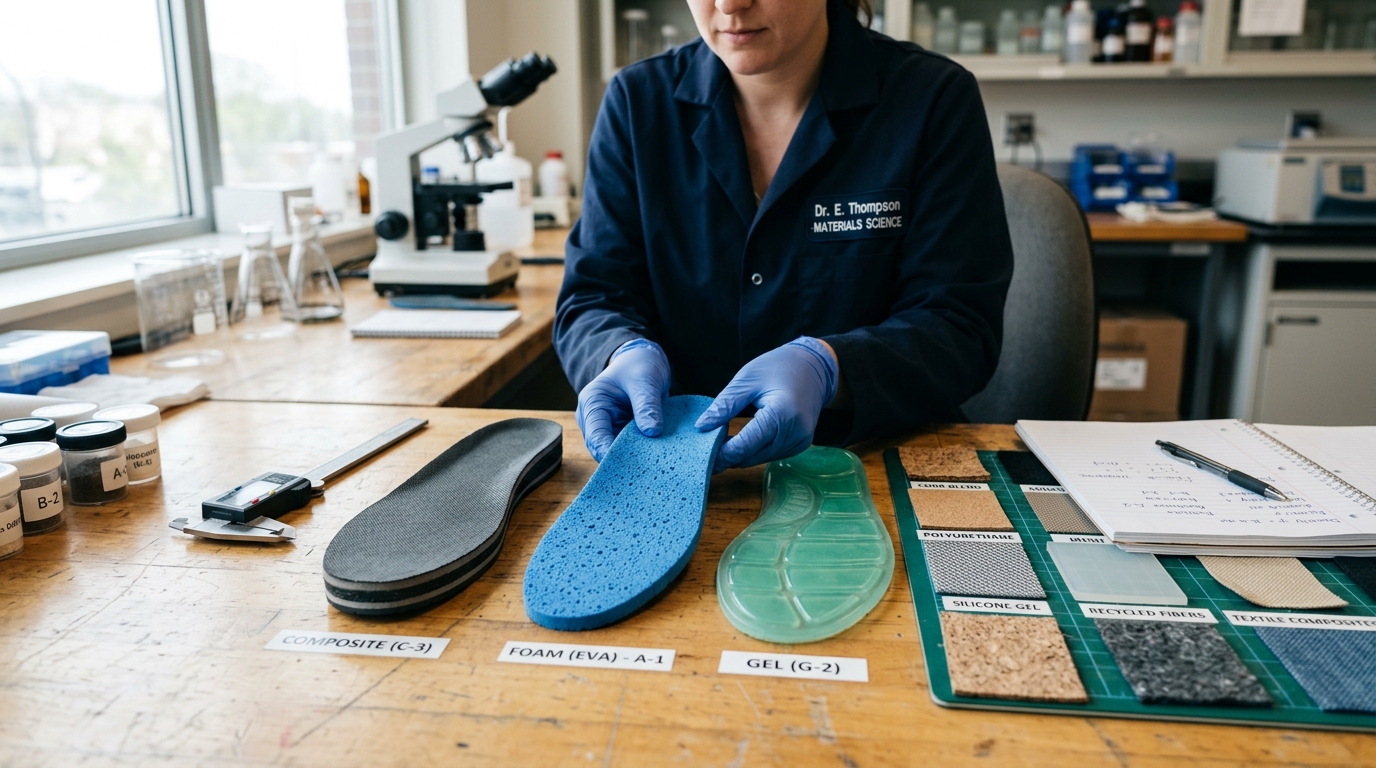
PU foam offers a higher density and excellent long-term resilience, making it a favorite for heavy-duty occupational insoles. It rebounds consistently across thousands of compression cycles and resists bottoming out — a critical failure mode where the insole loses all cushioning properties after heavy use. EVA foam is lighter and more cost-effective, with good initial cushioning that makes it popular across athletic and everyday footwear applications. However, standard EVA compresses over time. Advanced processes, like supercritical CO₂ foaming, produce EVA cells with tighter, more uniform structure — improving durability and energy return significantly compared to traditional molded EVA.
Gel inserts, often silicone-based, excel at localized pressure relief — particularly at the heel and metatarsal pad zones. They are frequently used in combination with foam substrates to create a layered system that addresses both broad pressure distribution and targeted cushioning hot spots. For a closer look at how these materials come together in finished footwear, see our overview of work shoe construction and components.
Energy Return vs. Shock Absorption
These two properties are often confused, but they serve distinct functions — and the best insoles for standing-intensive work balance both deliberately. Shock absorption describes how much impact energy the insole dissipates, converting it to heat rather than transmitting it to the foot and leg. Energy return describes how much of that compressed energy the material returns to the foot on the recovery stroke.
For workers who stand mostly stationary, high shock absorption with moderate energy return is the ideal profile. Too much energy return in a static-standing insole creates a springy, unstable feel underfoot — better suited to running than prolonged standing. For workers who alternate between standing and walking, a higher energy-return formulation reduces muscular effort over the course of a shift.
This is why insole specification is not one-size-fits-all. If you’re evaluating options and wondering what insoles do I need for your specific application, the answer starts with honestly mapping the activity profile of your end user — how much standing versus walking, on what surface type, and for how many hours.
Anti-Fatigue Insoles for Occupational Use
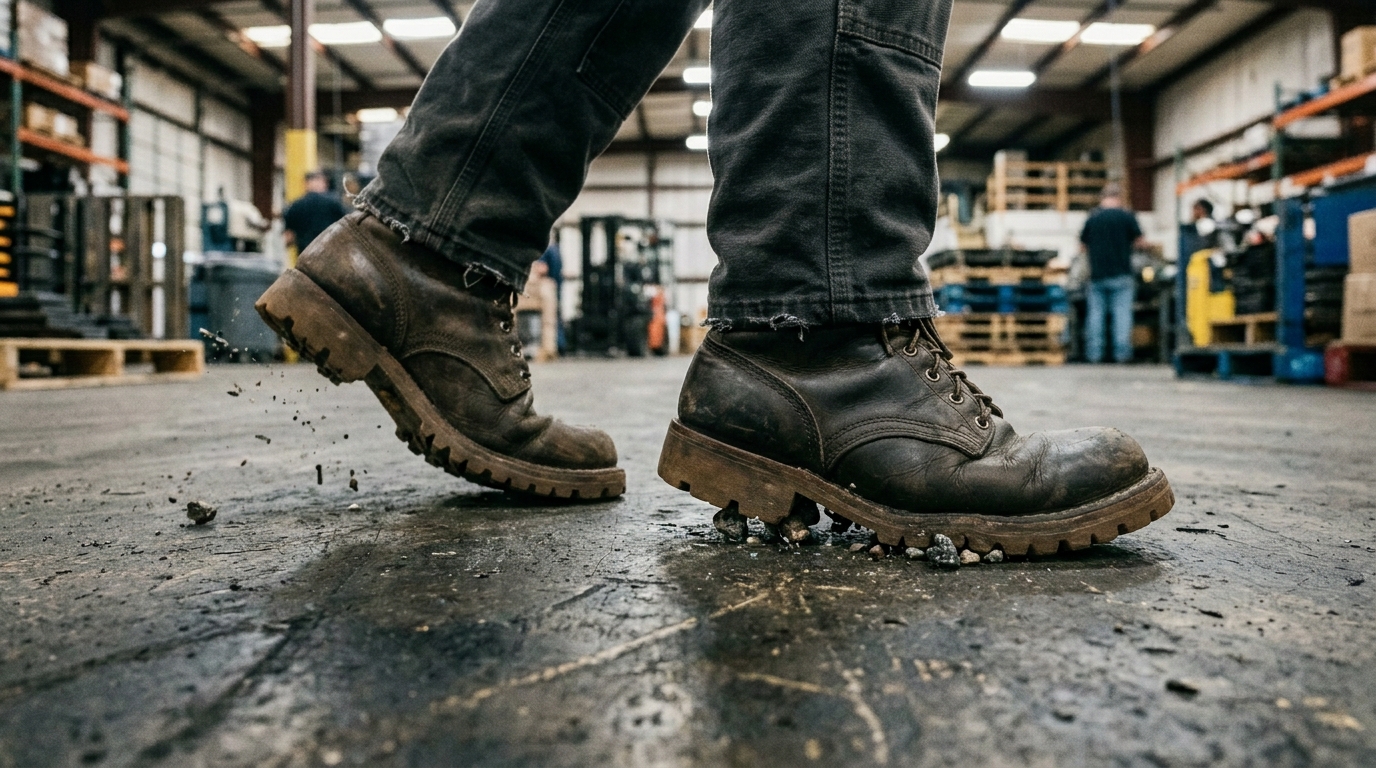
Industrial and occupational environments add complexity that consumer anti-fatigue insoles simply aren’t designed for. Safety footwear often features rigid protective elements — steel toes, metatarsal guards, puncture-resistant midsoles — that create a stiffer, less forgiving platform than athletic or casual footwear. In this context, the insole carries nearly all of the comfort burden.
Workers in manufacturing, construction, logistics, and healthcare log eight to twelve hour shifts on concrete, asphalt, or hard tile surfaces. These environments demand insoles with higher durometer ratings in the heel and forefoot zones, moisture-wicking top covers to manage heat and perspiration, and antimicrobial treatments to prevent odor and bacterial growth. Durability is non-negotiable: an insole that degrades after sixty days of heavy use creates recurring cost and discomfort for workers.
Well-engineered insoles for safety shoes address all of these requirements in a single component — integrating the right foam density, surface treatment, and structural geometry to complement protective footwear rather than fight against it. For brands developing or sourcing safety footwear, this level of specification requires a manufacturer with deep material expertise and flexible production capabilities.
FAQ
FAQ: What makes an insole “anti-fatigue”?
An anti-fatigue insole is specifically engineered to reduce the physical strain caused by prolonged standing or repetitive movement. The key mechanisms include improved pressure distribution across the plantar surface, arch support that reduces soft-tissue strain, and materials that absorb shock while providing enough cushioning resilience to remain effective over a full work shift. The term is functional, not decorative — a genuine anti-fatigue insole shows measurable reduction in peak plantar pressure and reported discomfort compared to a standard flat insole.
FAQ: How long do anti-fatigue insoles last?
Lifespan depends heavily on the material, usage intensity, and user body weight. Standard EVA insoles may show significant compression after three to six months of daily heavy use. Higher-density PU foam insoles typically last six to twelve months under similar conditions. Advanced materials like supercritical-foamed EVA and dual-density composites extend that range further. A simple test: if you press your thumb into the heel zone and it doesn’t rebound within a second or two, the insole has likely bottomed out and needs replacement.
FAQ: Can insoles fix plantar fasciitis?
Insoles are a supportive intervention, not a medical treatment. However, well-designed arch support and heel cushioning can significantly reduce the strain on the plantar fascia, which helps manage symptoms and may slow progression when combined with other interventions like stretching and footwear selection. For workers already experiencing plantar fasciitis, semi-rigid orthotic-style insoles that limit arch collapse tend to provide the most relief. Always recommend that individuals with persistent pain consult a podiatrist or physical therapist.
FAQ: Are thicker insoles always better for standing?
Not necessarily. Thickness contributes to cushioning volume, but material density and geometry matter more than raw thickness. A 6mm high-density PU insole will often outperform a 12mm low-density foam insole for standing comfort because it maintains its cushioning properties throughout the shift rather than compressing flat within hours. Additionally, very thick insoles can change the fit of the shoe, creating heel slippage or toe-box pressure that introduces new discomfort. Fit compatibility must always be considered alongside cushioning performance.
FAQ: What’s the best insole material for concrete?
Concrete is one of the most demanding surfaces for standing comfort because it has zero give — all energy absorption falls entirely to the footwear system. For concrete environments, a layered insole system typically works best: a high-density PU or dual-density EVA base for structural support, combined with a gel heel pad for localized shock absorption, and a moisture-wicking textile top cover. The base layer should resist bottoming out over long shifts, while the gel component addresses the high-impact heel strike zone that takes the most punishment on hard surfaces.
At FX Footwear (Fuxiang Group), we engineer anti-fatigue insoles for the real demands of occupational and performance footwear — not theoretical comfort, but measurable, shift-long support. Whether you’re a footwear brand developing a new safety line, a procurement manager sourcing the best insoles for standing-intensive environments, or an OEM partner looking for scalable manufacturing solutions, our team brings material science expertise and flexible production capabilities to every project. Contact FX Footwear to discuss custom insole development, volume pricing, and technical specifications tailored to your end user’s needs.