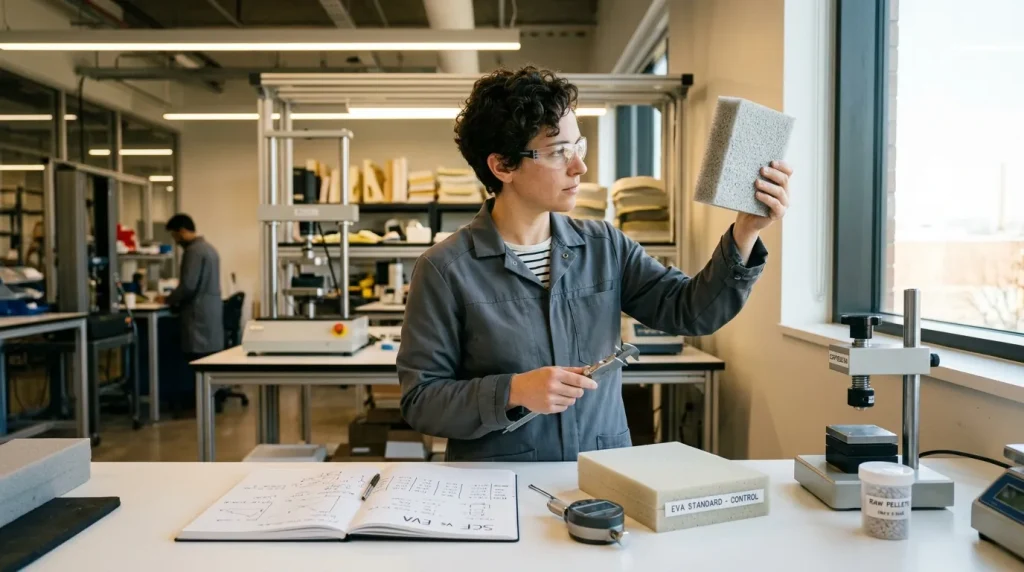
When brands and manufacturers evaluate midsole and insole materials, the choice between supercritical foam and traditional EVA is increasingly consequential. These two technologies differ not just in chemistry but in performance outcomes, environmental footprint, and manufacturing complexity. As footwear innovation accelerates, understanding the real-world trade-offs between these materials helps sourcing teams, product developers, and brand managers make smarter decisions. This guide breaks down each material category across five critical dimensions so you can evaluate what genuinely serves your product goals.
What Is Supercritical Foam?
Supercritical foam is produced by infusing a polymer — most commonly EVA, TPU, or PEBA —into supercritical fluids, typically CO₂, under controlled high-pressure and temperature conditions. When pressure is rapidly released, the CO₂ expands inside the polymer matrix, creating a uniform cellular structure with incredibly fine, consistent bubbles. The result is a lightweight, resilient foam with a closed-cell architecture that is difficult to achieve through conventional foaming methods.
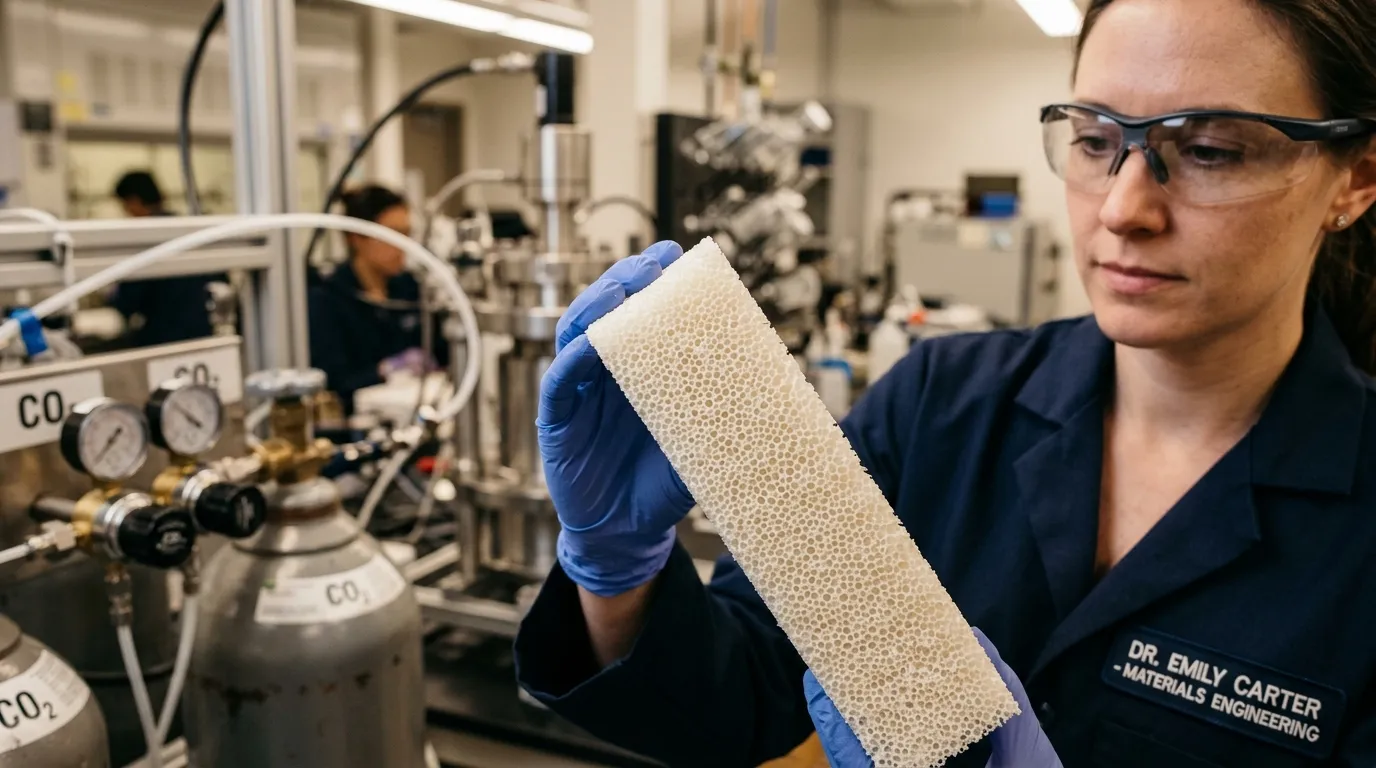
What makes this process notable is that supercritical fluids can replace traditional chemical blowing agents as the primary foaming medium. Traditional EVA foaming manufacturing may use compounds like azodicarbonamide (ADA) or other chemical additives to generate the gas that forms cellular structure. The supercritical process uses CO₂ as a physical foaming agent during expansion, replacing traditional chemical blowing agents. Brands exploring this material often start with the question raised in our article on why footwear brands are switching to supercritical foaming, which outlines the strategic drivers behind the shift.
The supercritical route also opens up material options. Because the foaming is driven by pressure and temperature rather than reactive chemistry, manufacturers can work with a broader palette of base polymers. This flexibility means the final foam can be tuned for specific end-uses — whether that is ultra-responsive cushioning in a performance running insole or plush comfort in a lifestyle sneaker.
Traditional EVA: Strengths & Limits
Traditional EVA (ethylene-vinyl acetate) foam has dominated footwear manufacturing for decades, and for understandable reasons. It is inexpensive to produce, relatively easy to process, and available from a wide network of global suppliers. The material offers dependable cushioning, is moldable into complex shapes, and bonds reliably with other footwear components. For high-volume, cost-sensitive product lines, it remains a practical default.
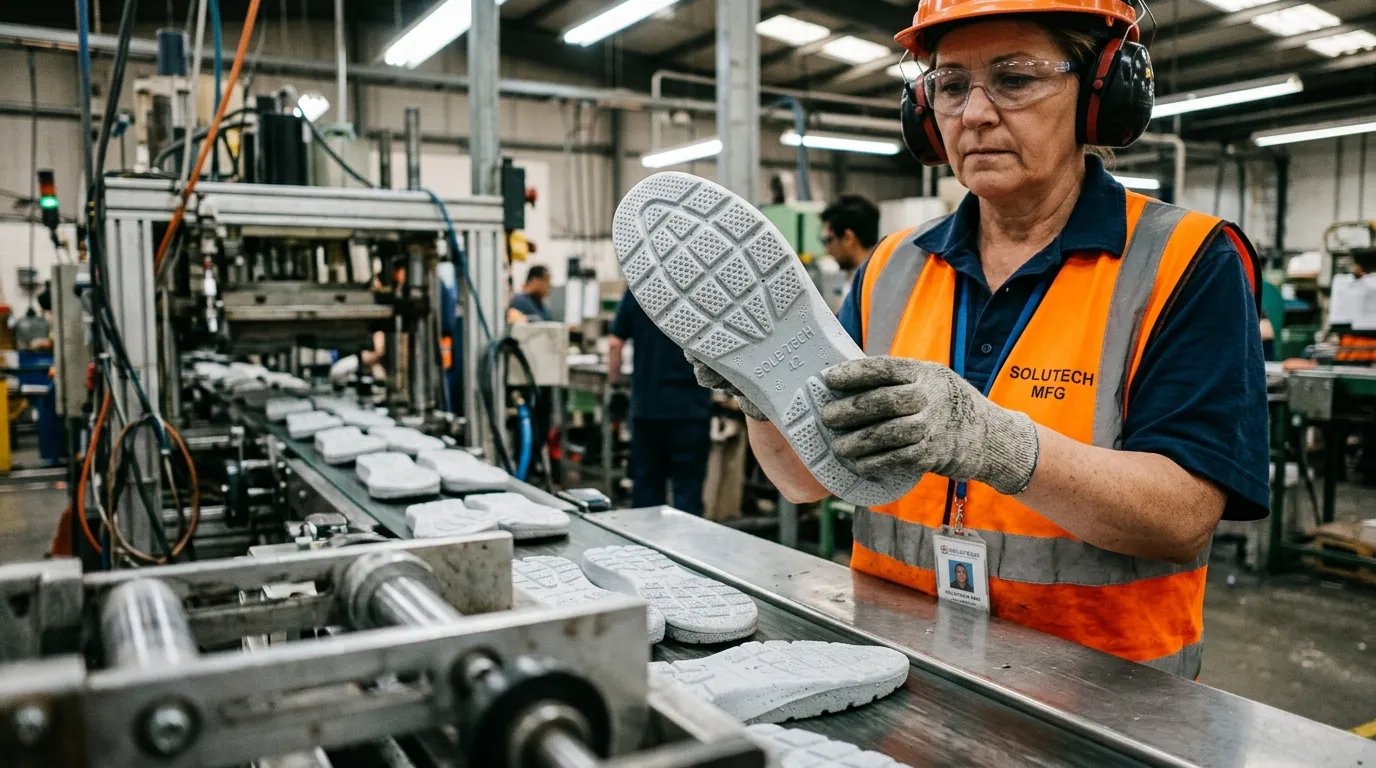
However, traditional EVA comes with real performance ceilings. One of the most cited drawbacks is compression set — the tendency of the foam to lose its original thickness and resilience after repeated compression cycles. A midsole or insole made from conventional EVA will feel noticeably less supportive after several months of regular wear, as the foam structure gradually loses resilience and may experience permanent deformation under repeated loading. This degradation affects both comfort and protective function over the product’s life.
There are also environmental considerations. Traditional EVA foaming uses chemical blowing agents and often involves processing aids that complicate end-of-life recyclability. The material itself is not biodegradable, and the chemical additives embedded during foaming make it harder to recover and reuse the polymer. For brands facing increasing pressure from retailers and consumers on sustainability commitments, these characteristics are becoming harder to overlook as they evaluate material choices.
Performance Comparison: Cushioning & Rebound
This is where the two technologies diverge most dramatically in measurable terms. Supercritical foam consistently delivers higher energy return — meaning more of the compression energy from each footstrike is returned as propulsion rather than absorbed as heat or dissipated as deformation. Depending on polymer type, density, and formulation, supercritical-processed materials can deliver 20–40% higher energy return compared with conventional EVA.
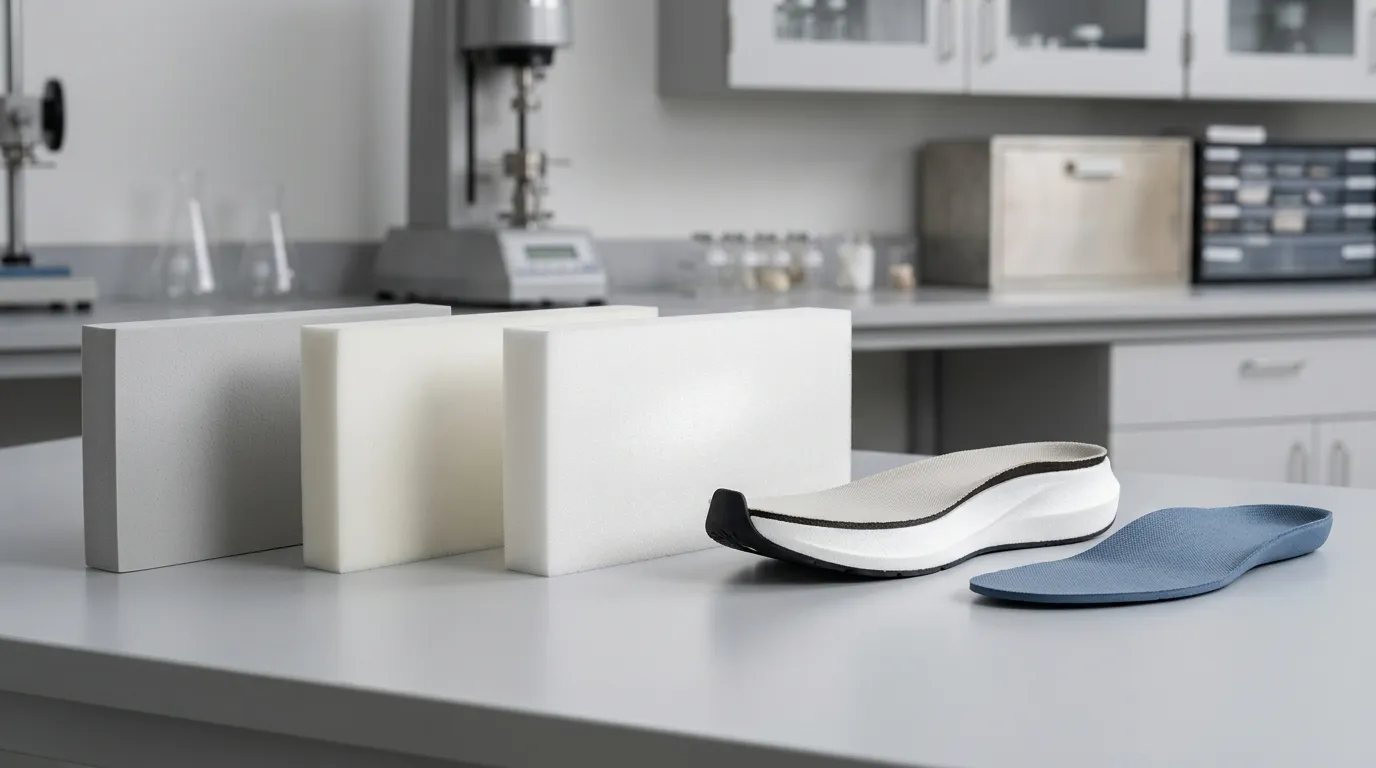
Cushioning behavior also differs qualitatively. Traditional EVA tends toward a softer, more “dead” feel at lower densities — it absorbs well but returns energy sluggishly. Supercritical foam, by contrast, exhibits a snappier, more responsive sensation that high-performance athletes and footwear testers consistently rate positively. This performance difference is particularly relevant in running, training, and any application where repetitive impact loading is central to the product’s function.
Weight is another measurable advantage. Because the supercritical process creates a more uniform and finer cell structure, manufacturers can achieve the same cushioning performance at lower material density. In practical terms, this means insoles and midsoles can be made lighter without sacrificing protection or rebound. For competitive footwear categories where every gram matters — trail running, marathon racing, court sports — this weight advantage translates directly into product differentiation.
Sustainability & Manufacturing Impact
The environmental narrative around supercritical foam is compelling but requires nuance. On the production side, the elimination of chemical blowing agents is a genuine win — CO₂ used in the supercritical process is typically sourced as a byproduct of industrial processes, and it dissipates harmlessly during expansion. There are no residual chemical blowing agent decomposition products embedded in the foam, which can help simplify material composition and support more consistent manufacturing control.
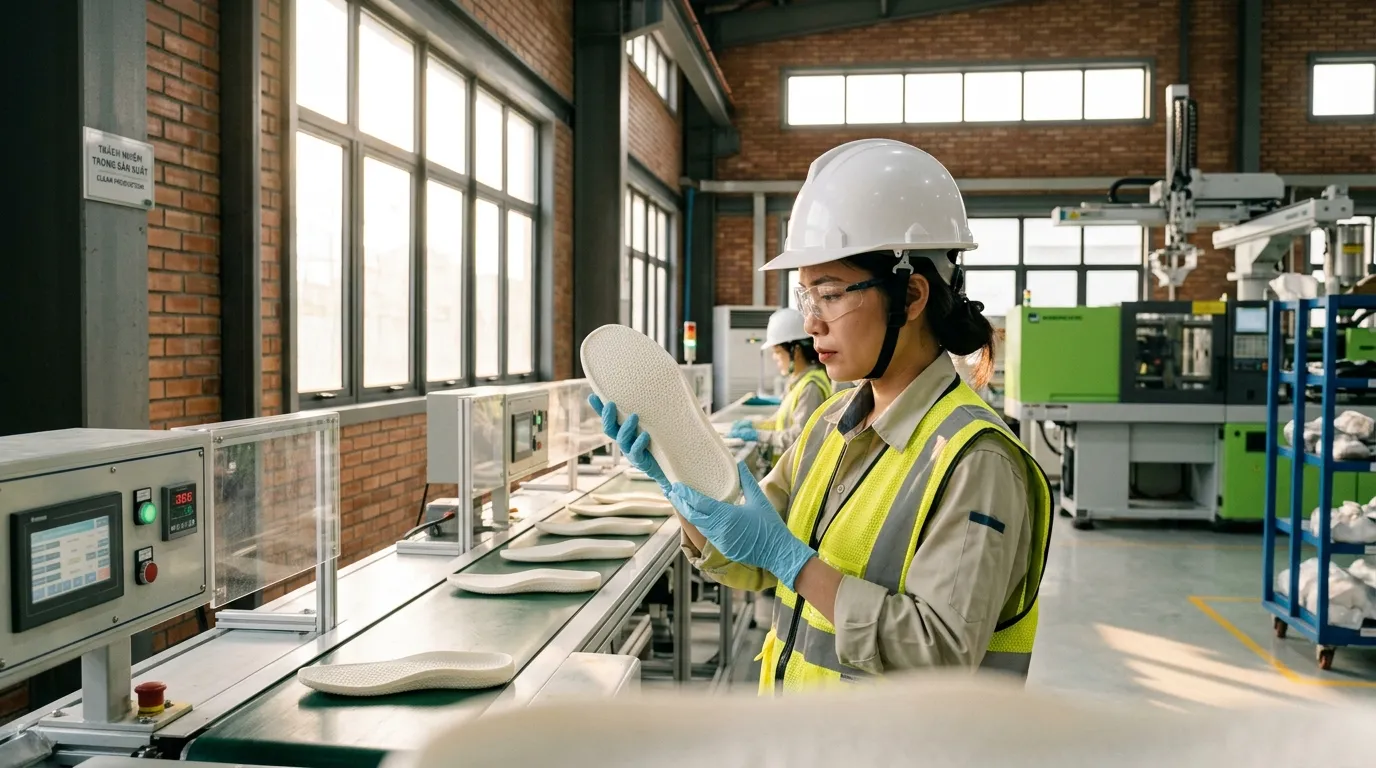
Energy consumption during supercritical processing is higher than in conventional EVA foaming, primarily because maintaining the high-pressure chamber requires significant equipment investment and energy input. However, many manufacturers offset this with process efficiencies: supercritical processing can reduce production steps, eliminate some secondary treatments, and enable more streamlined material designs. When assessed across the full production chain, the net environmental impact often favors supercritical methods, particularly when the base polymer is a recycled or bio-based material.
Recyclability is the area with the most ongoing development. Traditional EVA’s chemical additives create contamination challenges in recycling streams. Supercritical foam — especially when built on a single-polymer base like pure TPU — may offer advantages in recycling and chemical recovery. Partnering with a custom shoe insole manufacturer that has invested in closed-loop material programs can unlock additional sustainability value when supercritical-processed components are specified.
Cost, Scalability & Brand Fit
Cost is the most frequent objection raised when brands evaluate supercritical foam. The equipment required — autoclaves or continuous pressure vessels capable of maintaining high-pressure supercritical processing conditions — represents a significant capital investment compared to conventional EVA compression molding or injection foaming lines. This infrastructure cost is typically reflected in higher per-unit pricing, particularly at lower volumes.
That said, the cost calculus is shifting. As more manufacturers invest in supercritical processing capacity and the technology matures, unit costs are declining. Brands sourcing at scale — particularly those in the athletic, outdoor, or premium lifestyle segments — are increasingly finding that the performance and sustainability premiums are justifiable at their volume tiers. Exploring options like the supercritical CO2 foam insole helps brands understand what is achievable within current manufacturing capabilities.
Brand fit ultimately shapes the decision as much as raw cost. Supercritical foam is a natural match for brands that lead with performance credentials, sustainability storytelling, or premium positioning. Traditional EVA remains the right choice for everyday, budget-conscious, or entry-level lines where cost efficiency governs material selection. Most footwear brands will carry both technologies across their range — the question is where each belongs, and how to communicate the difference clearly to end consumers.
FAQ
FAQ: What polymers work with supercritical foaming?
Supercritical CO₂ foaming has been successfully applied to EVA, TPU, PEBA, and PP-based materials. TPU is one of the most widely adopted base polymers for supercritical footwear applications due to its excellent energy return, abrasion resistance, and compatibility with the supercritical process. PEBA variants produce some of the highest-performance foams on the market and are favored in elite running footwear. Manufacturers continue to experiment with bio-based polymers as sustainability priorities intensify, with promising early results from bio-TPU and recycled-content formulations.
FAQ: Is supercritical foam more durable than EVA?
Generally, yes — supercritical foam outperforms traditional EVA on durability metrics, particularly compression set. Because the fine, uniform cell structure created by the supercritical process is more structurally stable under cyclic loading, the material retains more of its original thickness and cushioning properties over time. This translates to a longer functional life for the insole or midsole component, which matters both for consumer satisfaction and for brands making warranty or lifespan claims.
FAQ: How does cost compare at scale?
At low to mid volumes, supercritical foam generally carries a higher cost premium compared with traditional EVA — often ranging from approximately 30–80%, depending on polymer type, density, thickness, geometry, and production volume. At higher volumes, the gap narrows as tooling amortizes and process efficiencies compound. Brands running full athletic lines in the tens of thousands of pairs per SKU generally find the premium manageable when weighed against performance differentiation and the marketing value of sustainability credentials.
FAQ: Can supercritical foam be recycled?
Yes, and this is one of its advantages over chemically blown EVA. Single-polymer supercritical foams — particularly those based on TPU — can be mechanically ground and reprocessed into new foam or other applications. The absence of chemical blowing agent residues simplifies the material recovery process. That said, multi-material constructions (for example, a supercritical TPU foam bonded to a fabric top cover) still require separation before effective recycling, so construction design matters for end-of-life outcomes.
FAQ: Which brands currently use supercritical foam?
Several major athletic footwear brands have commercialized supercritical foam technologies under proprietary names — including platforms from Adidas, Nike, ASICS, and New Balance, among others. The technology has moved from experimental to mainstream in the premium performance segment over the past five years. Smaller independent brands and private-label manufacturers are increasingly accessing the same processes through third-party component suppliers, making supercritical foam available to brands that do not operate their own foam production facilities.
Whether you are refining a performance line or rethinking your standard construction, comparing supercritical foam against traditional EVA is a worthwhile exercise at every product development cycle. The material landscape is evolving quickly, and the performance, sustainability, and commercial cases for supercritical processing are strengthening each year. FX Footwear (Fuxiang Group) works with global footwear brands and manufacturing partners to specify and develop foam components — from conventional EVA constructions to advanced supercritical-processed insoles — tailored to your volume, performance, and sustainability targets. Reach out to our team to discuss material options for your next collection.