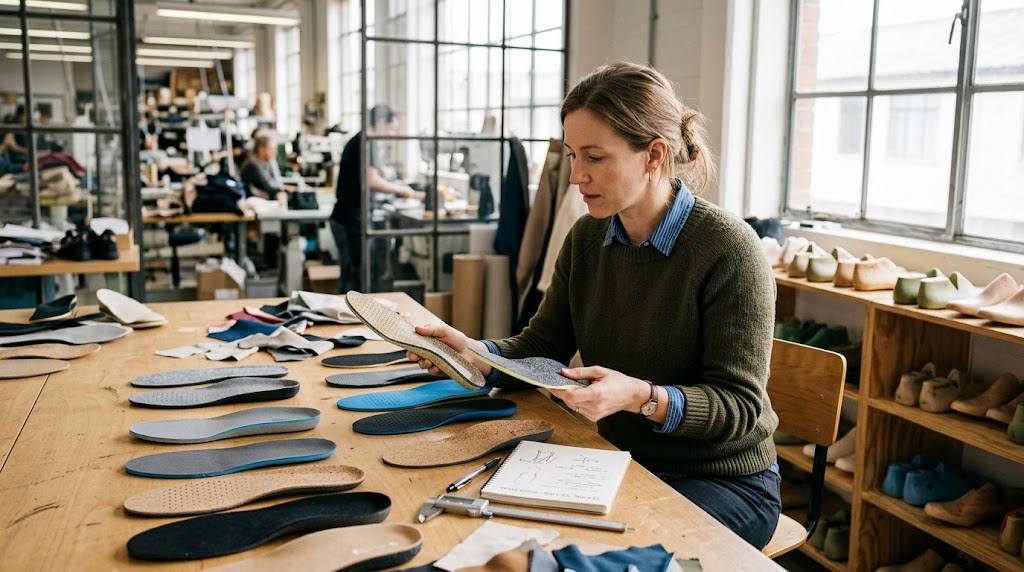
Sourcing insoles at scale is one of the most underestimated challenges in footwear product development. The right global insole manufacturer can make or break your timeline, your unit economics, and ultimately your product’s performance in the market. Whether you’re a heritage brand expanding into new categories or an emerging label launching your first collection, the manufacturer you choose must deliver consistent quality, competitive pricing, reliable lead times, and the compliance documentation your retail partners demand.
This guide profiles ten of the best global insole manufacturers trusted by international footwear brands today. We evaluated each company on manufacturing capacity, material expertise, geographic footprint, certifications, and ability to serve large-scale OEM programs. If you’re a US or international brand buyer looking for a scalable, trustworthy production partner, this list is your starting point.
How We Evaluated These Insole Manufacturers
Choosing a global insole manufacturer isn’t as simple as comparing price sheets. We assessed each company across several dimensions that matter most to professional footwear buyers managing complex, multi-season product lines.
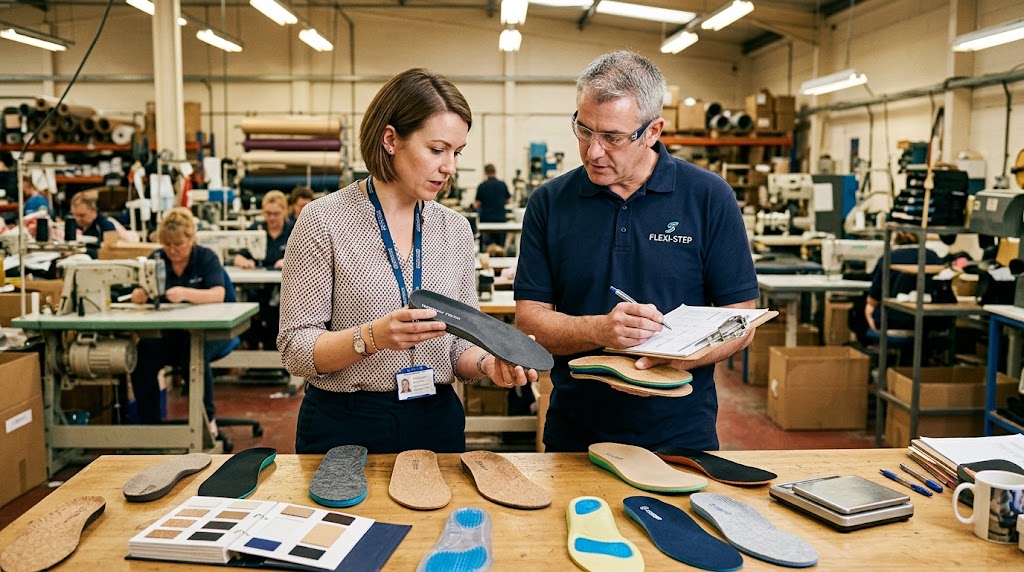
Manufacturing Footprint & Capacity: Brands increasingly need suppliers with facilities in multiple countries — China, Vietnam, Indonesia — to mitigate tariff exposure, reduce lead times, and coordinate with Tier 1 assembly factories. We prioritized manufacturers with proven multi-country operations over single-site producers.
Material Breadth & Technical Capability: The best manufacturers offer more than one foam type. We looked for companies capable of producing EVA, PU, supercritical foam, and functional/structural insoles (TPU plates, multi-material constructions) under one roof. In-house labs for rapid material testing earned extra points.
Certifications & Compliance: For US-market brands, CPSC compliance and California Prop 65 readiness are non-negotiable. We also valued GRS certification (for recycled-material supply chains), ISO 13485 (for therapeutic/orthotic applications), Higg Index participation, and the ability to provide SATRA, SGS, or ASTM test reports on demand. Social audits like BSCI or SMETA were considered standard expectations.
Lead Times & Responsiveness: We factored in realistic sampling timelines, bulk production windows, and quoting speed. A manufacturer that can deliver initial quotations within 48 hours for standard constructions and samples within 3–10 business days (depending on tooling requirements) demonstrates the operational maturity brands need.
1. FX Footwear (Fuxiang Group) — Best Overall
FX Footwear, the B2B brand of Fuxiang Group, stands out as the most well-rounded global insole manufacturer on this list — and the one we recommend first for brands seeking a true one-stop footwear component partner. Unlike insole-only suppliers, FX manufactures midsoles, uppers, and other key footwear components alongside its insole production, which means brands can consolidate multiple supplier relationships into a single, streamlined partnership.
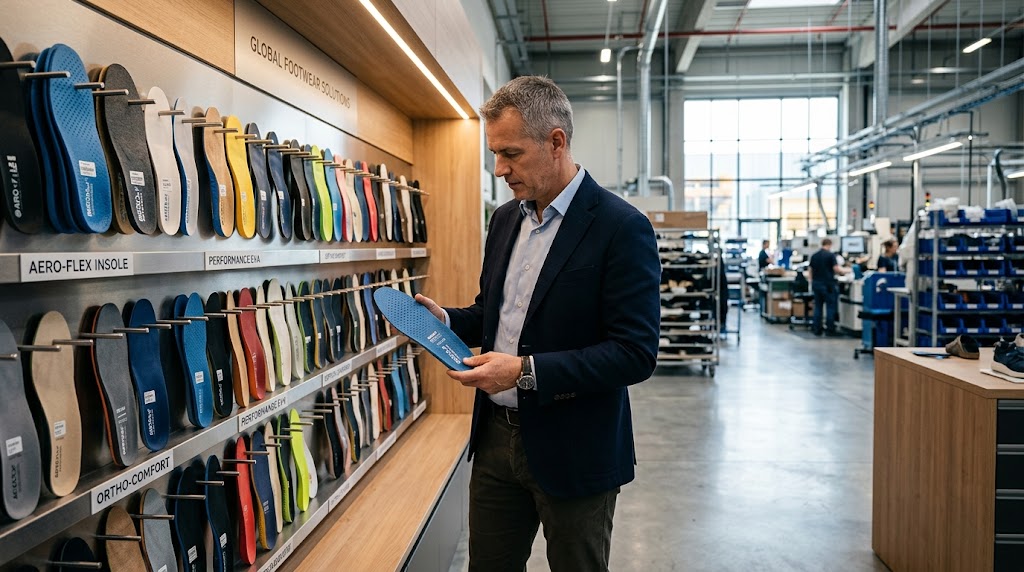
Manufacturing Footprint: FX operates facilities across China, Northern Vietnam, Southern Vietnam, and Indonesia — strategically positioned alongside the major Tier 1 footwear manufacturing hubs where your shoes are actually assembled. This regional manufacturing model delivers faster lead times, localized coordination with assembly factories, and reduced duty exposure. For US brands navigating tariff volatility, having a supplier with genuine multi-country production capability (not just a sales office) is a critical advantage.
Material & Product Range: FX covers the full spectrum of insole technologies. Its EVA insoles span a 20–45 Asker C hardness range (±3 tolerance) and are available in compression-molded, injection-molded, and die-cut formats. The company’s PU insoles — including OrthoLite alternatives — deliver strong compression resistance and long-term shape retention. For performance-focused brands, FX produces supercritical CO₂ foam insoles under its PulseSport line, offering consistent energy feedback and impact absorption across repeated use. The functional category includes TPU plates, carbon fiber plates, and complex multi-material constructions for structural and orthotic applications.
Sustainability Credentials: FX holds GRS (Global Recycled Standard) certification and participates in the Higg Index for supply chain sustainability measurement. Sustainable material options include sugarcane-based EVA, algae-based EVA (which reduces reliance on petroleum-based materials), recycled EVA compounds, and Susterra®-based bio-PU formulations — all sourceable under GRS-compliant supply chains with traceability documentation.
Certifications & Testing: Beyond GRS and Higg Index, FX holds ISO 13485:2016 for medical-device quality management (essential for therapeutic and orthotic footwear applications) and works with Intertek and BETA for third-party verification and testing. The company maintains an in-house lab for rapid material testing and product validation, reducing reliance on external labs and accelerating development cycles. Confirmed brand partners include HOKA, Clarks, KEEN, UGG, On, Arjat, and Teva.
Lead Times: Standard EVA insoles ship within 20–35 days after payment confirmation. Supercritical foam insoles require 30–45 days. For custom programs, expect approximately 45–70 days from spec confirmation to goods ready, with die-cut samples available in roughly 3 days and tooled samples in around 10 business days. Initial quotations arrive within 48 hours for standard constructions.
2. OrthoLite — Best for Open-Cell Foam Licensing
OrthoLite has built one of the most recognized names in the insole space, primarily through its open-cell PU foam technology that emphasizes breathability, moisture management, and long-term cushioning. Rather than operating as a traditional OEM manufacturer, OrthoLite functions largely as a branded material and technology licensor — its foam appears inside footwear from hundreds of brands globally.
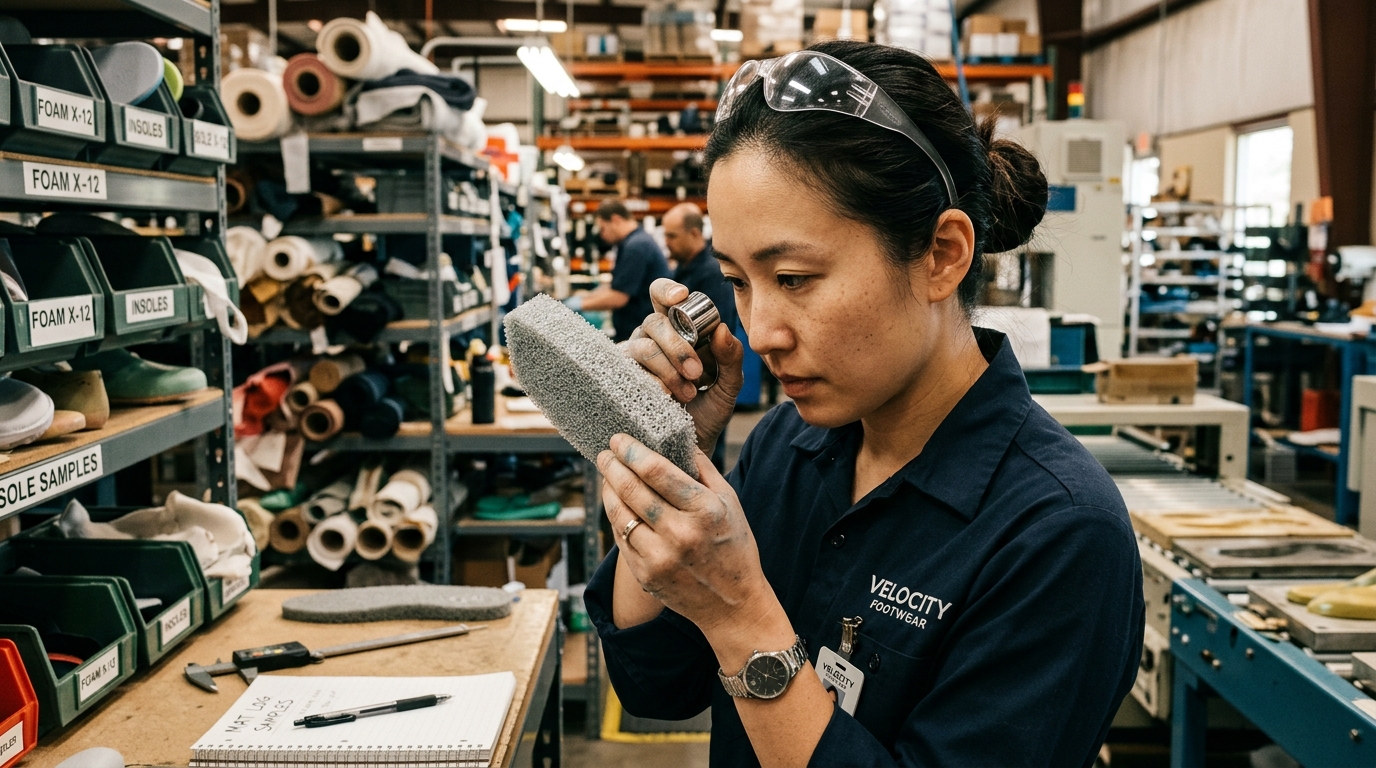
For brands seeking the OrthoLite name specifically, the company offers a licensing and co-branding model that provides consumer-facing brand equity. Their Hybrid and O-Therm lines have expanded the portfolio beyond the original open-cell PU into blended constructions that pair PU with EVA for improved energy characteristics.
However, OrthoLite’s model means brands are often locked into specific material platforms and pricing structures tied to the licensing arrangement. Brands looking for comparable open-cell cushioning performance without the licensing premium can work with manufacturers like FX Footwear, which offers OrthoLite-alternative open-cell formulations that deliver similar breathability and comfort at more competitive price points. As a shoe insole manufacturer with full production control, FX can customize density and performance specs in ways that a licensing model sometimes cannot accommodate.
3. Poron (Rogers Corporation) — Best for Impact Protection Materials
Poron, a division of Rogers Corporation, is a material technology company rather than a finished-insole manufacturer. Their polyurethane-based cushioning materials — particularly Poron XRD and Poron performance foams — are widely specified by footwear engineers for impact protection in athletic, military, and occupational safety applications.
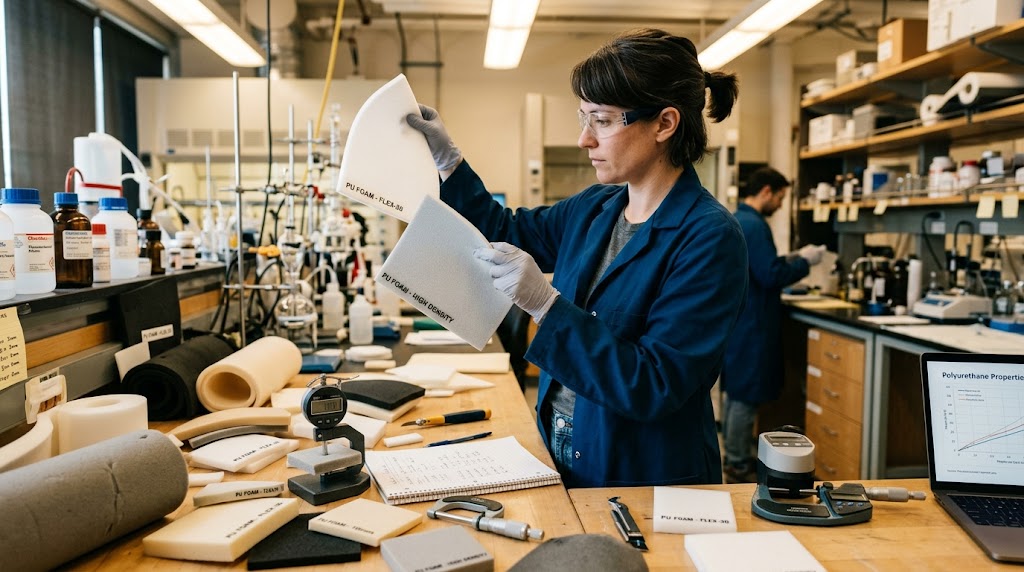
Poron materials are known for their strain-rate sensitivity — they remain soft during normal wear but firm up under high-impact forces. This makes them a preferred choice for heel strike zones, metatarsal pads, and targeted cushioning elements within multi-material insole constructions. The materials are available in sheet stock for die-cutting or can be integrated into laminated insole stacks.
Because Poron is a material supplier, brands still need a manufacturing partner to convert Poron materials into finished insoles. Many global insole manufacturers, including FX Footwear, can integrate Poron or comparable impact-absorbing PU materials into custom insole constructions. Brands should evaluate whether the Poron specification adds enough performance differentiation to justify the material cost premium over high-performance PU alternatives.
4. Footbalance — Best for Custom-Fit Retail Solutions
Footbalance, headquartered in Finland, has carved out a unique niche with its heat-moldable insole technology. Their system allows retail staff to custom-fit insoles to individual consumers in-store using a heating and molding process, bridging the gap between mass-produced insoles and fully custom orthotics.
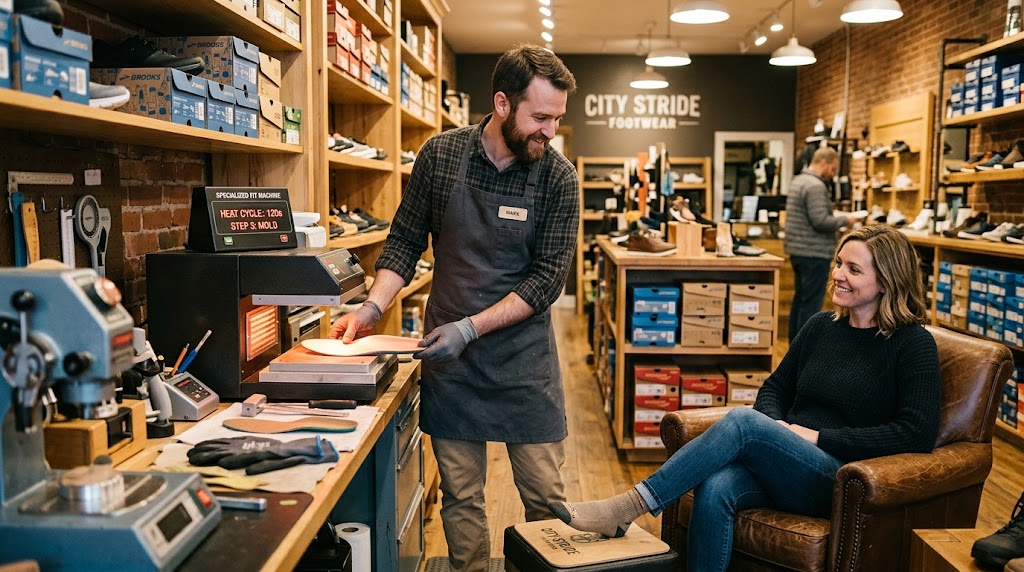
The company’s strength lies in the retail and sports specialty channel, where the in-store fitting experience drives consumer engagement and premium pricing. Footbalance insoles use EVA and thermoplastic materials designed to soften at controlled temperatures and then set to the wearer’s foot shape upon cooling.
For B2B buyers, Footbalance operates more as a branded product and retail system than a white-label OEM partner. Brands looking to integrate similar heat-moldable technology into their own product lines would typically need to source thermoformable EVA or TPU shell components from a component manufacturer and develop proprietary fitting systems. This is a specialized application, and understanding how footbed manufacturers approach custom-fit solutions can help brands evaluate whether to license existing technology or build internally.
5. Superfeet — Best for Structured Orthotic-Style Insoles
Superfeet, based in Washington State, is one of the most recognized aftermarket insole brands in the US, known for its structured, shape-based insole philosophy. Their products feature deep heel cups and firm arch profiles designed to stabilize the foot rather than simply cushion it. The company has expanded from its consumer aftermarket roots into OEM partnerships with footwear brands.
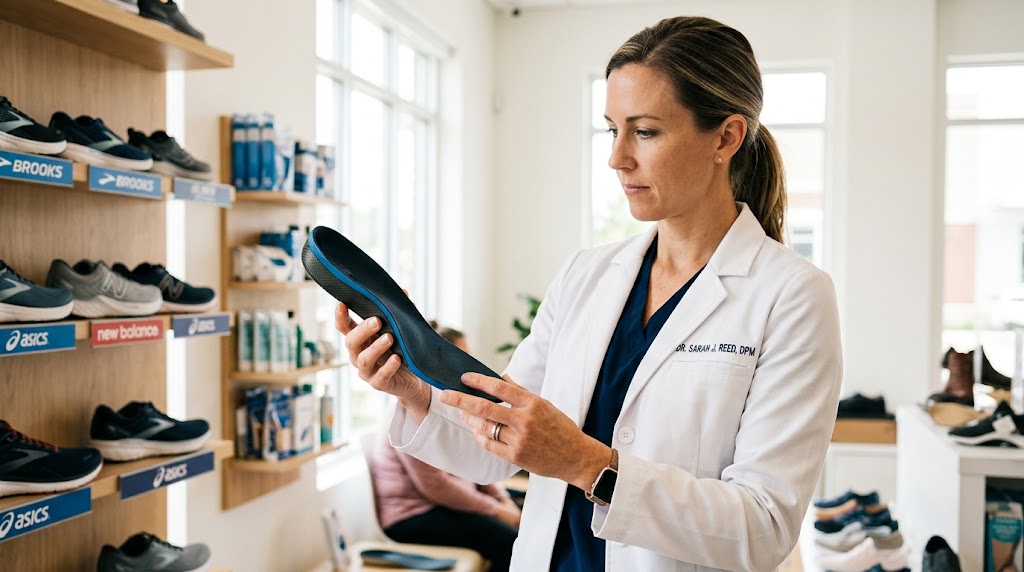
Superfeet’s manufacturing approach emphasizes biomechanical engineering, and their premium product lines use multi-density foam layups with rigid or semi-rigid stabilizer components. For brands seeking a co-branded or white-label structured insole, Superfeet’s OEM division can be a viable partner, though the premium positioning typically means higher per-unit costs.
Brands seeking similar structural insole capabilities at scale — including TPU plates, multi-density constructions, and functional components — may find more cost-effective options through Asian manufacturers with in-house tooling and production. The functional insole category, which includes orthotic insoles for running and other structured applications, has grown significantly among global OEM producers who can deliver comparable biomechanical performance with faster tooling turnaround and more flexible MOQs.
6. Scholl’s Wellness Company — Best for Mass-Market Consumer Distribution
Dr. Scholl’s (now operated under the Scholl’s Wellness Company umbrella) remains one of the most widely distributed insole brands globally, with deep penetration in drugstore, mass-market, and online retail channels. Their product range spans comfort insoles, pain relief solutions, and basic orthotic supports, largely targeting the end consumer rather than the B2B OEM market.
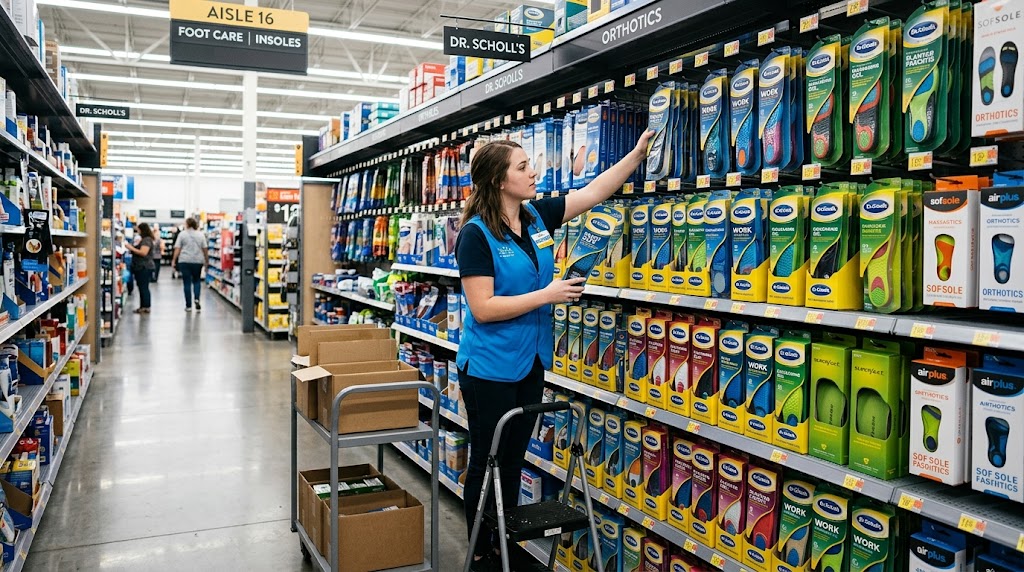
For brand buyers, the Scholl’s operation is relevant primarily as a competitive benchmark. Their success demonstrates the massive consumer demand for insole-based comfort solutions, and their product segmentation — by activity type, pain point, and footwear style — offers a useful framework for brands developing their own insole programs. The company’s manufacturing is largely outsourced to contract manufacturers across Asia.
While Scholl’s doesn’t typically operate as an OEM partner for other footwear brands, their supply chain model illustrates how effectively managed Asian manufacturing partnerships can support enormous retail volume. Brands looking to compete in similar comfort-insole categories need a manufacturer capable of handling high-volume production with consistent quality control — which is where vertically integrated producers with end-to-end production control from material foaming to final assembly become essential.
7. Amfit — Best for Digital Custom Orthotic Manufacturing
Amfit, based in Vancouver, Washington, represents the high-tech end of the insole manufacturing spectrum. The company specializes in digitally manufactured custom orthotics and insoles, using proprietary scanning, design, and CNC carving technology to produce individualized products at semi-mass-production speeds.
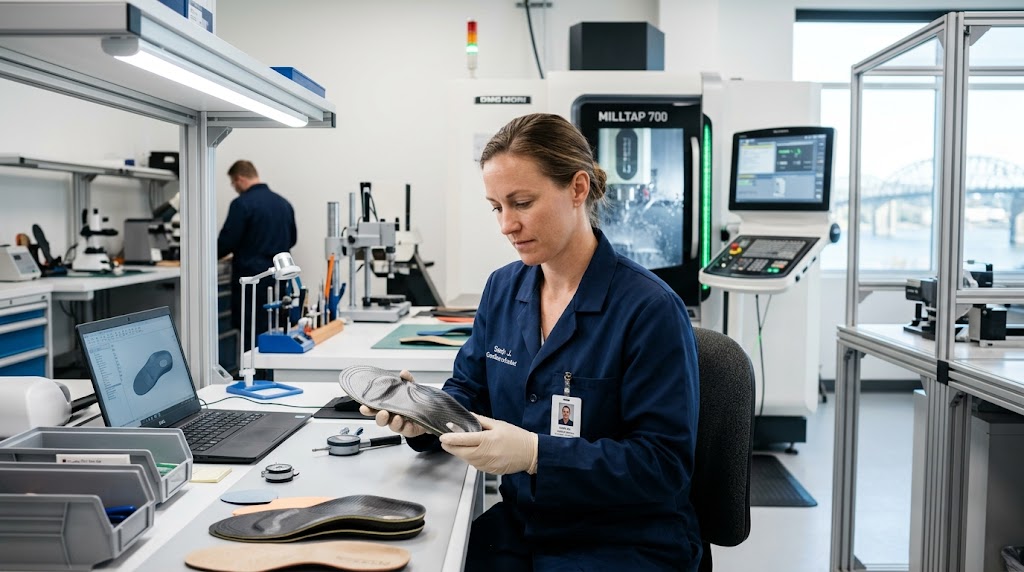
Their system captures 3D foot shape data digitally and then carves custom insoles from foam billets using computer-controlled manufacturing. This approach is primarily used in the medical/orthotic channel — podiatrists, pedorthists, and specialized retail environments — where each insole is unique to the wearer.
For footwear brands, Amfit’s relevance lies more in the technology trend it represents than as a traditional supply partner. The company’s digital workflow aligns with the broader industry movement toward mass customization, and brands exploring 3D-printed or digitally manufactured insole programs can learn from Amfit’s decades of experience in this space. According to Grand View Research, the global orthotic insole market continues to expand, driven by growing awareness of foot health and advances in digital manufacturing technology.
8. Spenco — Best for Sports Medicine Heritage
Spenco Medical Corporation, based in Waco, Texas, has operated at the intersection of sports medicine and insole technology since the 1960s. Originally founded to address friction and impact-related foot injuries in athletes, Spenco has built a portfolio of insoles and footcare products grounded in clinical research and podiatric endorsements.
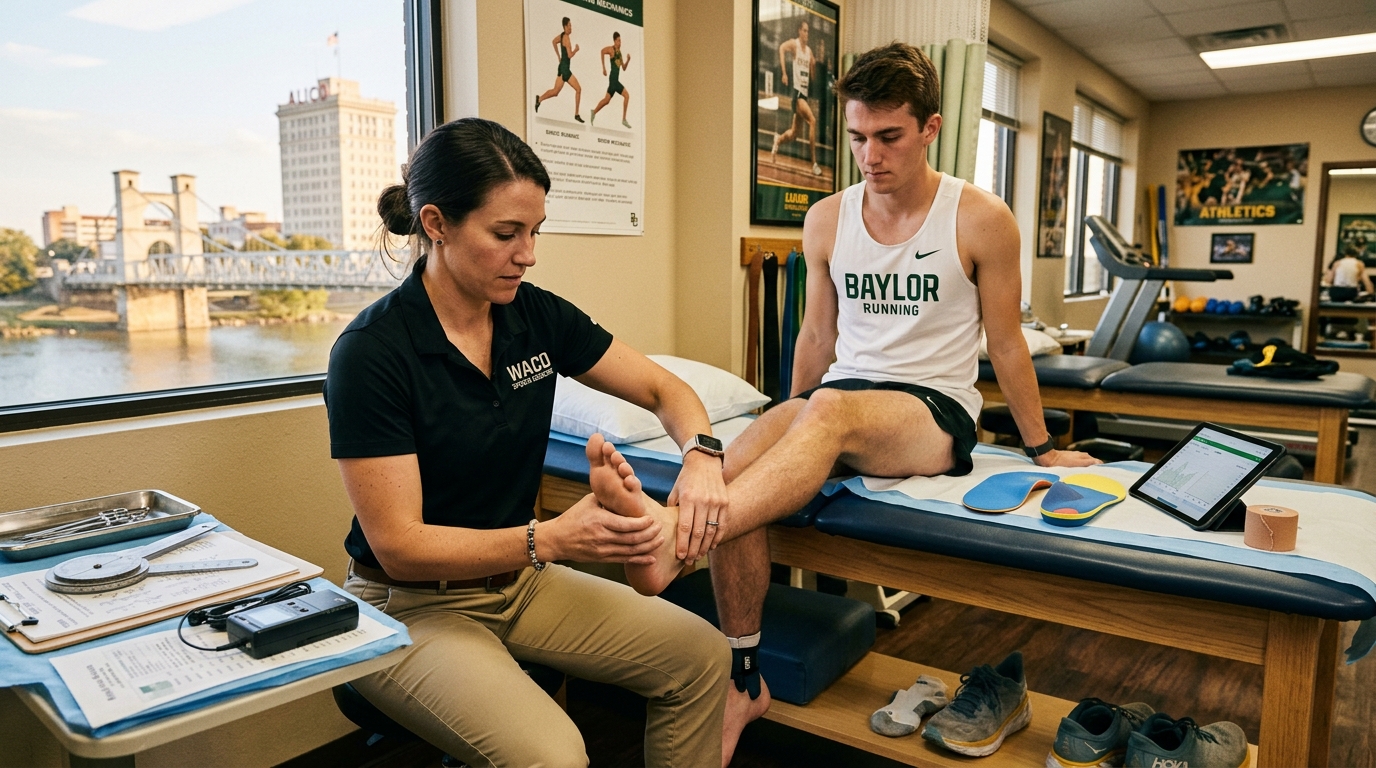
The company’s Total Support and Polysorb product lines are well-known in the running specialty and sporting goods channels. Spenco insoles typically feature multi-layer constructions combining cushioning foams with antimicrobial top covers and structured arch supports.
For B2B buyers, Spenco is most relevant as a competitor benchmark or potential co-branding partner rather than an OEM insole supplier. Their brand carries strong credibility in the medical and athletic communities, but their manufacturing model is more product-company than contract-manufacturer. Brands seeking to develop their own sports-medicine-grade insoles would benefit from working with an EVA insole manufacturer that can replicate multi-density constructions with antimicrobial top cloth options at production scale.
9. Aetrex — Best for Technology-Integrated Insoles
Aetrex Worldwide, headquartered in New Jersey, combines insole manufacturing with foot-scanning technology and data analytics. Their Albert 2 foot-scanning system is deployed in thousands of retail locations and generates personalized insole recommendations based on 3D foot mapping and pressure analysis.
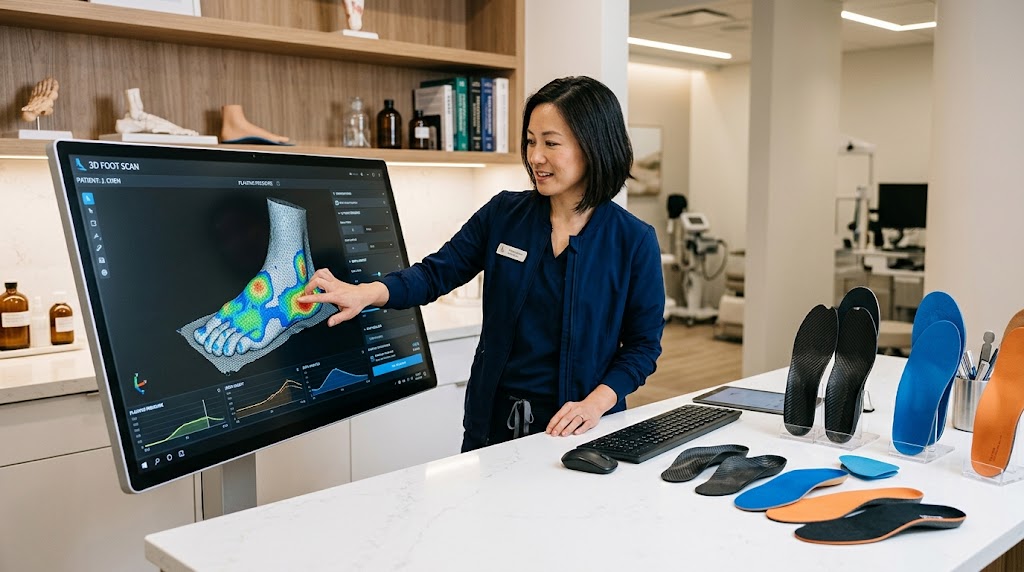
Aetrex’s insole products range from premium orthotic supports to performance-focused models with Lynco and L-series branding. Many of their products incorporate memory foam, cork composites, and metatarsal pads alongside traditional EVA and PU foams.
The company’s unique value proposition is the technology ecosystem — the scanner drives retail sell-through by creating a personalized recommendation experience that builds consumer confidence. For brands considering a similar technology-forward retail strategy, Aetrex offers a model worth studying. However, as a manufacturing partner for private-label or OEM insoles, Aetrex’s focus is primarily on its own branded products and retail technology platform rather than contract production for other footwear brands.
10. Soletech — Best for Pedorthic & Custom Orthotics
Soletech, a California-based manufacturer, specializes in materials and components for the pedorthic and custom orthotic industry. They produce EVA foam sheets, crepe rubber, Neoprene, cork composites, and other raw materials used by orthotists and pedorthists to fabricate custom foot orthoses.
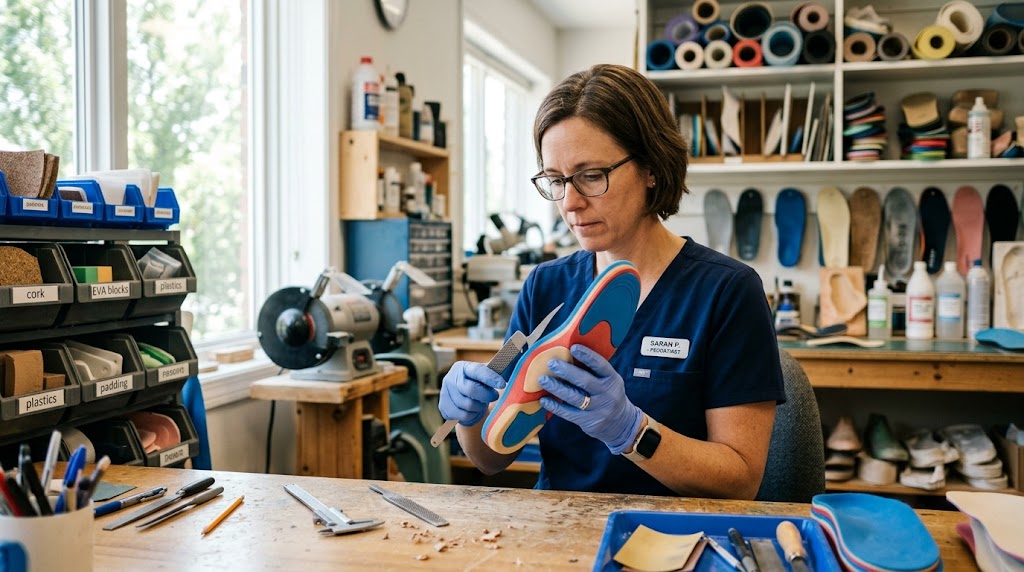
Their product catalog serves as something of an industry reference for the range of materials available in the orthotic space. Soletech’s material grades span from ultra-soft accommodative foams to rigid posting materials, covering the full spectrum of custom orthotic fabrication needs. According to the American Podiatric Medical Association, proper foot support through quality orthotic devices remains one of the most effective interventions for common foot pathologies.
For footwear brand buyers, Soletech is relevant primarily if your product line includes therapeutic, diabetic, or medical-grade footwear. Their materials can be specified within custom insole constructions produced by larger OEM manufacturers. Brands developing products that require ISO 13485 compliance for medical-device quality management should look for manufacturing partners that hold this certification — a relatively rare credential in the insole OEM space that FX Footwear’s Fuxiang Group maintains specifically for therapeutic and orthotic footwear applications.
Key Factors When Choosing a Manufacturer
Selecting the right global insole manufacturer requires balancing several interrelated factors. Here’s a framework for making that decision with confidence.

Geographic Diversification vs. Consolidation: The most resilient supply chains use manufacturers with facilities in multiple countries. Having production options in China, Vietnam, and Indonesia allows brands to shift orders based on tariff changes, capacity constraints, or proximity to Tier 1 assembly factories. A manufacturer with genuine multi-country operations — not just sourcing agents — provides the flexibility that single-site producers cannot match.
Vertical Integration Matters: Manufacturers that control the entire production chain — from material foaming through cutting, molding, laminating, and finishing — deliver more consistent quality and faster troubleshooting. When material production, insole fabrication, and quality testing happen under the same management system, brands experience fewer batch-to-batch variations and more reliable delivery schedules. An OEM insole manufacturer with end-to-end control can also iterate on specs more quickly during development.
Compliance Readiness for Your Market: For US-destined products, your manufacturer should demonstrate clear CPSC compliance processes and California Prop 65 awareness. GRS certification matters if you’re making sustainability claims. ISO 13485 is essential for any orthotic or therapeutic application. Social audit readiness (BSCI/SMETA) is increasingly required by major US retailers. Ask prospective manufacturers which certifications they hold — and verify them directly rather than relying on website claims.
Total Cost of Ownership: The cheapest per-unit price rarely delivers the lowest total cost. Factor in sampling costs, tooling amortization, defect rates, lead time reliability, freight mode requirements (air vs. ocean), and the management overhead of coordinating with the supplier. A manufacturer offering standard payment terms of 30% deposit with 70% before shipment, combined with transparent cost breakdowns, signals financial stability and professional operations.
FAQ
How long does insole sampling take?
Die-cut or knife-cut samples without new tooling typically take about 3 days, while samples requiring new molds or tooling take approximately 10 business days.
What certifications should an insole manufacturer have?
For US-market brands, prioritize GRS for sustainability claims, ISO 13485 for medical/orthotic applications, and the ability to provide ASTM/SATRA test reports, CPSC compliance documentation, and California Prop 65 verification.
What’s the typical lead time for bulk insole orders?
Standard EVA insoles ship within 20–35 days after payment confirmation, while custom programs with tooling and approval phases typically require 45–70 days from spec to goods ready.
Why does multi-country manufacturing matter for insoles?
Facilities in multiple countries (China, Vietnam, Indonesia) allow brands to reduce tariff exposure, shorten lead times by producing near Tier 1 assembly factories, and maintain supply continuity during regional disruptions.
What insole materials are best for athletic footwear?
Supercritical CO₂ foam delivers the highest energy return for performance applications, EVA provides versatile cushioning across athletic and casual use, and PU excels in compression resistance and long-term shape retention.
If you’re sourcing a global insole manufacturer that combines multi-country production, full material range, in-house testing, and proven compliance credentials, FX Footwear (Fuxiang Group) is built to be that partner. With facilities across China, Vietnam, and Indonesia — and a client roster that includes HOKA, Clarks, KEEN, UGG, On, and Teva — FX offers the scale, technical depth, and responsiveness that serious footwear brands require. Reach out to the FX Footwear team to discuss your next insole program and receive a detailed quotation within 48 hours.