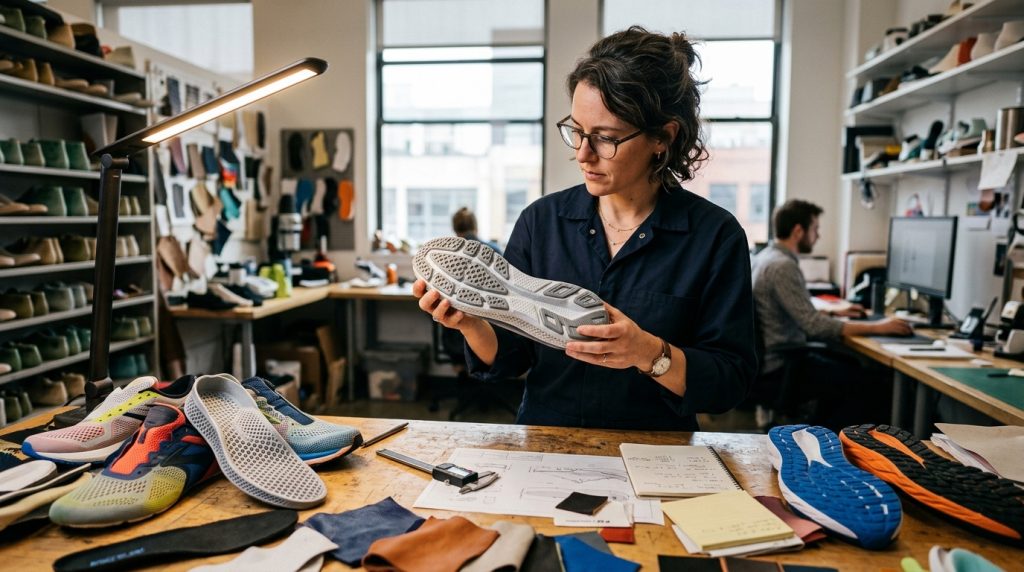
Every performance shoe that reaches the starting line, the trail, or the gym floor is really an assembly of precisely engineered components — each one designed to absorb impact, return energy, stabilize the foot, and survive thousands of cycles of wear. For brands developing athletic footwear, the quality of those components determines whether a product earns five-star reviews or warranty claims. Finding the right athletic footwear component supplier isn’t just a procurement task; it’s a strategic decision that shapes product performance, speed to market, and long-term brand reputation.
This guide breaks down what athletic footwear components actually are, which materials matter most for performance applications, and how to evaluate a component supplier that can keep pace with your product roadmap. Whether you’re launching a new running shoe, scaling a CrossFit line, or engineering a next-generation trail runner, understanding the supply side of athletic footwear will give your brand a measurable edge.
Core Athletic Footwear Components
Athletic shoes are far more complex than they appear on the shelf. Each component zone — from the foot bed to the outsole — serves a distinct biomechanical function, and the interaction between those zones determines the overall ride, fit, and durability of the shoe.
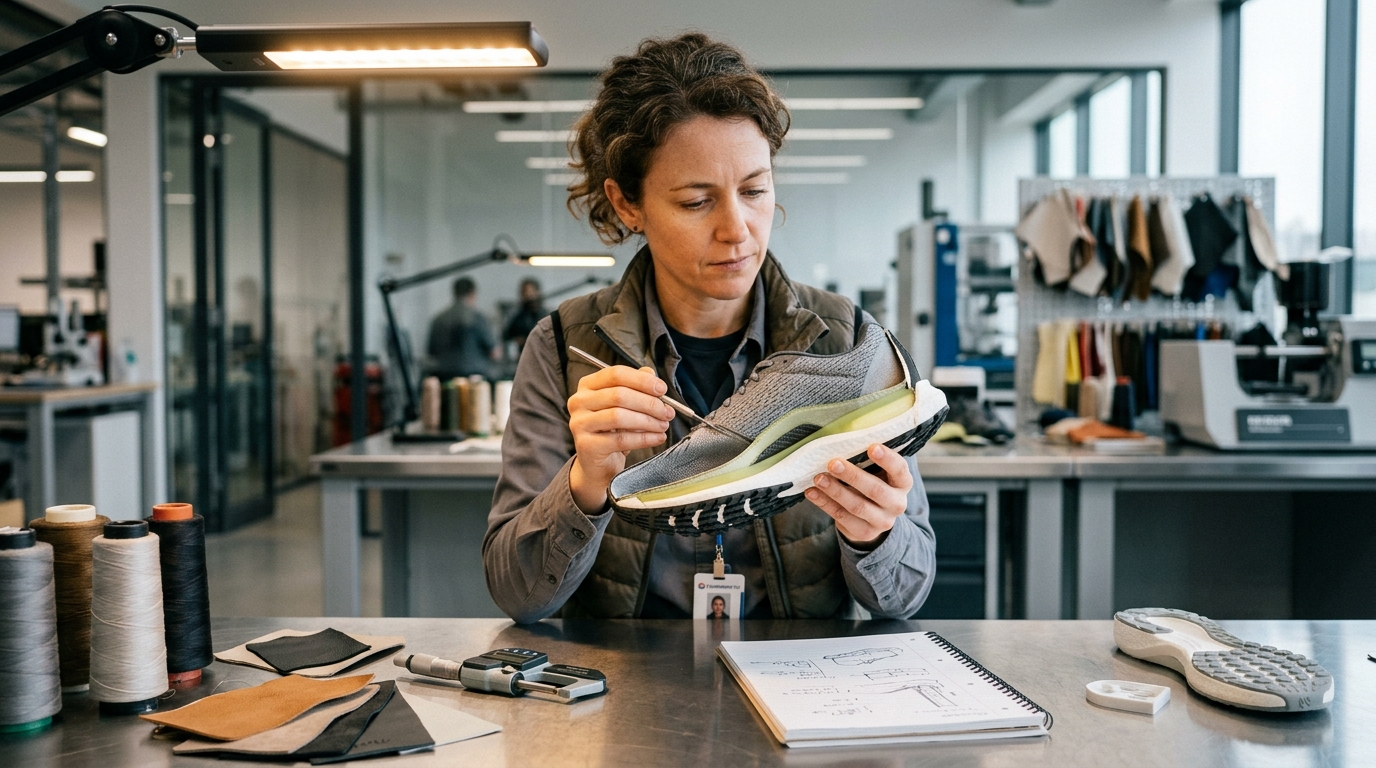
Insoles sit directly beneath the foot and serve as the primary comfort and fit interface. In athletic applications, insoles do more than cushion — they manage moisture, provide arch support, and influence how the foot interacts with the midsole beneath. A well-engineered insole can improve perceived comfort without adding weight, which is why brands working with a dedicated shoe insole manufacturer gain a significant advantage in product differentiation.
Midsoles are arguably the most performance-critical component in any athletic shoe. This is where impact absorption and energy return happen. Midsole foams — whether EVA, PU, or supercritical CO₂ foam — define the shoe’s cushioning character. A firm, responsive midsole suits tempo runs and racing flats; a softer, more cushioned midsole suits long-distance training and recovery shoes. The density, rebound characteristics, and durability of midsole foam are what separate a $60 shoe from a $180 one.
Uppers provide the structural envelope that holds the foot in place. In athletic footwear, uppers need to balance breathability, stretch, lockdown, and weight. Engineered knit, woven mesh, and laminated synthetics each offer different performance profiles. The upper also carries the brand’s visual identity — color, texture, and silhouette are all upper-driven.
Heel counters and structural reinforcements — including TPU plates, carbon fiber plates, and shanks — control torsional rigidity and rearfoot stability. These functional components are especially critical in trail running, basketball, and cross-training shoes where lateral movement and uneven terrain demand structural support beyond what foam alone can provide.
Outsoles provide traction and ground contact durability. While outsole rubber compounds are often sourced separately, many component suppliers also produce outsole-adjacent parts like heel clips and toe bumpers that integrate with the midsole assembly.
Understanding these components individually is important, but the real complexity lies in how they interact as a system. A supplier that manufactures multiple component categories — insoles, midsoles, and uppers — can optimize those interfaces in ways that single-category vendors cannot.
Performance Material Requirements
Athletic footwear demands more from its materials than any other footwear category. The forces involved — repeated high-impact landings, lateral cuts, hours of sustained flexion — require foams, textiles, and structural materials that perform consistently under stress and across temperature ranges.
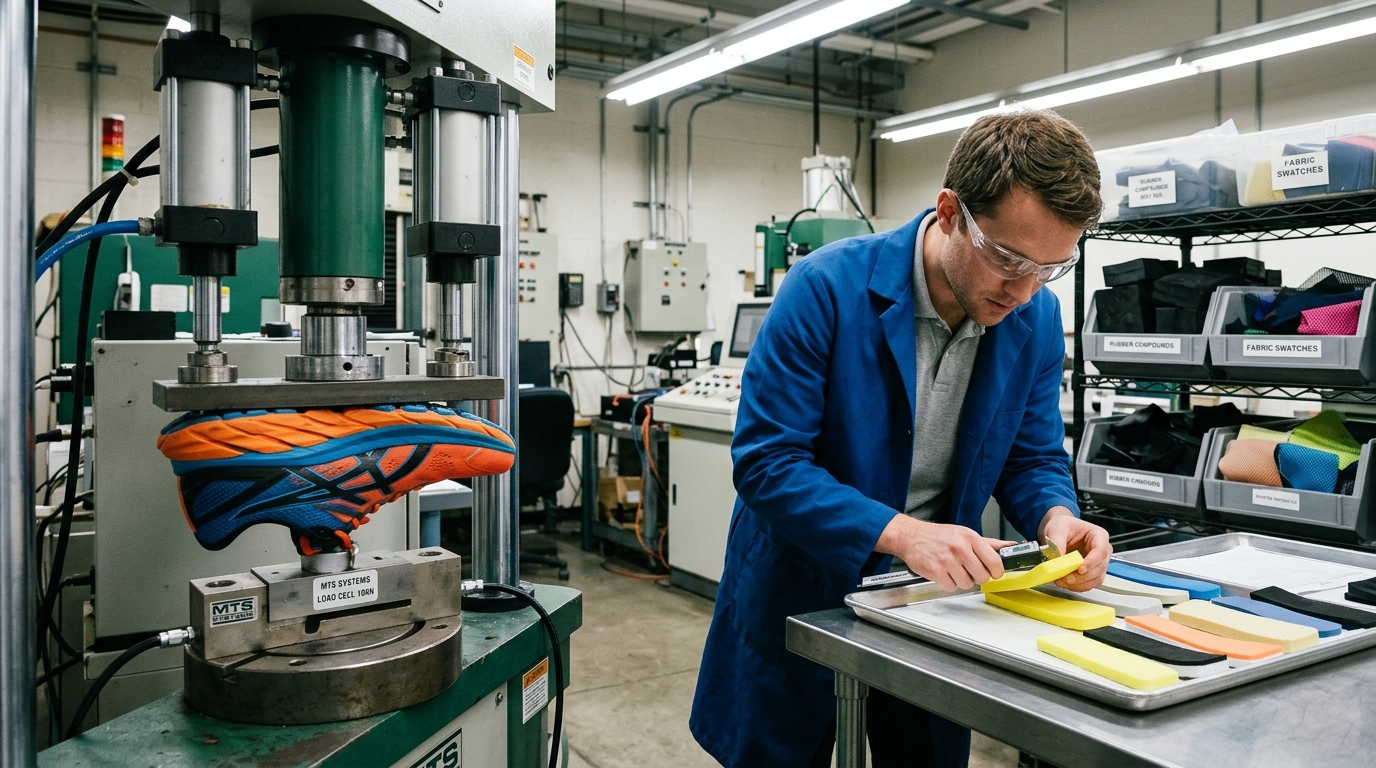
EVA (ethylene-vinyl acetate) remains the workhorse foam for athletic footwear components. Compression-molded EVA insoles and midsoles offer a well-understood balance of cushioning, weight, and cost. For athletic applications, hardness typically ranges from 20–45 Asker C (±3 tolerance), with softer formulations suited to comfort-oriented shoes and firmer options targeting responsive, race-day performance. EVA can be produced in single-layer and multi-density constructions, allowing engineers to tune cushioning zones within a single component. Formats include compression-molded, injection-molded, and die-cut, each with different precision levels and cost profiles.
Supercritical CO₂ foam represents the current performance frontier for athletic insoles and midsoles. This material is produced without traditional chemical blowing agents, yielding a microcellular structure with predominantly closed cells that delivers consistent energy return and impact absorption across repeated use. In the energy return hierarchy, supercritical foam outperforms EVA and PU, making it the preferred choice for brands targeting the performance running and elite training segments. FX Footwear’s supercritical CO₂ foam insole — the PulseSport line — exemplifies this technology in a production-ready format for athletic brands.
PU (polyurethane) foam excels in compression resistance and long-term shape retention, delivering a soft and comfortable feel that holds up over extended wear cycles. Open-cell PU offers better breathability than closed-cell alternatives, which makes it suitable for athletic shoes worn in warmer conditions or during extended training sessions. However, PU’s energy return characteristics are lower than both supercritical foam and EVA, so it’s positioned more for comfort and durability than for explosive performance.
Structural materials — TPU plates, carbon fiber reinforcements, and multi-material assemblies — add functional performance that foam alone cannot deliver. These components fall into the functional/structural insole category and are engineered for specific biomechanical goals: propulsion efficiency in racing shoes, midfoot stability in hiking boots, or torsional control in court shoes.
For brands prioritizing sustainability alongside performance, materials like sugarcane-based EVA, algae-based EVA (which reduces reliance on petroleum-based materials), recycled EVA compounds, and Susterra®-based PU formulations are now available within GRS-compliant supply chains. These aren’t separate product lines — they’re material options that can be integrated into existing insole and midsole constructions without sacrificing athletic performance specifications.
Evaluating an Athletic Component Supplier
Selecting an athletic footwear component supplier requires looking far beyond price per unit. The wrong supplier can derail a product launch, introduce inconsistency across production runs, or leave your brand exposed to compliance failures. Here’s what matters most.
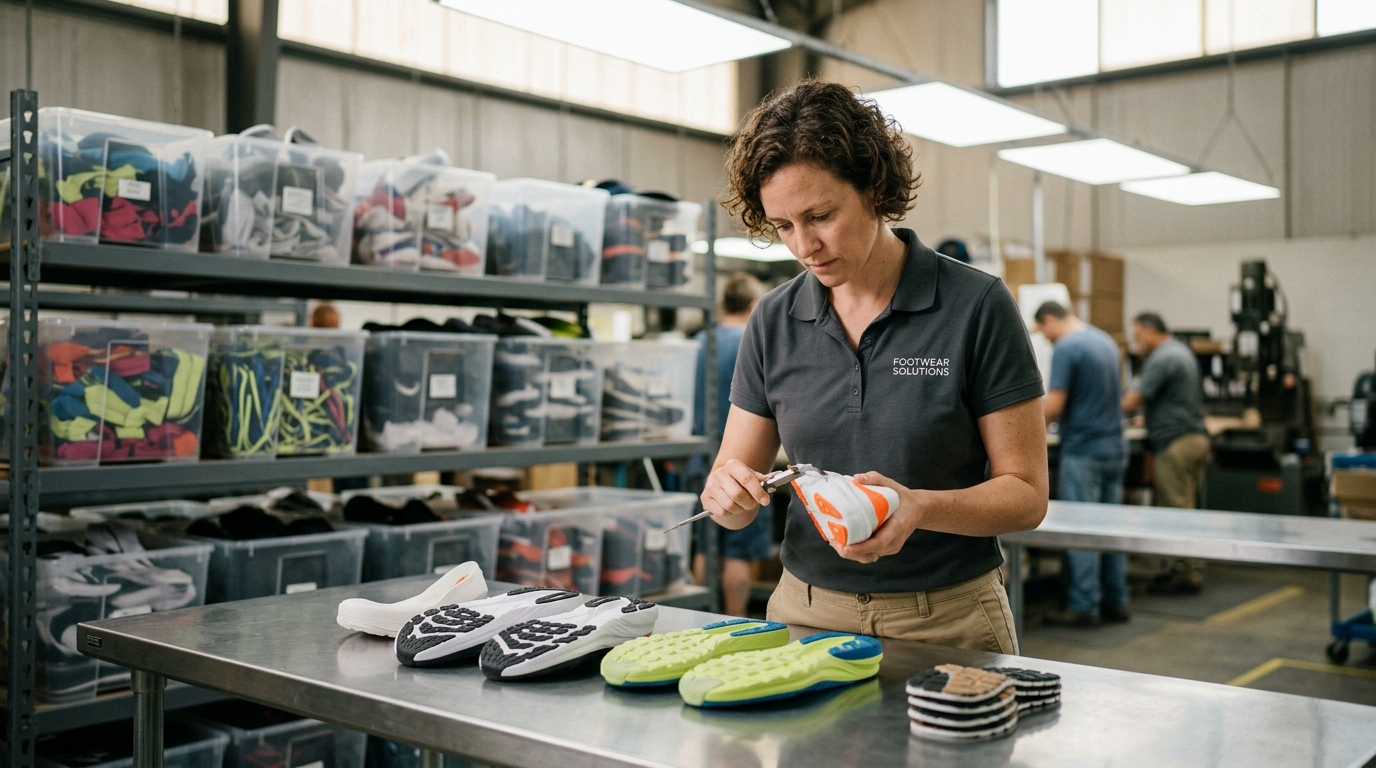
Manufacturing breadth matters. A supplier that only produces insoles forces you to coordinate separately for midsoles, uppers, and structural components — multiplying your vendor management overhead and increasing the risk of interface mismatches between components. A one-stop footwear component manufacturer that covers insoles, midsoles, uppers, and functional parts allows brands to consolidate suppliers across multiple categories, simplifying communication and improving component-to-component consistency.
Regional manufacturing footprint is increasingly critical for athletic brands navigating tariff landscapes and lead time pressures. Suppliers with facilities in China, Northern Vietnam, Southern Vietnam, and Indonesia are positioned alongside major Tier 1 footwear manufacturing hubs. This geographic diversification enables faster lead times, localized coordination with your assembly factories, and lower duty exposure — all of which translate to cost savings and supply chain resilience.
End-to-end production control — from material foaming to final component assembly — ensures consistent quality and stable supply across batches. When a supplier controls the entire process internally, there’s better accountability over performance specifications. If your midsole foam density drifts between batches, the supplier can trace the issue back to the foaming stage rather than pointing at an upstream raw material vendor.
In-house lab capabilities accelerate development timelines. Rapid material testing and product validation without relying solely on external labs means faster iteration during the sampling phase. For athletic products, where compression set, rebound resilience, and density consistency need to be verified before tooling investment, in-house testing is a genuine competitive advantage.
Certifications and compliance signal a supplier’s operational maturity. For athletic footwear components destined for the US market, look for GRS (Global Recycled Standard) certification if sustainable materials are part of your roadmap, and ISO 13485:2016 if your product line extends into therapeutic or orthotic applications. Third-party verification through organizations like Intertek and BETA adds another layer of confidence. On the compliance side, CPSC requirements and California Prop 65 should be standard operating procedure for any supplier serving US brands, complemented by SATRA, SGS, or ASTM test reports and social audits (BSCI/SMETA) for supply chain transparency. The Higg Index is an increasingly important benchmark for measuring supply chain sustainability in the footwear industry.
Sampling, Lead Times & Scalability
Athletic footwear operates on aggressive development calendars. Seasonal collections, athlete endorsement timelines, and retail booking windows all create pressure to move from concept to production-ready samples as fast as possible. Your component supplier’s sampling and production timelines directly determine whether you hit those windows or miss them.
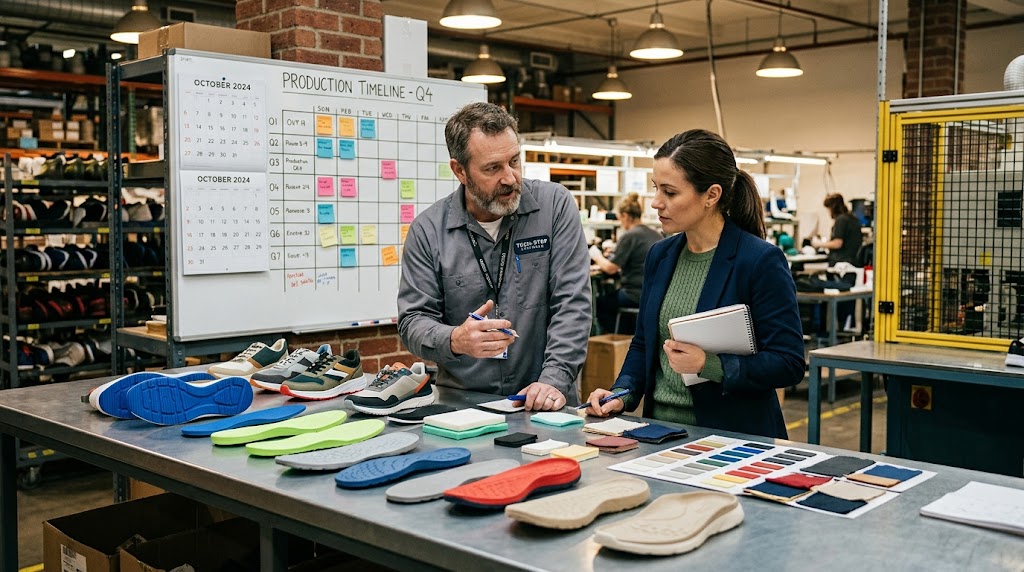
For die-cut or knife-cut samples that don’t require new tooling, expect turnaround in approximately three days. When new molds or tooling are needed — common for custom midsole geometries or multi-density insole constructions — the timeline extends to roughly 10 business days. Custom insoles in the sampling phase typically take 7–14 days, while bulk production after sample approval runs approximately 30–40 days. Standard EVA insoles without customization can ship in 20–35 days after payment confirmation, while supercritical CO₂ foam insoles require 30–45 days given the more specialized production process.
The total custom order cycle — from confirmed specifications to goods ready — typically falls in the 45–70 day range. Add 18–30 days for ocean freight from East Asia to US ports (or 5–10 days for air freight door-to-door), and first-time custom sourcing cycles land at approximately 65–100 days end to end.
Understanding these timelines matters because athletic brands often need to coordinate component delivery with Tier 1 factory production schedules. A supplier with regional manufacturing across multiple countries can reduce transit time between component production and shoe assembly, tightening the overall calendar. If your assembly factory is in Vietnam, sourcing components from a supplier with Vietnamese facilities eliminates weeks of cross-border logistics.
Scalability is the other side of this equation. A supplier that handles your initial 5,000-pair order but can’t ramp to 50,000 pairs without quality degradation or lead time blowout becomes a bottleneck just as your product gains traction. Integrated production and regional manufacturing across Asia enable competitive pricing at scale without compromising quality or lead time — which is exactly the profile athletic brands need as they grow.
Branding & Customization Options
Athletic footwear components aren’t just functional — they also carry your brand identity. Every time a consumer removes the insole or examines the interior of the shoe, they see your logo, your colorway, your design language. Component-level branding reinforces premium positioning and discourages aftermarket swaps.
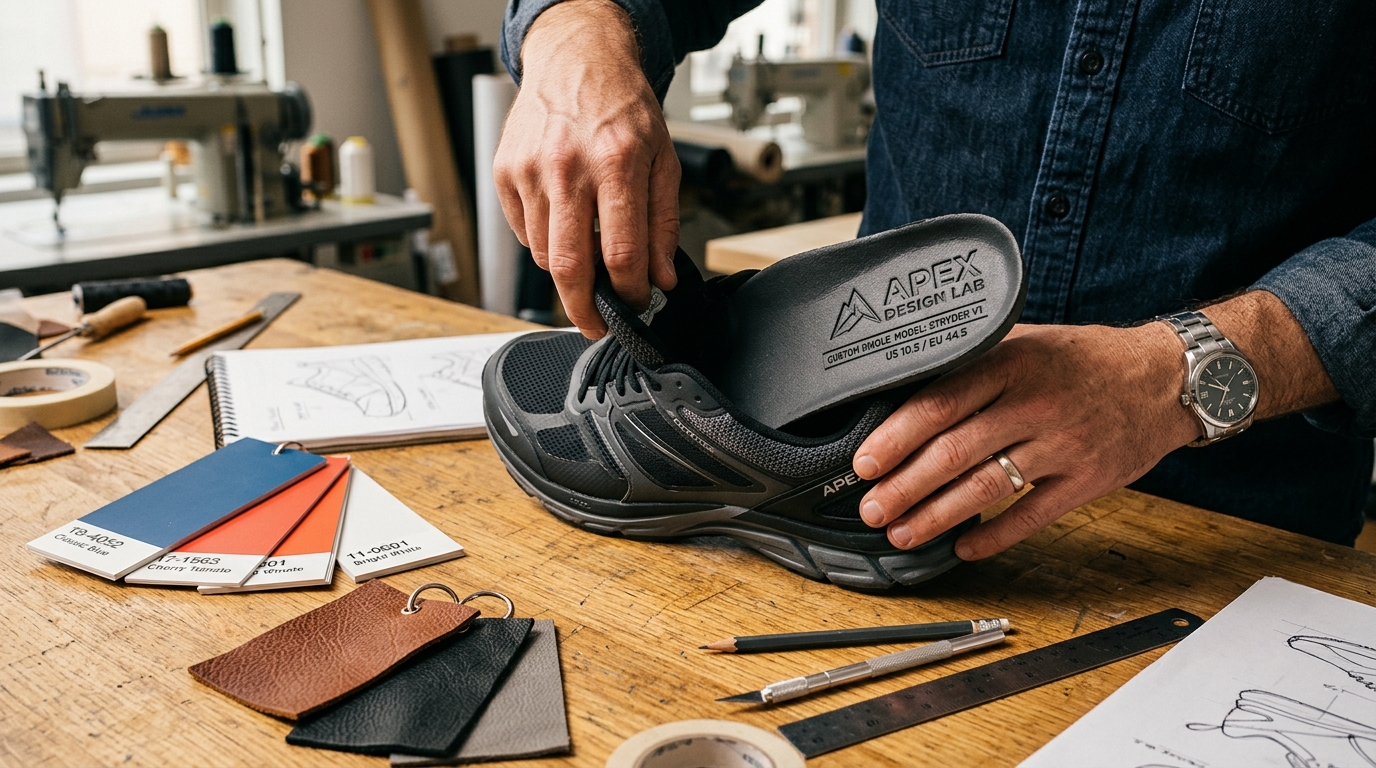
For insole surfaces, the standard branding methods include heat transfer print (the most common approach for top cloth graphics), screen print for logo application on top cloth, and emboss or deboss for structural components like heel cups. These methods cover the range of visual and tactile branding that athletic brands typically require, from photorealistic full-color graphics to subtle tonal logo impressions.
Beyond branding, customization in athletic insoles spans material selection, density zoning, surface texture, arch profile, and heel geometry. Multi-density constructions allow different hardness zones within a single insole — a firmer heel post for stability paired with a softer forefoot zone for comfort during toe-off, for example. Brands that have explored working with a private label insoles manufacturer understand how these customization layers transform a generic component into a branded performance asset.
For functional and structural components, customization extends to TPU plate stiffness, carbon fiber layup orientation, and multi-material bonding configurations. These are the details that separate a category-leading trail runner from a me-too product, and they require a supplier with the engineering depth to execute precisely at volume.
Cost Efficiency Without Compromise
Price pressure is a constant in athletic footwear. Retailers demand competitive wholesale pricing, consumers comparison-shop aggressively, and raw material costs fluctuate with petroleum markets and supply chain disruptions. The component supply chain is where brands find (or lose) margin.
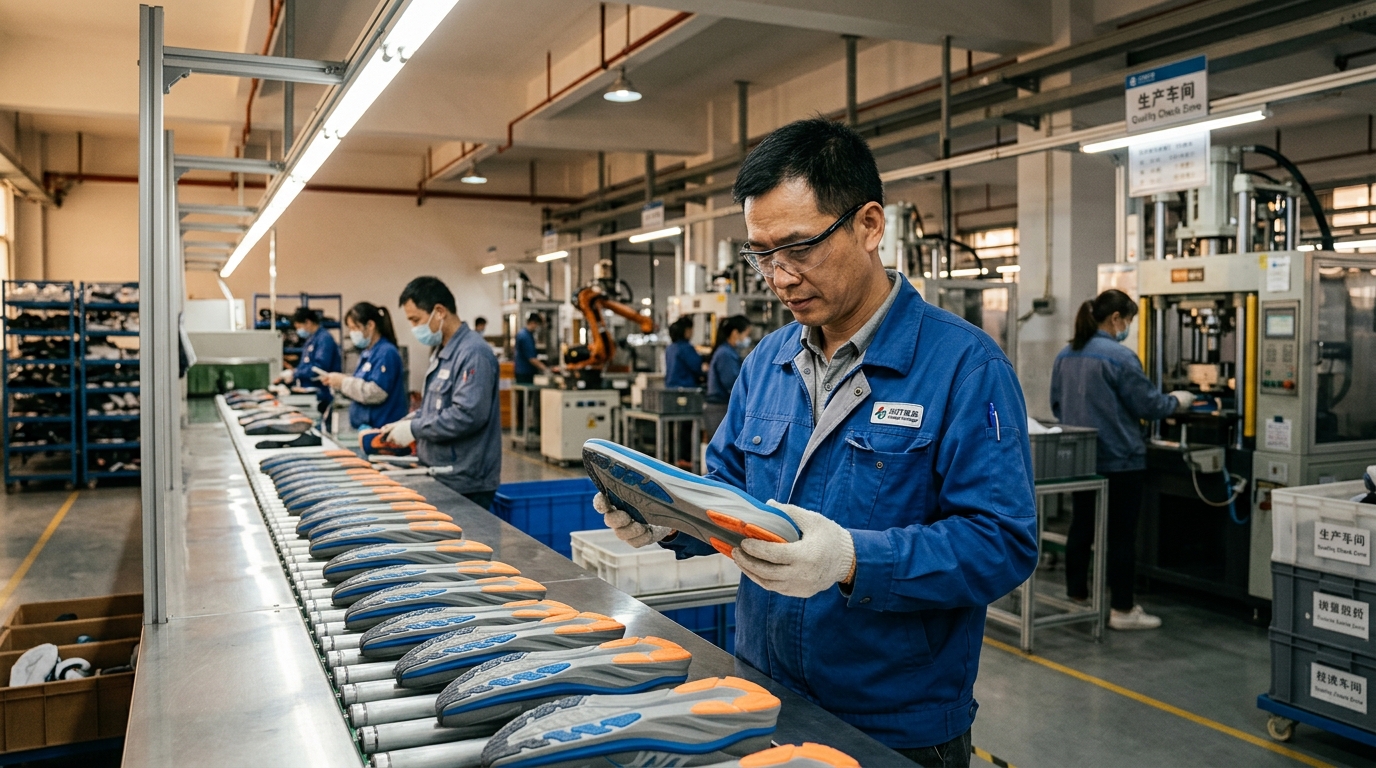
Cost efficiency in athletic footwear components comes from three sources: manufacturing integration, regional production economics, and supplier consolidation. A supplier that controls the full production chain — from raw material foaming through component finishing — eliminates the markup layers that accumulate when foam producers, molders, and finishers are all separate entities. That vertical integration delivers cost savings that single-process vendors cannot match.
Regional manufacturing across China and Southeast Asia allows suppliers to optimize production placement based on labor costs, material proximity, and logistics efficiency. Components produced near your Tier 1 assembly factory reduce freight costs, customs complexity, and lead time — all of which carry real dollar values when multiplied across seasonal order volumes.
Supplier consolidation generates savings that don’t always show up on a per-unit quote but dramatically affect total cost of ownership. Managing one supplier for insoles, midsoles, and uppers instead of three separate vendors reduces your procurement team’s workload, simplifies quality management, and eliminates the coordination overhead of aligning multiple suppliers to a single production timeline. For brands exploring OEM insole manufacturer partnerships optimized for cost and scalability, the PowerFrame line demonstrates how sustainable material options and efficient production can coexist.
Payment structures also influence cash flow management. Standard terms for new customers typically start at 30% deposit upfront with 70% before shipment, with sampling costs paid upfront. As relationships and order volumes grow, more flexible terms can be negotiated — an important consideration for athletic brands with seasonal cash flow patterns.
FAQ
What components does an athletic footwear supplier provide?
A comprehensive athletic footwear component supplier provides insoles, midsoles, uppers, and structural parts like TPU plates and heel counters — covering multiple component categories under one roof.
Which foam offers the highest energy return?
Supercritical CO₂ foam delivers the highest energy return among common footwear foams, outperforming both EVA and PU in rebound and impact absorption consistency.
How long does custom component sampling take?
Die-cut samples without new tooling take approximately 3 days, while samples requiring new molds or tooling take roughly 10 business days.
What certifications matter for US athletic brands?
GRS, ISO 13485 (for therapeutic applications), Higg Index, CPSC compliance, California Prop 65, and third-party testing via SATRA/SGS/ASTM are the key benchmarks for US-market athletic footwear components.
Can sustainable materials match athletic performance specs?
Yes — sugarcane-based EVA, algae-based EVA, recycled EVA compounds, and Susterra®-based PU formulations are available within GRS-compliant supply chains and can be integrated into athletic-grade constructions.
Ready to source athletic footwear components that match your performance standards and production timeline? FX Footwear (Fuxiang Group) is a one-stop footwear component manufacturer with facilities in China, Vietnam, and Indonesia — producing insoles, midsoles, uppers, and functional components for athletic brands across the US market. From supercritical foam technology to sustainable material options, our team delivers end-to-end production control, in-house lab validation, and the regional manufacturing footprint your supply chain demands. Contact FX Footwear today to start your next project.
Browse more articles in Sourcing & OEM Solutions.