
Multi-layer foam midsoles exist because a single foam density can’t do two jobs well. You need soft cushioning underfoot and firm stability closer to the outsole — one material won’t deliver both. Stacking different foam compounds in a single midsole lets brands tune ride feel, energy return, weight, and durability independently at each zone, and that’s exactly why layered construction has become the standard in performance and casual footwear alike.
If you’ve been sourcing single-density midsoles and wondering why competitors’ shoes feel better in wear tests, this is probably the answer. The architecture beneath the foot matters more than most product briefs acknowledge. Let’s get into the engineering.
How Layered Midsoles Work
A multi-layer foam midsole stacks two or more foam compounds — each with a distinct density, hardness, and cell structure — into a bonded or co-molded unit. The top layer (closest to the foot) is typically softer for immediate step-in comfort, while the bottom layer is firmer for structural support, ground feel, and durability.
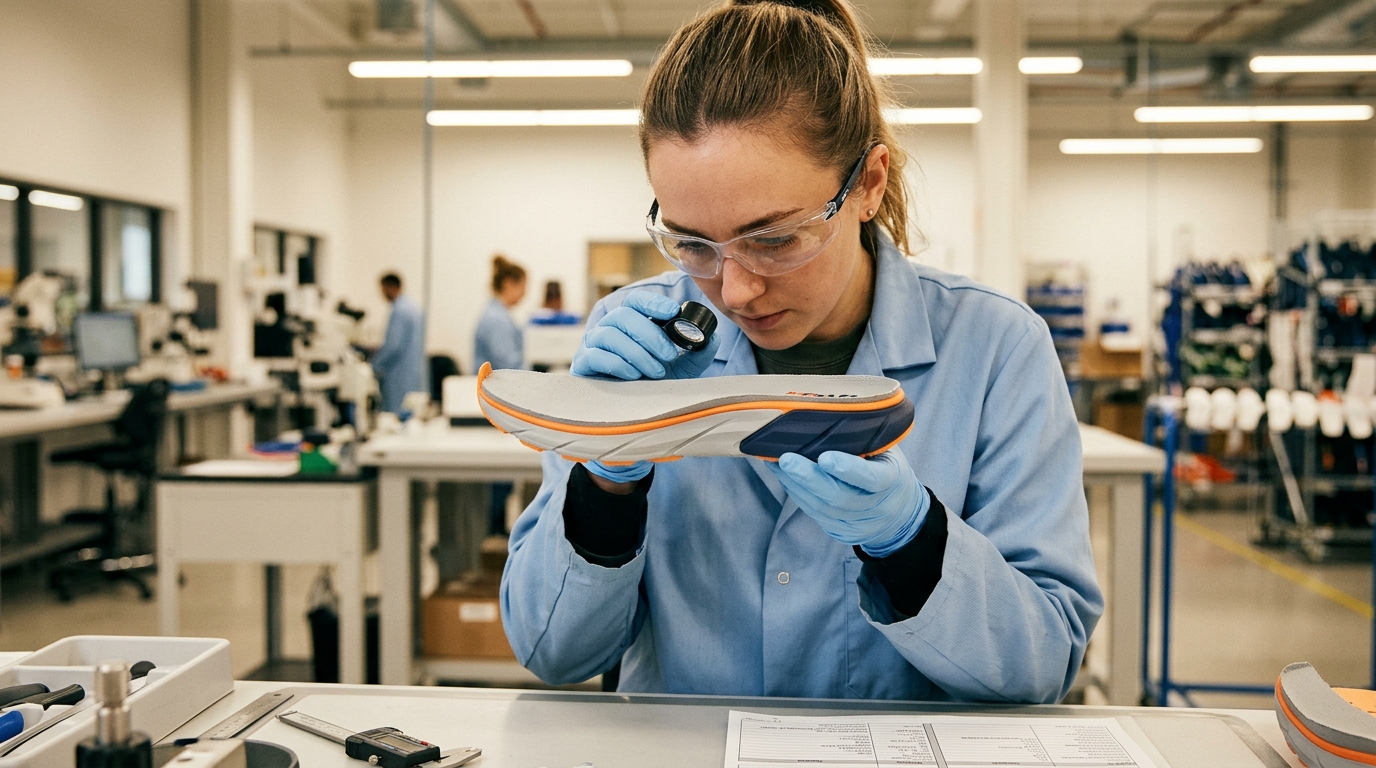
Think of it like a mattress. A memory foam topper on a firm base feels better than either material alone. Same physics, smaller scale.
The key performance variables in each layer:
- Density — measured in g/cm³; lower density = lighter, softer, less durable
- Hardness — for EVA, measured in Asker C (the standard unit for footwear foams, not Shore C); typical range is 20–45 Asker C with ±3 tolerance
- Rebound resilience — how much energy the foam returns per compression cycle
- Compression set — how well the foam retains thickness after repeated loading
A dual-layer midsole might pair a 25 Asker C top layer with a 40 Asker C bottom layer. The soft upper foam absorbs heel strike; the firm lower foam prevents bottoming out and maintains the shoe’s geometry over hundreds of miles. Neither layer alone would satisfy both requirements.
Some constructions go beyond two layers. A three-layer midsole can add a mid-density transition zone, smoothing the feel between extremes. Others insert a structural plate (TPU or carbon fiber) between foam layers to add torsional rigidity — common in racing flats and trail shoes.
Where things get interesting is material mixing. A supercritical CO₂ foamed EVA top layer paired with a compression-molded PU bottom layer gives you lightweight bounce on top and compression resistance below. That kind of hybrid build would be nearly impossible with single-material tooling, which is why multi-layer construction demands more from your midsole supplier than a simple spec sheet.
Dual-Compound vs. Dual-Density
These terms get used interchangeably. They shouldn’t.
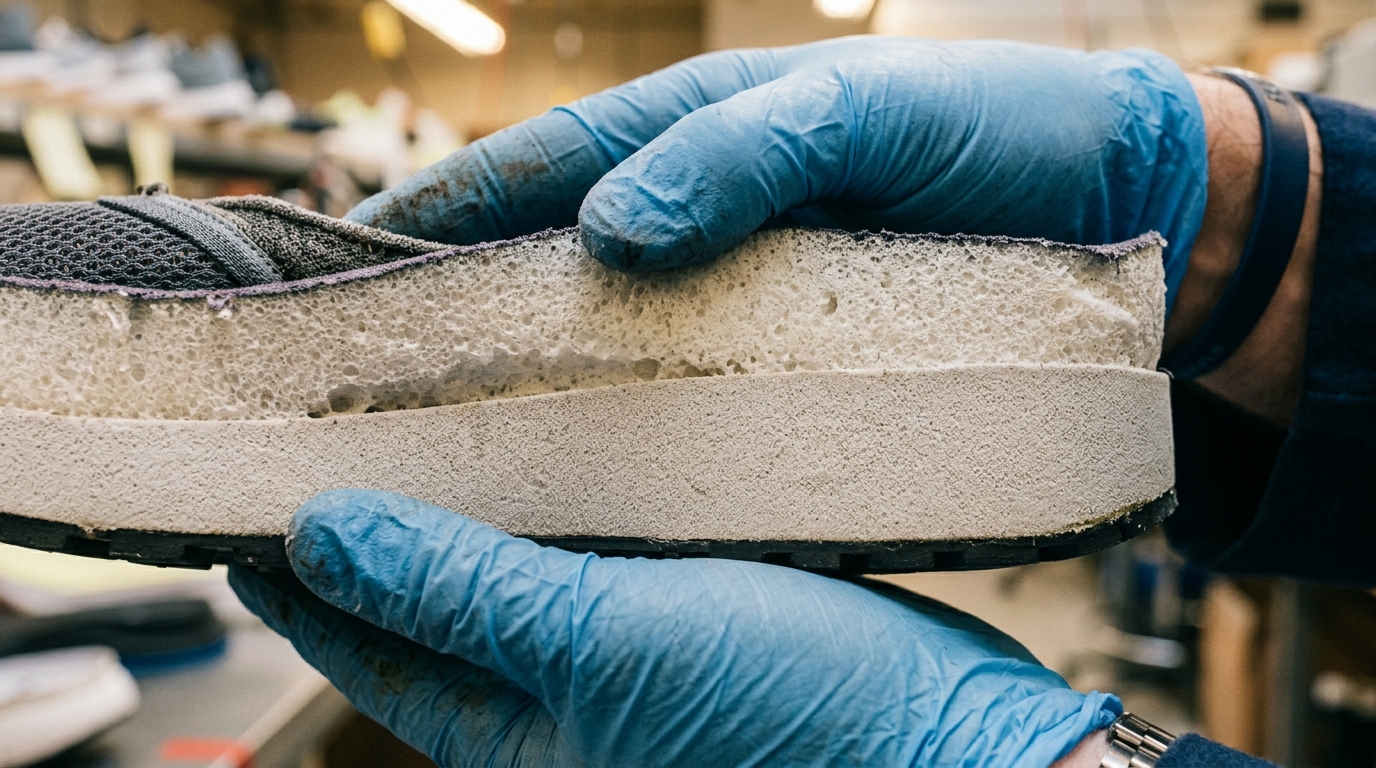
Dual-density means two layers of the same base material at different hardness levels. Example: a 28 Asker C EVA layer bonded to a 42 Asker C EVA layer. Same chemistry, different foaming parameters. This is the most common and cost-effective layered approach — tooling is simpler, adhesion between layers is reliable because the polymers are chemically compatible, and you can adjust the ride feel by changing the density ratio without redesigning the mold.
Dual-compound means two different base materials in the same midsole. Example: supercritical CO₂ foamed EVA on top, traditional PU on the bottom. Or a PEBA-blend foam crash pad under an EVA carrier. Different polymers bring genuinely different mechanical properties — PU’s compression resistance paired with EVA’s lightweight feel, for instance.
| Feature | Dual-Density | Dual-Compound |
|---|---|---|
| Base materials | Same (e.g., EVA + EVA) | Different (e.g., EVA + PU) |
| Bonding complexity | Low — chemical compatibility | Higher — may need adhesive or co-molding |
| Tooling cost | Standard | 15–30% more |
| Performance range | Moderate tuning | Wider performance envelope |
| Best for | Casual, work, entry athletic | Performance running, hiking, sport-specific |
The tradeoff is real. Dual-compound builds deliver better performance differentiation between zones, but they’re harder to manufacture consistently. Delamination risk increases when bonding dissimilar polymers — you need precise temperature control, compatible adhesives or tie layers, and process validation at scale. We run bonding-strength tests in our in-house lab specifically because this failure mode kills product reliability if it’s not caught early.
One thing that doesn’t get discussed enough: dual-compound midsoles create supply chain complexity. You’re now sourcing two separate foam types, managing two sets of material specs, and coordinating two production processes into one finished component. Brands working with a one-stop footwear component manufacturer have an easier time here because material sourcing, foaming, molding, and assembly all happen under coordinated production control.
Performance Zoning Strategies
Layering isn’t just top-to-bottom. The most sophisticated midsole designs use lateral and longitudinal zoning — different foams in different areas of the same layer.
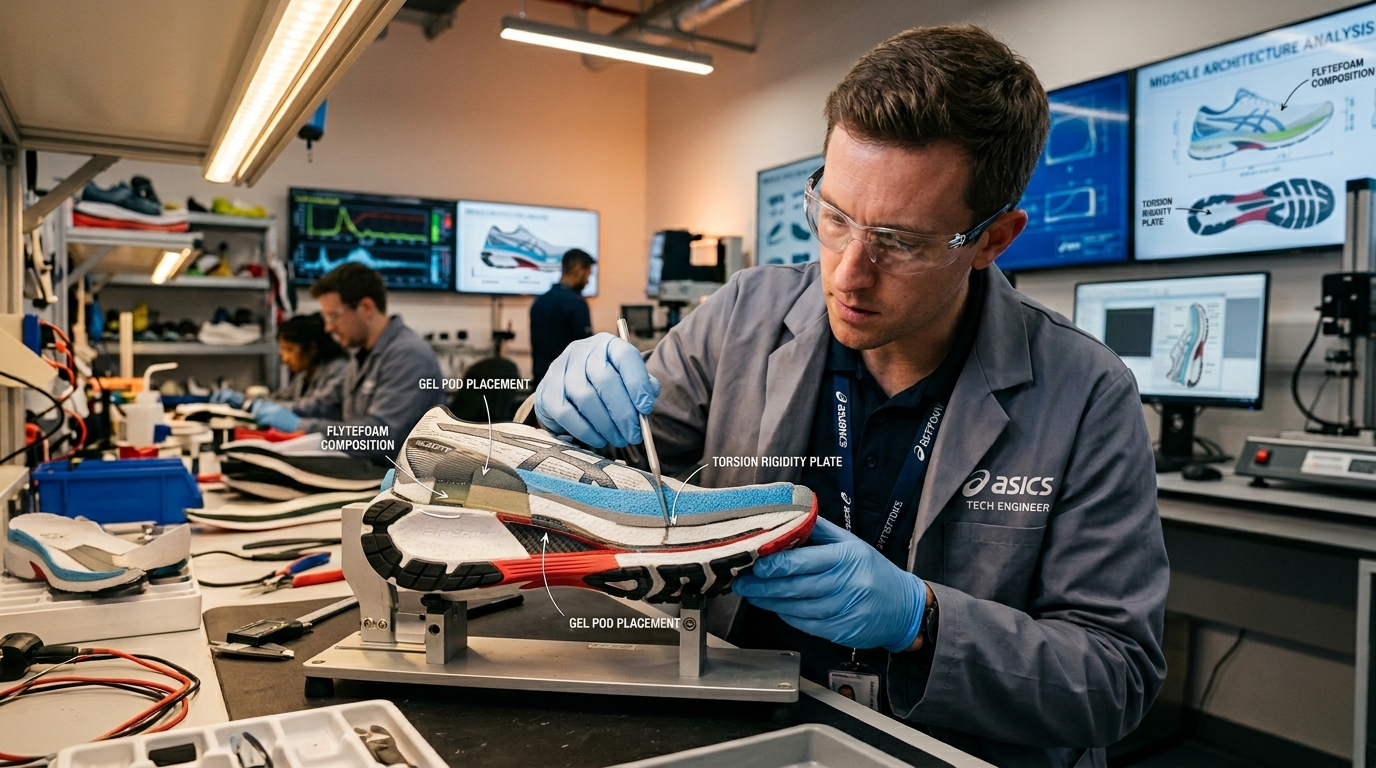
Heel crash zone. The rearfoot takes 2–3× body weight at heel strike during running (Lieberman et al., Harvard, 2010). A softer, higher-rebound foam pod here — maybe supercritical CO₂ foamed EVA at 0.12 g/cm³ — absorbs that initial impact. If you’ve worked with our supercritical CO₂ foam insole line, you’ll recognize this approach: microcellular structure with predominantly closed cells, tuned for consistent energy return across thousands of compression cycles.
Midfoot bridge. This zone needs stiffness, not cushioning. A firmer EVA (40+ Asker C) or an embedded TPU plate prevents the midsole from collapsing through the arch during the gait cycle’s midstance phase. Without adequate midfoot support, soft foams just let the foot sink and roll — bad for stability, worse for efficiency.
Forefoot propulsion zone. Here you want energy return. A higher-resilience foam (supercritical EVA or a TPU-blend compound) under the metatarsal heads converts stored elastic energy into forward push-off. The rebound hierarchy matters: PEBA-based foams return the most energy, followed by TPEE, then TPU-blend, then standard EVA. But PEBA is premium-priced and typically reserved for elite racing shoes, so most production midsoles use supercritical EVA or TPU-blend compounds in this zone.
Medial post. For stability or motion-control shoes, a firmer foam wedge on the medial (inner) side of the midsole resists overpronation. This is a density zone within the bottom layer — same material, higher density, placed asymmetrically. It’s one of the oldest multi-layer tricks in the book, and it still works.
Here’s where brands sometimes get it wrong: they specify performance zoning in the design brief but then choose a supplier who can only produce single-density compression-molded midsoles. The zones end up being cosmetic (different colors, same hardness). If you want real mechanical differentiation between zones, you need either co-injection molding or multi-piece bonded construction — both of which require tooling investment and process expertise.
We covered weight-focused foam construction in our piece on lightweight midsoles that don’t sacrifice durability, and the principles overlap heavily here. Lightweight foams almost always show up as the top layer in a multi-layer build, with a denser support layer below them.
Manufacturing Multi-Layer Builds
Building a midsole with two or more distinct foam layers isn’t as simple as glueing two slabs together (though some lower-tier suppliers do exactly that, and yes, it delaminates).
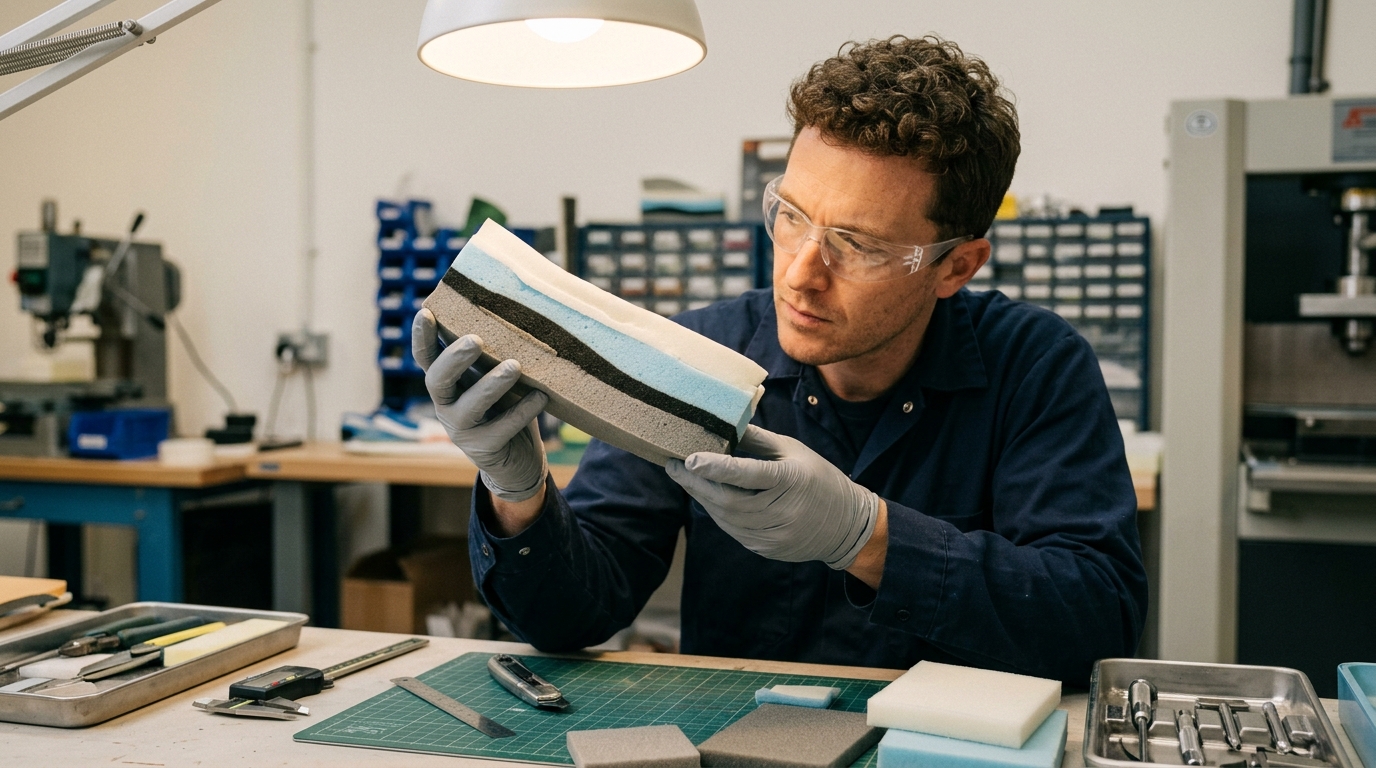
Co-molding is the preferred method. One foam compound is injected or placed into the mold cavity first, partially cured, and then the second compound is introduced. The two layers bond during the curing process, creating a chemical and mechanical interlock at the interface. Co-molded midsoles have substantially better peel strength than adhesive-bonded alternatives — we typically see 4–6 N/mm vs. 2–3 N/mm for post-bonded constructions in our lab testing.
Adhesive bonding is simpler and cheaper. Two separately molded foam pieces are surface-treated (corona or primer) and glued together. This works fine for casual footwear where the midsole doesn’t see extreme flex or impact loads. For athletic applications, it’s risky.
Insert molding places a pre-formed element (like a TPU plate or a pre-foamed crash pad) into the mold cavity before the main foam is injected around it. The foam encapsulates the insert. This is how most plate-stiffened running shoe midsoles are produced — the carbon or TPU plate sits between foam layers but is mechanically locked in place by the surrounding material.
The manufacturing challenge scales with the number of layers and materials. A three-compound midsole with an embedded plate requires four separate material inputs, precise placement fixtures, multi-stage molding, and tight process windows. Temperature deviations of 5°C can cause interface defects. This is exactly the kind of build where end-to-end production control — from material foaming through final midsole assembly — pays for itself in yield rate and consistency.
Dimensional tolerance matters more in layered builds, too. If the top layer is 2mm thicker than spec on one side, the shoe feels asymmetrical. With single-density midsoles, minor thickness variation is less noticeable because the foam properties are uniform. Multi-layer construction amplifies every tolerance stack-up.
One practical note for brands evaluating suppliers: ask to see cross-section cuts of layered samples. You want clean, consistent interface lines with no voids, gaps, or delamination at the boundary. If the cross-section looks messy, the process isn’t dialed in.
Choosing the Right Layer Stack
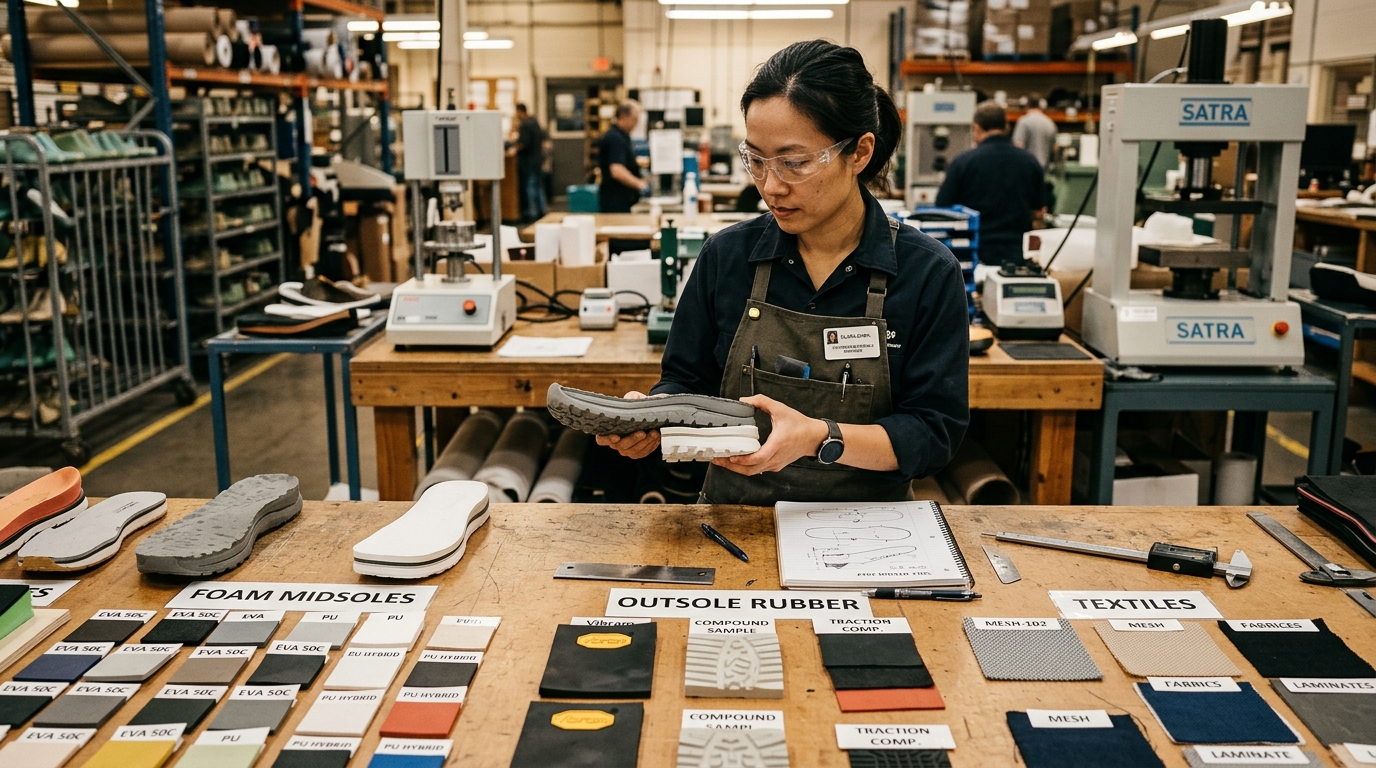
Material selection for each layer depends on the shoe’s purpose, price point, and target consumer. Here’s a decision framework we use with brand partners:
Athletic performance (running, training):
- Top layer: Supercritical CO₂ foamed EVA (low density, high rebound, 0.10–0.15 g/cm³)
- Bottom layer: Firmer EVA or TPU-blend compound (35–45 Asker C) for stability and ground contact durability
- Optional: TPU or carbon fiber plate between layers for propulsion efficiency
Casual / lifestyle:
- Top layer: Standard compression-molded EVA (25–30 Asker C) — cost-effective, comfortable
- Bottom layer: Slightly firmer EVA (35–40 Asker C) for longevity
- Dual-density, same compound — keeps tooling and material costs down
Work / industrial:
- Top layer: Open-cell PU or PU-blend for long-shift comfort and compression resistance
- Bottom layer: High-density EVA or PU (40+ Asker C) for load-bearing durability
- PU’s compression resistance makes it better than EVA for 8–12 hour standing applications
Sandal / open footwear:
- Molded EVA footbed with density-zoned areas rather than discrete layers
- The sandal footbed molding process uses compression molding with contoured tooling to create anatomical shapes with built-in arch support zones
Therapeutic / orthotic:
- Multiple density zones mapped to a podiatric prescription
- Often requires ISO 13485-compliant manufacturing (which FX Footwear holds)
- Materials must pass biocompatibility and skin-contact safety requirements
The cost math on layered builds: expect 10–25% higher per-unit cost compared to single-density midsoles, depending on material combination and molding complexity. For a supercritical CO₂ foam midsole paired with a standard EVA base, the premium comes primarily from the supercritical foaming step and the co-molding process, not the raw material. At scale — 50,000+ pairs per order — the per-unit premium shrinks because tooling costs are amortized and production runs become more efficient.
When Single-Density Still Wins
Not every shoe needs layers. Basic flip-flops, ultra-budget sneakers, slippers, and some minimalist running shoes work fine with a single-density midsole. Adding layers to a $12 FOB casual shoe doesn’t make commercial sense — the consumer won’t pay for it, and the performance benefit is marginal in low-impact wear.
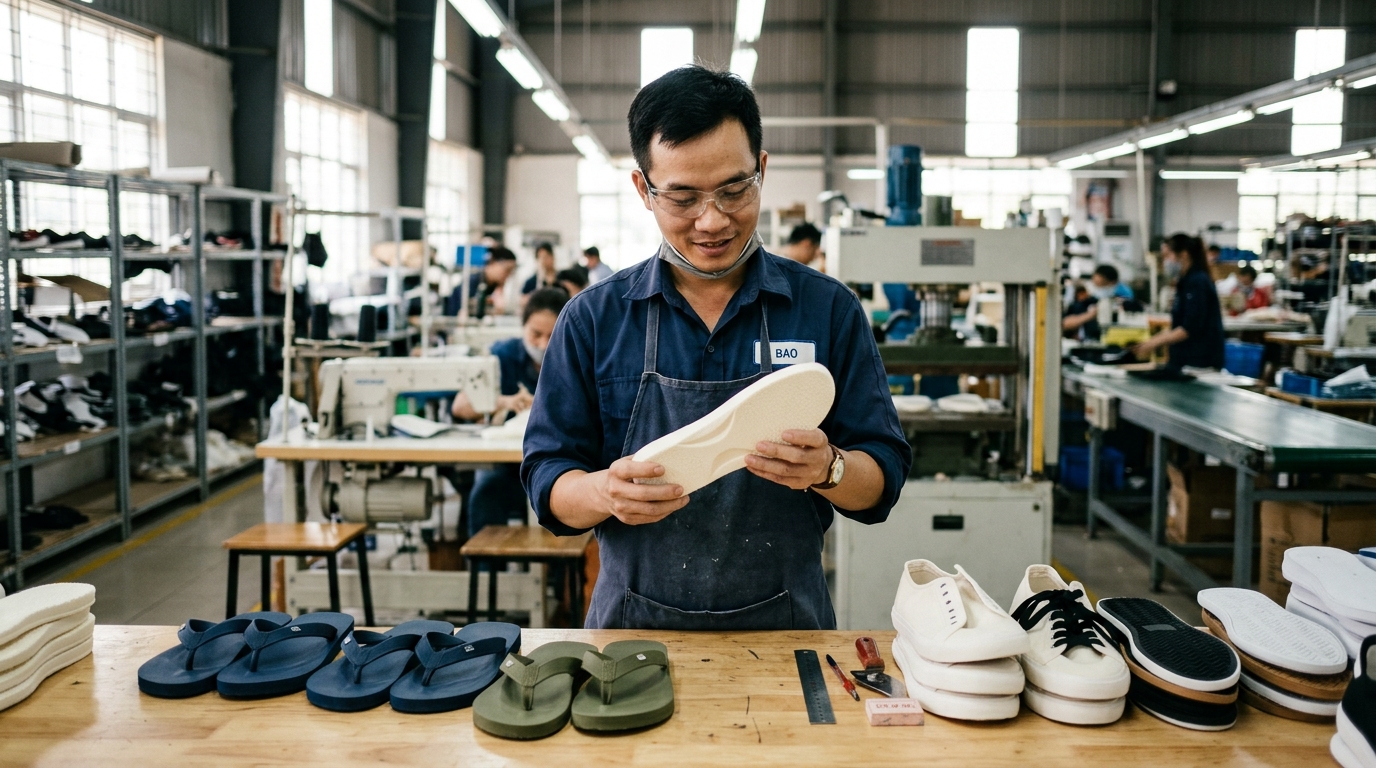
Layers matter when the shoe is asked to do something demanding: absorb running impact, support a worker standing for 10 hours, or provide medically specified cushioning zones. If the application doesn’t create meaningful stress variation across the foot, a well-spec’d single foam will do the job. (And it’ll be cheaper, faster to produce, and easier to QC.)
The question to ask: does this shoe’s use case create different mechanical demands in different zones? If yes, layer it. If no, don’t add complexity for its own sake.
FAQ
How many layers can a midsole have?
Most production midsoles use two or three foam layers plus an optional structural plate. Beyond three foam layers, manufacturing complexity and cost increase sharply with diminishing performance returns.
Does layering increase midsole weight?
Not necessarily. A dual-density build with a low-density top layer (0.10 g/cm³ supercritical foam) and a standard-density bottom layer can weigh less than a single medium-density slab that tries to compromise between softness and support.
What causes delamination in layered midsoles?
Poor interface bonding — usually from incompatible materials, incorrect mold temperatures, contaminated surfaces, or insufficient cure time. Co-molded constructions resist delamination better than adhesive-bonded ones.
Are multi-layer midsoles more expensive?
Yes, typically 10–25% more than single-density equivalents. The cost comes from additional tooling, co-molding process time, and sometimes more expensive secondary foam compounds.
What’s the lead time for custom layered midsoles?
At FX Footwear, custom midsole sampling takes 7–14 days, with bulk production running 30–40 days after sample approval. Supercritical CO₂ foam constructions may extend to 30–45 days for production.
If you’re developing a shoe that demands more from its midsole than a single foam can offer, we’d like to talk specifics. FX Footwear operates as a custom midsole supplier with manufacturing facilities across China, Vietnam, and Indonesia — equipped for co-molded multi-layer builds, supercritical foaming, and in-house material testing. Send us your layer stack concept, and we’ll have an initial quote back within 48 hours.
Browse more articles in Midsoles & Cushioning.