![10 Best Custom Insoles for Flat Feet [Sourcing Guide]](https://fxfootwear.com/wp-content/uploads/2026/04/10-best-custom-insoles-for-flat-feet-sourcing-guide_cover-1024x572.jpg)
Finding the right custom insoles for flat feet is one of the most consequential decisions a footwear brand or private-label sourcing team can make. Flat feet — also called pes planus — affect an estimated 20–30% of the general population according to the National Library of Medicine, and the demand for corrective, supportive insoles has surged across athletic, casual, and occupational footwear segments.
If you’re developing an orthotic line or upgrading the stock insoles in an existing shoe range, then you are in the right place. We know it’s quite a headache to fully master arch support design, material science, and OEM manufacturing nuances.
That’s why we write this guide to break down 10 of the best custom insole options engineered for flat feet, examines the design principles behind each, and walks B2B sourcing teams through what to evaluate before placing a bulk order. From dual-density EVA builds to advanced supercritical foam constructions, the options here cover a wide performance and price spectrum — so you can match the right insole to your brand positioning and end-user needs.
How We Chose These Insoles
Selecting which insoles earned a spot on this list required more than browsing catalogs. We evaluated each option against criteria that matter most to B2B buyers: arch support geometry, material durability, manufacturing scalability, customization flexibility, and per-unit economics at volume.
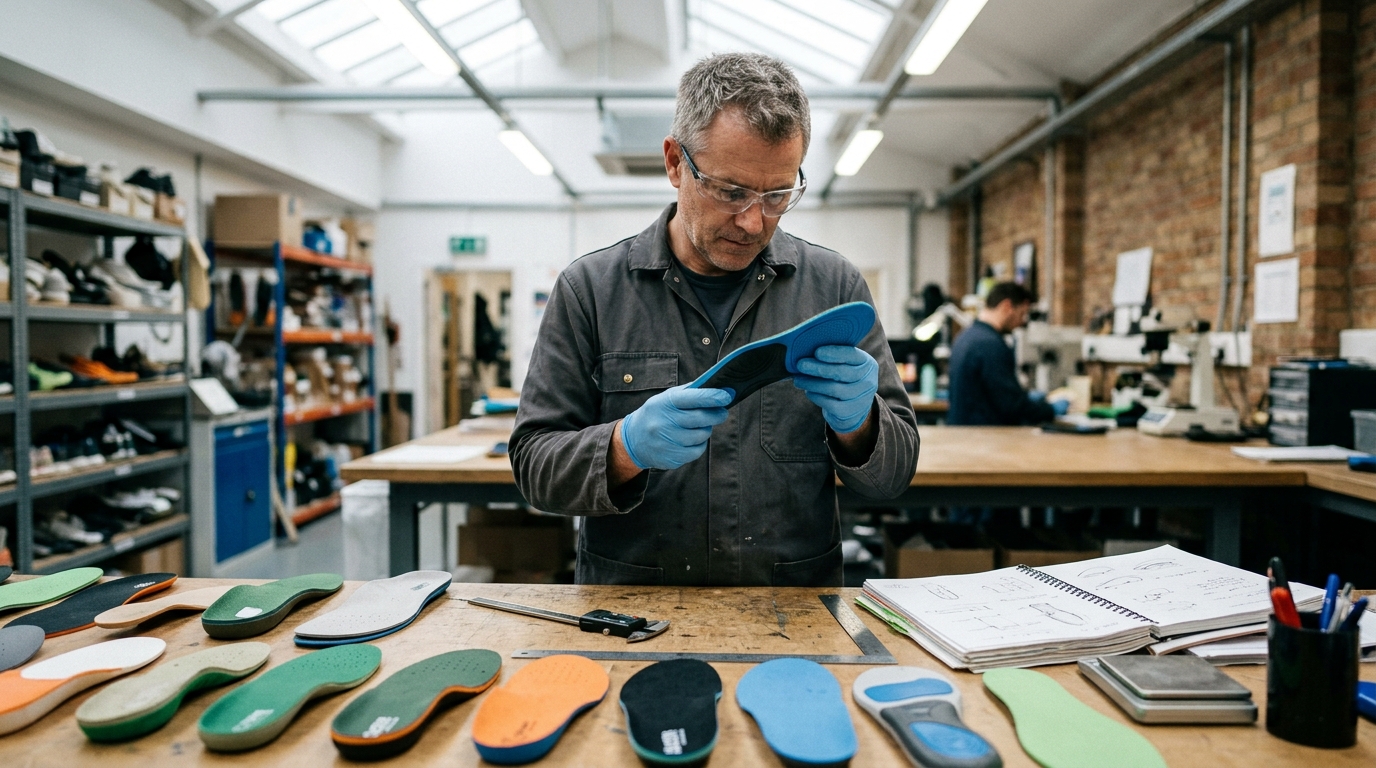
We also considered the end-user experience — how the insole performs for someone with flat feet over weeks and months of daily use. That means assessing rebound resilience, moisture management, weight, and the ability of the arch support structure to maintain its shape under repeated loading cycles. An insole that flattens out after 60 days is a warranty headache no brand needs.
Finally, we factored in OEM readiness. Can the manufacturer accommodate custom molds, branded top covers, and variable density zones without astronomical tooling fees? The insoles on this list come from factories and design philosophies that balance performance engineering with practical manufacturability.
1. Dual-Density EVA Arch Support Insole
Dual-density EVA insoles remain the workhorse of the flat-feet category for good reason. The design pairs a firmer EVA base (typically 45–55 Shore C) with a softer top layer (25–35 Shore C), creating a structure that supports the medial arch while cushioning the forefoot and heel.
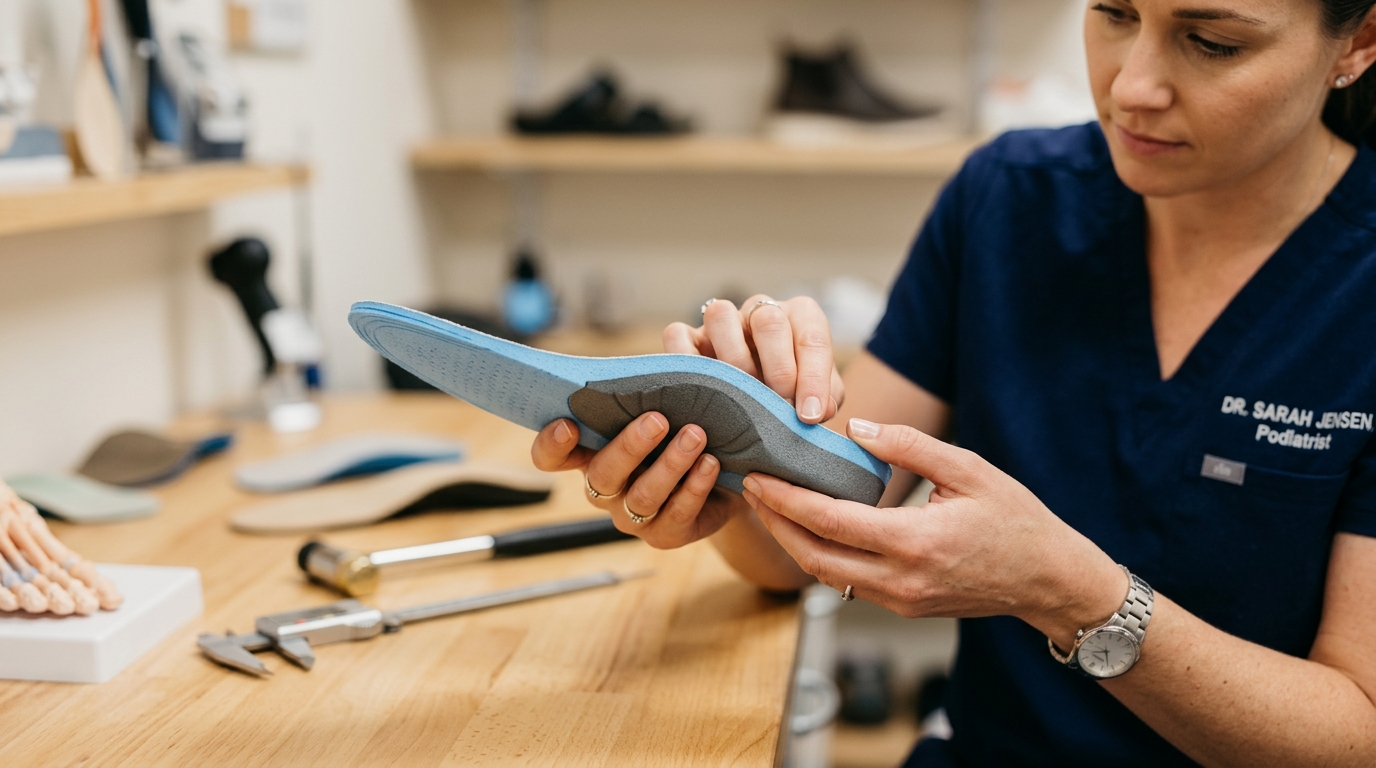
For flat-feet applications, the critical detail is the medial post — a wedge of higher-density material built into the arch zone that resists pronation. The best dual-density EVA insoles position this post to align with the navicular bone drop point, preventing the arch from collapsing during the midstance phase of gait. When sourcing, ask the manufacturer for cross-section samples so you can physically confirm the density transition.
The economic appeal for B2B buyers is hard to ignore. EVA tooling is relatively inexpensive, MOQs are manageable, and lead times are short. If you’re looking for a reliable EVA insole manufacturer that can adjust density zones to your specifications, make sure they offer in-house compression testing and can provide durability data at 50,000+ compression cycles.
2. Supercritical Foam Flat-Feet Insole
Supercritical foam technology has rapidly moved from a niche innovation to a mainstream insole material, and its properties make it exceptionally well-suited for flat feet. The foaming process uses supercritical CO₂ to create a uniform, closed-cell structure that delivers outstanding energy return without adding weight.
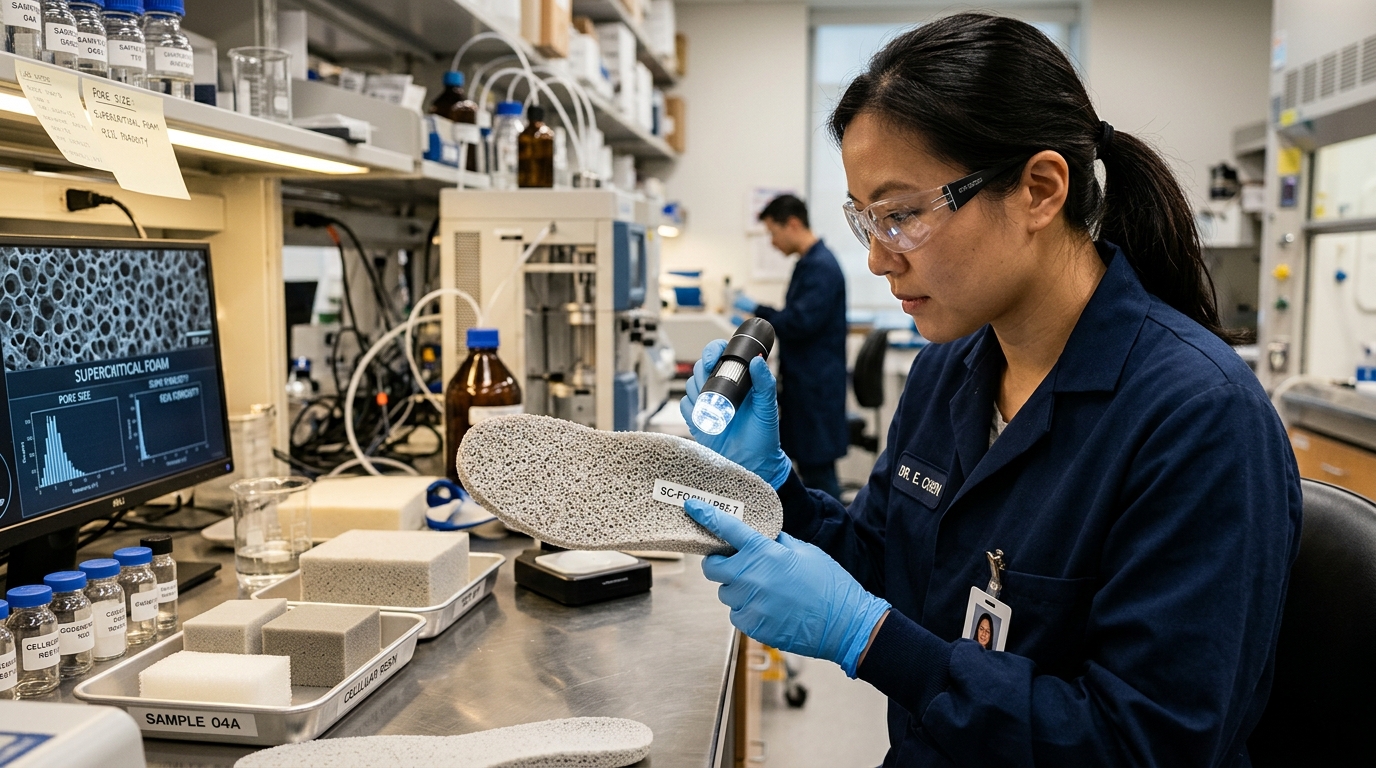
What makes a supercritical foam insole ideal for flat-feet correction is its ability to maintain consistent support density over time. Traditional foams compress and lose their arch support profile after repeated use, but supercritical foams exhibit significantly better compression-set resistance — often maintaining 90%+ of original thickness after extensive wear cycles.
For sourcing teams evaluating this technology, the key questions revolve around tooling investment and minimum order quantities. Supercritical foaming requires specialized equipment, which means not every factory can produce it. However, the per-unit cost has come down dramatically in recent years, making it viable for mid-tier and premium product lines. The weight savings alone — often 30–40% lighter than equivalent EVA — can be a compelling marketing differentiator.
3. Rigid Thermoplastic Arch Shell Insole
When a flat-feet insole needs to deliver maximum structural correction, a rigid thermoplastic shell is the go-to architecture. These insoles feature a nylon, polypropylene, or carbon-fiber-reinforced shell that wraps the heel cup and extends through the midfoot, physically preventing the arch from collapsing under load.
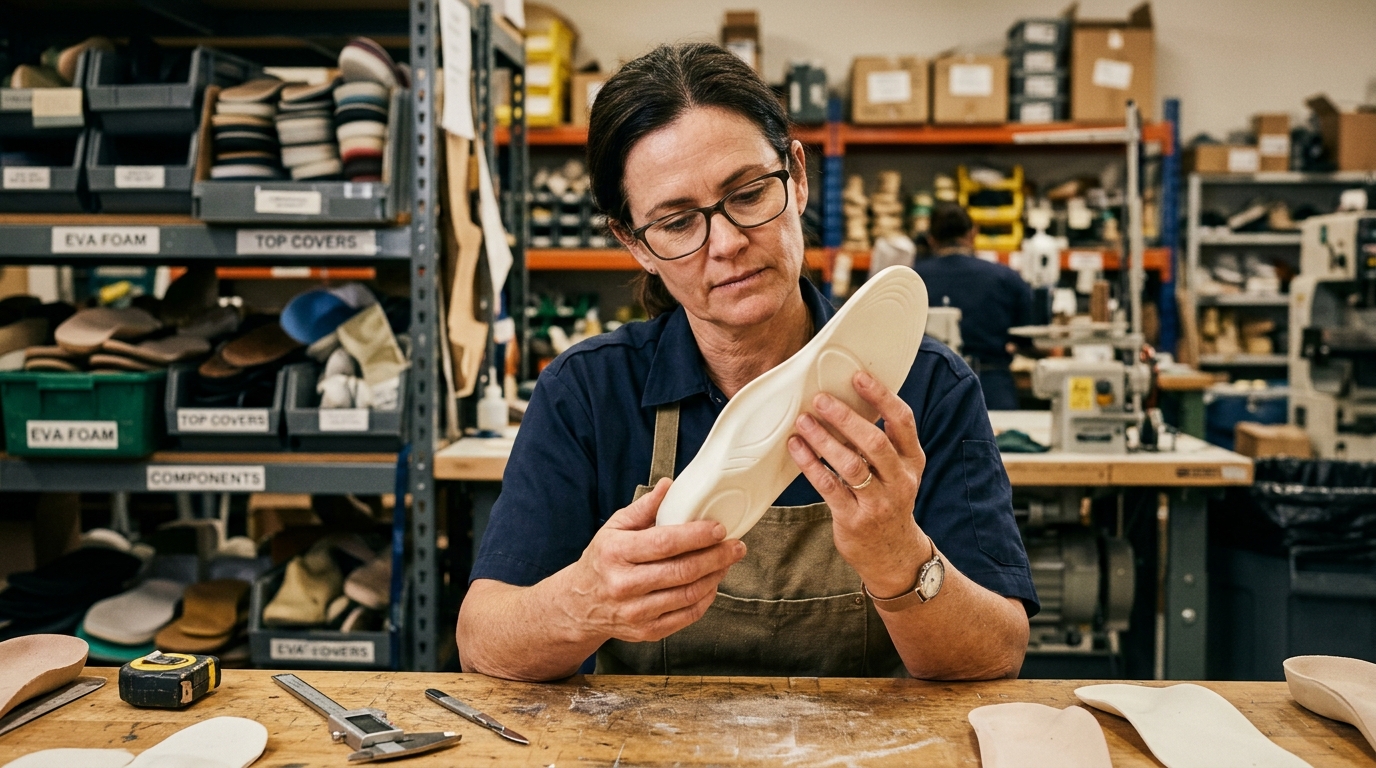
The shell is typically overlaid with a thin cushioning top cover — often PU foam, microfiber, or a textile laminate — to prevent pressure points. The art of designing these insoles for flat feet lies in the shell geometry: the medial flange height, the heel cup depth, and the flexion point where the shell terminates before the metatarsal heads. Too rigid and the insole becomes uncomfortable; too flexible and it fails to correct pronation.
B2B buyers should pay close attention to the shell material grade. Injection-molded nylon shells offer the best balance of rigidity, weight, and cost. Carbon-fiber shells command a premium but are justified in performance athletic or medical-grade applications. Always request a flex-test report and verify that the shell can withstand at least 100,000 loading cycles at the expected user weight range without cracking or deforming.
4. Memory Foam with Medial Arch Post
Memory foam insoles have enormous consumer appeal — the “step-in comfort” sensation is immediately noticeable. For flat-feet applications, however, standard memory foam alone is insufficient because it conforms too easily and provides little structural support. The solution is a hybrid design that embeds a firmer medial arch post beneath or within the memory foam layer.
This design gives the end user the plush feel they expect while the hidden arch post does the biomechanical work of supporting the collapsed arch. The post is typically made of high-density EVA or TPU and is contoured to match a low-to-medium arch profile — the sweet spot for most flat-footed users who need support without aggressive correction.
From a sourcing perspective, the challenge is ensuring consistent bonding between the memory foam and the arch post during production. Delamination is the most common quality issue in this category. Ask potential suppliers about their lamination process — heat bonding and adhesive film lamination tend to outperform spray adhesives. Also verify that the memory foam has a density of at least 60 kg/m³; anything lower will bottom out too quickly and negate the arch support.
5. PU Foam Full-Contour Insole
Polyurethane foam insoles occupy the premium tier of the insole market, and for flat-feet applications, their slow-recovery, high-resilience properties offer a compelling performance profile. Unlike EVA, which compresses and stays compressed over time, PU foam gradually returns to its original shape — meaning the arch support zone maintains its contour longer.
A full-contour PU insole for flat feet features a deep heel cup (typically 18–22mm), a pronounced medial arch ridge, and a metatarsal dome that redistributes forefoot pressure. This three-zone approach addresses the full biomechanical chain of problems that flat feet create: heel instability, arch collapse, and forefoot overloading.
The trade-off is cost and weight. PU insoles are heavier than EVA equivalents and more expensive to produce. For brands targeting the comfort, diabetic care, or premium work boot segment, the investment is justified. Speaking of work boots, many of the same arch support principles discussed here apply when sourcing custom insoles for work boots, where durability under extreme conditions adds another layer of specification complexity.
6. Orthotic-Grade TPU Insole for Pronation Control
Thermoplastic polyurethane (TPU) insoles designed to orthotic-grade standards represent the highest-performance tier for flat-feet correction. TPU offers an exceptional strength-to-weight ratio and can be engineered to specific flex modulus targets, allowing designers to create an insole that is rigid where it needs to be and flexible everywhere else.
For flat feet, the pronation-control geometry is paramount. The best orthotic-grade TPU insoles feature a deep, stabilizing heel cup with a built-in varus wedge — a slight inward cant that counteracts the natural tendency of flat feet to roll inward. The arch bridge is designed using biomechanical data mapped from pressure-plate studies, ensuring that the support profile matches the loading pattern of a pronating foot.
If your brand serves the running, hiking, or tactical footwear market, you may want to explore orthotic insoles for running that incorporate these TPU design principles. Sourcing teams should verify that the manufacturer holds relevant certifications — ISO 13485 for medical device quality management is the gold standard if you plan to market the insoles as orthotic devices.
7. Gel-Cushioned Flat-Feet Insole
Gel insoles occupy a distinct market niche: consumers who prioritize shock absorption and immediate comfort. For flat-feet users, gel insoles work best when the gel is strategically placed in the heel and forefoot zones while a firmer material — typically EVA or TPU — provides the arch support structure.
The most effective gel insole designs for flat feet use encapsulated gel pods rather than a continuous gel layer. This approach prevents the “waterbed effect” where gel displaces laterally under load and fails to provide targeted support. Encapsulated pods stay in place and deliver consistent impact absorption exactly where it’s needed.
From a manufacturing standpoint, gel insoles require more complex production processes. The gel must be poured or injected into a mold, cured, and then bonded to the base and top cover layers. This adds lead time and cost compared to pure foam alternatives. B2B buyers should request gel hardness specifications (typically measured in Shore OO), ensure the gel is medical-grade silicone or TPE (not cheap mineral oil–based compounds), and ask for aging test results — inferior gels can yellow, harden, or leak over time.
8. Cork-Based Natural Arch Support Insole
Cork insoles have experienced a renaissance driven by consumer demand for sustainable, natural materials. Cork’s unique cellular structure — millions of air-filled cells per cubic centimeter — gives it natural cushioning, thermal insulation, and moisture-wicking properties that synthetic materials struggle to replicate.
For flat-feet applications, cork is typically used in a molded or pressed composite form (cork granules bonded with natural latex or a bio-based resin) shaped into a contoured footbed with a built-in arch profile. Over time, cork gradually conforms to the user’s foot shape, creating a semi-custom fit that provides gentle arch support. While cork doesn’t offer the aggressive correction of a rigid shell or TPU insole, it’s ideal for casual and lifestyle footwear where comfort and sustainability messaging matter.
Sourcing cork insoles requires due diligence on material origin and composition. Premium insoles use Portuguese cork (FSC-certified), while budget alternatives may use lower-grade cork blended with high percentages of synthetic filler. Ask your supplier for the cork-to-binder ratio — anything below 70% cork content will compromise performance. Also confirm that the bonding agent is free of formaldehyde and meets REACH compliance for the US and EU markets.
9. 3D-Printed Custom Flat-Feet Insole
Additive manufacturing has opened entirely new possibilities for custom insoles for flat feet. 3D-printed insoles can be designed with lattice structures that vary in density across the footbed, delivering precise support in the arch zone while remaining flexible in the forefoot — all without the tooling costs of injection molding.
The workflow typically begins with a 3D foot scan (or pressure-map data), which feeds into generative design software that optimizes the lattice geometry for the user’s specific arch collapse pattern, body weight, and activity level. The insole is then printed in TPU, nylon, or a resin-based material. For B2B applications, this technology shines in the custom/bespoke segment — think made-to-measure orthotic lines or premium DTC brands offering personalized fit.
The limitation for high-volume B2B sourcing is throughput. Current 3D printing speeds make it impractical for orders of tens of thousands of pairs, but the technology is evolving rapidly. Some manufacturers now use 3D-printed molds to create conventional foam insoles with complex geometries — a hybrid approach that captures the design precision of additive manufacturing with the production speed of traditional processes. Partnering with a forward-thinking custom shoe insole manufacturer that invests in both digital and conventional capabilities gives your brand access to the best of both worlds.
10. Multi-Layer Composite Insole System
The most sophisticated custom insoles for flat feet aren’t made from a single material — they’re engineered as multi-layer systems where each layer performs a specific function. A typical high-performance composite might include a moisture-wicking textile top cover, a slow-recovery PU comfort layer, a medial-posted EVA support layer, and a rigid nylon stabilizer plate at the base.
This modular approach allows OEM engineers to tune each variable independently. Need more arch support? Increase the density of the EVA layer. Need better energy return? Swap the comfort layer for a supercritical CO₂ foam insole material. Need enhanced torsional rigidity for a trail running application? Upgrade the stabilizer plate to carbon fiber. The design flexibility is virtually unlimited.
For B2B sourcing teams, multi-layer composites represent the premium end of the cost spectrum but also the highest margin opportunity. The perceived value to end consumers is significant — especially when you can communicate the purpose of each layer through marketing materials and cross-section diagrams. The key sourcing requirement is finding a manufacturer with the engineering depth to design, prototype, and test multi-layer constructions efficiently. Request a design-for-manufacturing (DFM) review early in the process to avoid surprises during tooling and mass production.
Flat-Feet Insole Sourcing: Key Evaluation Criteria
Beyond the specific insole types listed above, every B2B sourcing decision for flat-feet insoles should address several universal criteria. Start with arch geometry validation: request CAD files or 3D scans of the insole’s arch profile and compare them against published biomechanical data for low-arch/flat-foot anatomies. The arch apex should sit roughly at the navicular bone — approximately 40–45% of the insole length from the heel.
Material testing documentation is non-negotiable. At minimum, ask for compression-set data (ASTM D3574), tensile strength results, abrasion resistance (Martindale or Taber), and any relevant toxicology reports (REACH, California Prop 65, CPSIA). If the insole includes adhesive layers, verify that the bond strength exceeds 2.0 N/mm under both dry and wet conditions.
Finally, evaluate the manufacturer’s OEM flexibility. Can they adjust arch height, heel cup depth, density zones, and top cover material on a per-SKU basis without requiring entirely new tooling? The best OEM insole manufacturer partners work with modular tooling systems that allow size-run and specification changes with minimal retooling cost and lead-time impact.
Flat-Feet Biomechanics: Why Arch Design Matters
Understanding the biomechanics of flat feet is essential for making informed sourcing decisions. When the medial longitudinal arch collapses — whether due to genetics, posterior tibial tendon dysfunction, obesity, or aging — the foot overpronates during gait. This means the ankle rolls inward excessively, the tibia rotates internally, and the knee, hip, and lower back absorb forces they aren’t designed to handle.
A well-designed insole intervenes at the foot level to prevent this chain reaction. The medial arch support lifts the navicular bone, the deep heel cup centers the calcaneus (heel bone) to reduce inward tilt, and the metatarsal support zone redistributes forefoot pressure away from the medial side. According to the American Academy of Orthopaedic Surgeons, arch supports and orthotic insoles are among the first-line conservative treatments recommended for symptomatic flat feet.
For B2B product developers, this biomechanical understanding translates directly into specification sheets. You should define the arch apex height (typically 20–28mm for flat-feet insoles), the heel cup depth (minimum 16mm for meaningful stabilization), and the rearfoot posting angle (2–6 degrees of varus post for moderate pronation control). These numbers aren’t arbitrary — they determine whether your insole actually works or is just a foam insert with a marketing claim.
FAQ
What causes flat feet in adults?
Flat feet result from weakened or stretched tendons (especially the posterior tibial tendon), genetics, obesity, aging, or injury. Some adults have flexible flat feet that only flatten under weight-bearing.
How firm should insoles be for flat feet?
Insoles for flat feet need a medial arch zone of at least 40 Shore C (EVA) to prevent collapse. The top comfort layer can be softer (25–35 Shore C), but structural support must come from a firmer base.
What’s the minimum order for custom flat-feet insoles?
MOQs vary by manufacturer and insole type, but most OEM factories require 1,000–3,000 pairs per SKU. 3D-printed insoles may have lower MOQs, while tooled injection-molded insoles typically require higher volumes.
Can one insole design work for all flat-feet types?
No — flat feet vary in severity and flexibility. A single design can address mild to moderate cases, but severe or rigid flat feet typically require a more aggressive arch profile and deeper heel cup.
How long do custom flat-feet insoles last?
High-quality insoles last 6–12 months with daily use, depending on material. PU and supercritical foam insoles tend to last longer than standard EVA due to superior compression-set resistance.
If you’re sourcing custom insoles for flat feet and want a manufacturing partner that combines material science expertise with scalable OEM production, FX Footwear (Fuxiang Group) is built for exactly that. From initial arch-profile design through prototype testing and mass production, our engineering team works alongside your product development group to deliver insoles that perform — not just on spec sheets, but on real feet, every day. Reach out to start your next project.