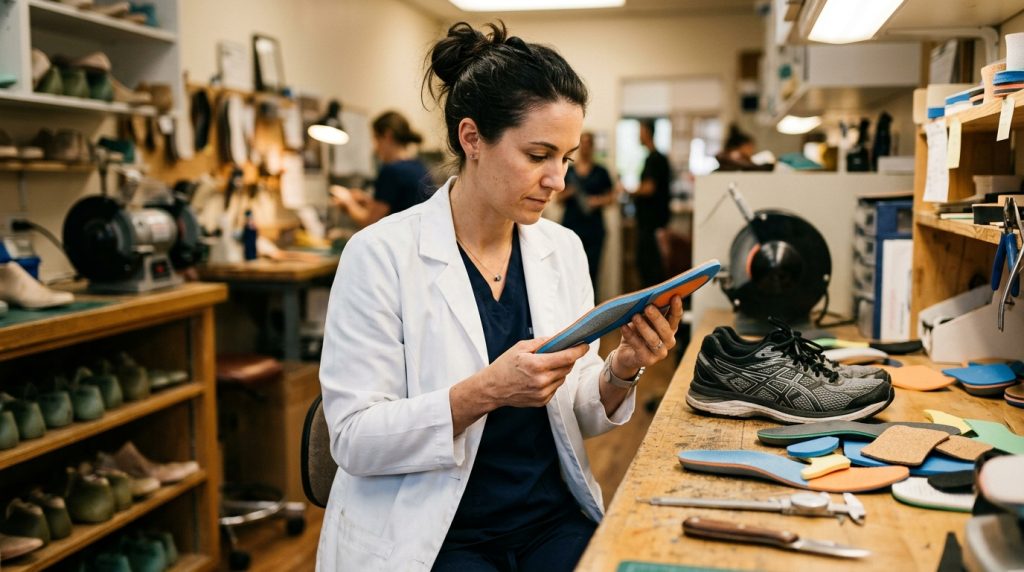
Dual density EVA insoles combine a softer top layer with a firmer base layer to deliver cushioning and structural support in a single insole. If you’re sourcing insoles for athletic, casual, or workwear footwear, this construction solves a problem that single-density EVA can’t: giving the foot a soft landing without bottoming out under load.
That’s the short version. The longer version involves material science, hardness specs, manufacturing methods, and some sourcing decisions that can save your brand months of back-and-forth. Let’s get into it.
What “Dual Density” Actually Means
A dual density EVA insole is two distinct EVA layers bonded together, each formulated to a different hardness. The top layer — the one touching the foot — is softer, typically in the 20–30 Asker C range. The bottom layer sits firmer, often 35–45 Asker C, acting as a structural platform.
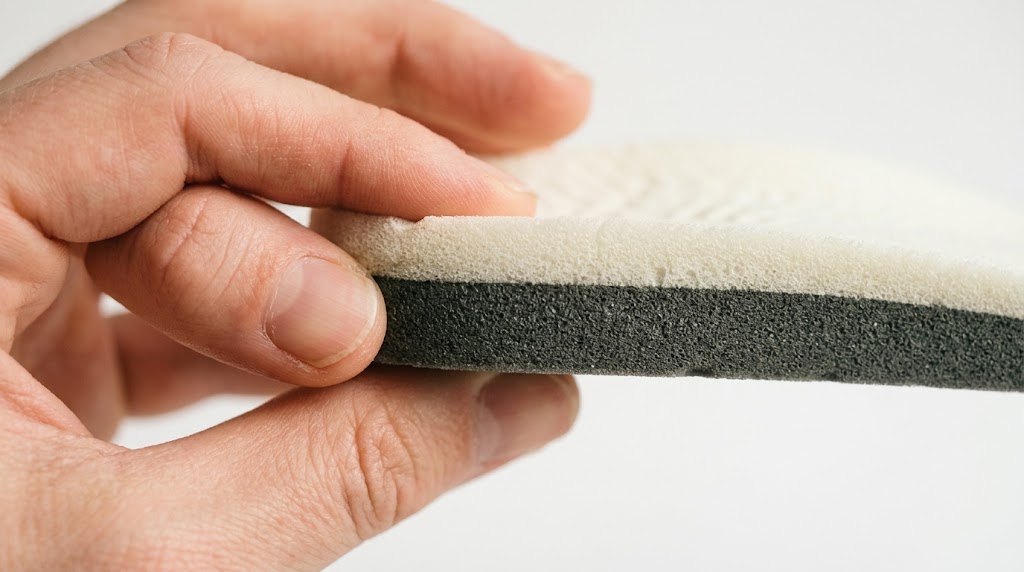
Why does this matter? Think about what happens when you step on a single-density EVA insole rated at 25 Asker C. It feels great out of the box. Plush. Cushy. But under a 90 kg wearer doing warehouse shifts, that foam compresses flat within weeks. The cell walls collapse. Comfort disappears. Now imagine a single-density insole at 40 Asker C. Durable, sure. But the wearer complains it feels like standing on a cutting board.
Dual density construction splits the difference — literally. The softer top absorbs initial impact and conforms around the foot’s contours. The firmer base resists compression set and maintains the insole’s geometry over time. You get the comfort score in wear-testing and the durability score in accelerated aging tests.
One detail that trips up newer product teams: EVA hardness in the insole industry is measured in Asker C, not Shore C. The standard range runs 20–45 Asker C with a ±3 tolerance. If a supplier quotes you Shore C values, that’s a flag — either they’re converting scales without telling you, or they’re not used to insole-specific specs.
Single vs. Dual Density EVA
| Feature | Single Density EVA | Dual Density EVA |
|---|---|---|
| Hardness | One uniform rating (e.g., 30 Asker C) | Two ratings (e.g., 25 top / 40 base) |
| Comfort perception | Good initially, fades faster | Consistent over longer wear cycles |
| Compression resistance | Lower (soft) or higher (firm) — pick one | High (firm base protects soft top) |
| Weight | Slightly lighter | Marginally heavier (~5–10%) |
| Tooling complexity | Standard mold | Requires dual-pour or bonded construction |
| Cost per unit (bulk) | Lower | 10–20% higher, depending on volumes |
| Best for | Budget casual, kids’ footwear, disposable inserts | Athletic, workwear, lifestyle brands with durability expectations |
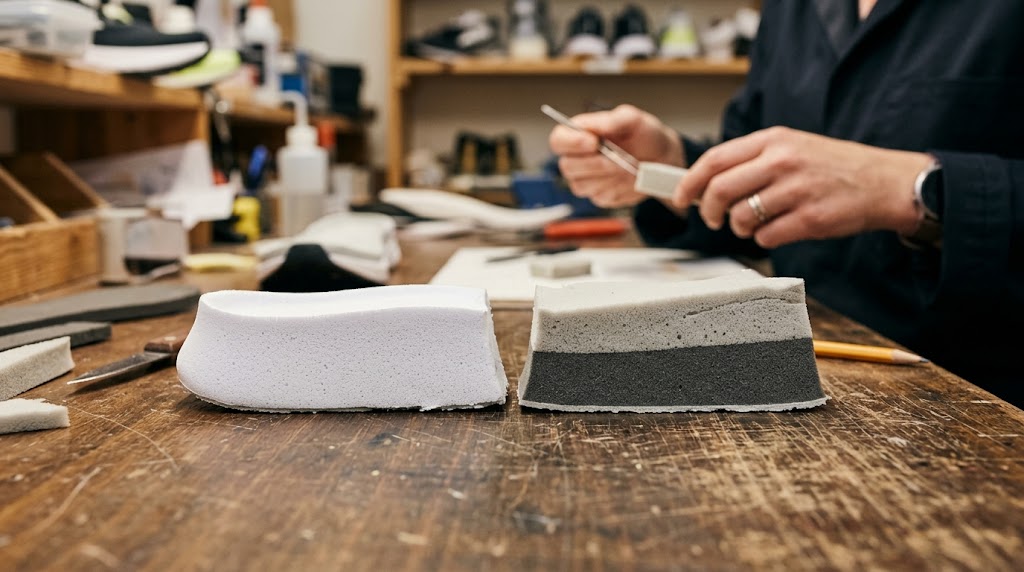
The tradeoff is real: dual density costs more per unit and requires more tooling precision. If you’re making a $12 retail flip-flop insert, it’s overkill. But for any application where end consumers expect the insole to perform after 200+ hours of wear — running shoes, hiking boots, safety footwear — the dual density construction pays for itself in fewer warranty claims and better reviews.
Worth noting that dual density EVA is different from multi-density constructions that incorporate PU or other foams. We covered open cell PU insoles in a previous article — PU excels at breathability and long-term compression resistance, but it doesn’t match EVA’s lightweight feel. When brands want both PU’s durability and EVA’s weight advantage, dual density EVA is often the answer.
How Dual Density EVA Gets Made
Three manufacturing routes exist for dual density EVA insoles, and the one you choose affects cost, lead time, and performance ceiling.
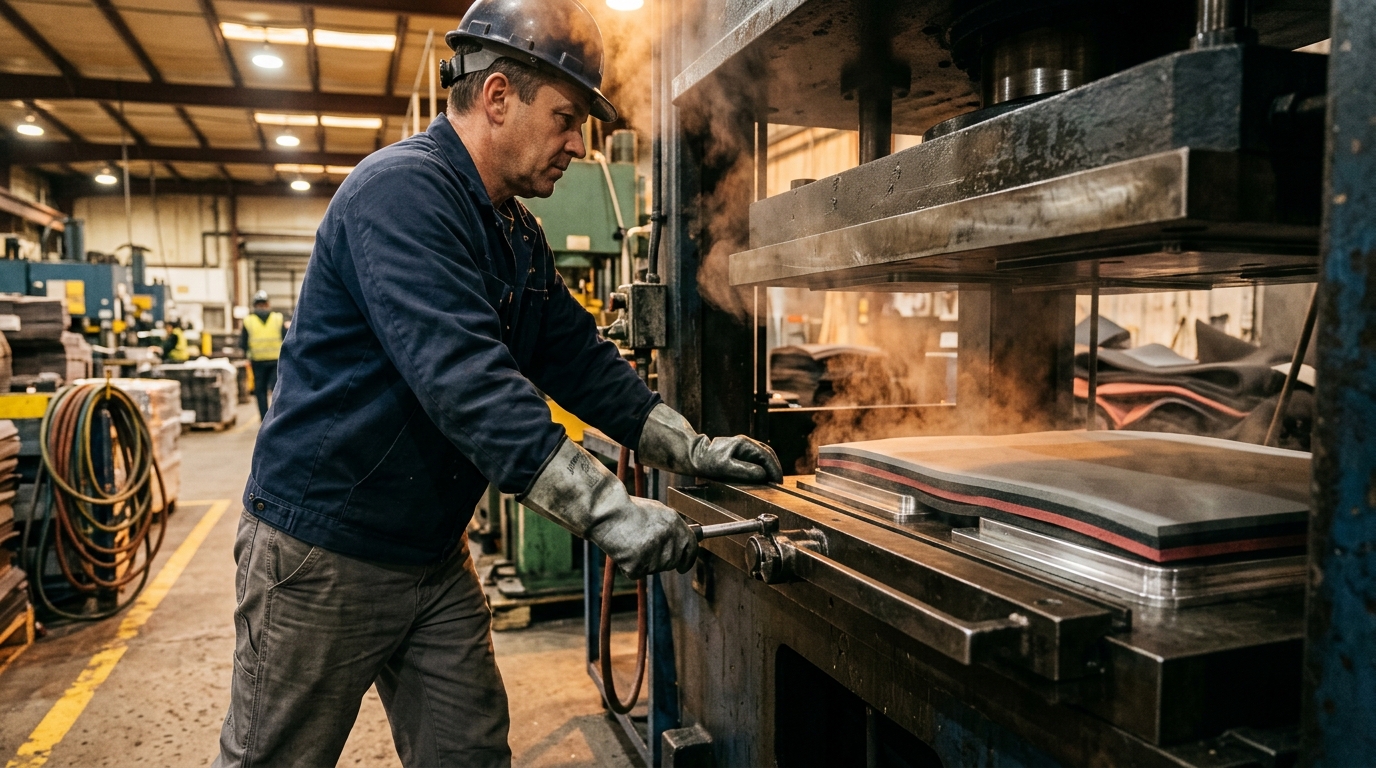
Compression molding (most common). Two pre-mixed EVA sheets — each at a different density — are stacked in a heated mold cavity. Heat and pressure fuse them into a single bonded unit. This is the workhorse method for mid-to-high volume orders. Bonding strength is excellent because the heat cycle partially cross-links the two layers together at the interface. At FX Footwear, compression-molded dual density insoles account for the majority of our dual density output.
Injection molding (two-shot or sequential injection). Molten EVA is injected into a mold in two stages — first the base layer, then the top layer (or vice versa). This method produces the most consistent density distribution and tightest tolerances. It’s faster per cycle once tooling is dialed in, but mold costs run higher upfront. Best for orders above 50,000 pairs where per-unit economics matter more than tooling amortization.
Die-cut and laminated. Two separate EVA sheets are foamed independently, then adhesive-bonded and die-cut to shape. This is the simplest route — no new compression or injection molds needed. Sampling can happen in roughly 3 days since it uses existing sheet stock and knife-cut tooling. The tradeoff? The bond line between layers is adhesive-dependent rather than thermally fused, which can delaminate under extreme flex cycling. Fine for casual inserts. Not ideal for athletic applications where the insole flexes thousands of times per day.
A production detail that matters for your BOM planning: dual density compression molds typically require about 10 business days for new tooling. If you’re already working with FX and have approved material specs, bulk production timelines for standard EVA insoles run 20–35 days after payment confirmation. Dual density adds minimal extra time to that window since the process change happens at the molding stage, not downstream.
Where Dual Density EVA Works Best
Not every shoe needs a dual density insole. Here’s where it earns its premium over single-layer EVA.
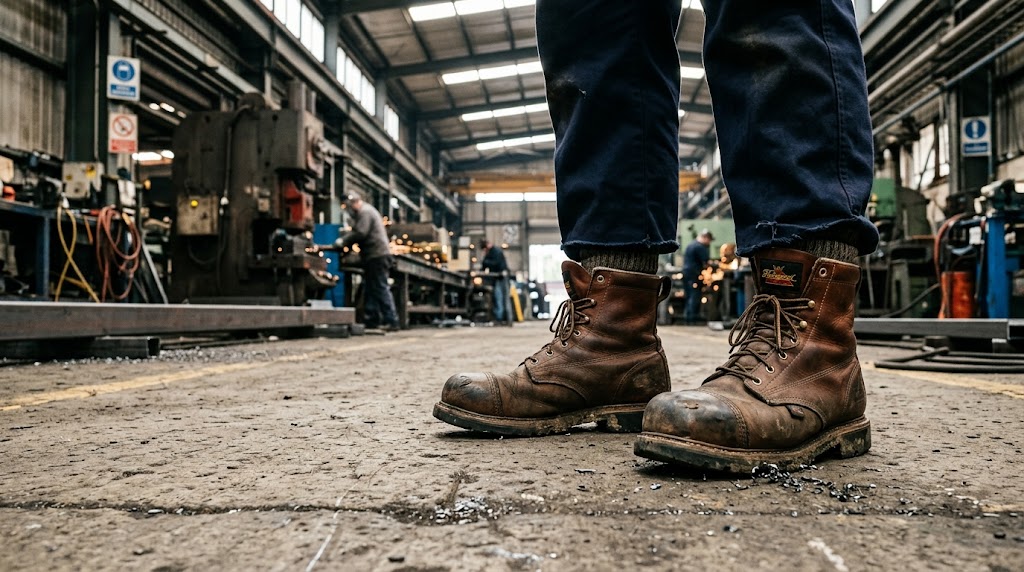
Workwear and industrial safety footwear. This is arguably the strongest use case. Workers standing 8–12 hours on concrete need cushioning that doesn’t collapse by Thursday. The firmer base layer (40–45 Asker C) in a dual density EVA insole resists compression set over months of daily wear, while the softer top layer (25–30 Asker C) reduces foot fatigue. Several work boot brands source dual density EVA insoles from our facilities for exactly this application — the insole has to pass ASTM F2413 requirements alongside the boot itself, and our in-house lab runs compression set and energy absorption testing before samples ship.
Athletic training shoes. For running, dual density EVA works best in daily trainers and stability shoes rather than race-day flats. (If you need maximum energy return for performance racing, supercritical CO₂ foam or PEBA-based constructions outperform EVA — that’s just physics.) But for a 60-mile-per-week training shoe where the insole needs to feel consistent from mile 1 to mile 300, dual density EVA hits the right balance of cost, weight, and durability. The softer top provides forefoot comfort during toe-off; the firmer base gives rearfoot stability during heel strike.
Hiking and outdoor. Uneven terrain means the insole takes asymmetric loads — heel edges on downhill, forefoot pressure on scrambles. A single-density soft insole would deform and create pressure points. Dual density distributes that load more evenly. Some outdoor brands pair dual density EVA with a rigid TPU stabilizer plate, which falls into our functional insole category for structural and multi-material constructions.
Where it doesn’t make sense: ultra-thin dress shoe insoles (there’s no room for two meaningful layers at 3mm total thickness), disposable hotel slippers, or kids’ shoes sized under EU 30 where the foot isn’t generating enough force to benefit from density differentiation. Save your tooling budget.
Sourcing Dual Density EVA Insoles
If you’re a US brand evaluating suppliers for dual density EVA insoles, here’s what to ask — and what to watch for.
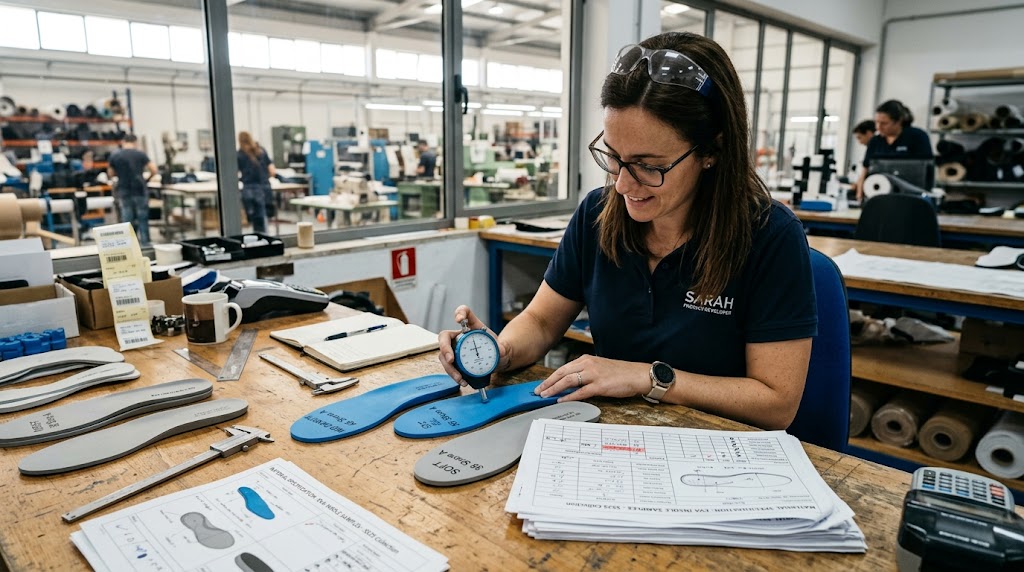
Material spec sheets, not just marketing names. Every supplier has a proprietary name for their EVA compound. What you need is the actual Asker C hardness per layer, density (g/cm³), compression set percentage after accelerated aging, and the test standard used (ASTM D2240 for hardness, ASTM D395 for compression set). If a factory can’t provide these within 48 hours, they’re either not testing or not set up for OEM-grade supply.
Production control across layers. The biggest quality risk in dual density EVA is inconsistency between batches. If the top layer runs 3 Asker C points harder than spec on one production run, your insole feels noticeably different — and consumers notice. Factories with end-to-end production control, from EVA foaming through molding and finishing, have tighter batch consistency than those outsourcing their foam billets. We control our EVA foaming in-house, which gives us visibility into every batch before it hits the mold press.
Multi-component sourcing advantage. Here’s a practical angle: if you’re already sourcing midsoles or uppers from a supplier, adding insoles to that same vendor simplifies your supply chain. As a custom shoe insole manufacturer with facilities in China, Northern Vietnam, Southern Vietnam, and Indonesia, FX Footwear can consolidate insole and midsole production under one roof — or at least under one purchase order. That’s fewer supplier audits, fewer quality protocols to manage, and lower freight costs from combined shipments.
Compliance for US market entry. Your dual density EVA insoles need to comply with CPSC requirements and, if selling in California, Prop 65. EVA foam itself isn’t typically problematic for heavy metals or phthalates, but adhesives used in laminated constructions and colorants in top cloth can trigger issues. Request SGS or Intertek test reports for the finished insole — not just the raw EVA compound. FX holds Intertek verification and can provide BETA-tested reports for components destined for the US market.
Lead time reality check. First-time custom dual density EVA insoles from initial spec to goods ready typically take 45–70 days. Add 18–30 days for ocean freight to US ports. So you’re looking at roughly 65–100 days from spec confirmation to receiving inventory. Plan accordingly for seasonal launches — if you need insoles in hand by August for fall delivery, start the conversation in April.
Dual Density EVA vs. PU vs. Supercritical Foam
Brands sometimes ask whether they should just skip EVA entirely and go straight to PU or supercritical CO₂ foam. Here’s how to think about it.
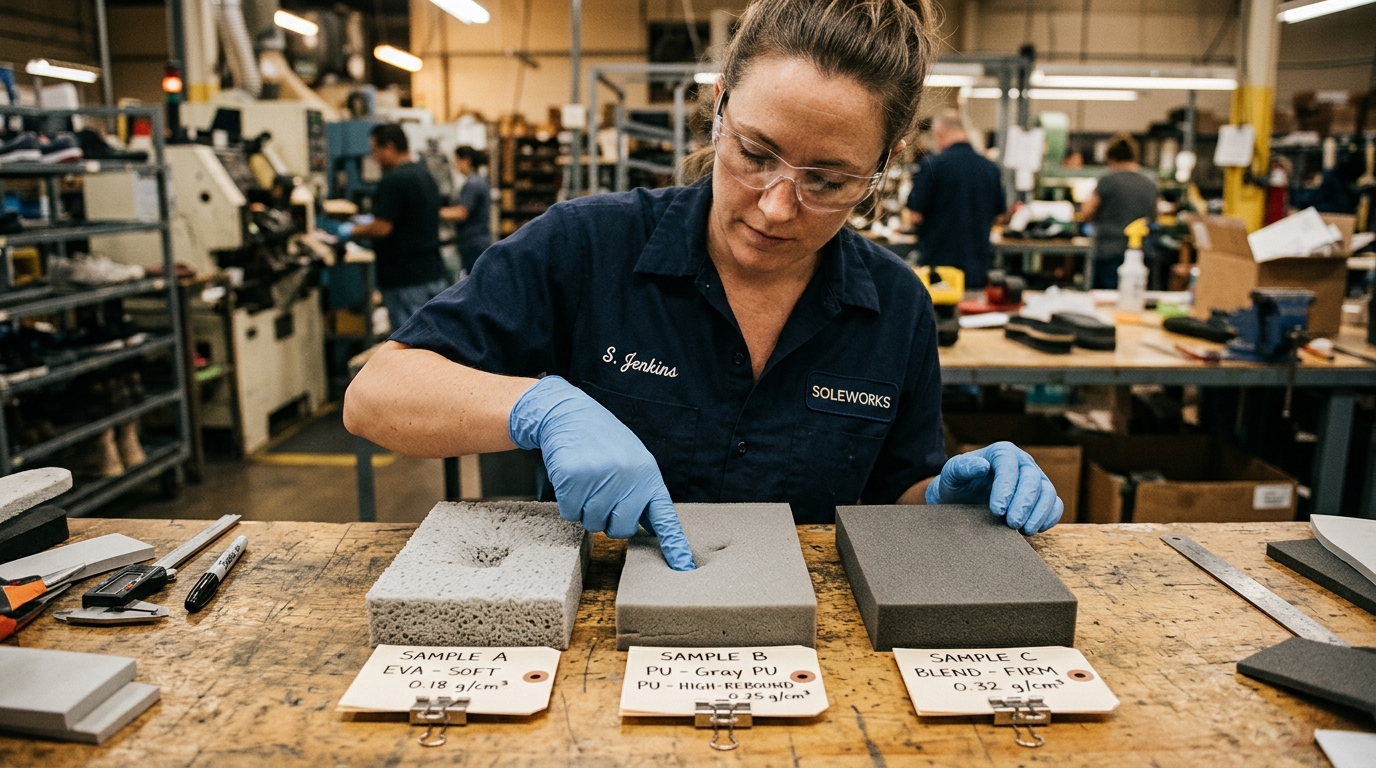
| Property | Dual Density EVA | PU (Open Cell) | Supercritical CO₂ Foam |
|---|---|---|---|
| Weight | Light | Heavier | Lightest |
| Cushioning feel | Bouncy, resilient | Soft, conforming | Responsive, springy |
| Energy return | Moderate | Lower than EVA | Highest |
| Compression resistance | Good (firm base layer) | Excellent | Very good |
| Breathability | Low (closed cell) | High (open cell) | Low (predominantly closed cell) |
| Cost (per pair, bulk) | $$ | $$ | $$$ |
| Best application | Athletic, work, casual | Comfort, therapeutic, dress | Performance running, premium athletic |
PU wins on long-term shape retention and breathability. If you’re building a comfort-focused lifestyle shoe or a therapeutic insert requiring ISO 13485 compliance, PU (or our Susterra®-based bio-PU formulations) is probably the better call.
Supercritical CO₂ foam wins on energy return and weight. For performance athletic footwear where consumers compare rebound specs, our PulseSport line delivers consistent energy feedback that dual density EVA can’t match — it uses a microcellular structure with predominantly closed cells, processed without traditional chemical blowing agents.
But dual density EVA wins on cost-at-scale and versatility. It’s the most tooling-friendly, the most widely understood by footwear factories globally, and the easiest to iterate on during development. For an EVA insole manufacturer producing hundreds of thousands of pairs per month, dual density EVA remains the backbone of the product mix.
The honest answer: most brands need dual density EVA in their line alongside other materials, not instead of them.
FAQ
What’s the hardness range for dual density EVA?
The top (comfort) layer typically ranges from 20–30 Asker C, and the base (support) layer from 35–45 Asker C. Standard industry tolerance is ±3 Asker C per layer.
How long do dual density EVA insoles last?
Under normal daily use, a well-made dual density EVA insole maintains its performance characteristics for 6–12 months. Heavy-use applications like warehouse work or high-mileage running will compress the top layer faster.
Are dual density EVA insoles heavier than single density?
Yes, but marginally — expect about 5–10% more weight due to the denser base layer. In a size US 9 insole, that’s roughly 3–5 grams per pair, which is imperceptible to most wearers.
What’s the minimum order for custom dual density EVA insoles?
MOQs vary by supplier. At FX Footwear, MOQs depend on whether existing tooling fits your size run or new molds are needed. Contact us with your specs for a quote — initial quotations for standard constructions come back within 48 hours.
Can dual density EVA insoles include sustainable materials?
Yes. The EVA compound in either layer can incorporate sugarcane-based EVA, algae-based EVA, or recycled EVA compounds, all sourceable under GRS-compliant supply chains with traceability documentation.
Ready to spec dual density EVA insoles for your next footwear line? FX Footwear (Fuxiang Group) manufactures insoles, midsoles, and uppers across facilities in China and Southeast Asia — giving you one-stop component sourcing with in-house lab testing and end-to-end production control. Reach out to our team with your material specs and target hardness, and we’ll get a detailed quote back to you within 48 hours.
Browse more articles in Insoles & Footbeds.