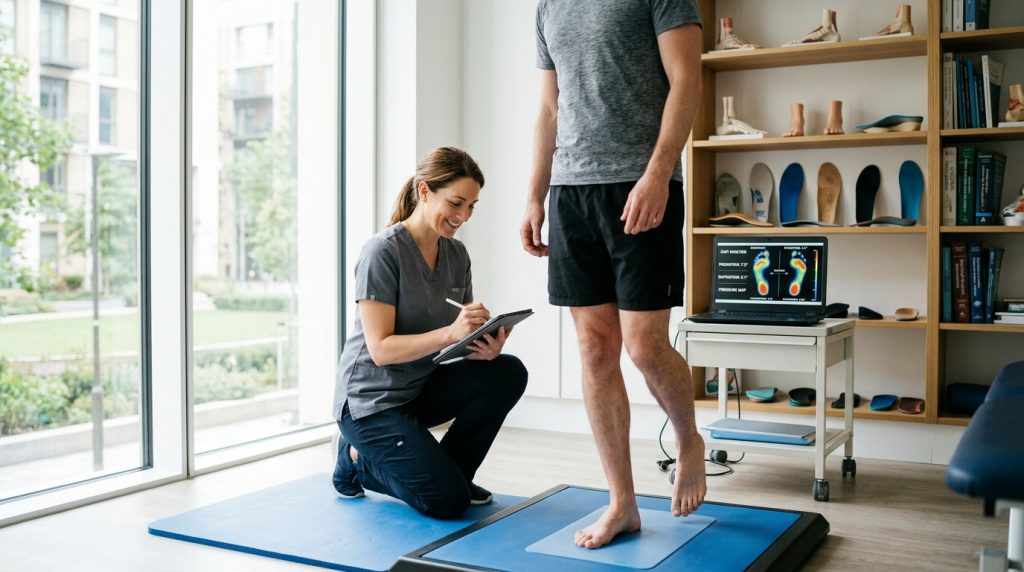
If you’ve ever noticed excessive wear on the inner edges of your shoes, or felt persistent knee and arch pain after walking or running, overpronation could be the culprit. Understanding what are the best insoles for overpronation — and how they actually work — is critical for footwear brands, product developers, and sourcing teams who want to deliver real biomechanical solutions to their customers. This technical deep-dive breaks down the mechanics of overpronation, the engineering behind corrective insoles, and what separates a product that genuinely helps from one that simply looks supportive on the shelf.
What Overpronation Actually Is
Overpronation occurs when the foot rolls excessively inward during the gait cycle —beyond the typical rearfoot eversion range of approximately 4–8 degrees during gait that helps absorb shock. As the arch collapses too far, it creates a chain reaction: the ankle rotates inward, the shin twists, and stress accumulates in the knee, hip, and lower back. It’s one of the most common biomechanical issues affecting both athletes and everyday wearers.

What makes overpronation particularly tricky from a product design standpoint is that it isn’t a single, uniform condition. Some individuals overpronate mildly due to flexible flat feet, while others have rigid fallen arches. The degree of pronation, foot width, body weight, and activity level all influence how severe the dysfunction becomes and what kind of corrective intervention is appropriate.
For footwear brands, this complexity means a one-size-corrects-all approach simply won’t work. The most effective solutions require a combination of medial arch support, rearfoot motion control, and appropriate cushioning — all calibrated to the wearer’s specific gait pattern. That’s why understanding the underlying mechanics is the necessary first step before any insole design conversation begins.
Biomechanics of Corrective Insole Design
Corrective insoles for overpronation work primarily through three mechanisms: arch support, heel cupping, and medial posting. Arch support prevents the midfoot from collapsing by distributing load across a broader surface area. Heel cupping cradles the calcaneus — the heel bone — and keeps it from tilting excessively inward. Medial posting refers to a slight wedge built into the inner heel or forefoot that mechanically tilts the foot back toward neutral alignment.
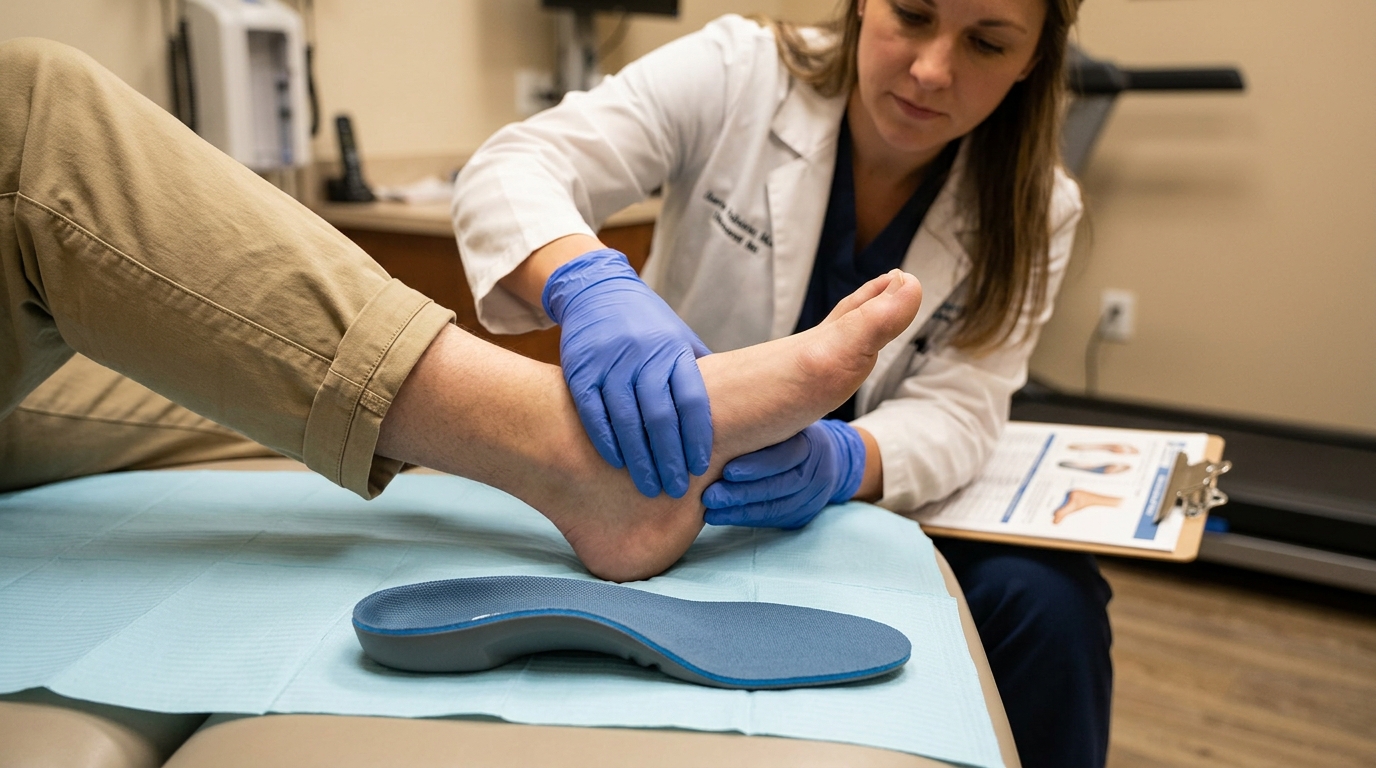
The materials chosen for each functional zone matter enormously. High-density EVA or polypropylene shells are common for the structural base because they resist compression under load without losing their corrective geometry over time. Softer top covers — typically polyurethane foam or fabric — improve comfort at the skin interface, while the midsole layer determines how much energy return versus motion control the insole delivers.
What separates clinically meaningful designs from decorative ones is the rigidity gradient. A well-engineered insole for pronated feet is firmer at the medial arch and heel, and progressively softer toward the lateral forefoot. This gradient guides the foot into a corrected position without creating painful pressure points. Brands that get this balance right — like those working with an experienced shoe insole manufacturer — consistently outperform competitors whose products sacrifice function for cost.
Motion Control Insole Materials
Material selection is where the technical gap between average and exceptional overpronation insoles becomes most visible. The shell or chassis of a motion-control insole is typically made from semi-rigid polypropylene, carbon fiber composite, or high-density EVA. Polypropylene offers excellent durability and a predictable flex point; carbon fiber is lighter and stiffer, often preferred in performance running applications; and high-density EVA provides a middle ground of support with slightly more flexibility.
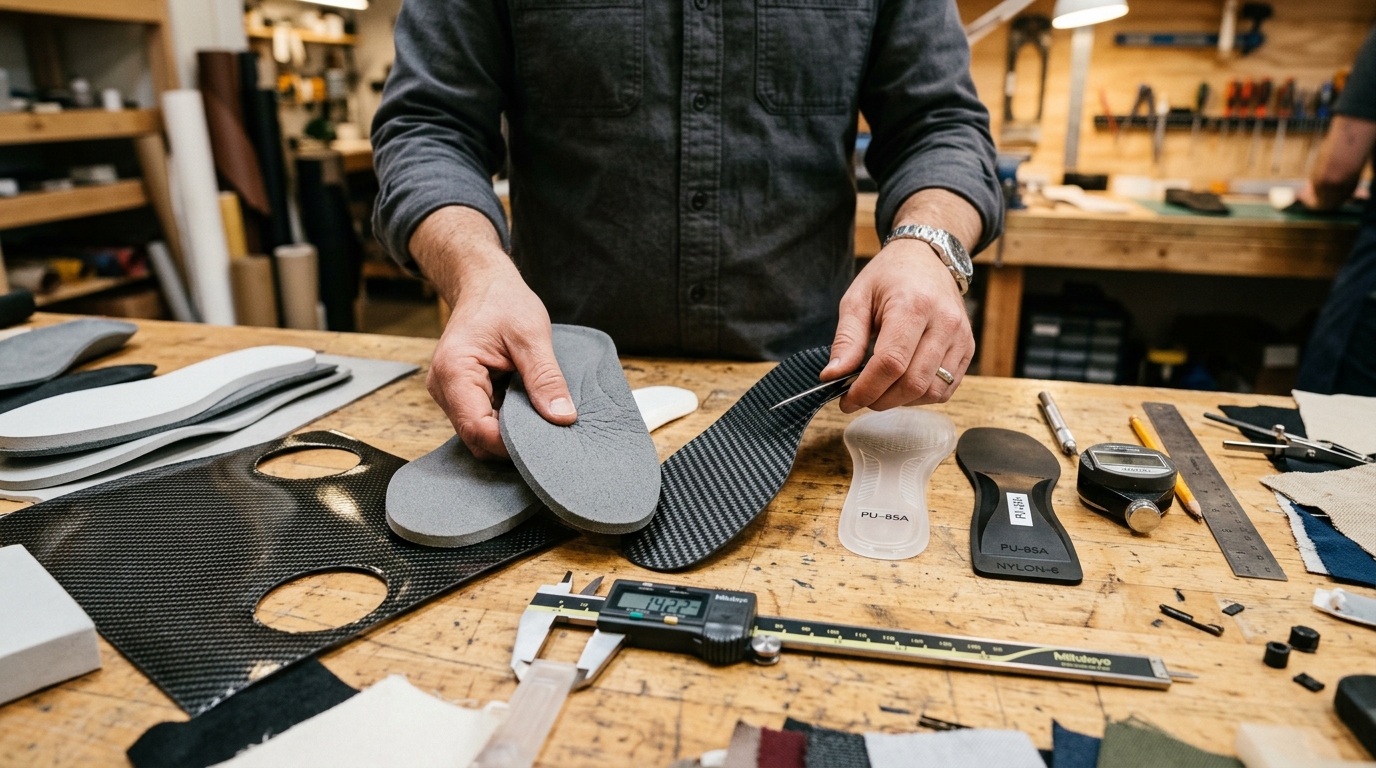
The cushioning layer adds another dimension. Standard open-cell PU foam provides adequate comfort but may experience compression set over time, especially under high-frequency use. Newer foam technologies — including memory foam variants and advanced closed-cell structures — maintain their shape far longer. For brands interested in premium positioning, a supercritical CO2 foam insole offers superior energy return and resilience that standard foams simply can’t match.
Top fabric selection also affects performance. Moisture-wicking, antimicrobial top covers keep the insole environment clean and reduce friction-related blistering, which matters especially in corrective insoles where the foot is being guided into an unfamiliar position. Brands that specify the full material stack — shell, cushion layer, and cover — rather than leaving it to a supplier’s default choices produce significantly more consistent results across production runs.
Insole Categories for Overpronation
Not all corrective insoles serve the same end-use, and understanding the category landscape helps brands position their products more precisely. At the clinical end of the spectrum sit full-contact orthotic insoles, which provide maximum medial arch support and heel control. These are typically recommended for moderate-to-severe overpronation and are often prescribed by podiatrists, though over-the-counter versions have become increasingly sophisticated.
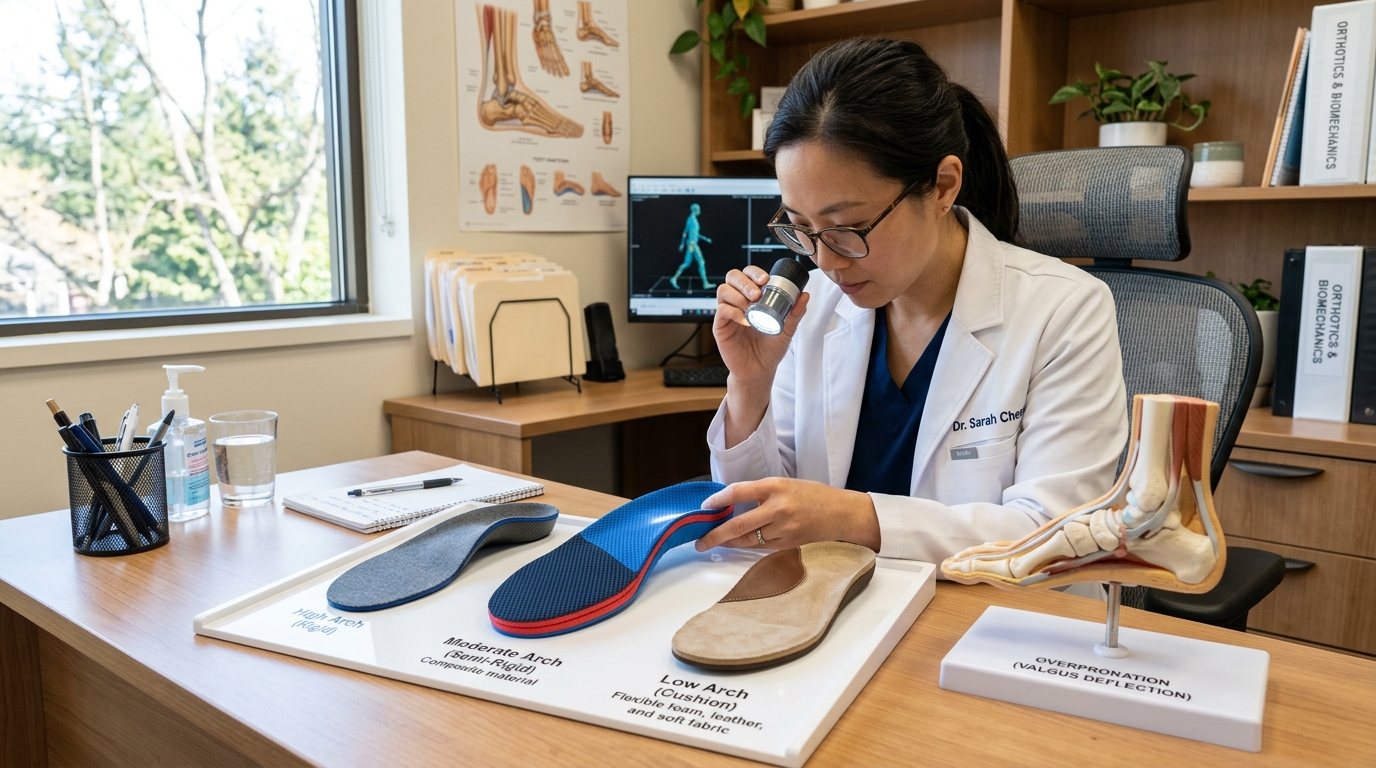
Mid-category products — sometimes called semi-rigid or sport-support insoles — balance correction with comfort, making them appropriate for athletic footwear, hiking boots, and casual daily wear. These are arguably the highest-volume category for footwear brands because they address the largest addressable market: active wearers with mild-to-moderate overpronation who want relief without the clinical feel of a rigid orthotic.
At the softer end sits cushioned arch-support insoles, which provide gentle pronation correction primarily through arch contouring rather than structural rigidity. These work well for users in early stages of overpronation or those who prioritize comfort alongside correction — a topic explored in depth in our guide to best comfortable shoe insoles. For brands building out a full insole line, offering products across these categories — rather than a single design — is the most effective way to capture the full range of consumer needs. If you’re still defining which type suits your target customer, a structured insole buying guide can help map the right solution to the right need.
Testing and Validating Gait Correction
Developing an insole that claims to correct overpronation is one thing — validating that it actually does is another. The most rigorous brands use a multi-stage testing protocol that begins with pressure mapping. Pressure mapping technology captures the distribution of force across the plantar surface of the foot during walking and running, allowing engineers to see precisely where load is concentrating and whether the insole is successfully redirecting it.
Gait analysis using motion capture cameras or accelerometer-based wearables adds another validation layer. These tools measure joint angles at the ankle, knee, and hip through the full gait cycle, quantifying how much the insole reduces internal rotation. Clinical studies combining pressure mapping with motion capture indicate that well-designed medial-posted insoles can reduce knee internal rotation to a measurable extent — contributing to improved load distribution and potential benefits in pain relief and injury risk management. Brands asking what are the best insoles for overpronation will find that this kind of validated, data-backed design is what distinguishes products that genuinely perform from those that merely claim to.
Durability testing completes the validation process. Compression testing machines cycle insoles through thousands of repetitions to simulate real-world wear, measuring how much corrective geometry is retained over time. Brands sourcing an insole for pronated feet should request durability data upfront — an insole that loses its arch height after 60 days of wear isn’t solving the problem, it’s deferring it. Asking potential manufacturing partners for test data on both compression set and pressure mapping results is one of the most effective ways to separate genuine solution providers from those offering cosmetic corrections.
FAQ
FAQ: What are the best insoles for overpronation?
The best insoles for overpronation combine a semi-rigid or rigid medial arch support, a deep heel cup, and a medial heel post that tilts the rearfoot toward neutral. Look for designs made with polypropylene or high-density EVA shells, which maintain their corrective shape through extended use. For brands, the best products are those validated through pressure mapping and gait analysis rather than designed by appearance alone. The ideal choice also depends on end-use — athletic applications typically demand lighter, more flexible options than everyday or clinical use cases.
FAQ: How do overpronation and flat-foot insoles differ?
Overpronation and flat feet are related but not identical conditions. Flat-foot insoles primarily address the collapsed arch by filling the void beneath it. Overpronation insoles go further by controlling rearfoot motion through heel cupping and medial posting, correcting the inward rotation of the entire lower limb rather than just supporting the arch. Many users have both conditions simultaneously, but the corrective mechanisms differ enough that a true overpronation insole delivers more comprehensive biomechanical intervention.
FAQ: Can insoles permanently fix overpronation?
Insoles do not structurally correct overpronation — they manage it. While wearing corrective insoles consistently can train gait patterns over time and reduce compensatory muscle tension, the underlying foot mechanics typically remain unchanged if the insoles are removed. For permanent improvement, insoles are most effective when combined with strengthening exercises targeting the intrinsic foot muscles, tibialis posterior, and hip abductors. Footwear brands should position corrective insoles as an ongoing management tool rather than a one-time cure.
FAQ: What makes overpronation insoles wear out?
The primary cause of premature wear is compression set — the loss of material height and density under repeated load. Low-density foams are the most vulnerable. Brands can extend insole lifespan by specifying higher-density base foams, reinforcing the medial arch zone with a polypropylene or nylon shell, and using abrasion-resistant top cover fabrics. Activity level matters too: a runner logging 30 miles per week will degrade an insole far faster than a casual walker. Offering insoles in activity-specific formulations helps brands set accurate replacement expectations.
FAQ: How to source overpronation insoles at scale?
Sourcing corrective insoles at scale requires a manufacturing partner with proven biomechanical engineering capabilities, not just foam-cutting capacity. Brands should evaluate suppliers based on their ability to customize arch height, shell rigidity, and heel cup depth — and to validate those specifications with real testing data. Working with a wholesale shoe insole manufacturer that offers co-development services, material transparency, and durability documentation reduces product liability risk and accelerates time to market with a product that genuinely performs.
For footwear brands serious about building products that solve real gait problems, the details matter enormously — from shell material selection to validation testing protocol. FX Footwear (Fuxiang Group) brings deep manufacturing expertise and biomechanical design capability to every corrective insole project, helping brands deliver products that answer what are the best insoles for overpronation with evidence, not guesswork. Reach out to our team to explore co-development options, request material specifications, or discuss custom tooling for your next overpronation insole line.