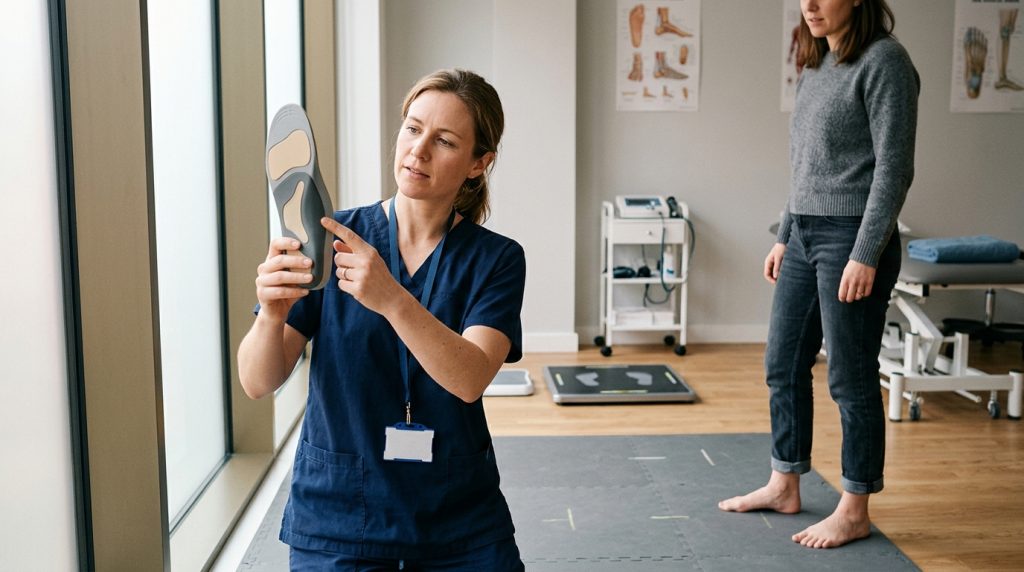
Insole overpronation is one of the most common biomechanical challenges footwear designers and brand developers face today. When the foot rolls inward excessively during the gait cycle, it places stress on the ankles, knees, and lower back — cascading into discomfort that users feel with every step. Yet the solution isn’t just about adding arch support. The materials used inside an insole determine how effectively it corrects motion, how long that correction lasts, and whether the wearer will actually keep the insole in their shoe. This deep dive unpacks the biomechanics of overpronation, explains how specific materials respond to gait forces, and gives footwear developers the technical grounding they need to make smarter sourcing decisions.
Overpronation Biomechanics Explained
Pronation itself is a natural and necessary motion. As the foot strikes the ground, a healthy gait involves a slight inward roll of the ankle — typically between 4° and 6° — that acts as a shock-absorption mechanism. Problems arise when that inward roll exceeds roughly 15°, which is the clinical threshold most podiatrists use to classify overpronation. At that point, the arch collapses further than intended, the tibia rotates inward, and the kinetic chain from heel to hip begins compensating in ways that generate cumulative strain.
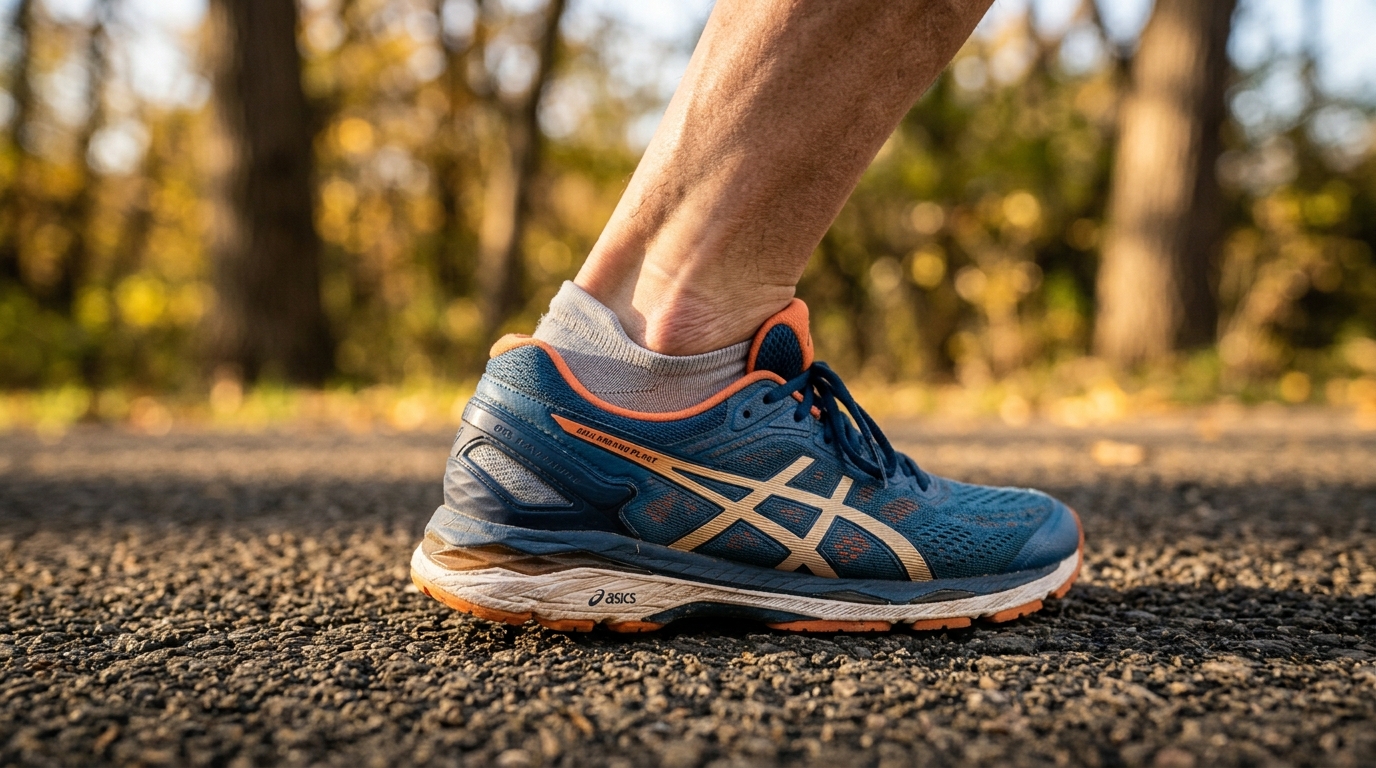
From a footwear engineering standpoint, what matters is understanding where in the gait cycle the overpronation is most severe. For most wearers, the critical window is the midstance phase — the moment when the full body weight transfers over the planted foot. This is when arch collapse is deepest and when an insole’s medial posting or rearfoot cup needs to do the most mechanical work. If the insole material is too soft to resist at this moment, it simply compresses and allows the collapse to proceed unchecked.
Understanding the gait cycle also clarifies why a one-size-fits-all approach fails. A runner’s overpronation presents differently than a warehouse worker’s, because the load magnitude, cadence, and surface type all vary. Footwear developers who work with a knowledgeable shoe insole manufacturer can map these end-use scenarios to specific material formulations rather than defaulting to generic arch profiles.
Materials That Resist Pronation Forces
The core challenge of corrective insole design is selecting materials that are stiff enough to guide motion but compliant enough to remain comfortable across a full workday or workout session. The industry generally works with four primary material categories: EVA foam, polyurethane (PU), thermoplastic shells, and natural cork composites. Each behaves differently under the shear and compressive forces that accompany insole overpronation.
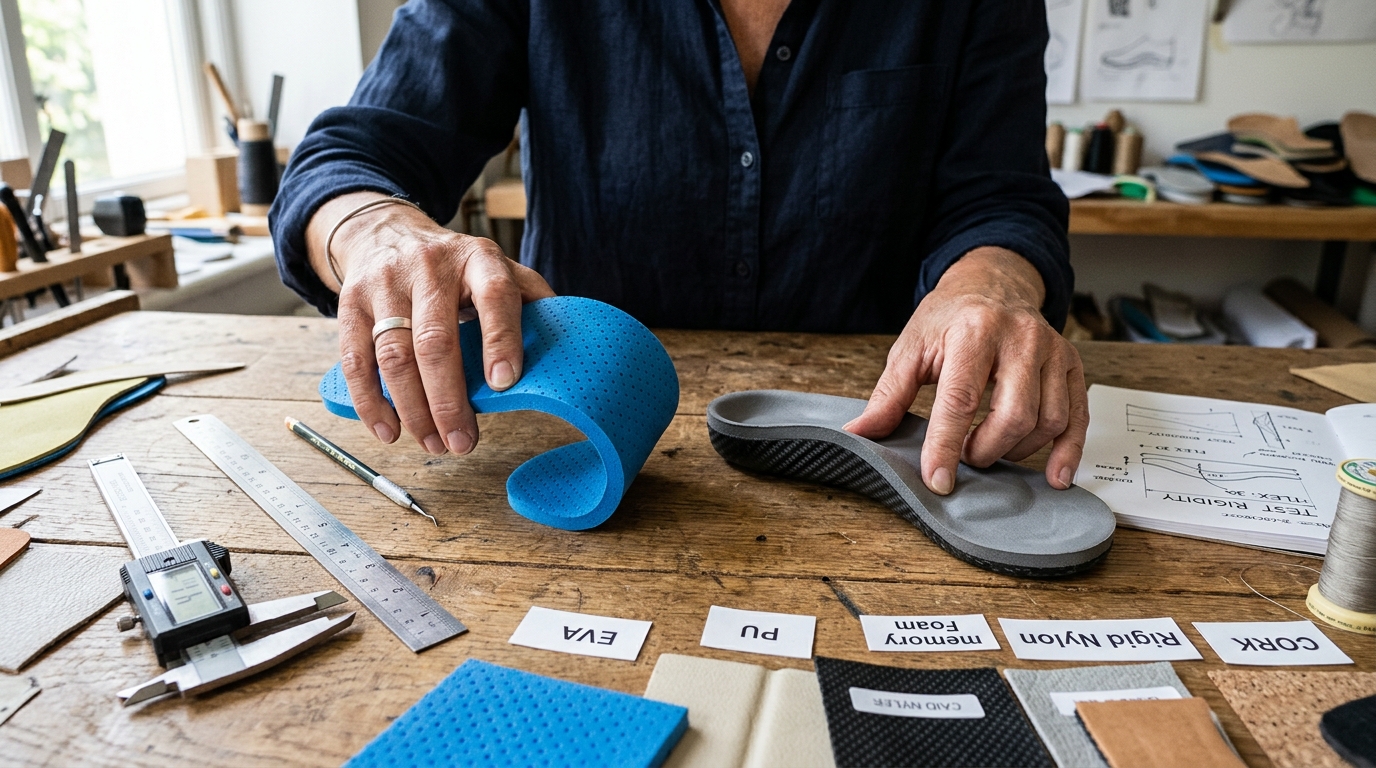
EVA (ethylene-vinyl acetate) foam is the most widely used base material, and for good reason. It is lightweight, tunable through density variation, and cost-effective at volume. However, standard EVA compresses over time — a phenomenon called compression set — which means a medial post molded in EVA at 45 Shore C may feel noticeably softer after just 60 to 90 days of heavy use. This is a real concern for brands making durability claims. Dual-density EVA, where a firmer medial zone (typically 55–65 Shore C) is bonded to a softer lateral zone (around 40–45 Shore C), addresses this by concentrating resistance exactly where pronation load is highest while preserving lateral cushioning.
Thermoplastic materials — particularly polypropylene and nylon-reinforced composites — are used for rigid and semi-rigid shells that sit beneath a cushioning top layer. These shells provide the most reliable long-term correction because they do not compress or deform under body weight. Their trade-off is that they require careful contouring to avoid pressure points, especially around the navicular bone and the first metatarsal head. Developers considering a dedicated insole for pronated feet will often find that a hybrid approach — thermoplastic shell plus EVA or PU top cover — delivers the best balance of correction and comfort.
Shore Hardness & Arch Height Spec
Specifying materials without specifying geometry is a common mistake in corrective insole development. Shore hardness values only tell part of the story; the arch height, medial post angle, and heel cup depth collectively determine how aggressively the insole corrects and which severity of overpronation it is suited to address.
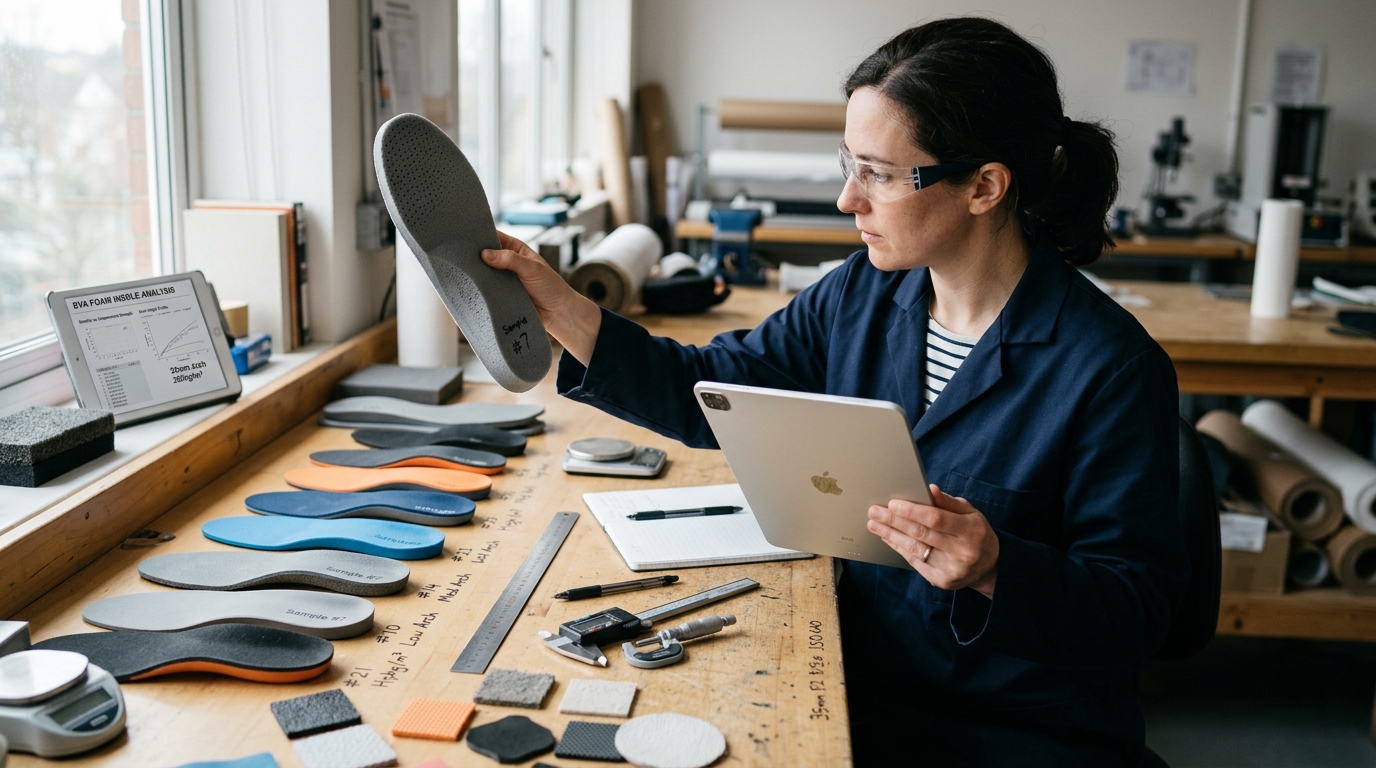
Arch height is typically categorized in three tiers. Low-profile insoles (arch height 8–12 mm) are suitable for mild overpronation and casual footwear, where a pronounced arch would feel intrusive. Medium-profile insoles (13–17 mm) cover the moderate overpronation range and work well in athletic and occupational footwear where the upper provides some structural support. High-profile insoles (18 mm and above) are reserved for severe overpronation cases, custom orthotics, or therapeutic footwear. At this height, the insole essentially becomes a functional device rather than a comfort accessory, and material stiffness must increase accordingly — typically above 60 Shore C in the medial post — to prevent the arch from bottoming out under load.
Medial post angle is the other critical specification. A 4° medial post is considered neutral-to-corrective and suits mild cases. A 6° post is the standard corrective angle used in most OTC (over-the-counter) corrective insoles. Posts above 8° are semi-custom territory and require more precise fit assessment. When specifying these angles, it is worth noting that the post angle interacts with heel cup depth — a deeper cup (20 mm or more) stabilizes the calcaneus and amplifies the corrective effect of any given post angle, which means a 4° post paired with a 22 mm heel cup can outperform a 6° post in a shallow 14 mm cup.
TPU vs. EVA Correction Durability
Thermoplastic polyurethane (TPU) has gained significant traction as a corrective insole material in recent years, and the reasons are well-grounded in material science. TPU exhibits much lower compression set than standard EVA — typically less than 10% after 72 hours under load, compared to 20–35% for standard EVA formulations. This means a TPU-based corrective element retains its geometry and stiffness far longer, which directly translates into sustained gait correction rather than a correction that fades within the first few months of wear.
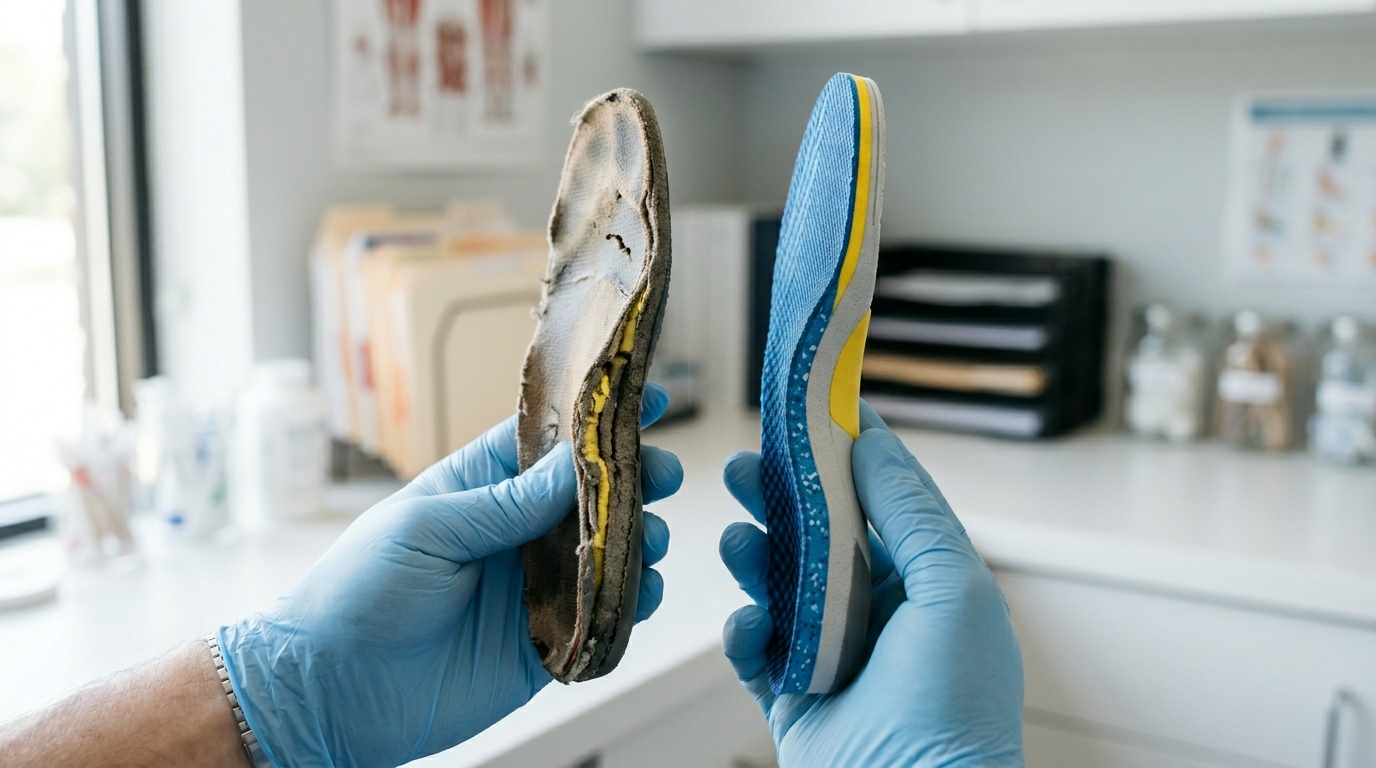
Where TPU loses ground to EVA is in energy return and processing cost. Standard EVA, especially closed-cell formulations, returns more kinetic energy per step — a property wearers experience as a “springy” feel underfoot. This matters in athletic applications where insole overpronation correction must coexist with propulsion efficiency. Some manufacturers have responded by using TPU only for the shell or post component while retaining EVA or supercritical foam for the cushioning layer. This hybrid construction captures the dimensional stability of TPU and the energy return of a high-performance foam.
It is also worth mentioning polyurethane foam — distinct from TPU — as an intermediate option. PU foam is denser and heavier than EVA but offers superior compression resistance and a firmer, more consistent feel across temperature ranges. This makes it a strong candidate for occupational and work footwear where insole performance needs to hold up through extended shifts and temperature variations. Brands developing insoles for rugged environments should explore this option carefully, particularly before moving to full TPU construction, and the performance comparison with real-world work use cases is explored further in this series on the best boot insoles for work.
Sourcing Corrective Insoles: What to Specify
Translating biomechanical requirements into a manufacturer-ready technical brief is where many brands lose momentum. The gap between “we need a corrective insole for mild-to-moderate insole overpronation” and a production-ready spec sheet is substantial, and bridging it requires both material knowledge and manufacturing process understanding.
A well-structured spec sheet for a corrective insole should define: top cover material and thickness (typically 1–3 mm of microfiber, leather, or moisture-wicking fabric), cushioning layer material and Shore hardness, shell or post material (if applicable), arch height at the scaphoid, medial post angle and position, heel cup depth and width, overall insole length and width by size run, and target weight per pair. Each of these variables affects both performance and cost, so prioritizing them in order of functional importance helps when negotiating with a supplier.
When vetting manufacturers, it is worth applying the same rigor that goes into any OEM relationship. Corrective insoles require tooling precision — particularly in the molds used for thermoplastic shells and dual-density EVA posts — and not all suppliers have the equipment or QC protocols to hold the tight tolerances that gait correction requires. This mirrors broader supplier evaluation challenges covered in this series, including the supplier red flags discussed in the piece on footwear OEM supplier vetting. Working with a manufacturer who provides biomechanical testing data, not just product samples, is a meaningful differentiator when evaluating corrective insole partners.
FAQ
FAQ: What materials work best for insole overpronation correction?
The most effective materials are dual-density EVA foam, thermoplastic polyurethane (TPU), and rigid or semi-rigid polypropylene shells. Dual-density EVA suits mild-to-moderate cases; TPU is preferred when long-term dimensional stability is the priority; polypropylene shells provide the rigid foundation needed for severe overpronation. Most high-performance corrective insoles combine two or more of these in a hybrid construction — see the Materials section above for a full breakdown of trade-offs.
FAQ: How does arch height affect pronation correction?
Arch height determines how aggressively an insole engages the medial longitudinal arch during midstance. A low-profile arch (8–12 mm) provides subtle guidance suitable for mild overpronation, while a medium-profile arch (13–17 mm) is standard for moderate cases in athletic and occupational footwear. High-profile arches above 18 mm are reserved for severe overpronation and function more like a custom orthotic. Beyond the arch height itself, the combination with heel cup depth and medial post angle determines total corrective force — a deeper heel cup amplifies any given arch height’s correction by stabilizing the calcaneus before the arch even engages.
FAQ: How long do corrective insoles maintain their correction?
Durability varies by material. Standard EVA begins losing stiffness after 60–90 days of heavy use; TPU and polypropylene shells typically hold their geometry for 12–18 months under normal conditions. For the full material-by-material comparison, refer to the TPU vs. EVA Correction Durability section above. When making durability claims, request compression set test data (ASTM D395 or equivalent) from your manufacturer.
FAQ: Can one insole correct overpronation and supination?
No — overpronation and supination require opposite corrective geometries. An insole designed for overpronation features medial posting, which tilts the foot outward to reduce inward roll. An insole for supination typically has lateral arch support and a less aggressive heel cup to encourage the foot to roll slightly inward toward neutral. Using an overpronation insole on a supinating foot would amplify the supination problem rather than correct it. Footwear developers should segment their product line accordingly, and end-use guidance should clearly indicate which biomechanical profile each insole addresses to prevent misuse.
FAQ: What belongs in a corrective insole brief?
A complete brief should specify: top cover material and thickness, cushioning foam type and Shore hardness, shell or post material and stiffness, arch height at the navicular, medial post angle and position, heel cup depth and width, size run dimensions, and target weight per pair. Also request compression set test results, arch height retention data after accelerated aging, and full-size-run samples before committing to production tooling. See the Sourcing section above for guidance on tolerance documentation.
At FX Footwear (Fuxiang Group), we work with footwear brands, OEM developers, and private-label buyers across the US to translate biomechanical requirements into production-ready insole components. Whether you need a dual-density EVA post for a corrective casual line or a TPU shell system for a high-performance athletic insole, our engineering and materials teams are equipped to support every stage of development — from spec sheet to final sample. Reach out to explore how FX Footwear’s corrective insole solutions can elevate both the performance claims and the end-user experience of your next footwear program.